Harness vs Collar for Dachshunds: Which Protects the Back?
Choosing between a harness and a collar seems simple, but for a Dachshund it can affect the neck, back, and everyday walks. A long-backed dog is more sensitive to pulling, jerking, and pressure around the neck, and in an apartment, walks are often short, frequent, and full of distractions such as other dogs, hallway noises, and visitors. This guide compares collars and harnesses honestly, explains how a harness should fit, and helps you choose a type that suits apartment life, without brand claims or prices.
Why collar pulling strains neck/back
A collar sits around the neck, so when a Dachshund pulls, lunges, or stops suddenly, pressure goes directly to the neck and upper spine. Over time, repeated pulling can contribute to neck strain, coughing, and discomfort, and it can make a dog more reactive because it feels pressure when it tries to move forward. Collars are useful for holding an ID tag, and some calm, well-trained dogs walk well on a collar, but they offer little protection if your dog pulls. In an apartment building, where a dog may pull toward a lift, a door, or another dog in a corridor, that pressure can happen many times a day. For a breed already prone to back problems, reducing neck and back strain during walks is a sensible precaution, even if your dog is small.
Harness benefits
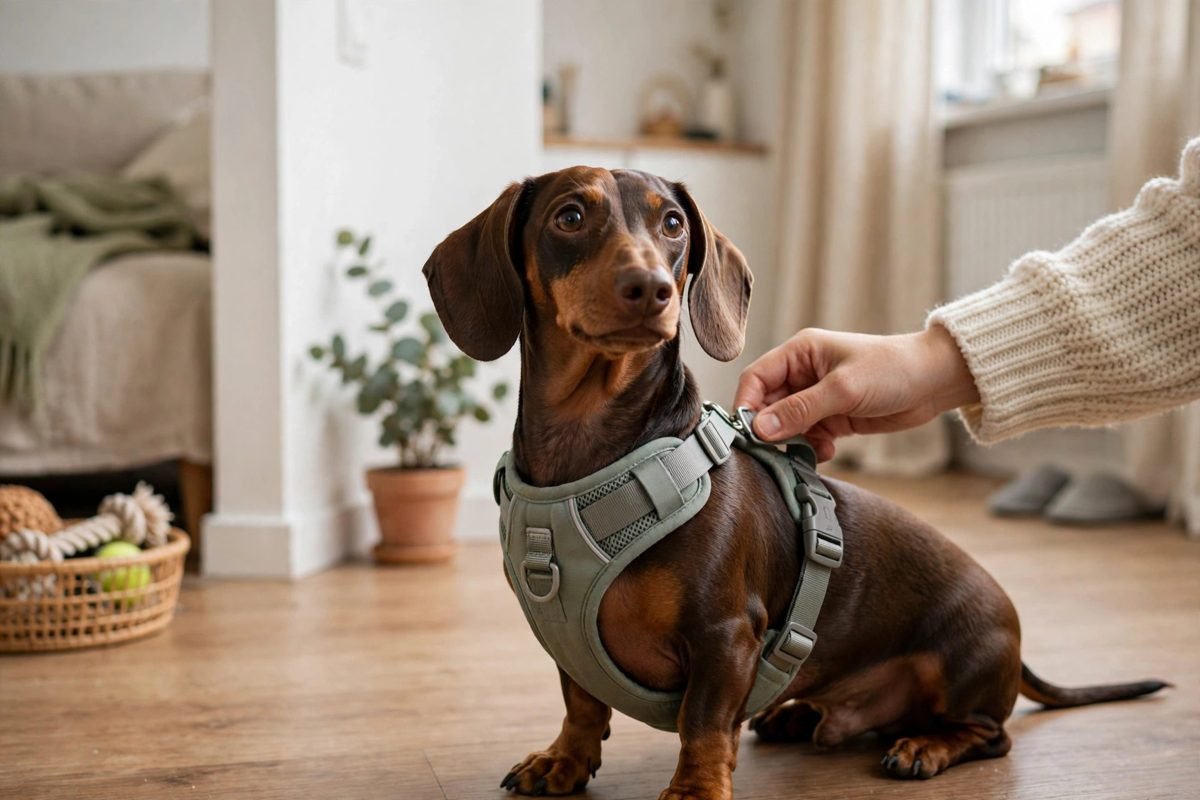
A harness spreads pressure across the chest and shoulders, rather than concentrating it on the neck. This can make walks more comfortable for a Dachshund, especially one that pulls, is excitable, or is still learning loose-lead walking. A harness also gives you more control without jerking the neck, and it can be easier to help a dog up a ramp, into a car, or over a step with gentle support. Many owners find that a harness reduces coughing and pulling-related discomfort, and it can help with training because the dog is calmer when it does not feel pressure on its throat. A harness is not a magic fix for pulling, and training is still needed, but it is generally the safer everyday choice for a long-backed breed, particularly in busy apartment surroundings.
How a harness should fit
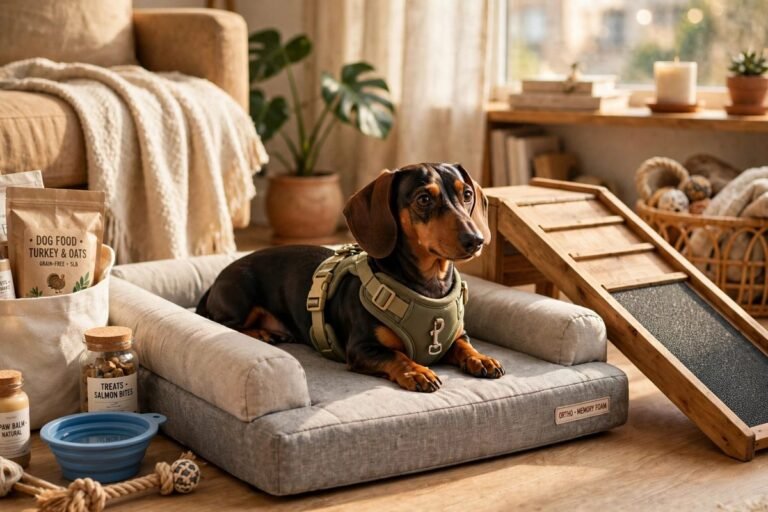
Fit matters more than style. A good harness should sit snugly but not tightly, with room to fit two fingers under the straps, and it should not rub under the front legs, across the shoulders, or along the spine. Measure your Dachshund’s chest and neck, following the size guide for the harness type, and check the fit again after a few weeks, because weight and coat can change. The harness should not slide sideways, twist, or restrict leg movement, and your dog should be able to walk, sit, and lie down comfortably. Try it indoors first, with treats and praise, and watch for rubbing, chafing, or reluctance to walk. Adjust straps evenly, and re-check fit after washing, because fabric can stretch or shrink. If a harness causes sores, limping, or a change in gait, stop using it and try a different fit or style, or ask a vet or experienced trainer for advice.
Choosing harness type for apartments
For apartment life, choose a lightweight, easy-to-put-on harness that your Dachshund will accept daily. A step-in or front-clip style can be easier for small dogs, while a back-clip style is simple for calm walkers. Look for soft padding, adjustable straps, a secure buckle, and a sturdy lead attachment, and avoid heavy, bulky designs that add weight or heat. In summer, choose breathable material, and in wet weather, choose a harness that is easy to clean and dry. Keep a collar with ID tags for identification, even if you walk on a harness. If your Dachshund shows back pain, wobbliness, sudden weakness, or severe anxiety, see a vet promptly, and do not rely on a harness change to delay care. This is general information only, not a diagnosis. With a well-fitting harness and calm training, apartment walks can be safer and more enjoyable for both you and your Dachshund.