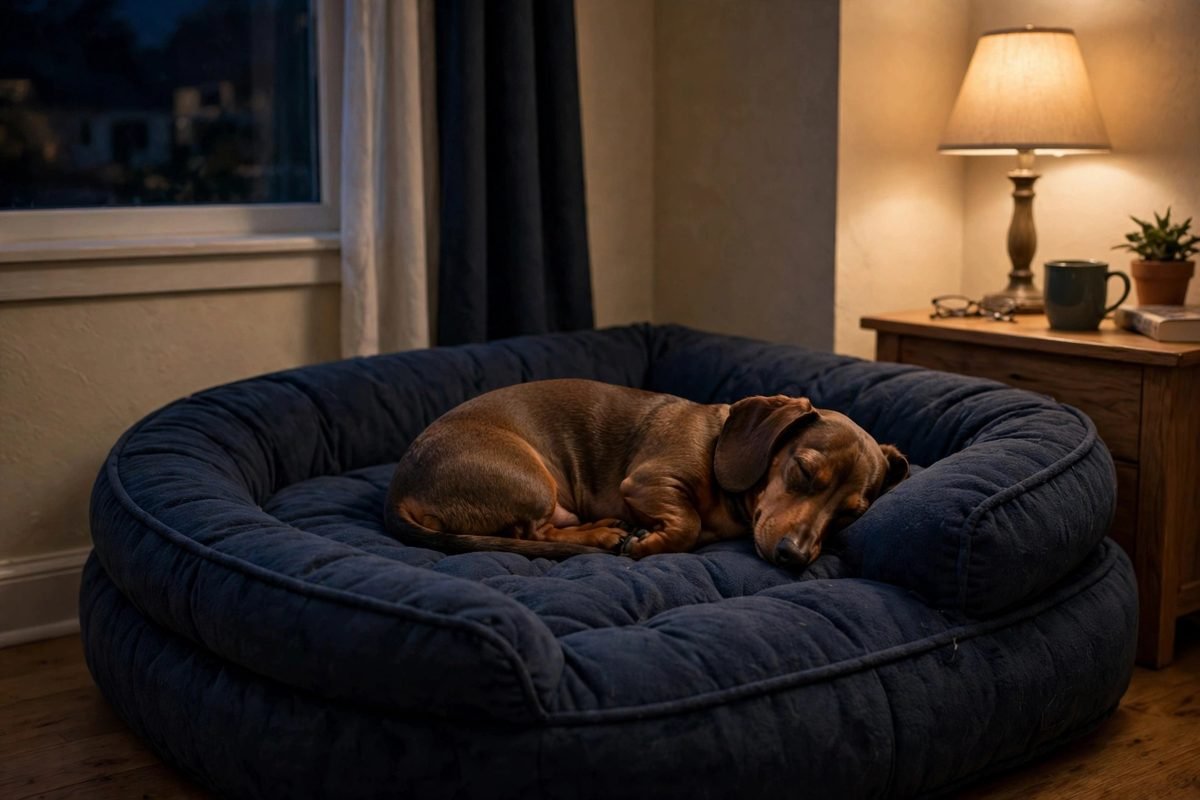
Best Orthopedic Bed for Dachshund Back Support
A good bed is more than a comfortable place to sleep. For a Dachshund, the right bed can support the spine, ease joints, and help a dog rest properly after walks and play. In a small apartment, a bed also needs to fit the space, be easy to clean, and stay in a quiet spot where your dog can relax without being disturbed. This guide explains what orthopedic support means, how to choose a bed type and firmness, and how to tell whether a bed is working, without brand claims or prices.
What orthopedic support means
Orthopedic support usually means a bed that holds its shape under your dog’s weight, rather than sinking flat or bunching up. A supportive bed spreads weight evenly, so the spine stays in a more natural position while resting, and joints are not pressed against a hard floor. This is especially helpful for older Dachshunds, dogs recovering from activity, or dogs that spend a lot of time resting in an apartment. Orthopedic does not mean hard: a bed can be supportive and still comfortable, with a firm base and a softer top layer. Avoid beds that are too soft and deep, because a dog can sink in and struggle to get up, which can strain the back when it climbs out. The goal is a bed that is easy to step onto, supportive to lie on, and stable in shape over time.
Bed types and firmness
Common bed types include flat mats, bolster beds with raised edges, donut beds, and raised beds. Flat mats are easy to place in small spaces and easy to wash, but they may offer less support unless they have a thick, firm base. Bolster beds give a dog a place to rest its head, which many Dachshunds like, but the bolster should not force the neck into an awkward angle. Donut beds are cosy, but they can be too soft for a dog that needs support. Raised beds keep a dog off a cold floor and can be easier to get on and off, if the height is low. For firmness, choose medium-firm support: press the bed with your hand, and it should spring back, not stay dented. If your dog is older, heavier, or has joint stiffness, a thicker, firmer base is usually better, and your vet can advise on support for a specific condition.
Size and washability for apartments
Size matters in an apartment. A bed should be large enough for your Dachshund to stretch out fully, not just curl up, because stretching helps muscles relax. Measure your dog lying down, and allow extra space for stretching, but avoid a bed so large that it blocks walkways or takes over a small room. Choose a bed with a removable, washable cover, because apartment beds collect hair, dirt, and smells quickly. A waterproof or water-resistant base can help if your dog has accidents or comes in wet from a walk. Place the bed in a quiet, draught-free corner, away from the front door and busy hallways, so your dog can rest without barking at every noise. If you use a crate, make sure the bed fits inside without bunching, and that your dog can turn around and lie down easily.
Signs a bed is not working
Watch how your dog uses its bed. Signs a bed is not working include avoiding the bed, sleeping on the floor instead, circling for a long time before settling, stiffness after rest, or difficulty getting up. Check the bed regularly for flattening, lumps, torn seams, or a cover that no longer fits. Wash the cover as directed, and replace a bed that has lost its support, even if it still looks clean. If your Dachshund shows back pain, wobbliness, sudden weakness, or severe anxiety, see a vet promptly, and do not rely on a new bed to delay care. This is general information only, not a diagnosis. With a supportive, correctly sized, washable bed in a calm apartment spot, your Dachshund can rest better, recover better, and enjoy a more comfortable daily life.