
Best Ramp for Dachshunds: How to Choose the Right One
For a Dachshund, a ramp is one of the most useful items you can buy for an apartment. It helps a long-backed dog get onto a sofa or bed without jumping, and it can reduce repeated strain on the spine. Choosing the right ramp, however, is not just about picking the first one you see. Size, slope, grip, and how your dog will use it all matter. This guide explains how to choose a ramp that fits your home, your dog, and your daily routine, without relying on brand claims or prices.
Ramp types (wooden, folding, carpeted, portable)
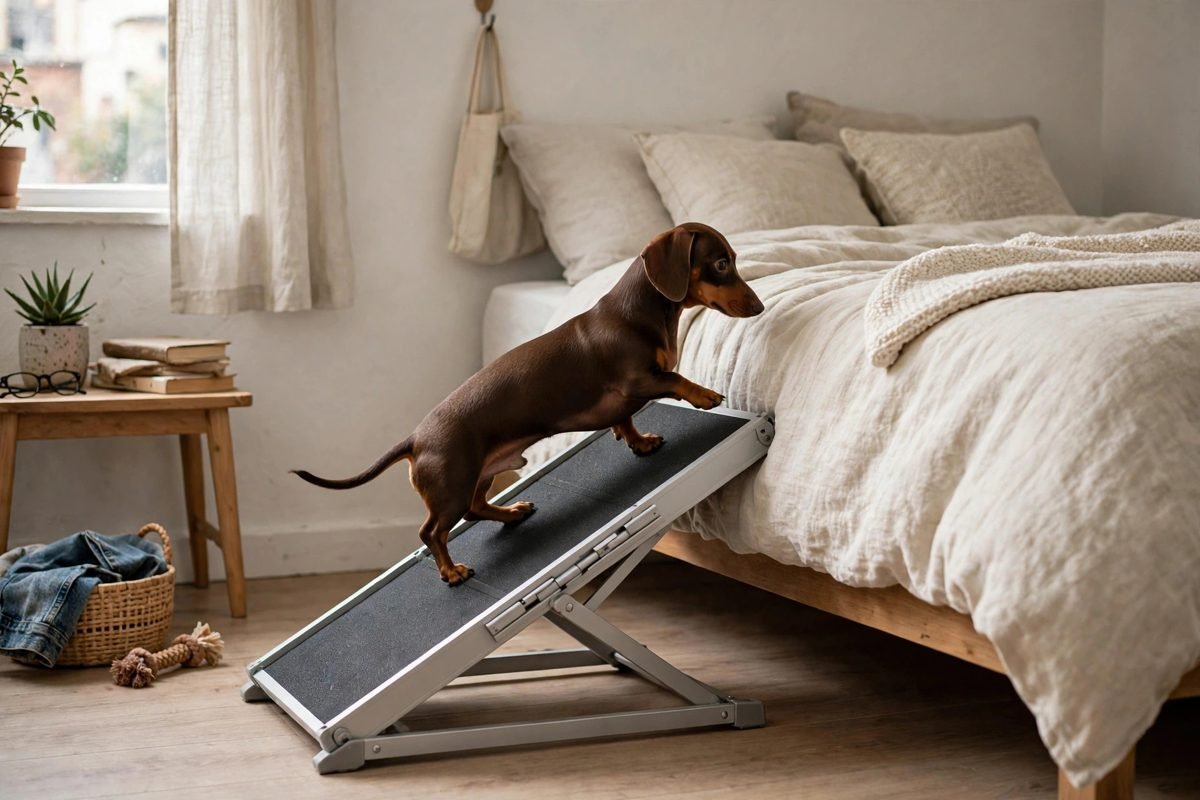
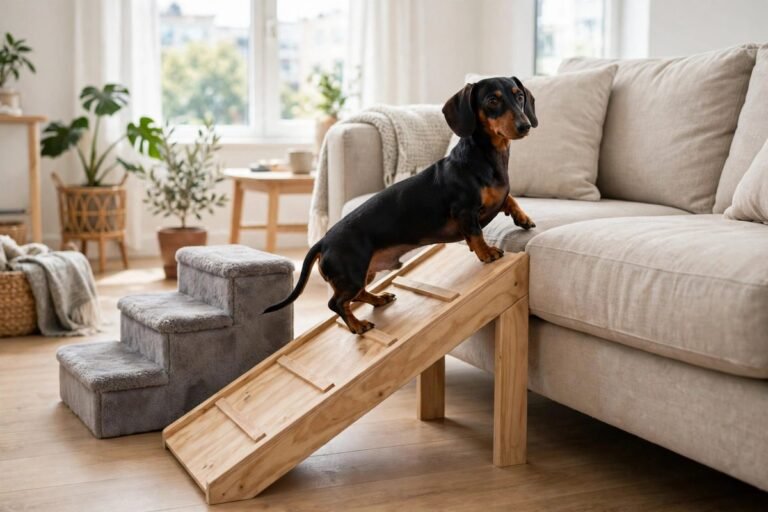
Ramps come in several broad types. Wooden ramps are often sturdy and stable, and they can look good in a living room, but they may be heavier to move. Folding ramps are useful if you need to store one in a small apartment or take it to a car, because they fold flat or in half. Carpeted ramps give better grip for paws, which helps a nervous dog feel secure, while smooth ramps may need a non-slip surface added. Portable ramps are lighter and easier to carry, but they must still be stable and not wobble under your dog’s weight. Think about where the ramp will live most of the time: a permanent ramp by the sofa can be heavier and sturdier, while a ramp for the car or for travel needs to be light and easy to set up.
Size, slope, non-slip and weight limit
Size and slope are the most important safety features. A ramp should be long enough that the slope is gentle, not steep, because a steep ramp can be hard for a small dog to climb and may cause slipping. Measure the height of your sofa or bed, and choose a ramp length that gives a comfortable, gradual climb. The walking surface should be wide enough for your Dachshund to walk confidently, with raised edges or a non-slip texture to prevent paws sliding. Check the weight limit and stability: the ramp should not bend, slide, or tip when your dog walks on it. Place it on a non-slip mat if your floor is smooth, and test it yourself by pressing down firmly before your dog uses it. For a mini Dachshund, a lighter, narrower ramp may work, but it must still feel solid and safe.
Sofa vs bed vs car use
Different places need different ramps. A sofa ramp is usually lower and can be shorter, but it still needs a gentle slope and a stable base that does not move when your dog steps on it. A bed ramp is often higher, so it needs to be longer, and it should fit beside the bed without blocking a walkway in a small apartment bedroom. A car ramp needs to be portable, easy to clean, and strong enough for outdoor use, with a surface that works in wet weather. If you need one ramp for several places, choose a folding, portable type that is long enough for the highest place you will use it. Avoid using a ramp that is too short for a bed, because the steep angle defeats the purpose. In every case, keep the ramp in the same place as much as possible, so your dog learns where it is and uses it routinely.
How to introduce a ramp
Introduce a ramp slowly, with patience and treats. Start with the ramp flat on the floor, let your Dachshund sniff and walk across it, and reward calm steps with small treats and praise. Then raise it slightly, using books or a low step, and repeat until your dog is confident. Next, place it against the sofa or bed, and guide your dog up and down with treats, keeping sessions short and positive. Never push, drag, or force your dog onto a ramp, and do not use a ramp as a punishment. If your dog is fearful, go back a step and build confidence again. Once your dog uses the ramp regularly, keep treats occasional, and praise calm use. If your Dachshund shows back pain, wobbliness, sudden weakness, or severe anxiety, see a vet promptly, and do not rely on a ramp to delay care. This is general information only, not a diagnosis. A well-chosen, gently introduced ramp can make apartment life much safer for a Dachshund back.

One Comment