How Much Exercise Does a Dachshund Need Without Hurting Its Back?
Dachshunds are lively, curious dogs, but their long backs need careful exercise. Too little exercise can lead to weight gain, boredom, and barking, while too much jumping, stair climbing, or rough play can strain the spine. The goal in an apartment is not to tire your dog out completely, but to give regular, moderate, back-friendly activity every day. This guide explains how much exercise most adult Dachshunds need, what kinds work best in a small home, and what to avoid.
Safe apartment exercise
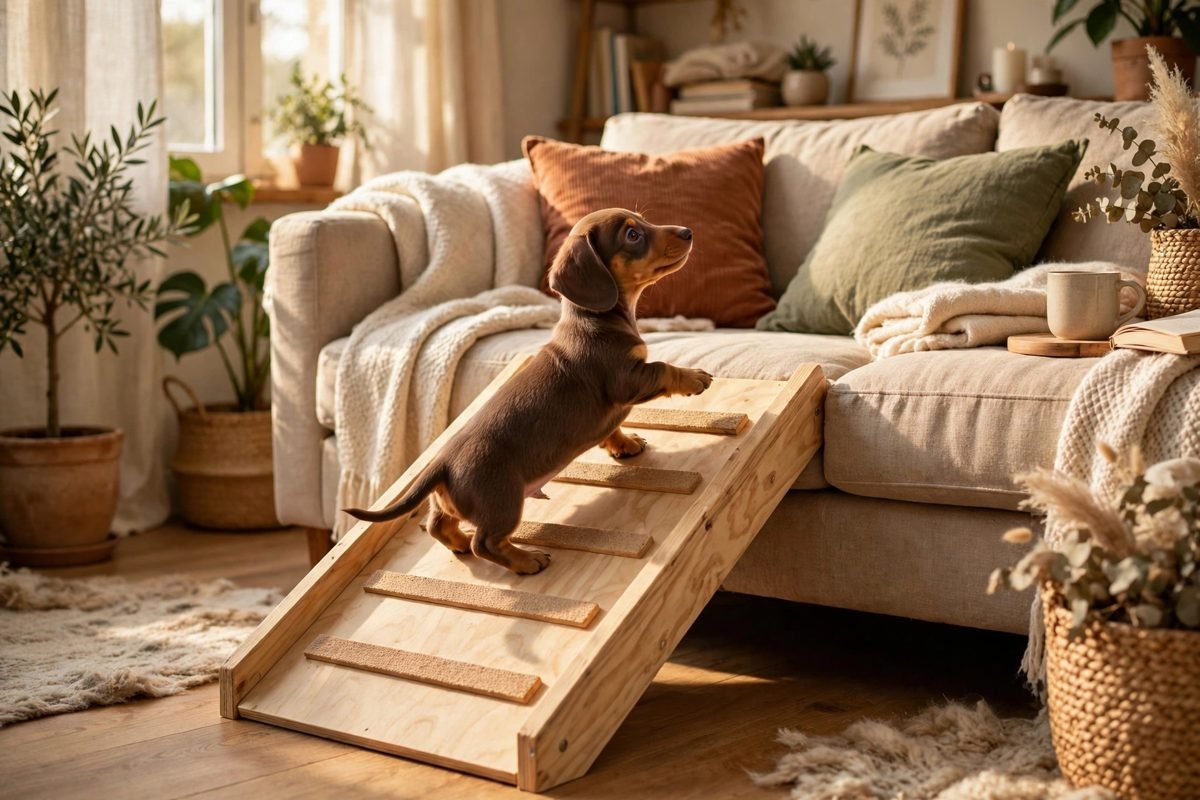
Most healthy adult Dachshunds do well with about thirty to sixty minutes of activity per day, split into shorter sessions rather than one long, intense outing. This can include two short walks, a gentle play session, and some mental enrichment indoors. Puppies need shorter, more frequent sessions, and seniors may need slower, shorter walks, so always adapt to your dog’s age and health with vet guidance. In an apartment, use hallways, a balcony only if safe and supervised, and indoor play areas for fetch with a soft toy, tug with rules, and scent games. Keep floors non-slip with rugs or mats, and use a ramp for the sofa and bed, so exercise does not include repeated jumping. Watch your dog’s breathing and pace: it should be happy and relaxed, not panting heavily or lagging behind.
Walks, play and mental enrichment
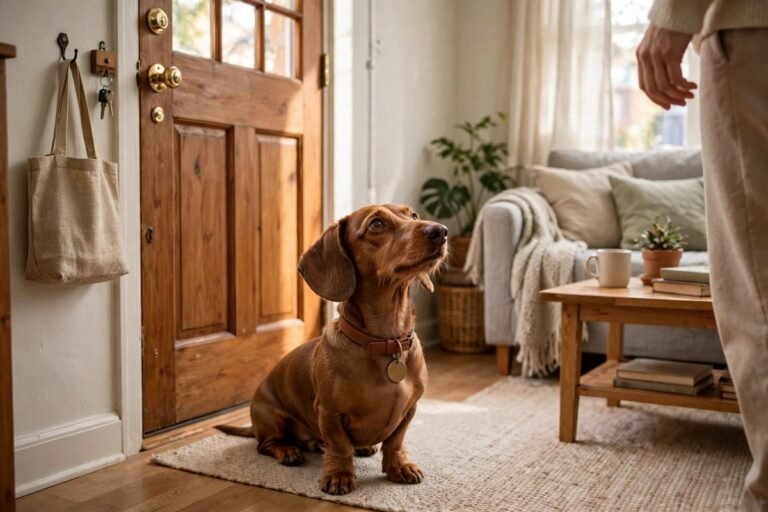
Walks are excellent for Dachshunds, but they should be steady and controlled, not fast runs or long hikes on steep ground. Use a harness rather than pulling on a collar, keep the lead loose, and let your dog sniff and explore, because sniffing is mental enrichment too. At home, try puzzle feeders, snuffle mats, hide-and-seek with treats, and short training sessions for calm behaviour and recall. These activities tire a dog mentally without stressing the back, and they can reduce barking and restlessness in an apartment. Rotate toys so play stays interesting, and finish sessions with a calm rest on a supportive bed. If your dog is very energetic, add another short walk or a play session, rather than making one session much longer or more intense.
Exercise to avoid (jumping, stairs, rough play)
Avoid activities that put repeated impact or twisting strain on a Dachshund back. Do not encourage jumping on and off high furniture, climbing many stairs, or rough wrestling with larger dogs. Avoid tug games that involve sudden jerks, and avoid throwing balls far so your dog leaps or skids to catch them. If your home has stairs, use a ramp or carry your dog with correct support, following the lifting advice in the back care guides, rather than letting it run up and down repeatedly. In a small apartment, it is easy to play fetch down a hallway, but keep throws short and low, and stop if your dog starts to jump, twist, or show excitement that is hard to control. Gentle, controlled play is safer and more useful than fast, chaotic play.
Rest and recovery signs
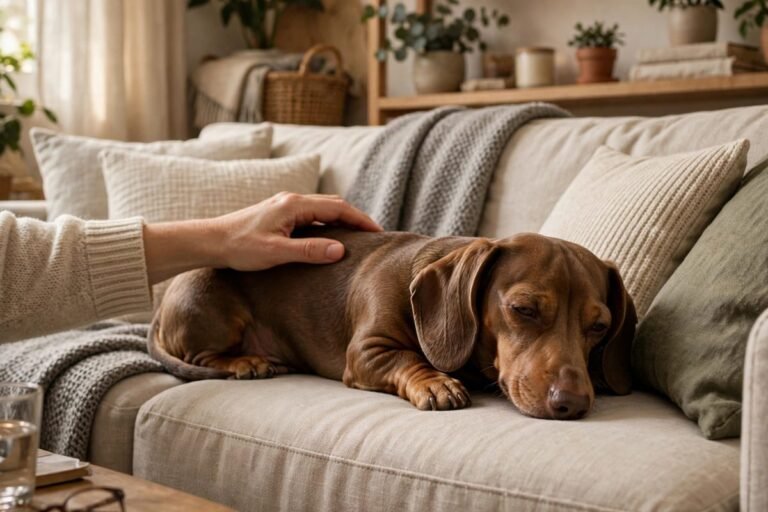
Rest is part of exercise, especially for a long-backed breed. After activity, your Dachshund should settle calmly, drink water, and rest without stiffness. Signs to slow down include lagging on walks, lying down during play, panting that does not settle quickly, limping, or reluctance to move the next day. If you see back pain, wobbliness, sudden weakness, difficulty walking, or severe anxiety, stop exercise and see a vet promptly. Do not push through pain, and do not use exercise to treat a back problem. This is general information only, not a diagnosis. With regular short walks, gentle indoor play, mental enrichment, and plenty of rest, an apartment Dachshund can stay fit, happy, and much safer for its back.