Dachshund Everyday Health Checklist for Apartment Owners
A short daily health check is one of the best habits for a Dachshund owner, especially in an apartment where small changes can be easy to miss. You do not need medical training, and you do not need much time. A few minutes each day, a slightly longer check each week, and a monthly review can help you catch weight changes, skin problems, dental issues, and early signs of back trouble. This checklist is simple, calm, and easy to fit into apartment life, and it helps you give your vet clear information when you visit.
Daily checks (back, weight, teeth, ears, paws)
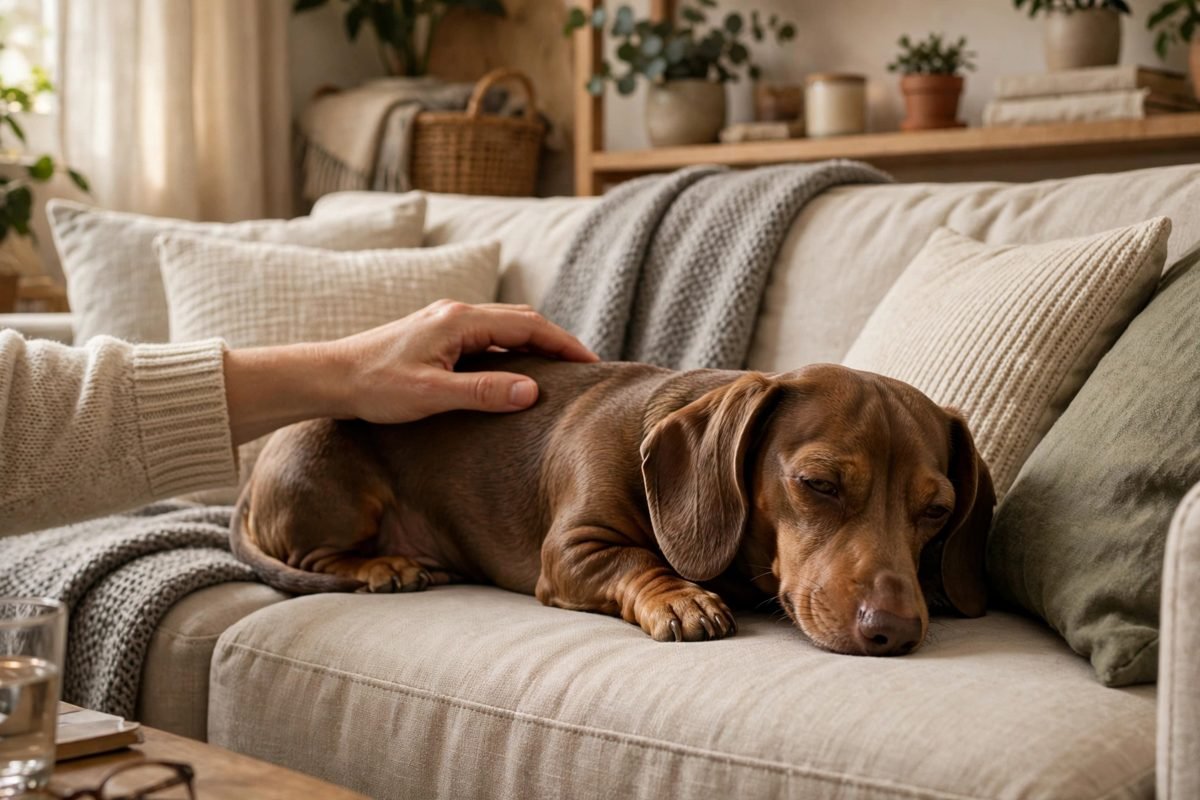
Each day, watch how your Dachshund moves. Is it walking normally, jumping less, hesitating at steps, or showing stiffness after rest? Gently run your hands along its back and belly, watching for flinching, tension, or pain. Check weight by feeling the ribs under a thin layer of fat, and note any sudden change in appetite, thirst, or toilet habits. Look at the teeth and gums for bad breath, broken teeth, or red gums, and check ears for smell, redness, or discharge. Finally, check paws for cuts, cracked pads, or something stuck between the toes, especially after walks on pavements or in wet weather. In a small apartment, you can do most of this during cuddle time or after a walk, keeping it gentle and positive with praise and a small reward.
Weekly routine
Once a week, add a slightly longer check. Brush the coat and look for lumps, bald patches, fleas, ticks, or sore skin. Clean ears only if your vet has shown you how, and trim nails carefully, or ask a groomer or vet if you are unsure. Check the harness and lead for wear, and make sure the ramp, bed, and feeding area are clean and safe. Weigh your Dachshund weekly if weight is a concern, and keep a short note of any changes in energy, appetite, or behaviour. Also review exercise and barking: is your dog getting enough play and mental enrichment, or is it becoming bored, restless, or noisy? A weekly routine helps you stay ahead of small problems, and it makes vet visits easier because you can describe what changed and when.
Monthly vet/home checks
Each month, review the bigger picture. Is weight stable, is the coat healthy, are teeth clean, and is movement normal? Check that vaccinations, flea and worm prevention, and any regular medication are up to date, following your vet’s schedule. Review food portions and treats, especially if activity has changed with the seasons. Check your apartment setup: ramps in place, no slippery floors, no high jumps from beds or sofas, and a safe, quiet resting place. If your Dachshund is a puppy, senior, or has a known health condition, your vet may suggest more frequent checks. Keep a simple health notebook or phone note, with weight, appetite, movement, and any concerns, so patterns are easy to see over time.
Red flags to see a vet promptly
Some signs need prompt veterinary care, not home monitoring. See a vet promptly if your Dachshund has back pain, wobbliness, sudden weakness, difficulty walking, crying when touched, loss of bladder or bowel control, or severe anxiety, distress, or self-harm behaviour. Also seek care for vomiting, diarrhoea lasting more than a day, refusal to eat or drink, sudden weight loss, breathing difficulty, or a wound that will not heal. Do not try to diagnose back problems at home, and do not delay care while trying food, treats, or exercise changes. This article is general information only, not a diagnosis. A calm daily checklist, a weekly routine, and prompt vet care for red flags give an apartment Dachshund the best chance of a long, comfortable, happy life.