Healthy Food for Dachshunds: What to Feed a Mini Dachshund
Feeding a mini Dachshund well is one of the simplest ways to protect its long back, its weight, and its everyday energy. Because Dachshunds are small, prone to weight gain, and have a body shape that puts extra strain on the spine, food choices matter more than they might seem. The goal is not a complicated or expensive diet. It is a balanced, portion-aware routine that suits your dog’s age, activity, and health, and that you can keep up in a small apartment kitchen.
What a healthy Dachshund diet looks like
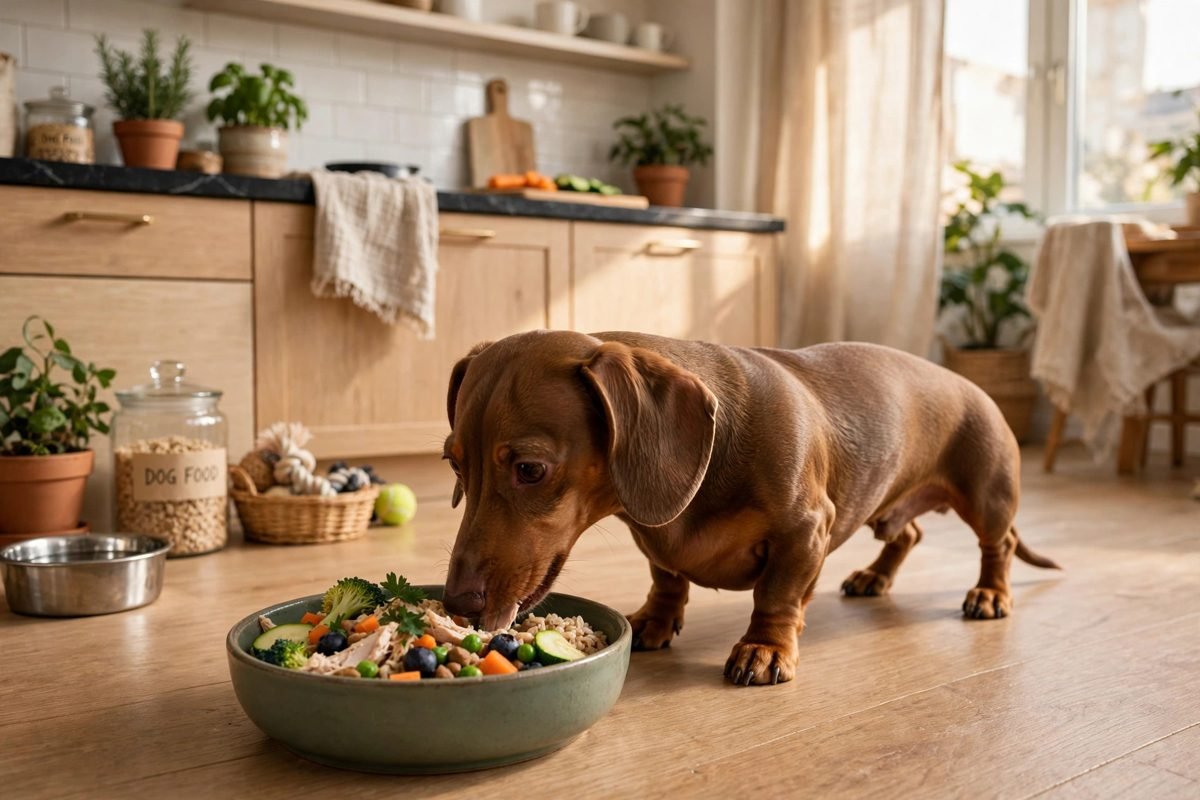
A healthy diet for a Dachshund usually centres on a complete, balanced food made for small dogs, with good-quality protein as a main ingredient, moderate fat, and digestible carbohydrates. Many owners choose a dry food, a wet food, or a mix, and any of these can work if the overall diet is balanced and portions are controlled. Fresh water should always be available, and meals are usually better than leaving food out all day, because free feeding makes it hard to notice how much your dog is eating. Treats, chews, and table scraps all count as food, so they should be part of the daily plan, not extra on top of it. If your dog has a sensitive stomach, allergies, or a medical condition, your veterinarian can help you choose a suitable food, rather than relying on trends or claims alone. The best diet is the one your dog tolerates well, keeps a healthy weight on, and enjoys in sensible portions.
Portion control basics
Mini Dachshunds need surprisingly small portions, and it is easy to overfeed by eye. Use the feeding guide on the food as a starting point, then adjust based on your dog’s body condition, activity, and your vet’s advice. Weigh food with a measuring cup or kitchen scale, rather than guessing, and split the daily amount into regular meals. Check your dog’s shape: you should be able to feel ribs under a thin layer of fat, see a waist from above, and see a tucked belly from the side, without prominent bones showing. Weigh your Dachshund regularly, even monthly at home if your vet shows you how, and keep a simple note of weight changes. Extra weight does not just affect looks. For a long-backed Dachshund, it can increase strain on the spine and joints, and make exercise harder. If weight is creeping up, reduce treats first, then discuss a gradual portion change with your vet, rather than making a sudden cut.
Foods to avoid
Some foods are unsafe for dogs and should never be given, including chocolate, grapes and raisins, onions and garlic, xylitol-sweetened products, alcohol, and cooked bones that can splinter. Fatty table scraps, rich leftovers, and frequent high-fat treats can upset the stomach and contribute to weight gain. Raw diets, homemade diets, and supplements need care, because an unbalanced homemade diet can lack essential nutrients. If you want to cook for your Dachshund, ask your veterinarian or a veterinary nutritionist for a balanced recipe, rather than guessing. Also avoid feeding from the table during family meals, because it teaches begging and adds hidden calories. Keep human food out of reach in a small apartment, especially during cooking, and store treats where a curious Dachshund cannot help itself. When in doubt, a simple rule helps: if you are not sure it is safe for dogs, do not offer it.
Vet advice for special needs
Puppies, older Dachshunds, and dogs with health conditions often need different feeding. Puppies need more frequent meals and a puppy food, while older dogs may need fewer calories and joint-friendly nutrition. Dogs with back pain, wobbliness, sudden weakness, or other concerning symptoms should be seen by a vet promptly, and food should never be used to delay that care. This article is general information only, not a diagnosis. A vet can advise on weight, dental health, allergies, and whether a special diet is needed, and can help you set a realistic target weight. Bring a note of what your dog eats, including treats, to vet visits, so advice is based on the full picture. With a balanced food, measured portions, safe treats, and regular vet checks, feeding a mini Dachshund in an apartment can be simple, calm, and good for its back for years to come.