
Dachshund Barking at Vet Visits: A Calm Clinic Routine
Quick Answer
- Vet-visit barking is often a mix of fear, unfamiliar smells and sounds, other animals, and handling the dog cannot predict.
- Practice at home first: carrier time, short waits, gentle handling, and calm rewards, in small steps.
- At the clinic, use a quiet waiting spot, a mat or blanket, and short settle rewards between steps.
- Tell the clinic team the dog barks when stressed, and ask for a calm, unhurried approach where possible.
Contents
- 1. Why Vet Visits Cause Barking
- 2. Practice the Carrier and the Journey at Home
- 3. A Calm Waiting-Room Routine
- 4. Handling Practice: Exams Without Surprises
- 5. After the Visit: Recovery and Next-Time Notes
- Vet Visit Checklist
- Common Mistakes
- When to Call Your Vet
- Pin This: Vet Visit Checklist
- Frequently Asked Questions
- Conclusion
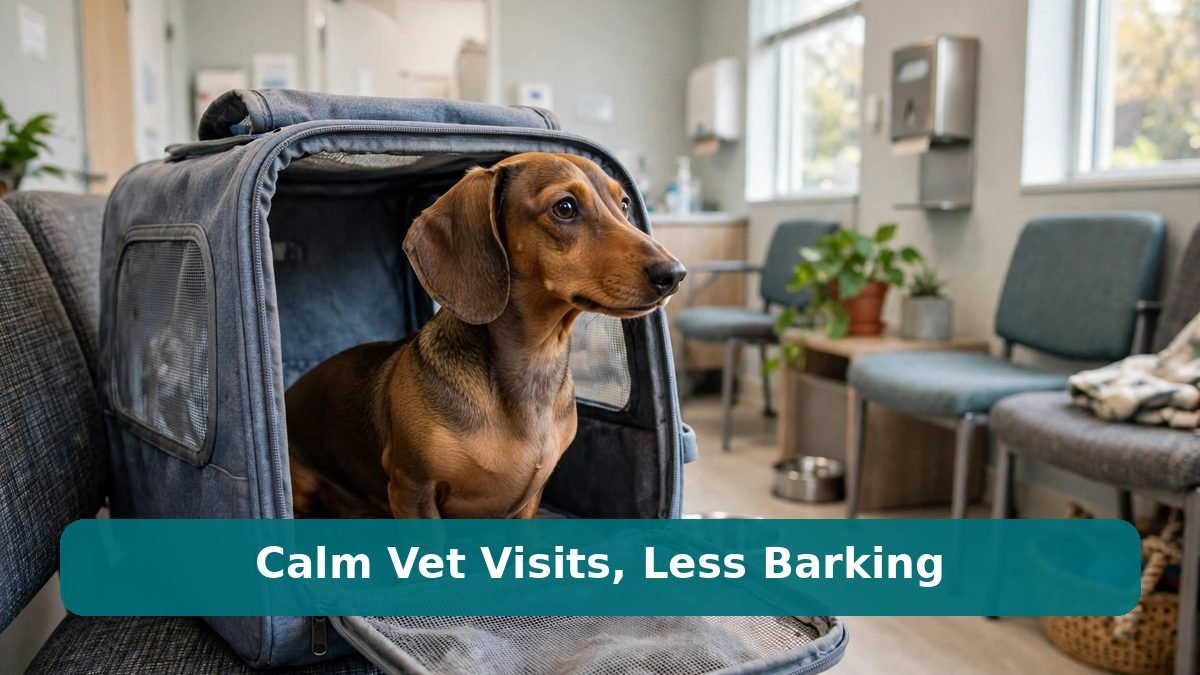
A vet visit packs many triggers into a short time. A car journey, a strange building, unfamiliar smells, other dogs and cats, new people, a slippery table, and hands touching ears, paws, and belly can all arrive within an hour. For a Dachshund that rarely meets those triggers, barking is an understandable response. It may be fear, excitement, a warning to other animals, or a protest at being handled. Whatever the mix, the visit is harder for the dog, the owner, and the clinic team when barking takes over.
The visit itself is too late to start training. Calm clinic behavior is built at home, in short, easy steps, over days and weeks before the appointment. This article explains why vet visits cause barking, how to practice the carrier, the journey, waiting, and handling at home, and how to use a calm routine on the day itself.
1. Why Vet Visits Cause Barking
Several triggers usually combine at a vet visit. The journey may already raise stress, especially if car travel is rare or already causes barking. Arrival adds new smells, sounds, and animals in a small waiting room, with little space to move away. Other dogs may bark first, which can set off a chain of barking. Then the exam itself adds handling, restraint, and sometimes mild discomfort, all from people the dog does not know well.
Unpredictability makes the reaction stronger. At home, the dog knows where sounds come from and can move to a familiar spot. At a clinic, doors open suddenly, people appear from corridors, and the dog is lifted onto a table it cannot leave. A dog that cannot predict or control what happens next is more likely to bark, pace, tremble, or try to move away. Dachshunds, with their alert nature and strong attachment to their owner, may bark more when the owner is present but cannot remove the trigger.
Past visits shape future visits. A visit that ended in pain, a long wait, or a frightening restraint can make the next visit start with barking at the car or the clinic door. That is why preparation should start well before the next appointment, and why each visit should be reviewed afterward. Note what triggered barking, at what stage, and what helped, so the next plan can target that stage first.
2. Practice the Carrier and the Journey at Home
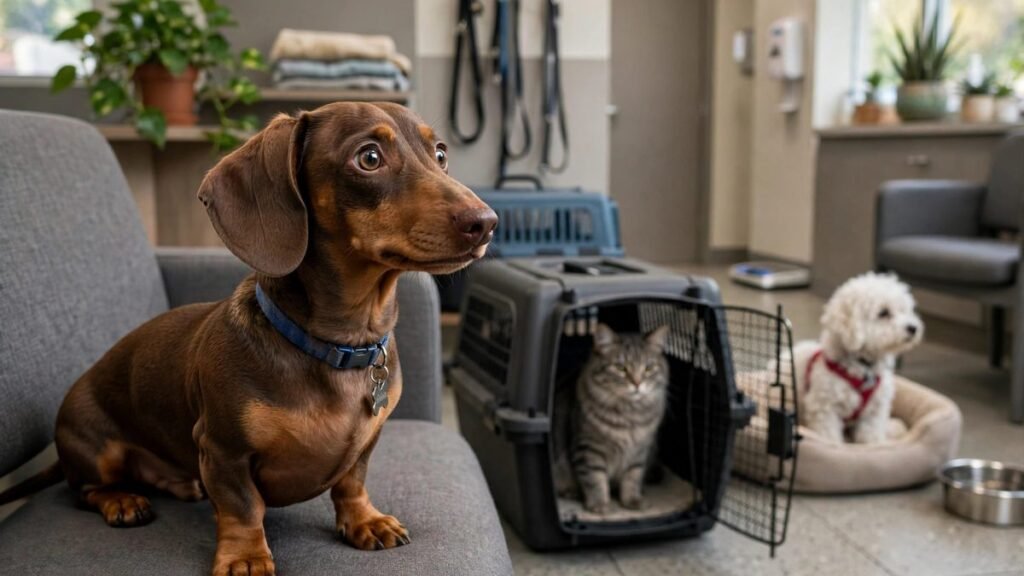
Start with the carrier as a normal piece of furniture, not a signal that a vet visit is coming. Leave it open in a living room with a familiar blanket inside, feed occasional meals or treats near it, and let the dog enter and leave freely. Over days, reward calm time inside the carrier with the door open, then with the door closed for a few seconds, then for a minute. Keep sessions short and end them while the dog is calm.
Practice short journeys separately from vet visits. Sit in the car with the dog for a few calm minutes, reward settling, and then return indoors. Next, drive a very short distance, such as around the block, and return home with a calm settle reward. Build distance gradually, and keep the car calm: low radio volume, steady driving, and no excited talking. The routine for barking in the car covers these steps in more detail, and it pairs well with carrier practice.
On the day, keep the journey routine the same as practice. Use the familiar blanket, keep the carrier secure, and arrive a little early so the dog is not rushed from car to waiting room. A calm journey gives the waiting room a better starting point, while a rushed, stressful journey often leads to barking before the dog even enters the clinic.
3. A Calm Waiting-Room Routine
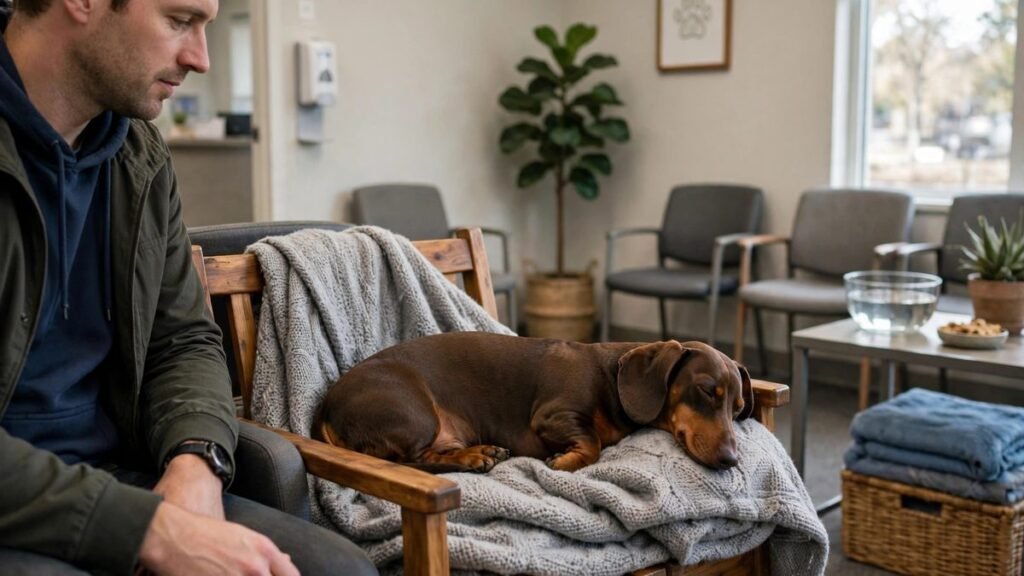
Choose the quietest waiting spot available, away from the door and from other animals if possible. A corner seat, or a spot near a wall, gives the dog fewer directions to watch. Place a familiar blanket or mat on the floor or on your lap, and let the dog settle on it. A mat the dog already uses at home carries a history of calm rewards, which helps in a new place.
Use short settle rewards during the wait. Reward quiet lying down, calm looking around, and settling after a sound, with small, quiet treats delivered low and calmly. Avoid letting the dog greet every other animal, because each greeting is a new excitement peak that can tip into barking. If another dog is barking, move a little farther away, turn the dog gently toward you, and reward attention to you. If the wait becomes too long and barking rises, ask staff if you can wait outside or in the car until your turn, where that is allowed.
Keep your own behavior calm and steady. Talk in a low voice, move slowly, and avoid constantly stroking a tense dog, which can add arousal. A brief, calm stroke when the dog settles is more useful than continuous fussing. Tell reception staff on arrival that the dog barks when stressed, so they can plan a quieter room or a shorter wait where possible.
4. Handling Practice: Exams Without Surprises
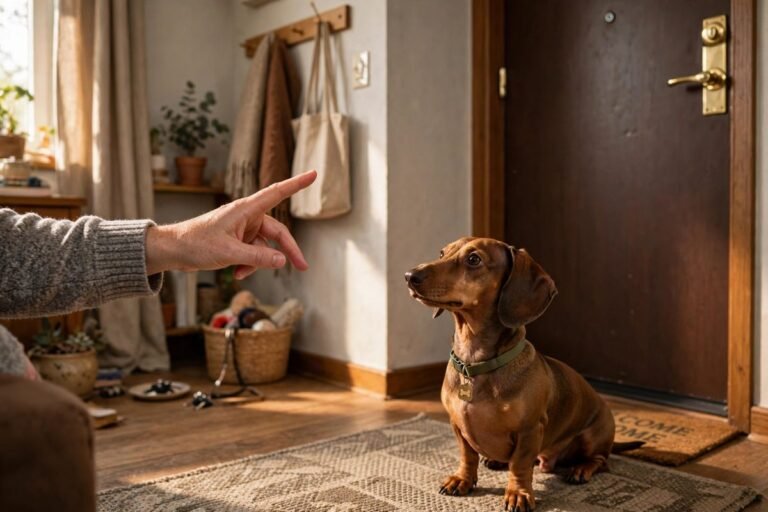
Handling practice at home removes surprises from the exam. In short sessions, gently touch ears, lift a paw, look at teeth briefly, and stroke the belly, rewarding calm behavior after each touch. Keep touches brief at first, a few seconds, and build duration slowly. Practice lifting the dog correctly, supporting chest and hindquarters, and placing it on a raised, non-slip surface for a few seconds, then back down with a reward. Short, pleasant practice is far better than one long session.
Practice with different people when possible, starting with familiar household members and then a calm visitor. Each new person should use the same gentle approach: slow movements, a low voice, and a treat after a calm response. If the dog barks, growls, or tries to move away, the handler should pause, give space, and try an easier touch next time. Pushing through a fear response teaches the dog that barking does not work, and can make the next exam harder.
At the clinic, the same principles apply. Ask the vet team, where possible, to approach calmly, to allow a brief settle moment, and to explain each step in simple terms. The routine for barking at strangers on walks uses a similar gradual approach to new people, and its distance-and-reward steps transfer to clinic introductions. If the dog becomes very distressed, ask whether the exam can be paused briefly, or split into shorter steps, rather than rushed through while barking continues.
5. After the Visit: Recovery and Next-Time Notes
Recovery starts on the journey home. Keep the car calm, offer water on return, and give the dog a quiet rest period rather than an exciting play session or a visit from guests. Some dogs need a few hours to return to normal after a vet visit, and that is not unusual. A short, calm walk later in the day, a familiar meal, and a settle on a favorite bed usually help the dog reset.
Write a brief note after each visit: what triggered barking, at which stage, what the clinic team did, and what helped. That note is valuable for the next visit, because it shows whether carrier practice, waiting-room position, or handling practice needs more work. Share the note with the clinic team at the next appointment, so they can plan around it. A vet team that knows the dog barks at waiting-room dogs but is calm on the table, for example, can plan the wait differently.
Keep practicing between visits, not only in the week before an appointment. A few minutes of carrier time, handling, or settle practice each week keeps the skills fresh, so the next visit does not feel like a sudden test. If visits remain very stressful despite home practice, discuss the pattern with the clinic team, who can advise on longer-term support and on how to structure future visits.

Vet Visit Checklist
| Stage | What to do | What to avoid |
|---|---|---|
| At home | Carrier open daily, handling practice, short car trips | Using the carrier only on vet days |
| Journey | Familiar blanket, secure carrier, calm driving | Rushing, loud radio, excited talking |
| Waiting room | Quiet corner, familiar mat, short settle rewards | Greeting every animal, long waits in a crowded room |
| Exam | Calm approach, brief settle, pause if distressed | Rushing through handling while barking continues |
| After | Quiet rest, water, brief review note | Exciting play or guests immediately after |
Common Mistakes
- Starting carrier or handling practice only the day before a visit.
- Letting the dog greet every animal in the waiting room.
- Continuous fussing that adds arousal to a tense dog.
- Pushing through a fear response instead of pausing and easing back.
- Forgetting to tell clinic staff that the dog barks when stressed.
- Judging the whole plan by one difficult visit.
When to Call Your Vet
Contact a veterinarian promptly if barking at visits is paired with signs such as pain, limping, a hunched back, vomiting, appetite changes, or any sudden change in behavior. A veterinarian can examine the dog, check whether pain or illness contributes to barking, and discuss a plan for calmer future visits, including whether a qualified behavior professional should be involved. This article gives general information only and is not a diagnosis. If a visit is urgent, tell the clinic team about the barking and stress in advance, so they can plan the safest approach.
Pin This: Vet Visit Checklist
- Keep the carrier open at home with a familiar blanket inside.
- Practice short car trips that end at home, not only at the clinic.
- Practice gentle ear, paw, and belly handling in short sessions.
- Choose a quiet waiting corner and a familiar mat.
- Reward quiet settling, and avoid greeting every animal.
- Tell staff the dog barks when stressed.
- Rest quietly after the visit and note what helped.
Frequently Asked Questions
How early should I start vet-visit practice?
Start as soon as you can, ideally weeks before an appointment. Even a few minutes of carrier and handling practice each week helps, and practice between visits keeps skills fresh.
Should the dog stay in the carrier in the waiting room?
Many dogs settle better in a familiar carrier with a blanket, especially in a crowded room. If the dog is calmer on a mat on your lap, use that instead, and keep distance from other animals.
What if a Dachshund barks at other dogs in the waiting room?
Move farther away, reward attention to you, and ask staff about waiting outside or in the car until your turn, where that is allowed.
Is it all right to ask the vet to slow down?
Yes. Most clinic teams welcome a brief explanation and will allow a settle pause or shorter steps where possible. Tell them in advance if the dog barks when stressed.
When is professional help the right step?
Seek a qualified trainer or veterinary behavior professional if visits remain very stressful despite home practice, or if barking is paired with fear, escape attempts, or pain signs.
Conclusion
Vet-visit barking improves when the visit stops being a surprise. Practice the carrier, the journey, waiting, and handling at home, use a quiet waiting routine, and rest calmly afterward. Start practice well before the next appointment, and review each visit to improve the next one.





One Comment