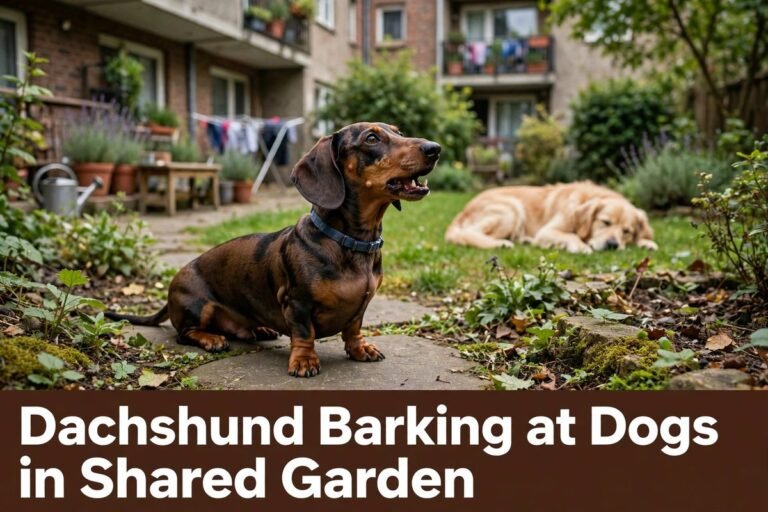
Dachshund Barking in the Garden and From the Balcony
Quick Answer
- A Dachshund that barks in the garden or from the balcony is guarding its territory. People, dogs, and bikes passing below look like intruders to a dog on a high perch.
- Block the view first. A solid barrier, a screen, or frosted film on the balcony rail stops most barking, because the dog cannot bark at what it cannot see.
- Never leave the dog alone on the balcony or in the garden for long stretches. Boredom and a clear view are the two biggest drivers of barking.
- Give the dog a job outside: a sniffing game, a chew, or a settle spot away from the rail.
- Most Dachshunds improve within two to three weeks of blocked views.
Contents
- 1. Dachshund Barking in the Garden and From the Balcony
- 2. Reading the Bark: Guarding, Excitement, or Boredom
- 3. Blocking the View: Barriers That Stop Most Barking
- 4. The Supervised Outing Routine
- 5. Keeping the Garden and Balcony Calm for Good
- Garden and Balcony Calm Plan
- Common Mistakes
- When to Call Your Vet
- Pin This: Quiet Garden and Balcony
- Frequently Asked Questions
- Conclusion
1. Dachshund Barking in the Garden and From the Balcony
Dachshund barking in the garden and from the balcony starts with a view. A garden fence, a balcony rail, or a low wall gives the dog a clear look at everything that passes: people walking dogs, children on bikes, delivery riders, and cats crossing the street. The dog sees them all, and from a high balcony the dog sees even more. Each passerby is a new event, and the dog barks at each one. The barking feels endless, because the street never stops moving.
The balcony makes it worse. A dog on a balcony is high up, with a wide view and no way to reach what it sees. The height adds excitement, the rail gives the dog a place to stand and stare, and the open air carries every sound from the street below. A Dachshund on a balcony can see a dog three floors down and hear it too, and the distance makes the barking louder, because the dog barks harder to be heard. The dog is not being naughty. It is doing what it was bred to do: watch, guard, and announce every stranger.
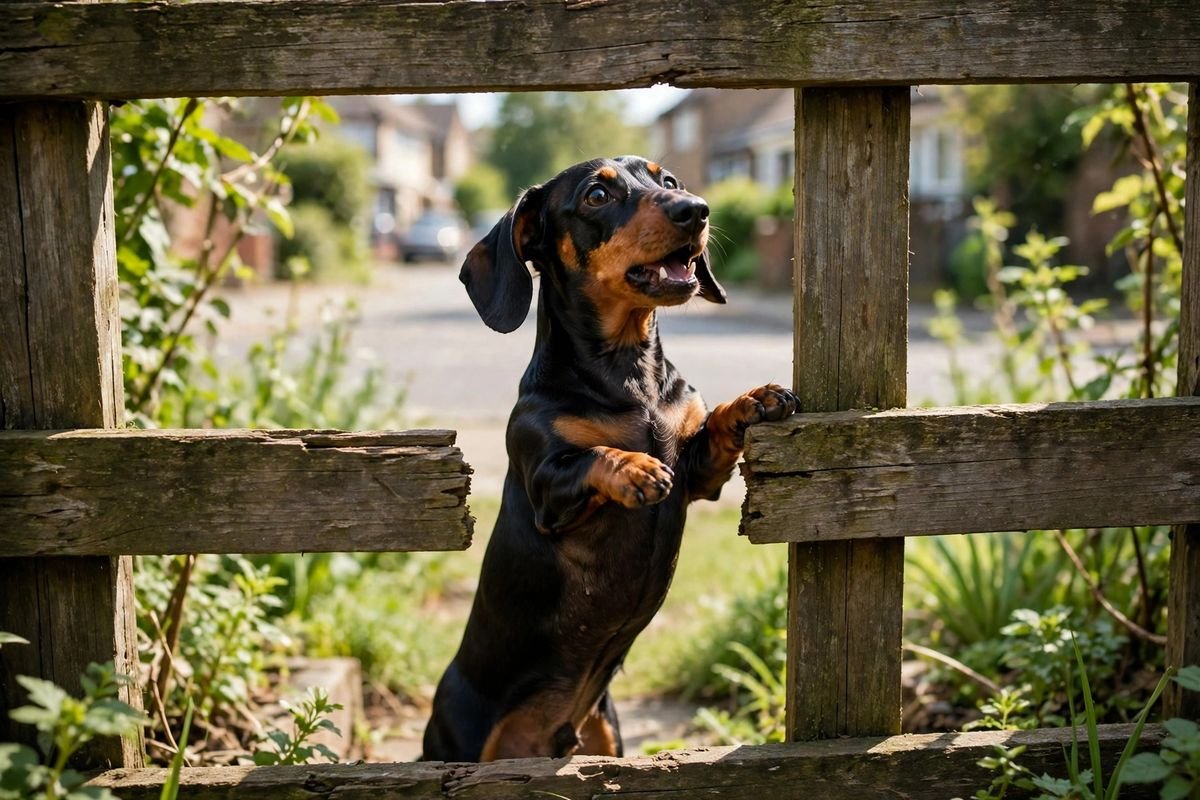
The garden has its own triggers. A fence with gaps lets the dog see feet, wheels, and other dogs passing by, and a gap at the bottom is the worst of all, because the dog can see movement at ground level and smell everything that passes. A dog that can see through the fence will bark at the fence all day, while a dog behind a solid fence will often lie quietly in the sun. Sound adds to the problem: a garden carries voices, car doors, and other dogs barking, and each sound can set off a fresh round of barking even when nothing is visible.
2. Reading the Bark: Guarding, Excitement, or Boredom
A guarding bark is deep, steady, and rhythmic, with the dog standing square at the rail or the fence, ears forward, body stiff, and eyes fixed on the person or dog below. The dog is telling the passerby to stay away, and it will keep barking until the passerby is gone. This bark is the most common garden and balcony bark, and it is the one that most annoys neighbors. The fix is to take away the view and the audience: block the sightline, and the guarding has nothing to guard against.
An excitement bark is higher and faster, with the dog bouncing, spinning, or running along the fence as a dog or a child passes. The dog is not angry. It is thrilled, and it wants to join in. This bark shows up when a favorite person, a familiar dog, or a child passes below, and it often comes with a wagging tail and a play bow at the fence. The fix is the same as for guarding, with one extra step: give the dog something to do outside, like a sniffing game or a chew, so the excitement has somewhere else to go.
A boredom bark is slow and spaced out, with the dog lying by the door, barking once every minute or two, or barking at nothing at all. It shows up when the dog has been outside alone for a long time, with nothing to do and no one to watch. The dog is not guarding or excited. It is asking for something to happen. The fix is not training but time: shorter outings, more play before going out, and never leaving the dog alone outside for long stretches.
3. Blocking the View: Barriers That Stop Most Barking
Blocking the view is the single most effective step for Dachshund barking in the garden and from the balcony, because a dog cannot bark at what it cannot see. On a balcony, fix a solid screen, outdoor fabric, or frosted film to the rail, so the dog cannot see the street below. On a garden fence, add solid panels, reed screening, or a hedge to cover the gaps, especially the gap at the bottom where the dog sees feet and wheels. The barrier does not need to be tall. It only needs to block the dog’s eye line when the dog is standing on the ground.
Check the barrier from the dog’s height, not from a person’s height. Crouch down to the dog’s eye level and look through the fence or over the rail. If the street is visible, the dog can see it too, and it will bark. A screen that looks solid from above can have a gap at the bottom that the dog sees straight through. Cover the bottom of the fence first, then the middle, and check again after a week, because wind and weather can open new gaps.
Inside the home, close the curtains or use frosted film on windows that look onto the street, for the same reason. A dog that watches the street from the living room window will bark just as much as a dog on the balcony, and the window is often the first place to fix. The guide to barking at other dogs through the fence covers the same barrier method for a dog that barks at every dog passing the fence. A blocked view does not make the dog unhappy. It takes away the trigger, and a dog without a trigger can relax.

4. The Supervised Outing Routine
Outings in the garden and on the balcony should be short and supervised, especially at first. Ten or fifteen minutes at a time is enough, with the owner outside too, and a chew or a sniffing game ready. The owner watches for the first sign of barking, a stiff body or a fixed stare, and calls the dog away with a calm word and a treat before the barking starts. Calling the dog away early is the key skill, because once barking starts, it is much harder to stop.
Give the dog a job outside. Scatter a handful of treats in the grass for the dog to sniff out, give it a chew on its bed, or play a short game before the dog has time to stare at the street. A dog that is sniffing the grass cannot watch the fence at the same time, and a dog that is chewing on its bed is not standing at the rail. The job should be calm, not exciting: sniffing and chewing settle a dog, while chasing a ball near the fence winds it up and leads to more barking.
Set up a settle spot away from the rail or the fence. A bed or blanket in the corner farthest from the street, with a clear view of the door back inside, gives the dog a place to rest that is not a guard post. When the dog lies on its spot, drop a treat quietly. When the dog runs to the fence, call it back calmly and reward the return. Over days and weeks, the dog learns that the settle spot is where the good things happen, and the fence is just a fence. Safety comes first on a balcony, and the balcony safety guide for apartments covers rail gaps, fall risks, and safe balcony setups before any training starts.
5. Keeping the Garden and Balcony Calm for Good
Once the barking has dropped, the routine has to stay in place, or the barking comes back. Keep the barriers up, keep the outings short and supervised, and keep the settle spot ready. Check the fence and the balcony screen every month, because gaps open up, screens tear, and a new gap means a new view and a new round of barking. A five-minute check once a month saves weeks of retraining.
Watch the times of day when barking is worst. Most garden and balcony barking happens in the morning, when people leave for work and school, and in the late afternoon, when they come home. These are the busiest times on the street, and the dog has the most to bark at. Keep the dog inside during those hours, or go out with the dog and a chew, so the busiest hour is also the calmest hour for the dog. A dog that is inside during rush hour cannot bark at it.
Teach a recall that works outside. Choose one word, such as here or inside, and use it only when the dog comes to the owner for a treat. Practice inside first, then in the garden, then on the balcony, until the dog turns and comes at once. A strong recall is the safety net for every outdoor session: when the dog runs to the fence and starts to bark, one word brings it back. A dog with a reliable recall can enjoy the garden and the balcony without the barking taking over.

Garden and Balcony Calm Plan
| Step | What to Do | What Good Looks Like |
|---|---|---|
| First | Block the view: screen on the rail, solid fence panels | Dog cannot see the street from its eye level |
| Daily | Short, supervised outings of 10 to 15 minutes | Dog settles on its spot instead of guarding |
| Outside | Sniffing game or chew; settle spot away from the rail | Dog sniffs and chews instead of staring |
| Dog barks | Call the dog away calmly; reward the return | Dog comes back before the barking builds |
| Busy hours | Keep the dog inside during morning and evening rush | Dog misses the busiest street hours |
| Monthly | Check fences and screens for new gaps | No new views open up |
The plan works best when the barriers stay up and the outings stay short. A dog that spends all day alone on a balcony will bark, no matter how good the training is.
Common Mistakes
- Leaving the dog alone on the balcony or in the garden for hours, with a clear view of the street.
- Shouting at the dog from inside, which the dog hears as joining in with the barking.
- Fixing the barrier at a person’s eye level and leaving a gap at the dog’s eye level.
- Letting the dog stand at the rail or the fence and stare, which builds the guarding habit.
- Using exciting games near the fence, which wind the dog up instead of settling it.
- Skipping the safety check on the balcony before starting any training.
- Rewarding the dog while it is still barking at the fence, which teaches the dog that barking earns treats.
- Taking the barriers down once the barking stops, so the view comes back and the barking restarts.
When to Call Your Vet
Contact a veterinarian if the barking comes with shaking, hiding for hours, loss of appetite, or a refusal to go outside for more than a few days. Contact a veterinarian promptly if the dog seems in pain, yelps when touched, or shows sudden changes in behavior, such as barking far more than usual or becoming withdrawn. A veterinarian can check whether anxiety, pain, or a health problem is driving the behavior, and can advise on the next steps. This article gives general information only and is not a diagnosis.
Pin This: Quiet Garden and Balcony
- Block the view at the dog’s eye level, not yours.
- Keep outings short, supervised, and 10 to 15 minutes.
- Give the dog a sniffing game or a chew outside.
- Set up a settle spot away from the rail or the fence.
- Keep the dog inside during morning and evening rush hours.
- Check fences and screens monthly for new gaps.
Frequently Asked Questions
Why does my Dachshund bark at people on the street but not at visitors inside?
People on the street are strangers passing through the dog’s territory, and the dog cannot reach or sniff them. A visitor inside is someone the owner has welcomed, and the dog can see, smell, and approach them. The balcony and the fence turn every passerby into an intruder the dog cannot investigate.
Is it safe to leave my Dachshund on the balcony alone?
No, not for long stretches, and never without a safety check. Balconies have rail gaps a small dog can slip through, furniture a dog can climb, and sun that can overheat a dog fast. Keep balcony time short and supervised, and check the safety guide before letting the dog out alone at all.
How do I block my Dachshund’s view from the balcony?
Fix a solid screen, outdoor fabric, or frosted film to the rail, so the dog cannot see the street below. Check it from the dog’s eye level, not yours, and cover the bottom first. A screen that blocks the view usually cuts the barking within a few days.
What if my Dachshund barks at the neighbor’s dog through the fence?
Block the view with solid panels or screening, and give the dog a settle spot away from the fence. Do not let the two dogs bark at each other through the fence, because the barking becomes a daily habit for both dogs. Short, supervised outings with a chew work better than long, unsupervised ones.
Will my Dachshund ever enjoy the garden without barking?
Yes, most Dachshunds do, once the view is blocked and the routine is steady. A dog with a settle spot, a sniffing game, and short outings will usually lie in the sun instead of guarding the fence. The barking fades when the trigger is gone.
Conclusion
A garden or a balcony is a wonderful place for a Dachshund, but only when the dog cannot see every passerby and is not left alone for hours. Block the view at the dog’s eye level, keep outings short and supervised, give the dog a sniffing game or a chew, and keep it inside during rush hour. As a next step, crouch down to the dog’s eye level at the fence or the rail today, and see exactly what the dog sees.