Dachshund Barking at Dogs in Shared Garden: Calm Plan
Quick Answer
- Dachshund barking at dogs in shared garden usually means the dog feels that a shared space is its own territory, and another dog arriving there feels like an intrusion.
- A shared garden has no fence between the dogs, no door to close, and no easy escape, so the dog barks to push the other dog away and to warn the owner.
- Start with distance and a lead, reward calm looking at the other dog, and only let the dogs come closer when both are relaxed.
- Pick quiet times for garden visits at first, and always have a calm exit route back inside, so the dog never feels trapped.
- Most Dachshunds improve within three to four weeks of short, calm garden sessions, with shorter barking bursts and faster settling.
Contents
- 1. Dachshund Barking at Dogs in Shared Garden Explained
- 2. Why a Shared Garden Is Harder Than a Fence
- 3. The Shared Garden Plan: Distance, Looking, and Leaving
- 4. Real Garden Moments: Arrivals, Play, and Neighbours
- 5. Keeping the Shared Garden Calm for Good
- Shared Garden Calm Plan
- Common Mistakes
- When to Call Your Vet
- Pin This: A Calmer Shared Garden
- Frequently Asked Questions
- Conclusion
1. Dachshund Barking at Dogs in Shared Garden Explained
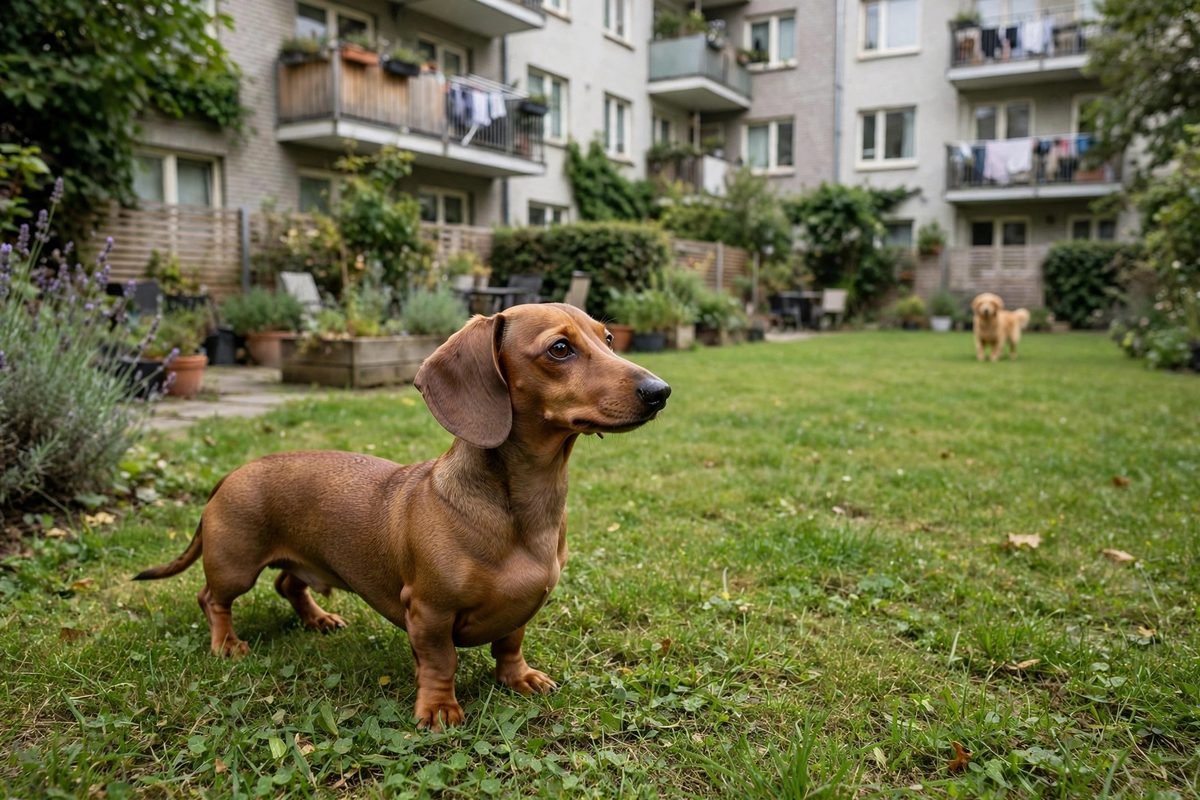
Dachshund barking at dogs in shared garden starts with a space that belongs to everyone and to no one. The garden is shared by the whole building, so the dog meets dogs it did not invite, at times it did not choose, in a place it has come to think of as its own. A neighbour’s dog walks in, the Dachshund stiffens, and the barking begins. The bark is often loud and fast, and it can go on until the other dog leaves or the owner takes the Dachshund inside.
The barking is a warning, not an attack. A Dachshund is a small dog with a big voice, and barking is the safest way it knows to say that another dog is too close. The dog may also be guarding its owner, its ball, or its favourite sunny spot, and the other dog’s arrival feels like a threat to all three. In a small garden there is nowhere to retreat to, so the dog stands its ground and barks louder instead.
The owner’s reaction often makes the barking worse. The owner pulls the lead tight, shouts the dog’s name, or rushes forward to grab the dog, and the dog feels the tension through the lead and barks harder. A tight lead tells the dog that something is wrong, and a shouting owner adds noise to a moment that is already loud. The fix starts with the owner’s calm body and a loose lead, because a calm owner gives the dog permission to be calm too.
2. Why a Shared Garden Is Harder Than a Fence
A fence gives a dog a clear line. The other dog is on one side, the Dachshund is on the other, and both dogs know where the boundary is. A shared garden has no line at all, so the dogs meet face to face, with no barrier and no warning. That open meeting is far harder for a small dog, because it cannot tell where the other dog will stop. The guide to barking at other dogs through the fence covers the same guarding feeling with a barrier in place, and the shared garden is the same problem without the barrier.
The garden also changes every day. One day it is empty, the next day three dogs are there, and the day after that a dog the Dachshund has never met arrives. The dog cannot predict what it will find, so every garden visit feels like a surprise. Children playing and balls rolling add more noise, and each new thing can restart the barking.
Shared rules matter too. Some neighbours let their dogs run free, some keep them on a lead, and some do not watch their dogs at all. A free-running dog that rushes up to a Dachshund on a lead can cause a barking fit in seconds, and the Dachshund will remember that dog and bark at it next time too. Talking to neighbours about garden times, leads, and space helps every dog in the building, and a short, friendly chat is often the fastest fix of all.
3. The Shared Garden Plan: Distance, Looking, and Leaving
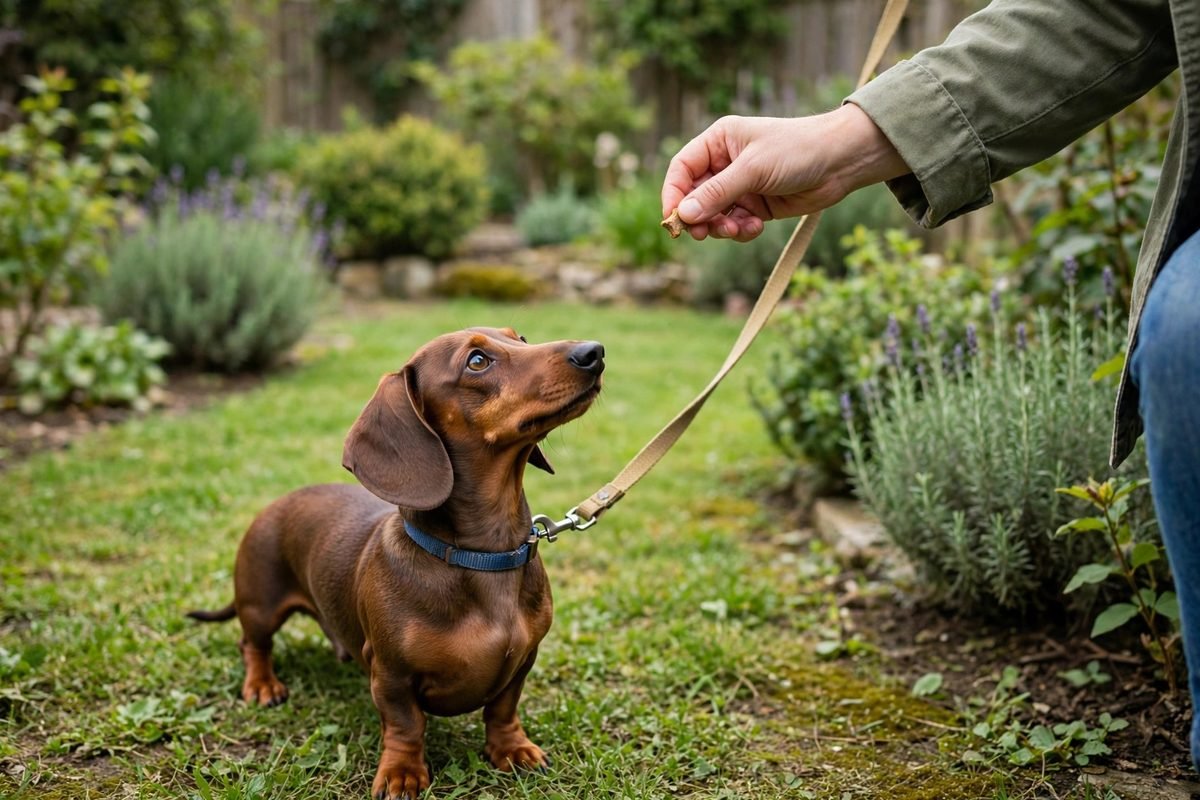
The plan starts at a distance, with the dog on a loose lead at the edge of the garden. When the other dog appears far away, let the Dachshund look, then drop a treat the moment it looks back at the owner. This is the heart of the whole plan: look at the other dog, look back at the owner, earn a treat. Repeat it five or six times, then go back inside. Keep the first sessions to five minutes, and keep the distance large enough that the dog can look without barking. If the dog barks, the distance was too small, so move further away and try again.
Over a week, close the distance a little each day, always rewarding calm looking. Start at twenty steps away, then fifteen, then ten, then five, moving closer only when the dog stays quiet at the current distance. If the dog barks at a new distance, go back to the last quiet distance for a day and try again tomorrow. The dog is learning that another dog nearby predicts treats, not trouble, and that looking calmly is the fastest way to earn them.
The third step is leaving calmly. Teach the dog that leaving the garden is a reward, not a punishment, by calling it inside with a treat and a chew every time, even on a good day. A dog that knows it can leave whenever it wants will stay calmer, because it never feels trapped. Never drag the dog out of the garden while it is barking, because a Dachshund pulled hard on a lead can twist, and gentle handling matters for a long-backed breed, since disc degeneration in short-legged breeds can begin in the first year of life. Lure the dog away with a treat, walk calmly to the door, and try again another day.
4. Real Garden Moments: Arrivals, Play, and Neighbours
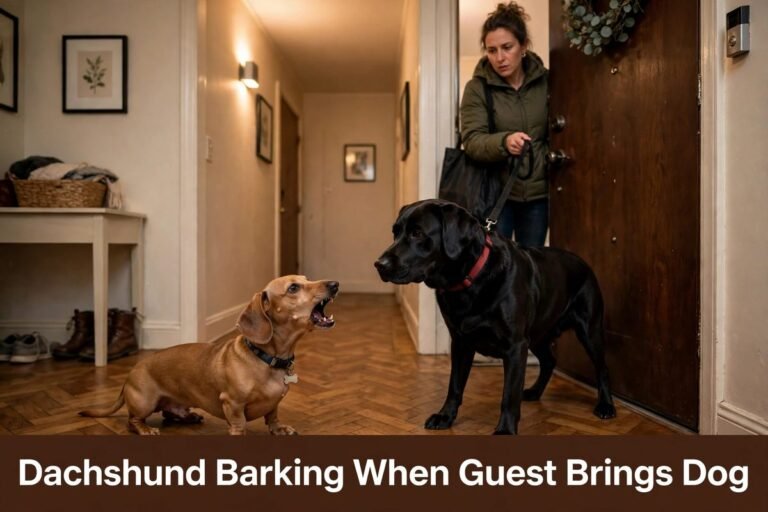
Arrivals are the hardest moment. A dog that is already in the garden has claimed the space, and a new dog walking in feels like an intruder. If the Dachshund is already there, let it see the new dog from a distance and reward calm looking before the dogs meet. If the Dachshund is the one arriving, pause at the gate, let it look at the dogs already there, and reward a calm look before walking in. A slow arrival with a treat beats a fast arrival with a barking fit every time.
Play in a shared garden needs watching. Two dogs chasing a ball can turn into barking in seconds, especially when the ball rolls toward the Dachshund’s owner or its favourite spot. Bring only one toy, keep the game short, and take the dog inside for a rest before it gets overexcited. A tired dog barks more, not less, so a ten-minute garden visit with a calm exit is better than a thirty-minute visit that ends in a barking match. The guide to barking at children playing in the park covers the same overexcitement problem when children and balls are part of the scene.
Neighbours are part of the plan, not part of the problem. A short chat with the other dog’s owner can fix more than a week of training alone. Agree on quiet garden times, on keeping dogs on a lead at the gate, and on giving each dog space when it arrives. Most neighbours are glad to help, because they want a quiet garden too. If a neighbour’s dog rushes up off the lead every time, a calm word and a shared plan are still the best first step.
5. Keeping the Shared Garden Calm for Good
The shared garden stays calm when the visits stay short and regular. A ten-minute visit every day teaches the dog far more than a long visit once a week, because the dog meets the same dogs, the same smells, and the same routine every time. Keep the same arrival routine, the same calm-looking game, and the same treat for leaving, and the dog will learn that the garden is a normal part of the day, not a daily surprise.
Keep practicing the distance game even after the barking improves. One short session a week, with the dog looking calmly at another dog from a few steps away, keeps the skill fresh. If the barking returns after a new dog moves into the building, or after a holiday away from the garden, go back to a larger distance for a few days and rebuild slowly. Setbacks are normal, and they are not a sign that the training has failed. They are a sign that the dog needs a reminder.
Watch the dog’s body as well as its voice. A dog that looks at the other dog, then looks back at the owner with a loose body and a soft tail wag, is calm. A dog that stares, stiffens, and raises its hackles is worried, even if it has not barked yet, and needs more distance at once. The stare is the warning before the bark, and giving the dog space at the stare stage stops the bark before it starts.
Shared Garden Calm Plan
| Step | What to Do | What Good Looks Like |
|---|---|---|
| Days 1 to 3 | Large distance, loose lead; reward looking back at owner | Dog looks at the other dog, then back, without barking |
| Week 2 | Close the distance a little each day; 5-minute sessions | Dog stays quiet at ten steps, then five steps |
| Week 3 | Slow arrivals at the gate; reward calm looking first | Dog enters the garden calmly |
| Every visit | Short visit, one toy, calm exit with a treat and chew | Dog leaves happily and settles inside |
| Neighbours | Agree quiet times and lead rules at the gate | Dogs meet with space and warning |
| Every week | One short distance practice session | Calm looking stays fresh and reliable |
The plan works best when distance comes first, looking earns the treat, and leaving is always a reward. Keep the visits short, and the garden will feel like a normal part of the day.
Common Mistakes
- Letting the dogs meet face to face on the first visit, with no distance and no warning.
- Pulling the lead tight when another dog appears, which tells the dog that something is wrong.
- Shouting the dog’s name over the barking, which adds more noise to the garden.
- Staying in the garden for a long visit that ends in a barking match.
- Dragging the dog out of the garden while it is barking, instead of luring it away calmly.
- Skipping the neighbour chat, so the same rushed meeting happens every day.
- Expecting the dog to be calm with every new dog at once, instead of one dog at a time.
- Stopping practice once the barking improves, so the skill fades within a few weeks.
When to Call Your Vet
Contact a veterinarian if the barking comes with shaking, hiding for hours, loss of appetite, or a refusal to enter the garden at all. Contact a veterinarian promptly if the dog seems in pain, yelps when touched, or shows sudden changes in behavior, such as barking far more than usual or becoming withdrawn. A veterinarian can check whether anxiety, pain, or a health problem is driving the behavior, and can advise on the next steps. This article gives general information only and is not a diagnosis.
Pin This: A Calmer Shared Garden
- Start at a large distance and reward calm looking at the other dog.
- Close the distance a little each day, only when the dog stays quiet.
- Arrive slowly at the gate and reward a calm look before walking in.
- Keep visits short, with one toy and a calm exit.
- Talk to neighbours about quiet times and lead rules.
- Never drag the dog out of the garden while it is barking.
Frequently Asked Questions
Why does my Dachshund bark at dogs in the shared garden but not on walks?
On a walk the dogs pass and move on, but in a shared garden the other dog stays, and the Dachshund feels that its space has been taken. The garden also has no fence and no easy exit, so the dog barks to push the other dog away. Distance practice and slow arrivals teach the dog that a shared garden is safe.
How do I start if my Dachshund barks the moment another dog enters the garden?
Start at the far edge of the garden, on a loose lead, and reward the dog for looking at the other dog and then looking back at you. If the dog barks, move further away. Build the distance down over days, not minutes, and keep every session under five minutes.
Should I let my Dachshund off the lead in the shared garden?
Not until the dog can stay calm on the lead with other dogs nearby. A dog off the lead can rush up to another dog and start a barking match in seconds. Keep the lead on until calm looking is reliable, then try a short off-lead moment with only one calm, known dog present.
What if a neighbour’s dog rushes up to my Dachshund off the lead?
Stay calm, step between the dogs if it is safe to do so, and lure your Dachshund away with a treat toward the door. Do not shout or pull the lead tight. Afterwards, talk to the neighbour about keeping dogs on a lead at the gate, and practice at a larger distance for a few days.
Will my Dachshund ever enjoy the shared garden?
Most Dachshunds learn to enjoy short, calm garden visits within a few weeks, especially when they know the other dogs and the routine is steady. The goal is a calm dog that can share the space, not a dog that plays with every dog it meets.
Conclusion
A shared garden is hard for a Dachshund because it is open, unpredictable, and full of dogs the dog did not choose. Distance, calm looking, slow arrivals, and a friendly word with the neighbours turn it into a normal part of the day. As a next step, take the dog to the far edge of the garden tomorrow, reward one calm look at another dog, and go back inside after five minutes.