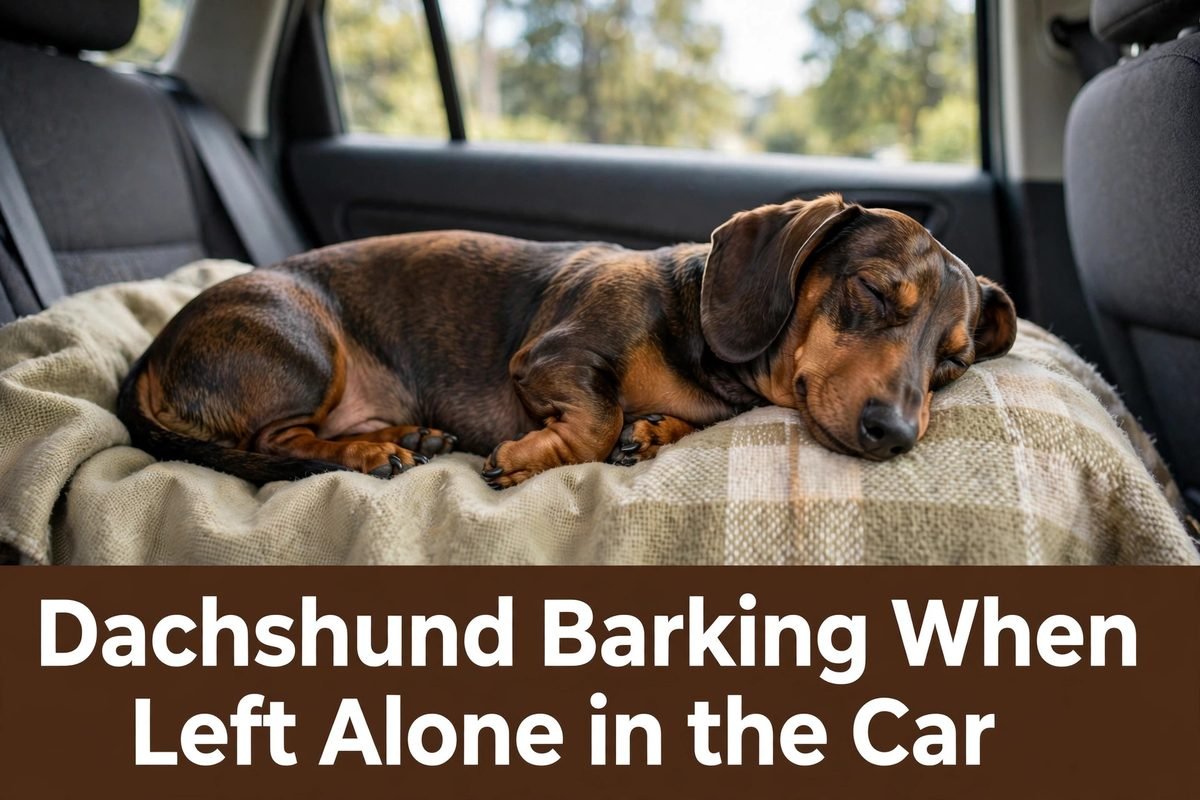
Dachshund Barking When Left Alone in the Car: Calm Tips
Quick Answer
- Dachshund barking when left alone in the car usually means the dog is distressed by the owner’s sudden absence in a small, strange space, not that the dog is being naughty.
- Never leave a Dachshund alone in a car for long, and never in heat or cold, because a parked car can become dangerous in minutes, even with a window open.
- Build up alone time in the car in tiny steps, starting with seconds while the owner stands beside the car, and only lengthening the time when the dog stays quiet.
- Give the dog a safe travel spot, a familiar blanket, and a chew, so the car feels like a calm den rather than a trap.
- Most Dachshunds improve within two to four weeks of short, calm practice, with shorter barking bursts and faster settling.
Contents
- 1. Dachshund Barking When Left Alone in the Car Explained
- 2. Why the Car Feels Different From Home
- 3. The Alone-in-the-Car Plan: Seconds, Then Minutes
- 4. Real Trips: Shops, Petrol Stops, and Waiting
- 5. Keeping Car Waits Calm for Good
- Alone-in-the-Car Calm Plan
- Common Mistakes
- When to Call Your Vet
- Pin This: Calmer Car Waits
- Frequently Asked Questions
- Conclusion
1. Dachshund Barking When Left Alone in the Car Explained
Dachshund barking when left alone in the car starts the moment the owner closes the door and walks away. The dog watches the owner leave, the car goes quiet, and the dog is alone in a small space that smells of fuel and the road. The dog cannot follow, cannot see where the owner has gone, and cannot open the door, so barking becomes the dog’s call for the owner to come back.
The barking is also a sign of worry, not of bad behaviour. A Dachshund is a companion breed that was bred to work close to people, and many Dachshunds follow their owners from room to room at home. Being left in a car takes that closeness away suddenly, in a place the dog does not control. The dog may also hear footsteps and other dogs passing the car, and each new sound can restart the barking.
Some dogs bark only when left alone in the car, and are quiet on the drive itself. That difference is the clue. A dog that is calm while the car is moving and the owner is present, but barks the moment the owner leaves, is reacting to the separation, not to the car. The fix is therefore a separation plan, not a driving plan, and it starts with very short absences that the dog can cope with. The guide to a calm leaving routine for separation anxiety barking covers the same slow build-up for being left at home.
2. Why the Car Feels Different From Home
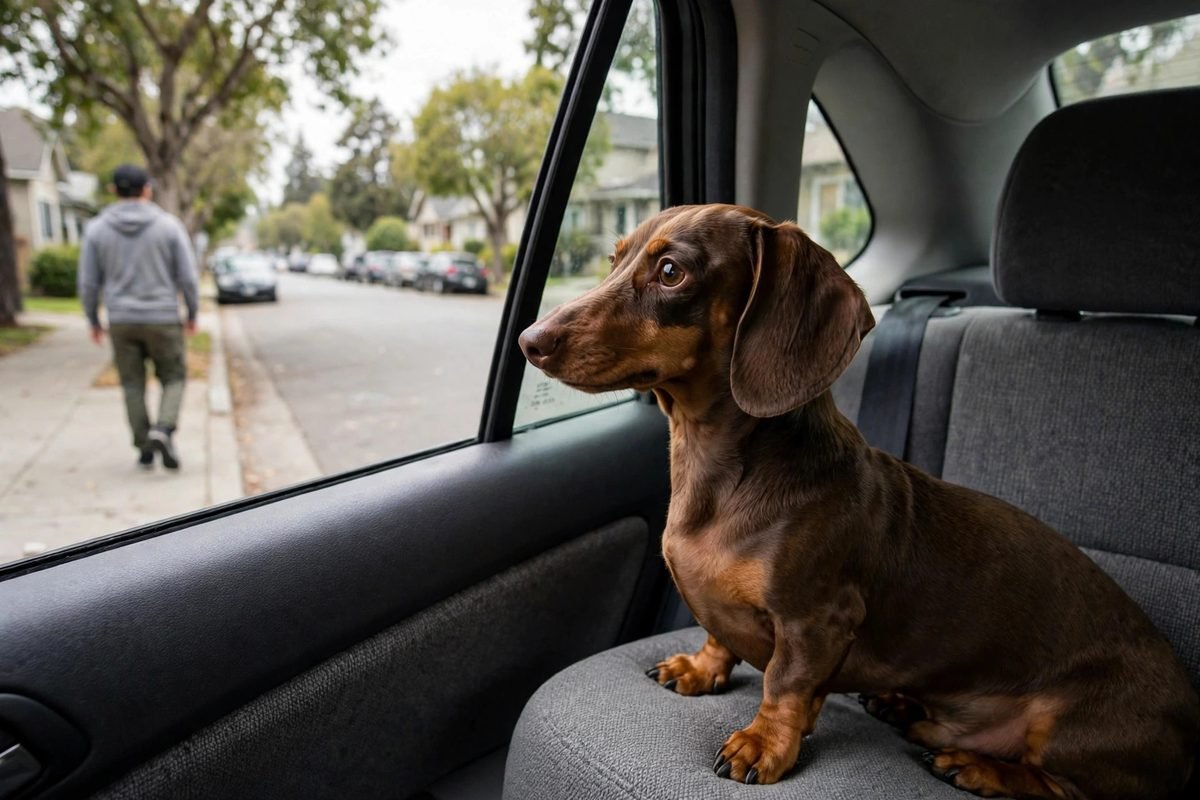
A car is a strange place to be left alone. At home the dog has its bed, its toys, and rooms it knows, and it can move away from a noise that worries it. In a car the dog is in one small space, strapped into a seat or a carrier, with windows all around and sounds coming from every side. People walk past close to the windows, and the dog can see everything but reach nothing. That feeling of being watched and trapped makes the car far harder than a quiet room at home.
Temperature adds to the stress. A parked car warms up fast in sun and cools down fast in cold weather, and a Dachshund feels those changes quickly because of its small body and short coat. A hot dog pants and barks, and a cold dog shivers and whines. Never leave a dog in a car in warm weather, even for a few minutes, and never in freezing weather. The safety rule comes first, and the training plan only applies to short waits in mild weather, with the owner close by.
The car also carries the memory of every trip. If the dog has only ever been left in the car at the vet, or only ever barked and been collected in a rush, the dog will expect the same thing every time. A new pattern needs new memories: short, calm waits that end with the owner returning quietly and a treat. Ten good waits teach the dog more than one long, stressful wait ever will.
3. The Alone-in-the-Car Plan: Seconds, Then Minutes
The plan starts with the car parked at home, engine off, doors open, and the owner sitting beside the dog. Let the dog settle on its blanket with a chew, then stand up, step out of the car, and step straight back in, all within a few seconds. Reward the quiet with a treat. Repeat this ten times, until the dog barely looks up when the owner steps out. The dog is learning the most important lesson of all: the owner leaving the car is not the start of a long absence, because the owner comes straight back.
Next, close the door for a few seconds. Step out, close the door gently, count to five, and open it again before the dog barks. Reward the quiet. If the dog barks, the wait was too long, so go back to three seconds and build up again. Over a week, stretch the wait to ten seconds, then thirty, then one minute, always returning before the barking starts. Stay where the dog can see you at first, then move a few steps away, then out of sight briefly, so the dog learns that out of sight still means coming back.
The third step is a chew that lasts. Give the dog a long-lasting chew or a stuffed food toy only for car waits, so the chew itself becomes a sign that a short wait is starting. The dog settles with the chew, the owner steps away, and the dog is busy rather than watching the door. When the owner returns, the chew is put away until the next wait, which keeps it special. A dog with a job to do barks less, because its mouth and its mind are both busy. Gentle handling matters throughout, because disc degeneration in short-legged breeds can begin in the first year of life, so lift the dog in and out of the car with support under the chest and the hindquarters, and never let it jump down from a high seat.

4. Real Trips: Shops, Petrol Stops, and Waiting
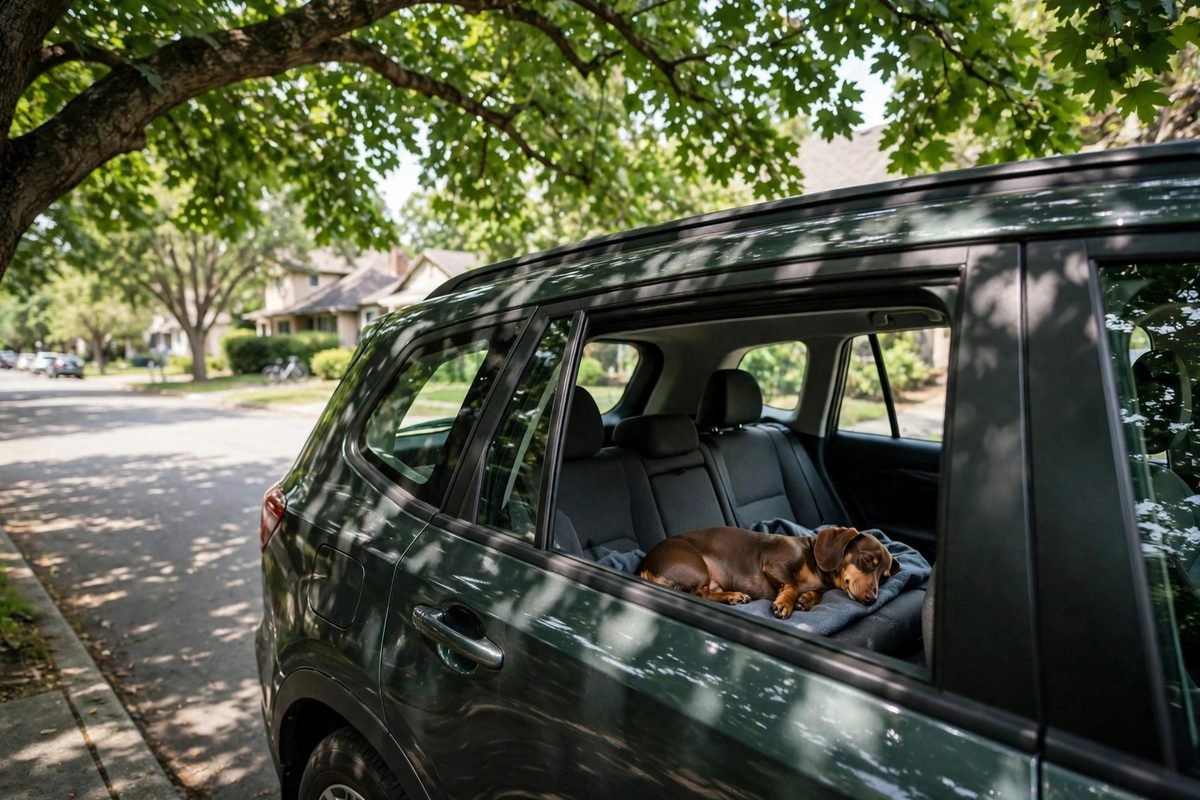
Real trips need a plan before the car leaves home. Wherever possible, take the dog out of the car and leave it with a friend, or choose a shop where one person waits in the car with the dog. If a short wait in the car is the only option, park in the shade, in mild weather, where the owner can see the car from the shop door. Give the dog its blanket and its special chew, set a timer for two minutes, and return before the timer ends. A short wait that ends well is worth far more than a long wait that ends in barking.
Petrol stops and quick errands are the hardest moments, because the owner is in a rush and the dog can feel it. Keep the routine the same every time: park, give the chew, say one calm word, step away, and return quietly. Never rush back shouting, and never open the door while the dog is barking, because that teaches the dog that barking brings the owner back faster. Wait for a pause, then open the door calmly. The guide to barking in the car covers the same calm-return rule for barking during the drive itself.
Waiting outside a school, a shop, or a friend’s house brings passers-by, and passers-by bring barking. Park where the dog can see fewer people if possible, and use a window shade so the dog is less likely to see every person who walks past. A dog that cannot see a stranger is less likely to bark at one. If the dog does bark at someone passing, wait for quiet, then reward the quiet, and do not tap the window or shout, because both add to the excitement inside the car.
5. Keeping Car Waits Calm for Good
Car waits stay calm when they stay short. Even a well-trained Dachshund should not be left alone in a car for long, and the goal is a calm two-to-five-minute wait, not a calm hour. Plan trips so the dog is rarely left alone in the car at all, and when a wait is needed, keep it short, in mild weather, with the chew and the blanket ready.
Keep practicing with short waits at home, even after the barking improves. One or two practice waits a week, with the owner stepping away for a minute and returning quietly, keep the routine fresh. If the barking returns after a holiday, a new car, or a stressful vet trip, go back to five-second waits and rebuild slowly. Setbacks are normal, and they are not a sign that the training has failed. They are a sign that the dog needs a reminder, and a few calm sessions usually bring the quiet back.
Watch the dog’s body as well as its voice. A dog that settles on its blanket and chews slowly is calm. A dog that pants heavily, drools, paces, or scratches at the door is distressed, and needs the owner to come back at once, not a longer wait. If the distress keeps happening even with very short waits, stop the practice and ask for professional help, because some dogs need more support than a home plan can give.
Alone-in-the-Car Calm Plan
| Step | What to Do | What Good Looks Like |
|---|---|---|
| Days 1 to 3 | Step out and straight back in; doors open; reward quiet | Dog barely looks up when the owner steps out |
| Days 4 to 7 | Close the door for 5 seconds, then 10, then 30 | Dog stays quiet with the door closed |
| Week 2 | Build to 1 minute, then 2; owner moves out of sight briefly | Dog stays quiet out of sight for a minute |
| Week 3 | Special chew for waits only; short real waits in mild weather | Dog chews calmly through a short wait |
| Real trips | Park in shade, timer set, return before it ends | Short waits end well every time |
| Every week | One or two short practice waits at home | Calm routine stays fresh and reliable |
The plan works best when the wait grows in seconds, not minutes, and when the owner always returns before the barking starts. Keep the waits short, and the dog will learn that waiting is safe.
Common Mistakes
- Leaving the dog alone in a car in heat or cold, which is dangerous even for a few minutes.
- Starting with a long wait, so the dog practices barking instead of practicing quiet.
- Returning to the car while the dog is barking, which teaches the dog that barking brings the owner back.
- Shouting at the dog through the window, which adds more stress to a small space.
- Skipping the blanket and the chew, so the car feels bare and strange.
- Practicing only on real trips, when the owner is in a rush and cannot return early.
- Expecting a calm hour-long wait, when the goal should be a calm few minutes.
- Ignoring heavy panting, drooling, or scratching at the door, which are signs of distress.
When to Call Your Vet
Contact a veterinarian if the barking comes with heavy panting, drooling, shaking, or scratching at the car door, or if the dog refuses to get into the car at all. Contact a veterinarian promptly if the dog seems in pain, yelps when touched, or shows sudden changes in behavior, such as barking far more than usual or becoming withdrawn. A veterinarian can check whether anxiety, pain, or a health problem is driving the behavior, and can advise on the next steps. This article gives general information only and is not a diagnosis.
Pin This: Calmer Car Waits
- Never leave a dog alone in a car in heat or cold.
- Start with seconds, with the owner beside the car, and build up slowly.
- Always return before the barking starts, and reward the quiet.
- Give the dog a blanket and a special chew for car waits only.
- Keep real waits short, in the shade, in mild weather.
- Wait for a pause in the barking before opening the car door.
Frequently Asked Questions
Why does my Dachshund bark only when I leave the car?
The dog is calm while the owner is present and the car is moving, but barks the moment the owner leaves, which points to separation, not to the car itself. The dog is calling for the owner to come back. Short waits that end with a quiet return teach the dog that leaving the car is brief and safe.
How do I start if my Dachshund barks the second I close the door?
Start with the doors open, stepping out and straight back in within a few seconds, and reward the quiet. Only close the door for three to five seconds once the dog is calm with the open-door step. Build the closed-door wait up in seconds, not minutes.
Is it safe to leave my Dachshund in the car for a few minutes?
Only in mild weather, in the shade, for a very short wait, with the owner close by and able to see the car. A parked car can heat up fast, even with a window open, so never leave a dog in a car in warm weather, and never leave a dog for long.
What if my Dachshund barks at people walking past the car?
Park where fewer people pass, and use a window shade so the dog sees less. A dog that cannot see a stranger is less likely to bark at one. Reward quiet pauses, and do not tap the window or shout, because both add excitement inside the car.
Will my Dachshund ever wait calmly in the car?
Most Dachshunds learn a calm two-to-five-minute wait within a few weeks of short daily practice. The goal is a short, calm wait, not a long one, and trips should still be planned so the dog is rarely left alone in the car at all.
Conclusion
A Dachshund that barks when left alone in the car is asking for the owner to come back, and the answer is a slow build-up of short, safe waits that always end well. Start with seconds, use a blanket and a special chew, and always return before the barking starts. As a next step, practice five open-door step-outs in the parked car at home today, and reward every quiet return.