
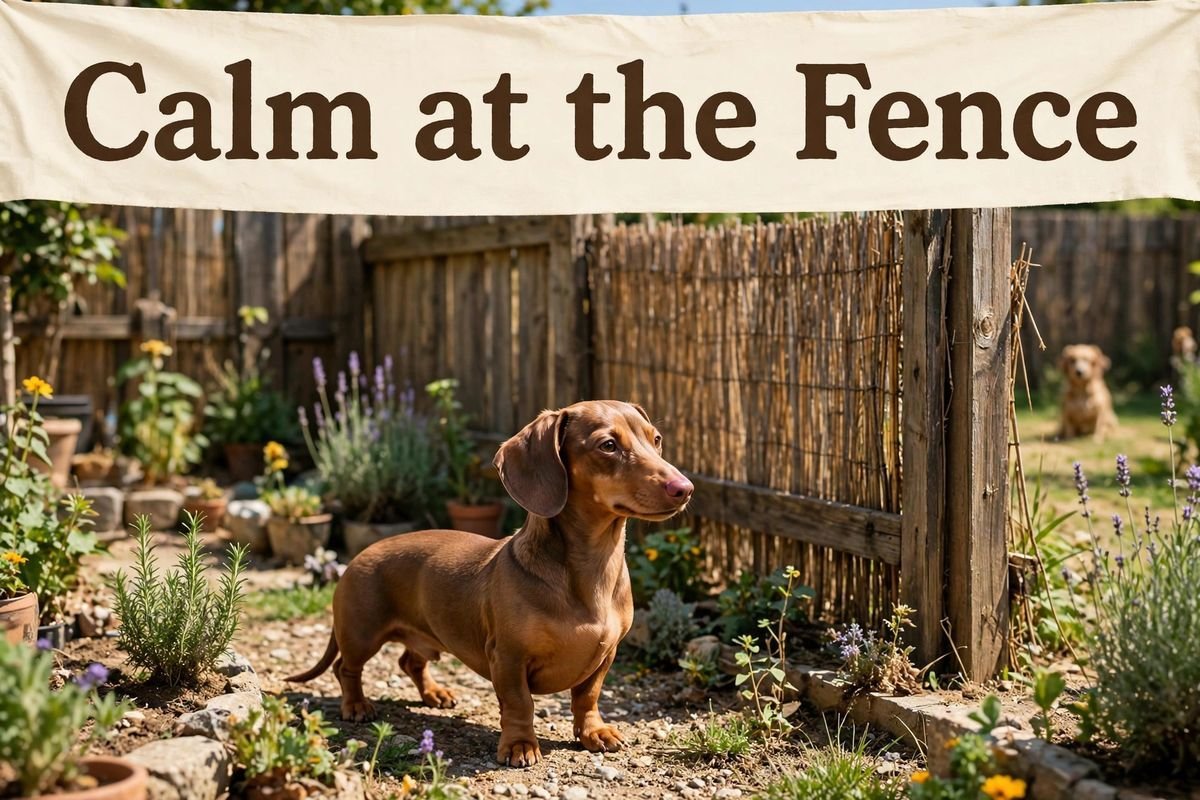
Dachshund Barking Through the Fence: Calm Boundaries
Quick Answer
- A Dachshund barks at other dogs through the fence or balcony because the barrier lets it see and hear the other dog but never meet it, so excitement and frustration build into barking.
- Block the sight line with a fence screen or balcony panel, call the dog away from the fence, and reward calm behaviour indoors.
- Keep fence and balcony time short and supervised, and never leave a barking dog outside alone to practice barking.
- Contact a veterinarian if barking comes with shaking, hiding, refusal to go outside, or sudden changes in behaviour, because pain, fear, or anxiety can sit behind sudden fence reactivity.
Contents
- 1. Why a Fence Makes Barking Worse
- 2. Blocking the View: Fence Screens and Balcony Panels
- 3. The Recall: Calling Your Dog Away From the Fence
- 4. Short, Supervised Garden and Balcony Time
- 5. Calm Neighbours and Calm Boundaries Over Time
- Fence and Balcony Comparison Checklist
- Common Mistakes
- When to Call Your Vet
- Pin This: Calm Fence and Balcony Checklist
- Frequently Asked Questions
- Conclusion
The neighbour’s dog appears at the fence, and the Dachshund races across the garden, barking at the top of its voice. Or the dog stands on the balcony, barking down at every dog that passes on the street below. The fence stops the dogs meeting, but it does not stop the barking, and in a block of flats the noise reaches every neighbour. The dog is not guarding the home out of malice. It is stuck behind a barrier, excited by a dog it cannot reach, and barking is the only thing it can do.
This article explains why fences and balconies make barking worse, how to block the view, teach a recall away from the fence, and keep garden and balcony time short and supervised. It is general information about training, not veterinary advice. A dog that suddenly fears the garden, or that barks with shaking, hiding, or refusal to go outside, needs a veterinarian, not only a new routine.
1. Why a Fence Makes Barking Worse
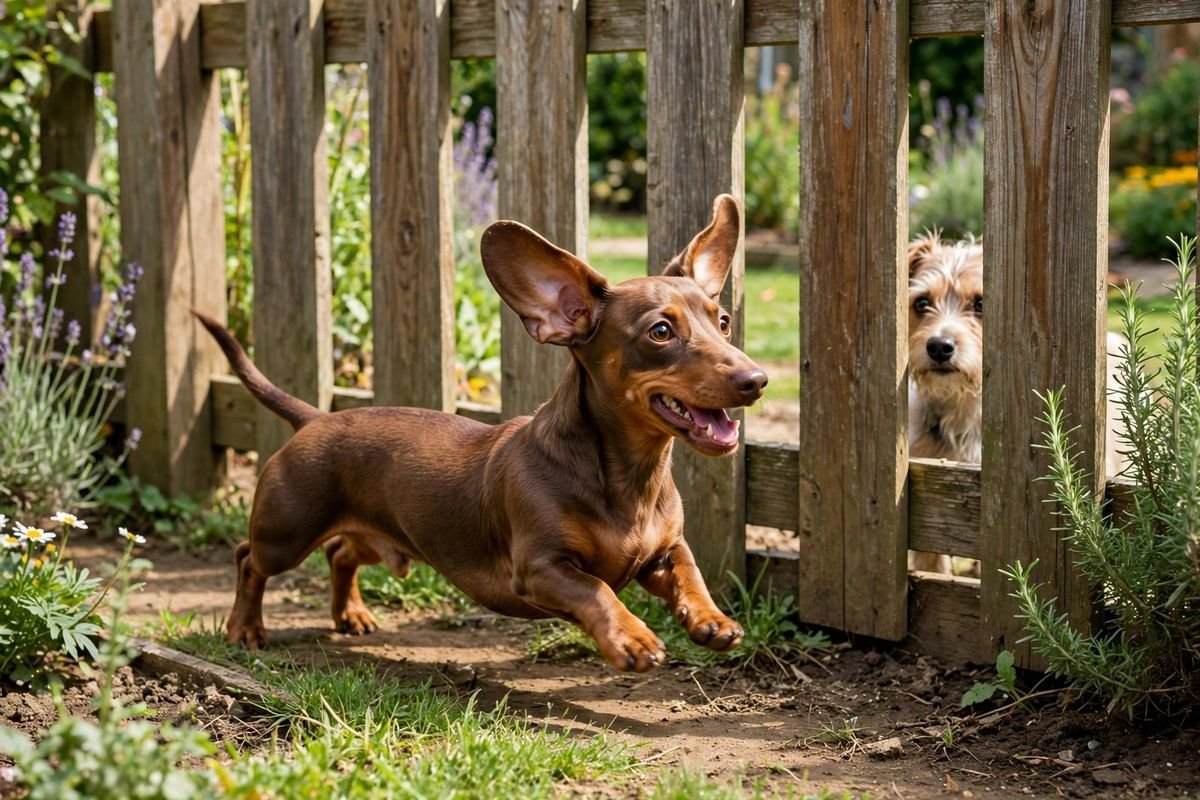
A fence is a barrier that excites and frustrates at the same time. The dog can see the other dog, hear it, and smell it, but it cannot reach it, sniff it, or play with it. That unfinished meeting builds frustration, and frustration in a Dachshund comes out as barking. On a walk, the dogs pass each other and the moment ends. At a fence, the other dog stays, the moment never ends, and the barking goes on and on.
Running the fence line makes it worse. The dog races back and forth along the fence, barking at the other dog, and the running itself is exciting, so the barking grows louder with every lap. The other dog often runs its side of the fence too, and the two dogs race each other, barking, in a game neither can win. A balcony adds height to the problem, because the dog looks down at dogs below, barks at them, and the sound carries across the whole block.
Territory adds a third layer. A garden or a balcony is the dog’s home ground, and a dog at the fence feels it must defend that ground, even from a friendly neighbour dog. The guide to barking at other dogs on walks covers the same frustration on a lead, where a dog that cannot reach another dog barks louder at it, and the fence is that pattern at home, where the dog meets the same neighbour dog every single day. The bark is the sound of a meeting that never finishes.
2. Blocking the View: Fence Screens and Balcony Panels
Blocking the view is the fastest fix, and it costs little. A fence screen, a reed screen, or a solid panel along the bottom of the fence stops the dog seeing the neighbour dog, and a dog that cannot see the trigger barks far less at it. Cover the gaps between fence boards, the space under the gate, and the low corners where a small Dachshund can peer through. A solid fence is a calm fence, and a fence full of peep holes is a barking fence.
Balconies need the same treatment. A balcony panel, a bamboo screen, or a solid board along the railing stops the dog looking down at the street and barking at every passing dog. Make sure the panel is fixed firmly, with no gaps at the bottom a small dog can squeeze through, and no loose edges the dog can pull at. A balcony must be safe before it is calm, so check the rails, the gaps, and the fixings before the dog uses it.
Sound still gets through a screen, so blocking the view is a start, not the whole answer. The dog may still hear the neighbour dog and bark at the sound, but the barking will be shorter and quieter, because the dog cannot see the other dog running the fence. Combine the screen with the recall in the next section, and the two together cut the barking far more than either one alone.
3. The Recall: Calling Your Dog Away From the Fence
Recall is the skill that ends a barking fit at the fence. Teach it indoors first, where there is nothing to bark at. Call the dog’s name and a short word such as “here”, reward the dog the moment it reaches you, and repeat it until the dog comes running on the word alone. Practice in the hallway, in the kitchen, and in the garden when no other dog is around, so the recall is strong before you need it at the fence.
Use the recall at the first bark, not the tenth. When the dog barks once at the fence, call it, reward it for coming to you, and take it indoors for a calm minute. The dog learns that barking at the fence ends the garden time, and coming to you earns a treat and a calm break. If you wait until the dog has barked for five minutes, the dog is too excited to hear you, and the recall fails.
Keep the recall word special. Use it only for coming to you, never for scolding, bathing, or nail trims, because a word that sometimes means trouble is a word the dog will ignore. Reward the recall every time at first, with a treat the dog loves, and keep the reward generous near the fence, because coming away from a neighbour dog is a hard choice, and hard choices deserve the best rewards.

4. Short, Supervised Garden and Balcony Time
Never leave a barking dog outside alone. A dog left alone at a fence practices barking for as long as the neighbour dog is there, and practice makes the habit stronger. Stay outside with the dog, watch for the first bark, call the dog away, and bring it indoors. Short, supervised garden time teaches calm. Long, unsupervised garden time teaches barking.
Give the dog a job in the garden besides guarding the fence. A scatter of treats in the grass, a chew on the mat, or a short game of fetch away from the fence keeps the dog busy and its mind off the neighbour dog. A dog with a job barks less than a dog with nothing to do but watch the fence. Rotate the jobs, so the garden stays interesting, and keep the fence end of the garden boring, with no toys and no treats near it.
Time garden visits to avoid the neighbour dog’s routine. If the neighbour dog is out at eight in the morning and six in the evening, let your dog out at seven and five, when the garden is quiet. That is not avoiding the problem forever. It is training at a level the dog can handle, while the recall and the fence screen do their work. As the dog improves, let the garden times overlap a little, and reward the calm.
5. Calm Neighbours and Calm Boundaries Over Time
Talk to your neighbours, because the fence has two sides. A neighbour who knows you are training will often keep their dog in for a few minutes, or call it away from the fence, and that small help makes training far easier. A friendly word over the fence, when both dogs are calm and indoors, builds a relationship between the owners, and calm owners make calm dogs.
Let the dogs meet properly, away from the fence, if both owners agree and both dogs are friendly. A walk together on neutral ground, at a distance, lets the dogs learn each other as real dogs, not as barking shapes behind a fence. A dog that has met the neighbour dog calmly on a walk often barks less at the fence, because the mystery is gone. The guide to barking with two dogs at home covers how dogs that live together learn each other’s habits, and a fence meeting that becomes a real meeting works the same way. Only arrange a meeting if both dogs are calm and both owners are willing, and keep it short.
Keep the routine going for a month after the barking stops. Fences do not move, neighbours do not move, and the dog will meet the same neighbour dog every day for the rest of its life. Reward the calm recall for a few more weeks, keep the fence screen up, and keep garden time supervised. A boundary that is calm for a month stays calm, and the whole block gets quieter for it.

Fence and Balcony Comparison Checklist
| Fence or balcony choice | Best for | Limit to watch |
|---|---|---|
| Solid fence screen | Blocking the view, less barking | Sound still gets through, add recall |
| Balcony panel on rails | Stopping barking down at the street | Must be fixed firmly, no gaps at the bottom |
| Recall at the first bark | Ending a barking fit early | Needs indoor practice first |
| Short supervised garden time | Dog never practices barking alone | Needs the owner outside too |
Common Mistakes
- Leaving a barking dog alone in the garden to practice barking.
- Waiting until the tenth bark before calling the dog away.
- Using the recall word for scolding, so the dog ignores it.
- Leaving peep holes in the fence the dog can see through.
- Putting toys and treats near the fence, which draws the dog there.
- Shouting at the dog over the fence, which adds noise to noise.
- Stopping rewards the week the barking stops, so it comes back.
When to Call Your Vet
Contact a veterinarian if a Dachshund suddenly refuses to go into the garden, shakes, hides, cowers, or barks far more than before, or if barking comes with limping, stiffness, loss of appetite, or sudden changes in behaviour. Sudden fence fear can follow pain, hearing or vision changes, or anxiety, and a dog that is hurting may bark more because it feels less safe. Contact a veterinarian also if the dog injures itself running the fence line, or if it panics and tries to climb or jump the fence or balcony. This article gives general information only and does not diagnose any condition. A veterinarian can check for pain, anxiety, and hearing or vision problems, and can refer the dog to a qualified behaviour professional if the barking needs more than a fence routine. Do not delay veterinary help for a dog that is frightened, in pain, or suddenly behaving very differently.
Pin This: Calm Fence and Balcony Checklist
- Block the view with a solid fence screen.
- Fix a panel along the balcony rails.
- Teach recall indoors first.
- Call the dog away at the first bark.
- Keep garden time short and supervised.
- Give the dog a job away from the fence.
- Keep the routine going for a month.
Frequently Asked Questions
Will a fence screen really stop the barking?
It cuts the barking a lot, because the dog cannot see the other dog, and seeing is the strongest trigger. Sound still gets through, so the dog may bark a few times at a sound, but the long barking fits usually stop. Combine the screen with recall, and most dogs settle within a few weeks.
Should I let the dogs meet through the fence?
No. Sniffing through a fence is tense, because neither dog can move away, and a fence meeting often ends in barking or a snap through the boards. Let the dogs meet on neutral ground, on a walk, at a distance, where both can move away if they want to. A proper meeting beats a fence meeting every time.
Is it safe to leave my Dachshund on the balcony alone?
Only for short, supervised periods, and only if the balcony is fully secure, with no gaps a small dog can squeeze through and no furniture the dog can climb on to jump the rails. A barking dog left alone on a balcony practices barking, and a frightened dog can injure itself. Stay with the dog, or bring it indoors.
What if the neighbour dog barks first?
Call your dog away from the fence and reward the recall, even if your dog did not start it. You cannot train the neighbour’s dog, but you can train yours to leave when the barking starts. A friendly word with the neighbour about training times helps, because both dogs learn faster when the fence is quiet.
How long does fence training take?
Many dogs bark far less within two to three weeks of a fence screen, recall practice, and short supervised garden time. Dogs that have barked at the fence for years take longer, and progress is not a straight line. Keep the screen up, keep rewarding the recall, and the quiet lasts.
Conclusion
Fence barking comes from a meeting that never finishes, and it changes with a blocked view, a strong recall, and short supervised garden time. Screen the fence, call the dog away at the first bark, and keep the routine going, and the garden becomes quiet again.



3 Comments