Dachshund Barking During Grooming: Calm Handling Plan
Quick Answer
- A Dachshund barks during grooming and nail trims because being held still, touched in sensitive places, and hearing clippers or a dryer feels strange and worrying, and barking is the dog’s way of saying stop.
- Keep sessions short, two to three minutes at first, reward calm stillness, and stop before the barking starts, so the dog learns grooming ends calmly.
- Handle one paw, one brush stroke, or one nail at a time, and build up slowly over days, not in a single long session.
- Contact a veterinarian if barking comes with snapping, shaking, limping, sore skin, or sudden changes in behaviour, because pain or a skin problem can sit behind grooming distress.
Contents
- 1. Why Grooming and Nail Trims Trigger Barking
- 2. Setting Up a Calm Grooming Spot at Home
- 3. The Short Session Rule: Stop Before the Bark
- 4. Nail Trims, One Nail at a Time
- 5. Brushing, Bathing, and the Dryer Without the Noise
- Grooming Calm Comparison Checklist
- Common Mistakes
- When to Call Your Vet
- Pin This: Calm Grooming Checklist
- Frequently Asked Questions
- Conclusion
The brush comes out and the barking starts. Or the nail clippers appear and the Dachshund wriggles, barks, and tries to pull its paw away before the first nail is even touched. Bath time is the same story, and the dryer is worse. For many owners, grooming is the noisiest ten minutes of the week, and it leaves both the dog and the owner dreading the next session. The dog is not being difficult. It is telling you, in the only voice it has, that grooming feels wrong.
This article explains why grooming and nail trims trigger barking, how to set up a calm grooming spot, and how to build a handling plan with short sessions, rewards, and one nail at a time. It is general information about training, not veterinary advice. A dog that suddenly hates being touched, or that barks with snapping, shaking, or sore skin, needs a veterinarian, not only a new routine.
1. Why Grooming and Nail Trims Trigger Barking
Grooming asks a dog to do something unnatural: stand still, let a person hold its paws, touch its ears and belly, and hold that stillness while strange tools make strange sounds. A Dachshund cannot ask what is happening, cannot see what the clippers are doing to its nails, and cannot move away when the brush pulls. Barking is the dog’s protest, and it works, because most owners stop grooming when the barking starts, which teaches the dog that barking ends the grooming.
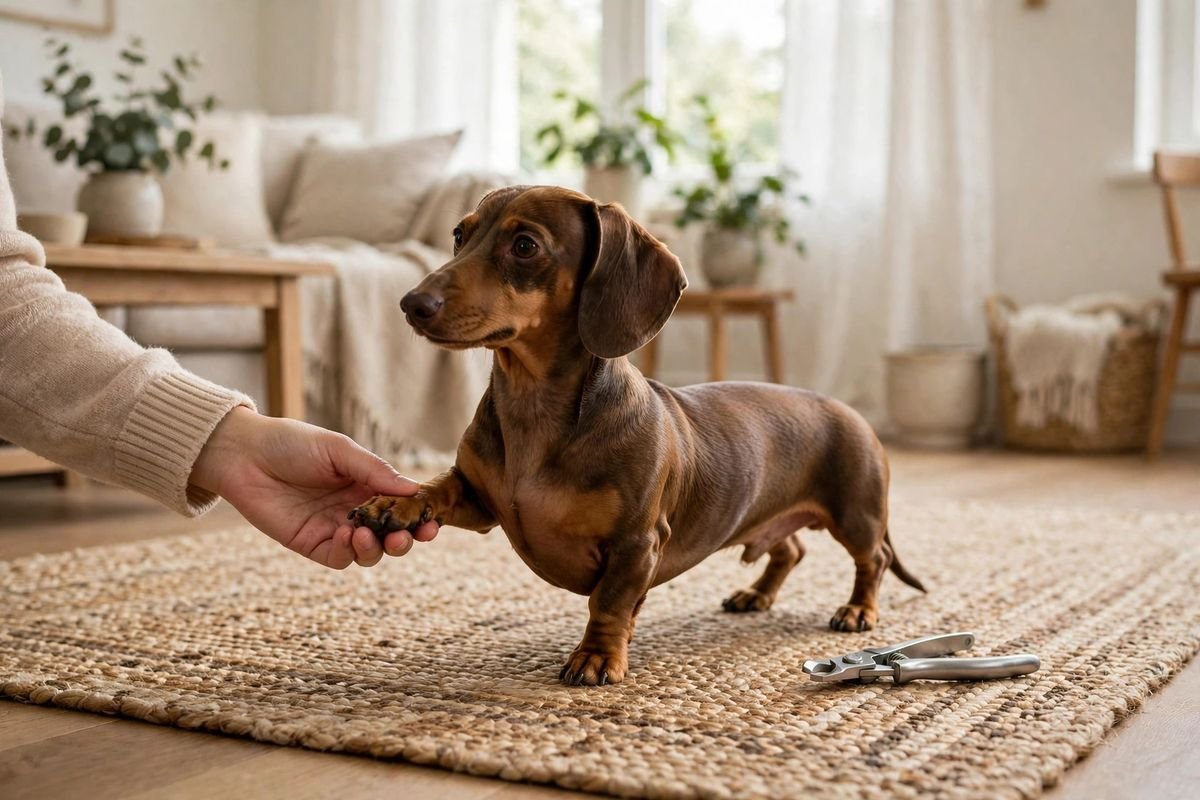
Paws are the most sensitive part. A dog’s paws are full of nerves, and being held by the paw feels very different from being stroked on the back. Nail trims add pressure, a squeezing feeling, and a sharp sound, and one painful nail, clipped too short even once, can make a dog bark at the sight of the clippers for months. The dog remembers the pain, and the bark is the memory speaking.
Sound adds to the stress. Clippers click, dryers roar, and running water is loud at a dog’s ear level. A dog that is already unsure about being held hears a loud dryer and barks at the noise, and the noise keeps coming, so the barking keeps coming too. The guide to back-safe grooming posture at home covers how to hold and support a long-backed dog during grooming, and posture matters here too, because a dog that is held safely and comfortably barks less than a dog that feels unsupported and wobbly.
2. Setting Up a Calm Grooming Spot at Home
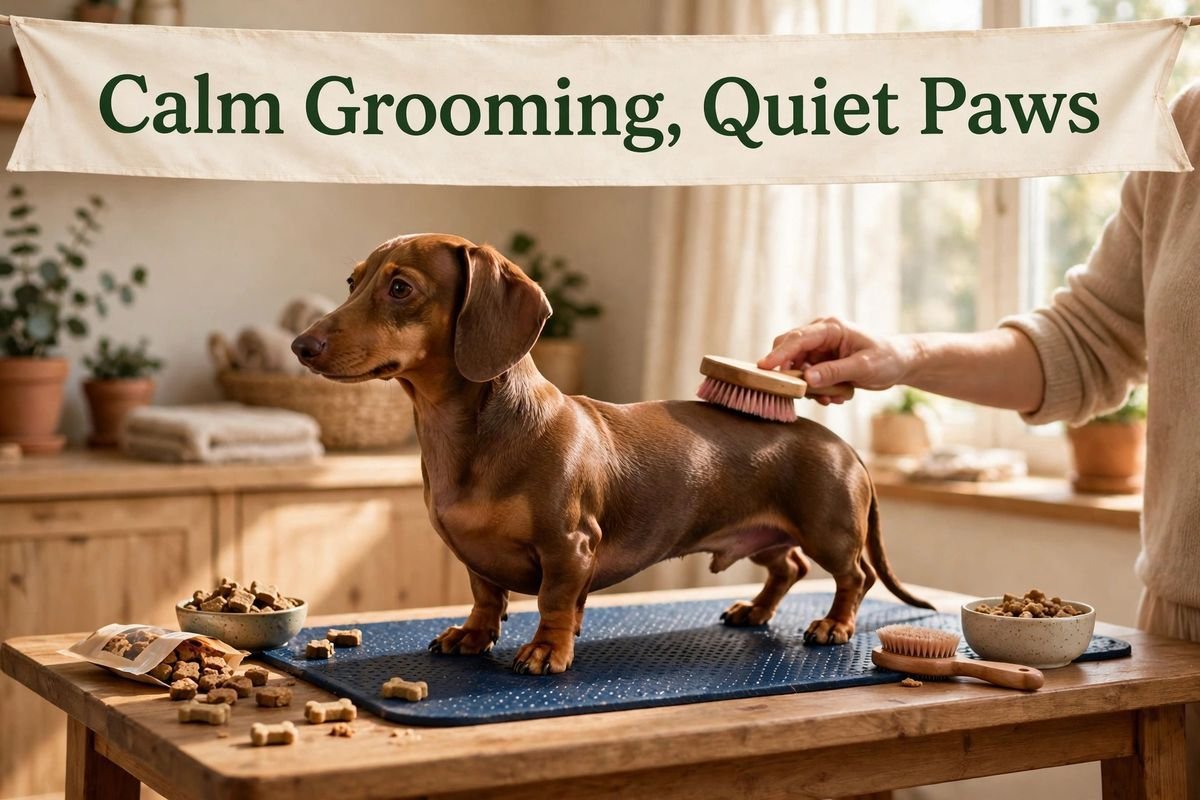
Choose one calm spot and use it every time. A non-slip mat on a low table, or a rug on the floor with the dog standing on it, works well, because the dog knows what the spot means and can settle there. Keep the spot away from the front door, the television, and the kitchen, where sudden sounds break the calm. The same spot, the same mat, and the same quiet room, every time, turn grooming into a routine instead of a surprise.
Gather everything before the dog arrives. Brush, clippers, treats, a towel, and a small bowl of water should all be within reach, so you never have to leave the dog alone on the table to fetch something. A dog left alone on a grooming table barks, wriggles, and can fall, and a fall from a table can injure a long back. Set up first, bring the dog second, and keep the session short.
Keep your own body calm. Slow movements, a low voice, and a relaxed hand teach the dog more than any tool. A person who rushes, grips hard, and talks loudly makes the dog bark more, because the dog reads the tension in the hands holding it. Sit or stand comfortably, keep the dog close to your body for support, and breathe slowly. The dog will copy your calm, or it will copy your rush, and the choice is yours.
3. The Short Session Rule: Stop Before the Bark
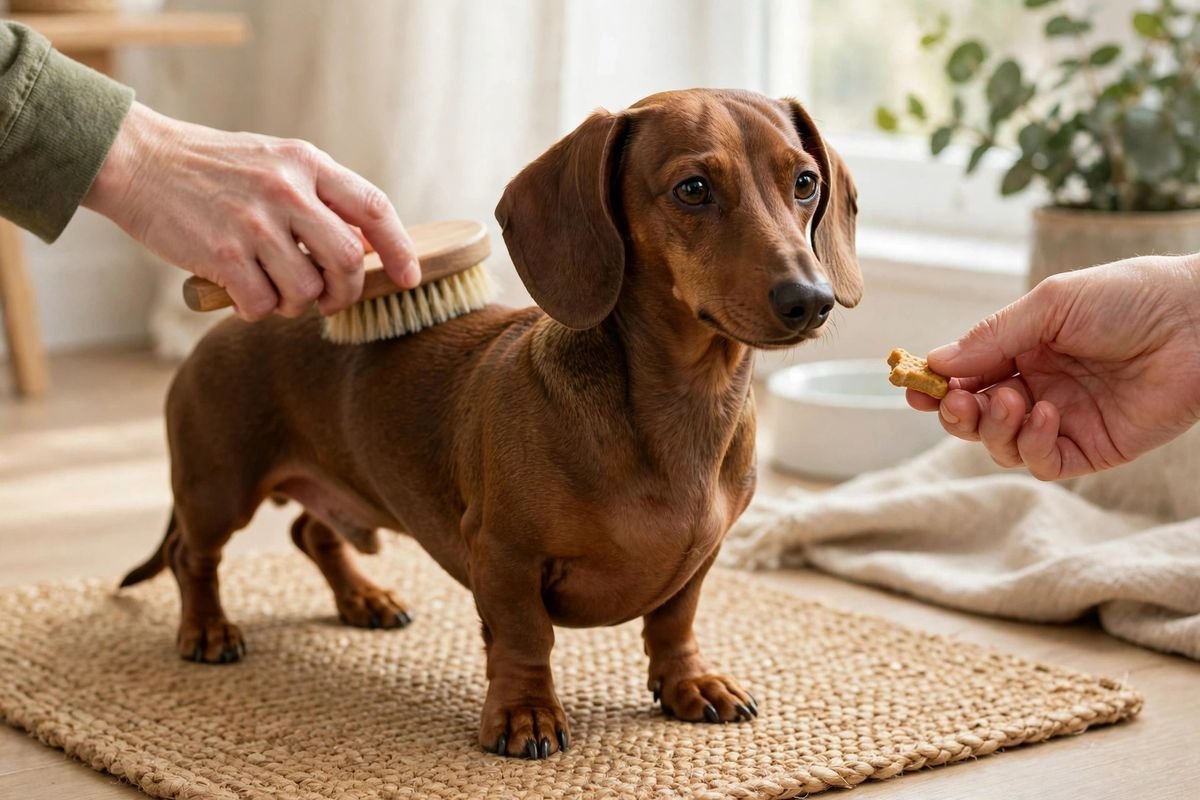
Keep the first sessions to two or three minutes. Brush three strokes, reward the dog for standing calmly, and stop. Touch one paw, reward, and stop. The dog learns that grooming is short, calm, and ends with a treat, and that lesson is worth more than a fully brushed coat. A session that ends before the barking starts teaches calm. A session that runs until the dog barks teaches barking.
Watch for the early signs, the same way you would on a walk. A stiff body, a hard stare at the brush, a lip lick, a yawn, or a paw pulling away are all signs the dog is reaching its limit. Stop at the first sign, reward the calm that came before it, and try again tomorrow. A dog that is pushed past its limit barks, and a dog that is stopped before its limit learns to trust the hands holding it.
Build the time slowly, a minute at a time. Week one is three minutes of brushing and one paw touched. Week two is five minutes and two paws. Week three adds the second brush and the ears. If the barking returns at a new step, go back to the step that worked and stay there for a few more days. Grooming is a skill built in minutes, not in hours, and a dog that trusts the routine will let you groom it for far longer than a dog that dreads it.
4. Nail Trims, One Nail at a Time
Nail trims deserve their own slow plan, because they are the hardest part of grooming for most Dachshunds. Start without cutting anything. Hold the clippers near the dog, reward the dog for looking at them calmly, and put them away. The next day, touch a nail with the clippers, reward, and put them away. The day after that, clip one nail, reward well, and stop. One calm nail is a win, and sixteen calm nails come later.
Learn the nail before you cut it. A Dachshund’s nails are small, and the quick, the pink blood vessel inside the nail, sits close to the tip in light nails and is hidden in dark nails. Cut a tiny sliver at a time, and stop well before the quick. A nail clipped too short bleeds, hurts, and teaches the dog to fear the clippers, and one bad cut can undo a month of calm training. The guide to nail and paw care at home explains how to check nails, paws, and pads, and reading it before the first trim makes the trim safer.
Keep the paw still without squeezing it. Hold the paw gently, support it from below, and let the dog’s weight rest on the mat, so the dog does not feel it is falling. If the dog pulls the paw away, let it go, reward the calm that follows, and try again in a minute. A paw that is squeezed hard will be pulled away hard, and a paw that is held gently is a paw the dog leaves in your hand. If the nails are very long or the dog is very frightened, a veterinarian or a professional groomer can trim them, and there is no shame in asking for help.
5. Brushing, Bathing, and the Dryer Without the Noise
Brushing should feel like stroking, not pulling. Use a soft brush, start on the back where the dog likes to be touched, and brush with the coat, not against it. If the brush catches a tangle, hold the hair above the tangle so the pull does not reach the skin, and work the tangle out slowly. Reward the dog every few strokes, and stop while the dog is still calm. A dog that enjoys the brush will stand still for it, and a dog that is pulled will bark at it.
Bathing needs the same slow approach. Wet the dog’s back first, where it is least sensitive, and keep water out of the ears and eyes. Use warm water, not hot, and a small jug instead of a loud shower head. Talk calmly through the bath, and keep a hand on the dog the whole time, so it feels held and safe. A bath that is warm, quiet, and short is a bath the dog can learn to accept, and a bath that is cold, loud, and long is a bath the dog will bark through.
The dryer is the loudest part, so introduce it last and at a distance. Turn the dryer on in another room, reward the dog for staying calm, and bring it closer over days. When you use it on the dog, use the lowest heat and the lowest speed, hold it well away from the coat, and keep it moving so no one spot gets hot. A towel dry first removes most of the water, so the dryer only needs a minute or two. A dog that is mostly dry and only hears the dryer briefly barks far less than a dog that is soaking wet and dried for ten minutes.

Grooming Calm Comparison Checklist
| Grooming choice | Best for | Limit to watch |
|---|---|---|
| Two to three minute sessions | First calm grooming, new routine | Coat will not be finished in one session |
| One nail per session | Dog that fears clippers | Takes many days to trim all nails |
| Soft brush, back first | Dog that dislikes brushing | Tangles need slow, gentle work |
| Towel dry, dryer last | Dog that barks at dryer noise | Needs a warm room so the dog does not chill |
Common Mistakes
- Grooming for twenty minutes on the first day, until the dog barks.
- Clipping a nail too short, which teaches fear of the clippers.
- Squeezing the paw hard instead of holding it gently.
- Starting with the dryer on full heat and full speed.
- Leaving the dog alone on a grooming table to fetch a tool.
- Stopping grooming the moment the dog barks, which rewards barking.
- Skipping rewards once the dog is calm, so the calm fades.
When to Call Your Vet
Contact a veterinarian if a Dachshund suddenly hates being touched, snaps during grooming, shakes, hides, limps, or has sore, red, or broken skin, or if barking comes with hair loss, lumps, or a bad smell from the ears or skin. Pain, skin infection, ear infection, or a sore nail can sit behind grooming distress, and a dog that is hurting may bark because touch hurts. Contact a veterinarian also if the dog injures itself falling from a table, or if a nail bleeds heavily and will not stop. This article gives general information only and does not diagnose any condition. A veterinarian can check the skin, ears, nails, and back, and can advise on safe handling for dogs with pain or anxiety. Do not delay veterinary help for a dog that is frightened, in pain, or suddenly behaving very differently.
Pin This: Calm Grooming Checklist
- Set up one calm spot, same mat every time.
- Keep sessions to two or three minutes at first.
- Stop before the bark, not after it.
- Touch one paw, clip one nail, then stop.
- Brush with the coat, never against it.
- Towel dry first, dryer on low last.
- Reward calm stillness every session.
Frequently Asked Questions
How often should I groom my Dachshund?
Brush a smooth-coated Dachshund once or twice a week, and a long-haired Dachshund three or four times a week to stop tangles. Trim nails every three to four weeks, or when you hear them clicking on the floor. Short, regular sessions keep the dog used to grooming, so no single session has to be long.
What if my dog barks the moment it sees the clippers?
Leave the clippers on the floor near the dog for a few days, reward the dog for sniffing them calmly, and do not pick them up. When the dog ignores the clippers on the floor, pick them up, reward calm, and put them down again. The clippers need to become boring before they can become a tool.
Should I muzzle my dog for nail trims?
A muzzle can keep everyone safe if the dog snaps, but it does not teach the dog to accept nail trims, and a frightened dog in a muzzle is still a frightened dog. Use a muzzle only as a short-term safety step while you build the slow handling plan, and ask a veterinarian for advice on fitting and use.
Can I use a nail grinder instead of clippers?
Yes, many dogs accept a grinder better than clippers, because it files the nail slowly and there is no squeezing pressure. Introduce the grinder the same slow way: let the dog hear it at a distance, reward calm, touch one nail briefly, and stop. Keep the grinder moving so the nail does not get hot.
What if my dog will not let me groom it at all?
Start even smaller. Reward the dog for standing on the grooming mat, then for letting you touch its back, then for one brush stroke. If the dog will not accept any touch, ask a veterinarian to check for pain, and ask a professional groomer for help. Some dogs need a professional’s calm hands while the home routine is still being built.
Conclusion
Grooming barking is a protest from a dog that feels held, touched, and surprised, and it changes with short sessions, gentle hands, and one nail at a time. Stop before the bark, reward the calm, and build slowly, and grooming becomes a quiet routine instead of a noisy battle.