Dachshund Barking at Visitors? Calm Greeting Routine
Visitors can turn a calm apartment into a barking concert in seconds. Your mini Dachshund hears the door, sees a new person, and excitement takes over. This is normal for a watchful, people-loving Dachshund, but it does not have to stay chaotic. A calm greeting routine gives your dog a clear job, gives guests clear rules, and keeps everyone safer, especially a long-backed dog that should not jump repeatedly. With practice, many Dachshunds learn that visitors mean settle first, then a calm hello.
Why visitors trigger barking
Visitors combine several triggers at once: a doorbell or knock, a new voice, a new scent, movement into the home, and often excited attention from the guest. For a Dachshund, the home is its territory, and the arrival is unpredictable. Some dogs bark from excitement and want to greet, while others bark from uncertainty and want space. In an apartment, there is little room to escape the excitement, and the hallway adds noise before the door even opens. If guests always rush to fuss over a barking dog, barking can become the fastest route to attention. That is why training should change the whole greeting, not just the moment of barking. When calm behaviour reliably leads to a hello, and barking reliably leads to a pause, your dog has a reason to choose calm.
Before visitors arrive (exercise, place, leash)
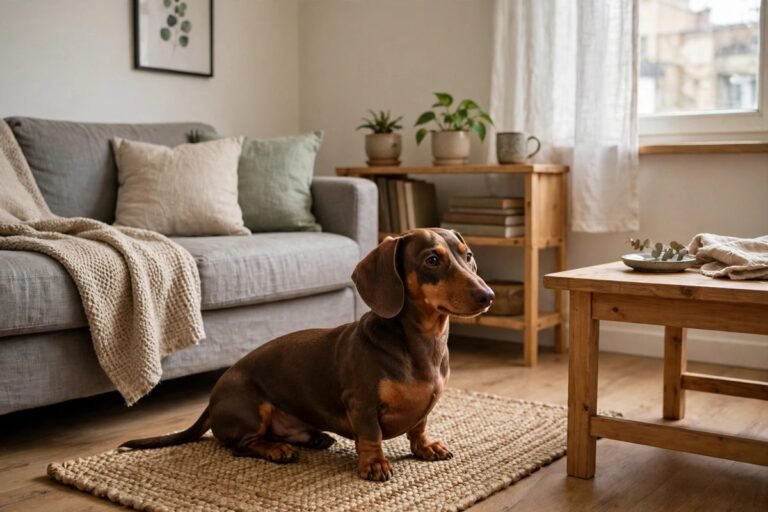
Preparation starts before the doorbell. Give your Dachshund a walk or play session earlier in the day, so it is not full of unused energy when guests arrive. Set up a place mat away from the door, with a comfortable bed and a long-lasting chew or puzzle to help settling. Have a short leash ready if you need gentle guidance, but avoid dragging your dog or holding it tightly, which can increase frustration. Tell guests in advance that you are training, and ask them to arrive calmly, ignore the dog at first, and wait for your signal. Put treats by the door, close other doors if needed, and keep the entryway clear. A little preparation prevents the most common problem: a rushed, noisy opening with no plan, no treats, and a dog already over its excitement limit.
Calm greeting steps
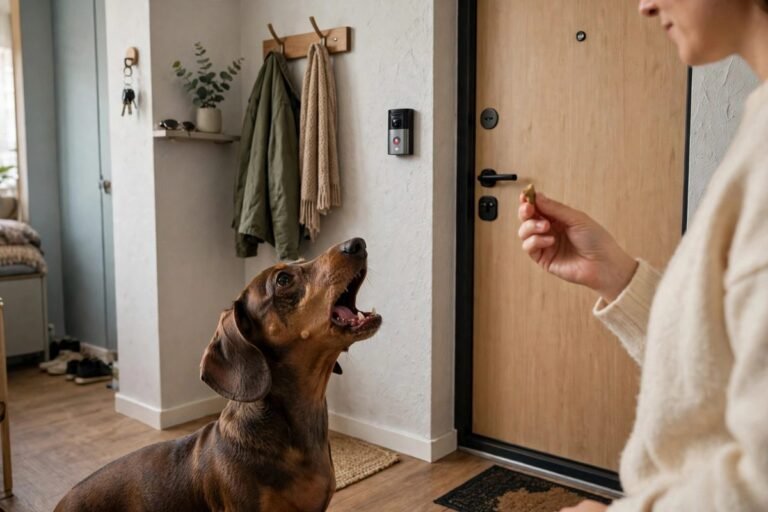
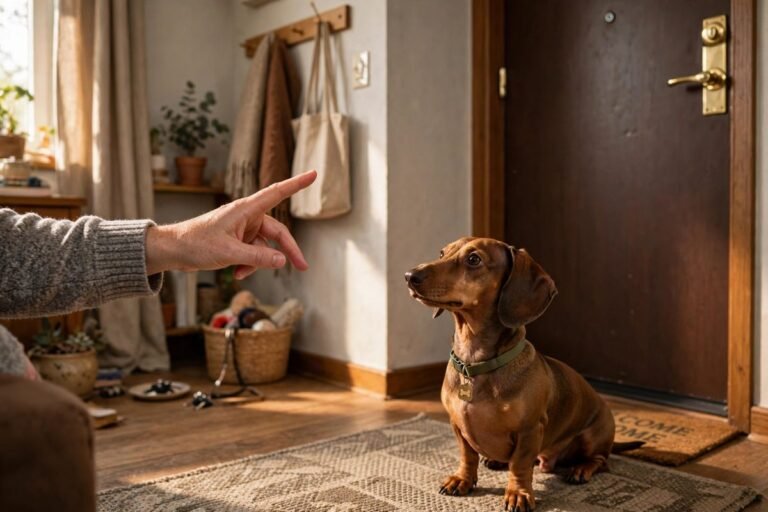
When the doorbell rings, send your Dachshund to its place and reward calm. Open the door slowly and only a little at first. If your dog stays settled, let the guest step in calmly and ignore the dog for a short time. Then, when your dog has four paws on the floor and is relatively quiet, invite a calm greeting: the guest can speak softly, offer a hand to sniff, and give a brief stroke on the chest or side rather than a big fuss on the head. Keep the first greeting to a minute or two, then guide your dog back to its place with a treat. If barking surges, calmly step back, close the door partway, and reset. Repeat the calm step rather than pushing through the excitement. Short, successful greetings build confidence and teach your apartment Dachshund that visitors are predictable, not overwhelming.
What guests should/should not do
Guests can help or undo training in seconds. Guests should enter calmly, avoid direct eye contact and reaching over the dog at first, speak quietly, and wait until the dog is calm before greeting. They should not shout, chase, pick the dog up suddenly, or use a high excited voice that fuels barking. They should not reward jumping by fussing over it, and they should not offer food without your permission, especially if you are counting treats for weight control. Children should be supervised and taught to stand still like a tree if the dog becomes too excited. If your Dachshund shows fear, trembling, hiding, or distress that does not improve, give it space and seek advice from your veterinarian or a qualified behaviour professional. This is general information only, not a diagnosis. With a consistent routine, a comfortable place, and calm guests, visitor greetings can become a pleasant part of apartment life for both your Dachshund and your neighbours.