Teach Your Dachshund ‘Quiet’ in 7 Days — Apartment-Friendly
Teaching a Dachshund to be quiet on cue is one of the most useful skills for apartment living. A mini Dachshund may bark at hallway noises, visitors, other dogs, or simply because barking feels rewarding. A clear quiet cue does not mean your dog can never bark. It means you can ask for calm, reward it, and help your dog settle again. With short daily sessions and realistic expectations, many Dachshunds make real progress in a week, even if the skill still needs practice afterwards. This seven-day plan is designed for small spaces, thin walls, and busy neighbours.
What ‘quiet’ means
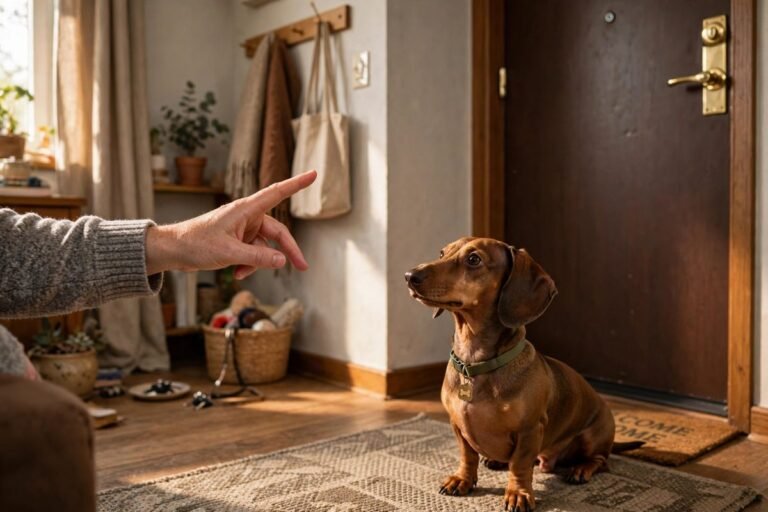
Quiet should mean stop barking and settle, not freeze in fear or stay silent forever. Start by choosing one calm word, such as quiet, and use it only when your Dachshund pauses, even briefly. Say the word softly, then reward calm with a small treat and gentle praise. Avoid using the cue while your dog is already barking loudly, because repeating it then teaches your dog to ignore it. Instead, wait for a natural pause, capture it, and build from there. Also decide what success looks like in your apartment. For most owners, success is a shorter barking burst, a faster recovery, and a dog that can go to its place and relax. Keep treats small and easy to eat, so training does not turn into a long chewing break, and keep your own voice and body calm. Dachshunds read tension quickly, so your calm helps your dog stay calm.
Day-by-day 7-day plan (short sessions, reward calm, increase distractions)
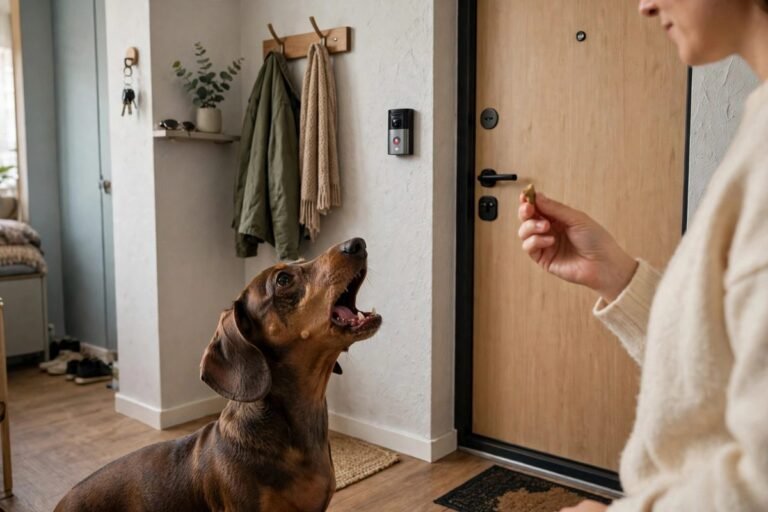
On days one and two, practise in the quietest room, with no real triggers. Reward calm settling, eye contact, and quiet pauses. Do three sessions of three to five minutes each day. On day three, add a very mild sound, such as a soft knock or a recorded hallway noise at low volume, and reward quiet responses. On day four, practise near the front door, but still without opening it. On day five, add movement, such as standing up, walking to the door, or a family member moving in the hallway. On day six, practise with a planned visitor who stays calm and ignores excitement. On day seven, combine the steps in a short real-life rehearsal, then review what worked. Increase distractions slowly, one step at a time. If barking returns at a new step, go back to the last successful step for a day. Short sessions are more effective than one long, frustrating session, and ending on a success keeps your Dachshund motivated.
Apartment tips (neighbours, thin walls, quiet hours)
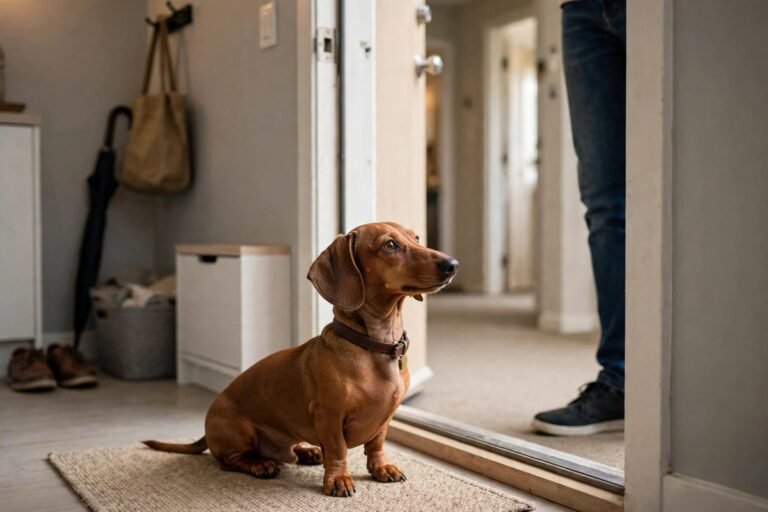
Apartment training needs extra courtesy. Let neighbours know you are training, and practise mainly outside quiet hours. A rug by the door, a white-noise machine, or soft background sound can reduce sudden hallway noises that startle a Dachshund. Use a place or mat away from the front door, so your dog is not guarding the exact spot where sounds arrive. Keep the front area calm by closing blinds if window barking is also an issue, and avoid leaving your dog alone near the door for long periods while you are still training. If you share walls, reward calm quickly and quietly, rather than using loud praise that adds to the noise. A consistent routine also helps: regular walks, play, and rest reduce the pent-up energy that can make barking worse. Think of quiet training as part of apartment life, not a one-week fix.
Troubleshooting (barking returns, excitement)
It is normal for barking to return when excitement is high, after a break, or with a new visitor. Do not see this as failure. Go back to easier steps, shorten sessions, and increase rewards for calm. Avoid shouting, because that often adds noise and excitement, and avoid punishment that can increase anxiety in a sensitive Dachshund. If your dog cannot settle, barks for long periods, or shows signs of distress when alone, such as pacing, panting, or destructive behaviour, speak to your veterinarian or a qualified behaviour professional. This is general information only, not a diagnosis. With patience, a clear cue, and daily apartment-friendly practice, your mini Dachshund can learn that quiet brings good things, and that calm is worth choosing again and again.