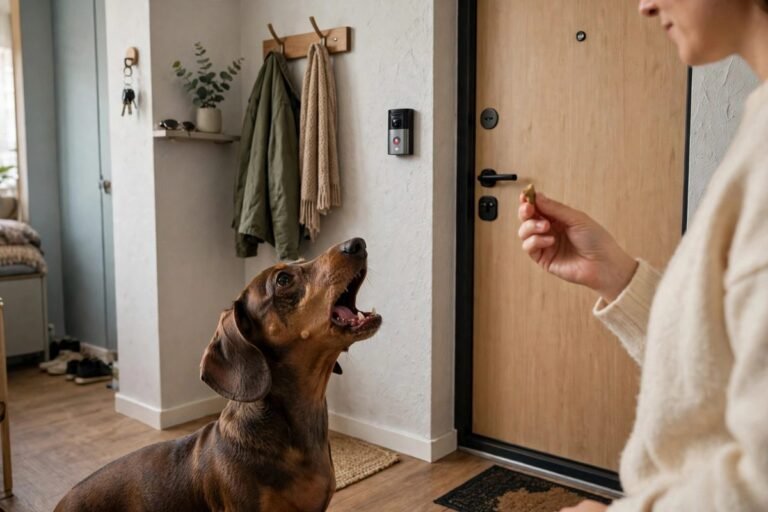
Stop Window Barking: 3 Fixes That Actually Work for Doxies
If your Dachshund spends the day barking at the window, you are not alone. For a mini Dachshund in an apartment, the window is a busy stage: people walk past, dogs appear, delivery riders stop, and every movement can trigger a bark. It may seem like your dog is guarding the home, but window barking is often a mix of excitement, alerting, and habit. The good news is that you do not need to block every window forever or scold your dog into silence. Three simple fixes, used together, help many Doxies learn to watch calmly instead of barking at everything that moves.
Why dogs bark at windows
Dachshunds are alert, curious, and quick to react, so a window gives them constant triggers they cannot reach. Barking can feel rewarding because the person or dog outside eventually moves away, which can look like the barking worked. In an apartment, windows are also close to foot traffic, so triggers are frequent and hard to avoid. Boredom, lack of exercise, and long hours alone by the window can make barking worse. Some dogs also practise the behaviour many times a day, which turns it into a strong habit. Understanding this helps you choose fixes that reduce triggers, teach an alternative behaviour, and reward calm, rather than simply trying to suppress barking after it has already started. The aim is a dog that can look, notice, and then settle, not a dog that is afraid to look at all.
Fix 1 block the view
The fastest way to reduce window barking is to reduce what your Dachshund can see. You do not need to close curtains all day. Try a window film that lets light in but blurs movement at street level, move furniture so your dog cannot sit on the windowsill all day, or close blinds during the busiest times, such as school runs or evening dog walks. If your apartment has a balcony door, use a partial screen or a frosted panel on the lower half. This is management, not failure. By removing the constant trigger, you give your dog fewer chances to practise barking, and you protect your neighbours from repeated noise. Combine blocking with enrichment elsewhere in the home, so your dog has a comfortable bed, a chew, or a puzzle away from the window. Over time, you can test opening the view for short periods once calm watching has improved.
Fix 2 redirect to a place/mat
Teaching a place or mat cue gives your Dachshund something to do instead of rushing to the window. Choose a mat in the same room, but away from the glass, and reward your dog for lying on it calmly. Start with no window triggers, then add mild distractions, such as you walking toward the window or a soft sound outside. When your dog looks toward the window but stays on the mat, reward that calm choice. Keep sessions short and positive, and use a leash indoors at first if your dog keeps running to the window. The place should feel good, not like a punishment spot. A comfortable mat, small treats, and a calm voice help your mini Dachshund learn that going to its place is the best job in the house. This also protects a long Dachshund back, because it reduces frantic jumping on and off furniture by the window.
Fix 3 reward calm watching
Calm watching is a skill you can build in tiny steps. Sit with your Dachshund at a distance from the window where it can notice movement without barking. The moment your dog looks but stays quiet, mark it softly and give a treat. If barking starts, calmly increase distance or briefly block the view, then try again at an easier level. Do not reward barking by giving attention, opening the door, or letting your dog out while it is barking loudly. Wait for a pause, then reward quiet. Practise for only a few minutes at a time, several times a day, so your dog learns that calm watching brings rewards.
Daily routine
A simple daily routine ties the three fixes together. In the morning, give your Dachshund a walk and play session before the busy street period, then set up the place mat away from the window. During peak times, block the lower window view and offer enrichment, such as a snuffle mat or a safe chew. Practise calm watching for five minutes in the afternoon, when triggers are milder. In the evening, keep the routine calm, with a final walk and a quiet settle on the mat. Be consistent, avoid shouting, and ask everyone in the home to use the same rules. If barking is severe, constant, or linked to distress when alone, talk to your veterinarian or a qualified behaviour professional for personalised advice. This article is general information only, not a diagnosis. With management, a place cue, and rewards for calm, many apartment Doxies learn that the window is for watching quietly, not barking at every passer-by.