

Dachshund Barking When a Guest Stays Overnight: Calm Plan
Quick Answer
- An overnight guest changes the home: new smells, new sounds, a person in the hallway at night, and a different morning routine.
- Introduce the guest calmly in the evening, give the dog its own sleeping spot, and keep the bedtime routine as normal as possible.
- Plan the morning in advance: who lets the dog out, where the dog waits, and how the guest moves around the flat.
- Contact a veterinarian if the dog shakes, hides for hours, will not eat, or shows signs of pain or distress during the stay.
Contents
- 1. Why an Overnight Guest Is Different From a Day Visitor
- 2. Preparing the Home Before the Guest Arrives
- 3. The Evening: Greeting, Settling, and Bedtime
- 4. The Night and the Morning Routine
- 5. After the Guest Leaves: Getting Back to Normal
- Overnight Guest Comparison Checklist
- Common Mistakes
- When to Call Your Vet
- Pin This: Overnight Guest Checklist
- Frequently Asked Questions
- Conclusion
A guest who visits for an hour is one thing. A guest who stays the night is quite another, and many Dachshunds know the difference. The visitor does not leave after tea. The person uses the bathroom in the dark, sleeps in the spare room, and appears in the hallway in the morning in different clothes. For a small dog that guards its home and loves routine, every one of those changes is a reason to bark, and the barking often comes at the worst times: late evening, the middle of the night, and first thing in the morning. This article covers that exact situation, not a short visit, and it gives a plan for the evening, the night, and the morning. It is general information only, not a diagnosis, and a dog that seems distressed rather than alert needs a veterinarian, not a louder command.
1. Why an Overnight Guest Is Different From a Day Visitor
A day visitor arrives, sits down, and leaves, and the dog can watch that whole pattern from start to finish. An overnight guest breaks the pattern: the person stays after the lights go out, moves around when the house is quiet, and is still there when the dog wakes up. Dachshunds are sensitive to routine and to sound, so a footstep in the hallway at midnight can feel more alarming than the same footstep at noon. The dog may bark at the guest, at the closed spare-room door, or at nothing the owner can see, simply because the home no longer sounds or smells the way it usually does at night.
The morning is often the hardest part. The dog wakes up, expects the usual routine, and instead finds the guest in the kitchen or the hallway, moving in a way the dog did not expect. A guest who walks toward the dog to say good morning, reaches out to pat it, or opens a door the dog was guarding can trigger a fresh round of barking. A dog that barked a little in the evening may bark much more in the morning, because it is tired, because it needs the toilet, or because the house is still dark and quiet. Planning the morning is therefore just as important as planning the greeting, and the plan should be agreed before the guest arrives.

2. Preparing the Home Before the Guest Arrives
Start by deciding where the dog will sleep, and set that spot up well before the guest arrives. The dog’s usual bed, in its usual place, is the best choice, because a familiar sleeping spot helps the dog settle when everything else changes. If the guest will sleep in the room where the dog usually sleeps, move the dog’s bed to a quiet corner of the owner’s bedroom or the living room a few days early, so the change is not linked to the guest. Keep the bed, the blanket, and a familiar toy together, and avoid washing the bedding on the day the guest arrives, because the familiar smell helps the dog feel safe.
Prepare the guest’s room so the dog does not need to guard it. Put the suitcase out of the main walkway, keep the guest’s shoes by the door, and leave a small light on in the hallway, so the guest does not have to feel along the wall in the dark. A night light also helps the dog, because it can see who is moving instead of hearing a shape in the dark. If the dog usually sleeps with the bedroom door open, decide in advance whether the door will stay open or closed, and practise the chosen arrangement for a night or two before the stay, so the dog is not surprised.
Tell the guest the simple rules before arrival, in a short message rather than a long talk at the door. Ask the guest not to reach for the dog, not to walk straight toward it, and not to feed it from the table, and explain where the dog’s bed is and where the dog goes to the toilet. Most guests are glad to know, because they want the stay to go well too. A short walk and a toilet break for the dog just before the guest arrives also helps, because a dog that has used up some energy and emptied its bladder is more likely to greet calmly and settle afterwards.
3. The Evening: Greeting, Settling, and Bedtime
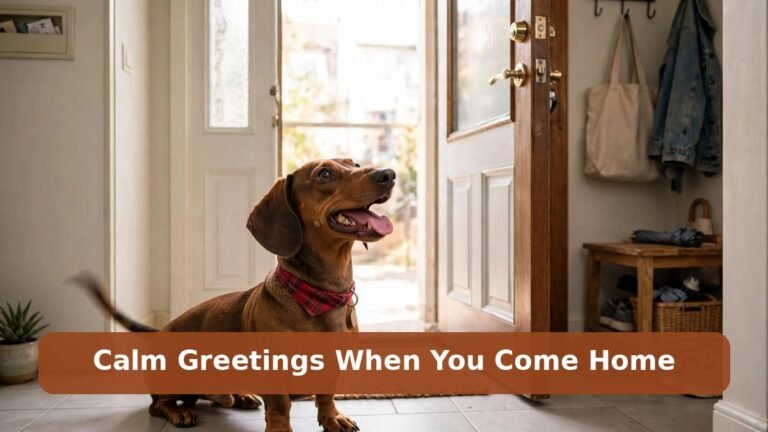
Let the dog meet the guest outside or in the hallway first, rather than in the middle of the living room. A short meeting on neutral ground, with the dog on a lead and the guest standing still, gives the dog time to sniff from a safe distance. Let the dog approach the guest, not the other way round, and reward calm sniffing with a small treat placed on the floor. The guide to a calm greeting routine for visitors uses the same slow approach for a short visit, and it works even better for an overnight stay, because the first meeting sets the tone for the whole evening. Keep the greeting short, then move inside together, with the dog walking beside the owner.
Keep bedtime as normal as possible, even if the evening has been different. Follow the usual last toilet break, the usual bedtime treat, and the usual lights-out routine, and settle the dog in its bed before the guest goes to bed. If the guest needs to use the bathroom during the night, agree that the guest will move slowly, speak softly, and avoid walking straight past the dog’s bed. A dog that wakes to a calm, slow-moving person in a lit hallway is far less likely to bark than a dog that wakes to quick footsteps in the dark.

4. The Night and the Morning Routine
Night barking usually has a simple cause: the dog heard something it could not see, and it woke up unsure. A hallway light, a closed door between the dog and the guest, and a familiar blanket all help, because they reduce the surprises. If the dog barks in the night, wait for a pause before responding, then speak calmly from the bedroom rather than rushing in. Check that the dog does not need the toilet, offer a quiet word, and settle it back in its bed. Rushing to the dog, turning on bright lights, or bringing the dog into the guest’s room can make the night worse, because the dog learns that night barking brings a big reaction.
Plan the morning the night before, and tell the guest the plan. The owner should be the first person to greet the dog, take it out, and feed it, just as on a normal morning, while the guest stays in the spare room or the kitchen until the dog has had its toilet break. The guide to a calm night routine for apartment dogs covers the same steady pattern of toilet, food, and rest, and the same order helps here, because the dog starts the day with a routine it knows. Only after the dog has been out and fed should the guest come to say good morning, calmly and from a distance.
Give the dog a calm place to be during breakfast. A mat in a corner of the kitchen, a chew, or a food puzzle keeps the dog settled while the guest eats, and it stops the dog from barking at every movement around the table. If the dog does bark, guide it back to the mat calmly, without scolding, and reward the quiet moments. Keep the morning unhurried if possible: a rushed morning, with bags being packed and shoes being put on, is a noisy morning, and a noisy morning is a barking morning. Slow down, keep the dog’s routine first, and let the guest’s departure be calm too.
5. After the Guest Leaves: Getting Back to Normal
When the guest leaves, give the dog a short walk and a chance to sniff the rooms the guest used. Dogs learn through smell, and a chance to check the spare room, the bathroom, and the hallway helps the dog understand that the visitor has gone and the home is back to normal. Avoid cleaning everything at once with strong-smelling products, because a sudden change in smell can unsettle the dog again. A quick tidy, the dog’s bed back in its usual place, and the normal routine are enough for most dogs.
Use what the stay taught the household for the next visit. A short note helps: what time the dog barked, what triggered it, and what calmed it down. If the evening greeting went well but the morning was noisy, plan the next morning better. If the dog slept well but barked at the bathroom door, add a night light or keep the door closed. Each stay is a little easier when the household learns from the last one, and a dog that has had two or three calm overnight stays will usually greet the next guest with far less barking.

Overnight Guest Comparison Checklist
| Approach | Best for | Limit to watch |
|---|---|---|
| Meet outside, then walk in together | Nervous dogs, first stays | Needs a lead and a calm guest |
| Dog’s usual bed in a quiet spot | Night settling | Move the bed days early if needed |
| Food puzzle during the evening | Busy settling-in time | Remove it before bedtime |
| Owner greets the dog first in the morning | Noisy mornings | Guest must wait for the toilet break |
Common Mistakes
- Letting the guest reach for the dog or walk straight toward it.
- Moving the dog’s bed on the same day the guest arrives.
- Skipping the last toilet break because the evening is busy.
- Rushing to the dog at every night bark.
- Letting the guest feed the dog from the table.
- Cleaning with strong products the moment the guest leaves.
- Planning a busy day out straight after the guest has gone.
When to Call Your Vet
Contact a veterinarian if the dog shakes, hides for hours, will not eat, pants heavily, or shows signs of pain during or after an overnight stay, and seek urgent help if the dog collapses, cannot breathe normally, or shows sudden weakness. Contact a veterinarian also if the dog injures itself rushing a door, refuses food for more than a day, or stays distressed long after the guest has left. This article gives general information only and does not diagnose any condition. A veterinarian can check for pain, hearing problems, or anxiety, and advise whether a calmer routine, a behaviour plan, or a health check is the right next step for that individual dog. Do not delay veterinary help for a dog that is clearly distressed or in pain.
Pin This: Overnight Guest Checklist
- Set up the dog’s sleeping spot days early.
- Walk the dog before the guest arrives.
- Meet outside, let the dog approach first.
- Give the dog a chew or puzzle in the evening.
- Keep bedtime and the last toilet break normal.
- Owner greets the dog first in the morning.
- Return the bed and routine to normal after the stay.
Frequently Asked Questions
Why does my dog bark more at night when a guest stays?
The house is dark and quiet, so a footstep or a door sound stands out more, and the dog cannot see who is moving. A hallway light, a familiar bed, and a slow-moving guest help the dog feel safe enough to settle again.
Should the guest sleep with the door open or closed?
Either can work, as long as the dog knows the arrangement in advance. A closed door keeps sounds and smells lower, while an open door lets the dog see the guest. Practise the chosen arrangement for a night or two before the stay.
Can the guest give my dog treats?
Yes, if the treats are small and placed on the floor, not offered from the hand while the dog is barking. Treats from the guest can help the dog link the visitor with good things, but the owner should stay in charge of the routine.
What if my dog barks every time the guest uses the bathroom?
Keep a small light on in the hallway, ask the guest to move slowly and speak softly, and settle the dog back in its bed with a quiet word. If it happens every time, try keeping the bathroom door closed or moving the dog’s bed further from the hallway.
How soon can we have another overnight guest?
Wait until the dog is back to its normal eating, sleeping, and walking routine, usually a day or two. A second stay often goes better than the first, because the dog has already learned that guests leave and the home returns to normal.
Conclusion
An overnight guest changes the evening, the night, and the morning, and the dog needs a plan for all three: a calm greeting outside, a familiar bed, a normal bedtime, and a morning that starts with the owner and the usual routine. Prepare the home, agree the plan with the guest, and the stay becomes a visit the dog can cope with, not a night of barking.



3 Comments