Dachshund Treat Pouch Guide for Walks and Training Tips
Quick Answer
- A Dachshund treat pouch is a small waist bag that holds training treats within easy reach on walks and during training sessions.
- Pick a pouch that opens wide with one hand, closes securely, and sits comfortably at the waist or hip without bouncing.
- Choose a washable pouch with a pocket for bags and a clip for a lead, so everything for the walk stays in one place.
- Fill it with small, soft treats that the dog can eat quickly, and keep portions small so training never means overfeeding.
- Contact a veterinarian if the dog gains weight, refuses food, or seems unwell, since diet and health need a professional check.
Contents
- 1. Why a Dachshund Treat Pouch Helps on Walks and Training
- 2. Choosing the Right Pouch: Size, Opening, and Closure
- 3. Wearing a Treat Pouch: Fit, Comfort, and Placement
- 4. Filling the Pouch: Treats That Work for Training
- 5. Cleaning and Caring for a Treat Pouch
- Treat Pouch Buying and Use Checklist
- Common Mistakes
- When to Call Your Vet
- Pin This: Treat Pouch Checklist
- Frequently Asked Questions
- Conclusion
1. Why a Dachshund Treat Pouch Helps on Walks and Training
A Dachshund treat pouch keeps rewards within reach at the exact moment the dog does something right. Training works best when the reward arrives within a second or two of the good behaviour, and a pouch makes that timing possible. Instead of digging through a coat pocket or a bag while the moment passes, the owner reaches into the pouch at the waist, takes out a small treat, and gives it straight away. The dog learns fast, because the link between the behaviour and the reward stays clear.
A pouch also keeps the walk calm and organised. A Dachshund owner on a walk already manages a lead, waste bags, keys, and a phone, and treats loose in a pocket get crushed, mixed with lint, or forgotten at home. A pouch holds the treats in one clean place, with a pocket for the bags and a clip for the lead, so nothing is fumbled at a busy crossing or a meeting with another dog. The walk feels easier, and the owner can focus on the dog instead of on pockets.
There is a training reason too: a pouch makes the owner consistent. When treats are always in the same place, the owner rewards the same behaviours every time, and the dog knows what earns a treat. A pouch also keeps the treat smell away from the dog’s nose between rewards, since a closed pouch holds the scent in, while treats in an open pocket can distract the dog for the whole walk. A consistent, well-timed reward is the heart of good training, and the pouch is the tool that makes it easy.
2. Choosing the Right Pouch: Size, Opening, and Closure
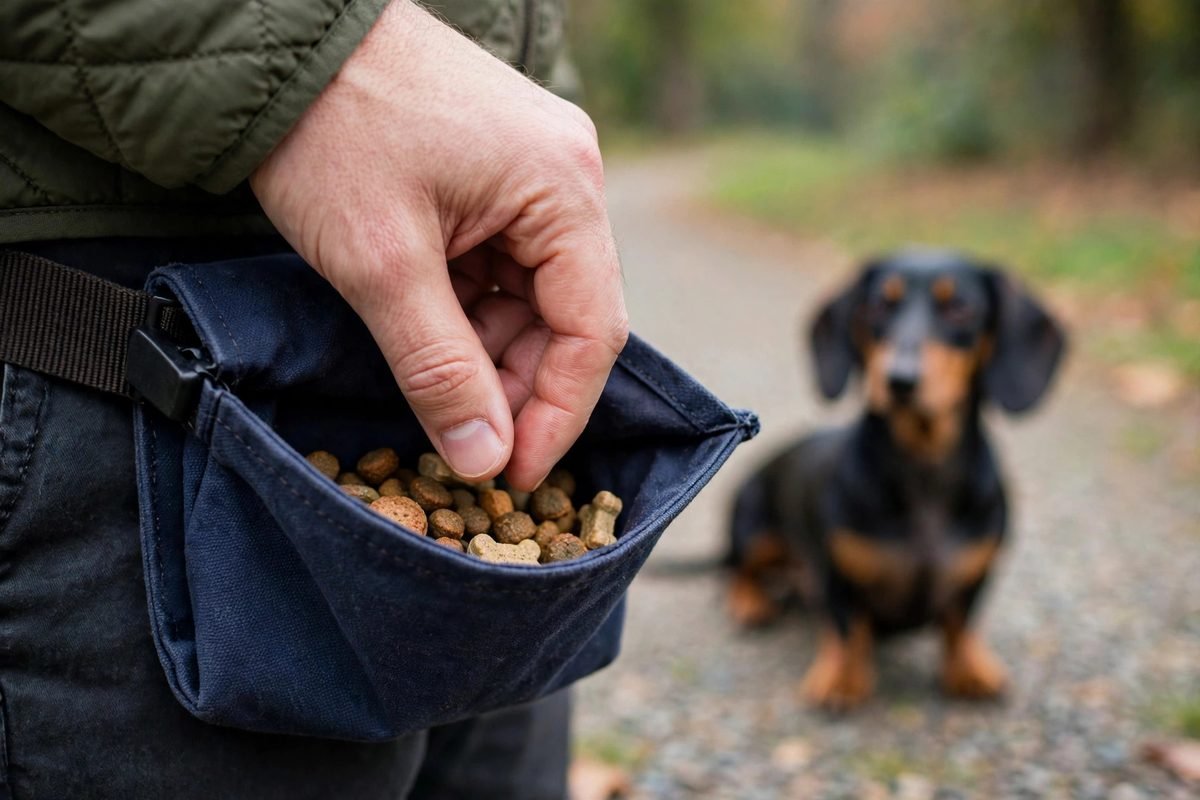
Start with the opening, because the opening decides how fast the owner can reach a treat. The best pouches open wide with a single pull, so the hand goes in and out without looking down. A stiff, springy rim holds the pouch open while the owner walks, while a drawstring opening needs two hands and slows the reward down. Try the opening with one hand before buying: if the hand fumbles, the timing of the reward will suffer, and the dog will learn more slowly.
Next, look at the closure. A pouch that stays open all the time will spill treats when the owner bends down, sits on a bench, or drops the lead. Look for a pouch with a magnetic clasp, a drawstring, or a flap that closes the top with one motion. The closure should be quick to open and quick to shut, so the pouch is closed between rewards and open at the moment of the reward. A pouch with no closure at all suits only a very calm walk with no bending or sitting.
Size matters, and smaller is usually better. A pouch that holds a handful of small treats is enough for a normal walk or a short training session, and a pouch that is too big bounces at the hip and gets in the way. Look for a pouch about the size of a fist, with a main compartment for treats and a small pocket for waste bags. A walk essentials kit for apartments covers the other items worth carrying, so the pouch can stay small and focused on treats alone.
3. Wearing a Treat Pouch: Fit, Comfort, and Placement
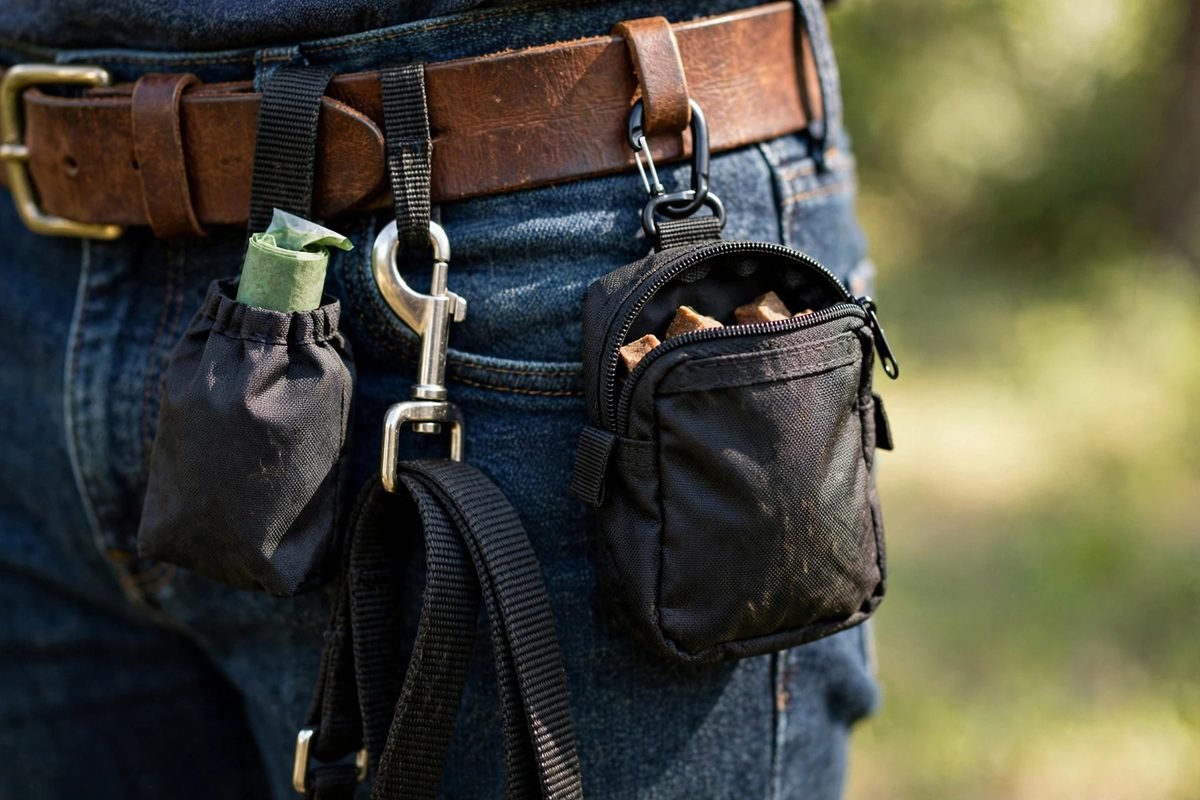
A treat pouch usually hangs from a waist belt or clips onto a belt loop, and the fit decides whether it is comfortable for a whole walk. A wide, adjustable belt spreads the weight across the waist and stays in place, while a narrow cord digs in and slips. Try the pouch on over a winter coat, since a belt that fits over a T-shirt may be too tight over a thick jacket. The pouch should sit at the front of the hip on the side opposite the lead hand, so the free hand can reach in without crossing the lead.
Check the weight and the bounce. A pouch full of treats weighs little, but a pouch that swings with every step will annoy the owner and distract the dog. Look for a pouch that sits flat against the body, with a belt that tightens enough to stop the swing. Some pouches clip to a belt or a pocket instead of using their own strap, and that suits owners who already wear a belt. Whichever style is chosen, the pouch should feel like part of the clothing, not like a bag hanging off it.
Placement matters for the dog too. A pouch that hangs low, near the dog’s nose, will distract the dog with the smell of treats for the whole walk. Wear the pouch at waist height, on the side away from the dog, and keep it closed between rewards, so the dog focuses on the walk and the training, not on the pouch. A clicker and whistle guide covers the other training tools that pair well with a pouch, since a clicker marks the behaviour and the pouch delivers the reward.
4. Filling the Pouch: Treats That Work for Training
Fill the pouch with small, soft treats that the dog can eat in one bite. Training treats should be no bigger than a pea, so the dog swallows quickly and stays focused on the next repetition. Soft treats work better than hard biscuits, since a hard treat takes time to crunch and breaks the flow of the session. Cut larger treats into small pieces at home before the walk, and fill the pouch with only what the session needs, so the dog is not overfed by the end of it.
Choose treats the dog loves, but keep the portions small. A treat the dog finds only mildly interesting will not hold its attention when a squirrel runs past, while a high-value treat, such as a small piece of cooked chicken, will. Save the best treats for the hardest tasks, such as recall or calm behaviour near other dogs, and use plainer treats for easy repetitions at home. Vary the treats from day to day, so the dog stays keen, and keep a note of which treats cause an upset stomach.
Count the treats as part of the dog’s daily food. A Dachshund gains weight easily, and a pouch full of treats can add a surprising number of calories to the day. Take the training treats out of the daily food allowance, using a small part of the measured meal as training rewards where possible. If the dog’s weight creeps up, use smaller treats, shorter sessions, or lower-calorie rewards, and ask a veterinarian about the right daily amount. Training should never mean overfeeding, and a pouch that holds only a small portion helps keep the balance right.
5. Cleaning and Caring for a Treat Pouch
Clean the pouch after every few walks, since crumbs and grease build up fast. Most pouches are made from washable nylon or canvas, and they can be turned inside out and wiped with a damp cloth, or washed in cold water with mild soap. Let the pouch air dry fully before the next walk, since a damp pouch smells and can grow mould. Check the care label before the first wash, and avoid hot water, which can warp a stiff rim or shrink a cotton pouch.
Check the pouch weekly for wear. Look at the belt, the clip, the strap, and the closure, and replace anything that is frayed, loose, or no longer holds. A magnetic clasp that has lost its strength will let treats spill, and a belt that slips will let the pouch bounce. Keep a spare pouch ready if training happens daily, so a wet or torn pouch never leaves the owner without one on a training day. A well-cared-for pouch can last for years, while a cheap one may need replacing after a few months.
Store the pouch in a fixed place by the front door, next to the lead, so it is always ready. Empty it after each walk, and refill it fresh the next time, since treats left in a pouch overnight go stale and attract crumbs and smell. Keep the pouch away from the dog’s reach at home, since a clever Dachshund will learn where the treats live and help itself. A pouch that is clean, dry, and filled fresh each morning makes every walk and training session start well.
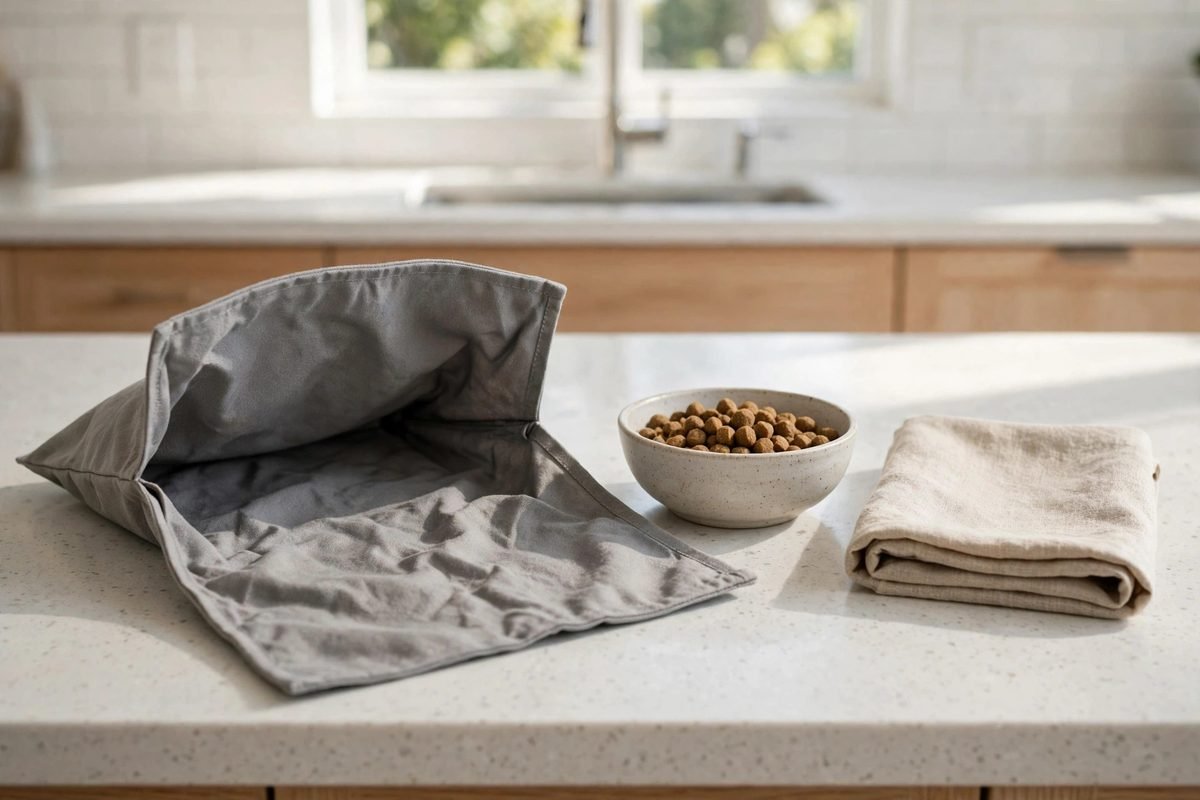
Treat Pouch Buying and Use Checklist
| Step | What to Do | What to Watch For |
|---|---|---|
| Opening | Wide opening, one hand, stiff rim holds it open | No fumbling; fast reward timing |
| Closure | Magnetic clasp, flap, or drawstring | Closes with one motion; no spills |
| Size | Fist-sized; main compartment plus bag pocket | No bouncing; holds one session of treats |
| Fit | Wide adjustable belt; sits at front of hip | Comfortable over a coat; no slipping |
| Treats | Small, soft, pea-sized; counted in daily food | Quick to eat; no weight gain |
| Care | Wipe or wash; air dry; check weekly | No smells; clasp and belt hold firm |
Follow the checklist in the same order every time. A pouch that opens fast, closes securely, fits well, and is filled fresh makes training rewards land on time, every time.
Common Mistakes
- Keeping treats loose in a pocket, where they crush and the timing slips.
- Buying a pouch with a narrow opening that needs two hands.
- Choosing a pouch with no closure, so treats spill when bending down.
- Filling the pouch with large, hard treats that slow training down.
- Forgetting to count training treats in the dog’s daily food.
- Wearing the pouch low, where the smell distracts the dog all walk.
- Leaving stale treats in the pouch overnight.
- Skipping the wash, so the pouch smells and the treats go stale.
When to Call Your Vet
Contact a veterinarian if the dog gains weight, refuses food, or seems unwell, since diet and health need a professional check. Contact a veterinarian promptly if the dog vomits, has diarrhoea, or shows signs of pain after eating a new treat. A veterinarian can check whether the problem comes from the treats, the amount, or a health issue, and advise on the next step. This article gives general information only and is not a diagnosis.
Pin This: Treat Pouch Checklist
- Pick a pouch that opens wide with one hand.
- Make sure it closes securely between rewards.
- Wear it at waist height, away from the dog’s nose.
- Use small, soft, pea-sized treats.
- Count training treats in the daily food.
- Call a veterinarian if the dog gains weight or seems unwell.
Frequently Asked Questions
What is a Dachshund treat pouch for?
A treat pouch is a small waist bag that holds training treats within easy reach on walks and during training sessions. It keeps the reward close, so the owner can give it within a second or two of the good behaviour. It also keeps treats clean, organised, and separate from pockets, keys, and waste bags, which makes the whole walk calmer and easier to manage.
How do I choose a good treat pouch?
Look for a wide opening that works with one hand, a closure that shuts quickly, and a size about as big as a fist. A wide, adjustable belt keeps the pouch comfortable and stops it bouncing, and a pocket for waste bags keeps everything in one place. Try the opening with one hand before buying, since fast access is the point of the pouch.
How do I wear a treat pouch on walks?
Wear it at waist height, at the front of the hip on the side opposite the lead hand, so the free hand can reach in without crossing the lead. Keep the belt snug enough to stop the pouch swinging, and keep the pouch closed between rewards, so the smell of treats does not distract the dog for the whole walk.
What treats should go in a Dachshund treat pouch?
Small, soft treats no bigger than a pea, which the dog can eat in one bite. Save the best treats, such as small pieces of cooked chicken, for the hardest tasks, and use plainer treats for easy repetitions. Cut larger treats into small pieces at home, and count the training treats as part of the dog’s daily food, so training never means overfeeding.
How do I clean a treat pouch?
Turn it inside out and wipe it with a damp cloth after every few walks, or wash it in cold water with mild soap if the care label allows. Let it air dry fully before the next walk, and check the belt, clip, and closure weekly for wear. Empty the pouch after each walk and refill it fresh, since treats left overnight go stale.
Conclusion
A Dachshund treat pouch works when it opens fast with one hand, closes securely, sits comfortably at the waist, and is filled with small, soft treats. The next step is a small one: pick a pouch with a wide opening and a secure closure, then fill it with pea-sized treats for the next walk.