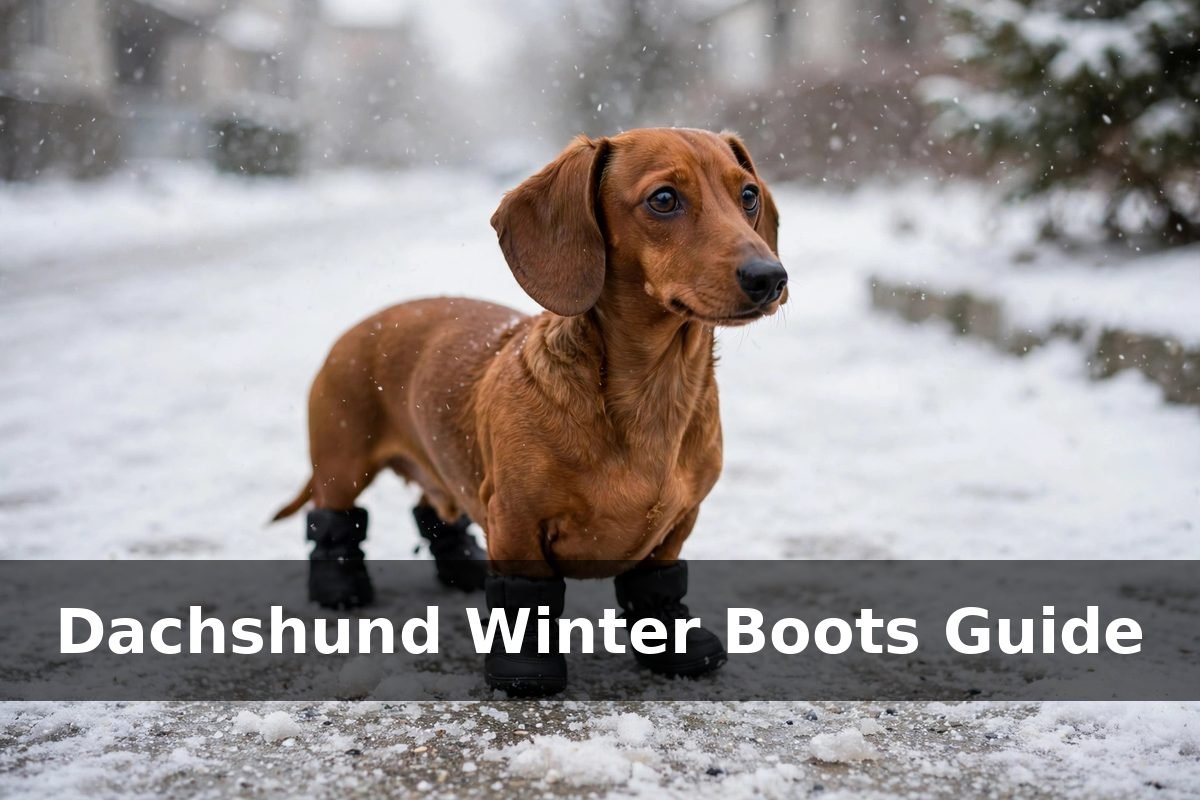
Dachshund Winter Boots and Paw Protection Guide: Cold Walks
Quick Answer
- Dachshund winter boots are small, flexible shoes that protect a short-legged dog’s paws from cold ground, ice, road salt, and grit on winter walks.
- Fit matters most: each boot should cover the paw snugly, stay on during a walk, and leave the toes free to spread naturally.
- Pick a soft, waterproof boot with a flexible sole and a secure strap, and avoid stiff boots that change how the dog walks.
- Introduce boots slowly indoors, with treats and short wear sessions, before the first real winter walk.
- Contact a veterinarian if a paw looks red, cracked, or sore after a winter walk, even when boots were worn.
Contents
- 1. Why Dachshund Winter Boots Matter on Cold Walks
- 2. Choosing the Right Boots: Size, Sole, and Materials
- 3. Measuring and Fitting Winter Boots at Home
- 4. Teaching a Dachshund to Walk in Boots
- 5. Paw Care After Winter Walks, With or Without Boots
- Winter Boots and Paw Care Checklist
- Common Mistakes
- When to Call Your Vet
- Pin This: Winter Boots and Paw Care Checklist
- Frequently Asked Questions
- Conclusion
1. Why Dachshund Winter Boots Matter on Cold Walks
Dachshund winter boots protect the part of the dog that touches the winter ground on every step: the paws. A Dachshund is low to the ground, with short legs and small paws, so its feet spend more time close to cold pavement, slush, and ice than a taller dog’s feet do. Cold ground chills the paws quickly, and road salt and grit stick to the pads and the fur between the toes, causing dryness and discomfort. A boot puts a warm, dry layer between the paw and the ground, and the dog comes home with cleaner, warmer feet.
Salt is the winter hazard most owners notice first. Roads and pavements are gritted with salt to melt ice, and that salt clings to a dog’s paws during a walk. It dries the pads, stings small cracks, and tastes unpleasant if the dog licks its feet at home. Boots keep most of the salt off the paws entirely, so there is less to wash off when the walk ends.
Boots also help on the coldest days, when the ground itself is the problem. Frozen pavement and icy patches chill a small paw fast, and a dog that feels the cold will lift its feet, hop, or try to turn for home after only a few minutes. A boot adds insulation and grip, so the dog can walk at a normal pace for longer. Boots are not a fix for bitter weather, and a walk should still stay short when the temperature drops sharply, but they turn a cold walk from an ordeal into a normal outing.
2. Choosing the Right Boots: Size, Sole, and Materials
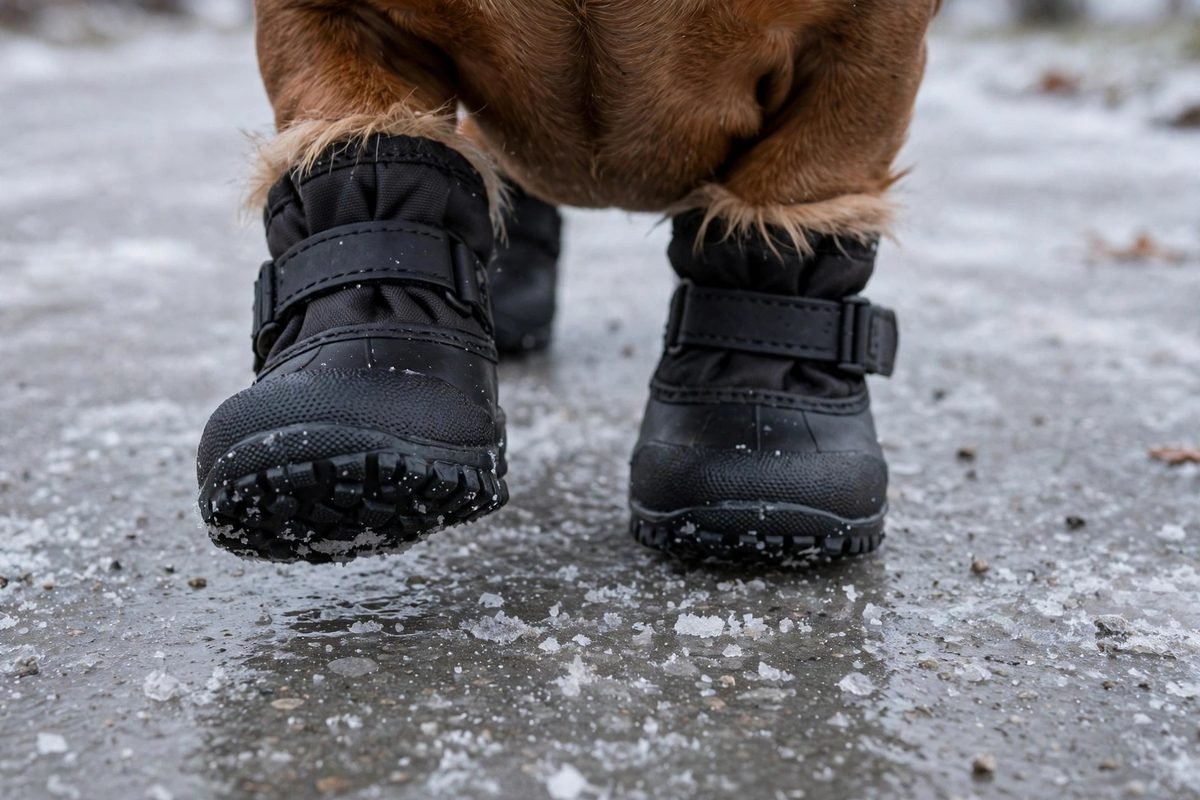
Start with the sole, because the sole decides how the boot feels underfoot. A good winter boot has a flexible, textured sole that bends with the paw and grips icy pavement, while a stiff, flat sole makes the dog walk awkwardly and slip. Press the sole with a thumb: it should bend easily in the middle and spring back. Look for a tread pattern with small lugs or grooves, since smooth soles slide on ice, and check that the sole covers the whole underside of the boot, not just the front.
Next, look at the upper material. A waterproof outer layer keeps slush and wet snow out, while a soft inner lining keeps the paw warm and stops rubbing. Nylon and soft-shell fabrics are common choices, since they are light, waterproof, and easy to clean. Avoid boots with rough seams inside, since seams rub the toes and the dewclaw area, and avoid boots with hard plastic shells, which are heavy and inflexible for a small dog. The boot should feel soft in the hand, like a thick sock with a grippy sole.
The strap is the part that keeps the boot on, so check it carefully. A wide strap with a hook-and-loop fastening wraps around the ankle and holds the boot in place without squeezing. Two straps hold better than one, especially on a dog that runs or jumps. Try the strap on a finger: it should close firmly and stay closed when tugged. Boots that rely on elastic alone often slip off in deep snow, and boots with a drawstring can be fiddly to tighten with cold hands. A raincoat and winter coat guide covers the matching outerwear for wet and icy days, so the whole dog stays warm and dry.
3. Measuring and Fitting Winter Boots at Home
Measure the paws before buying, since boot sizes vary widely between makers and a Dachshund’s front paws are usually larger than the back paws. Stand the dog on a sheet of paper, press the paw flat, and trace around it with a pen, then measure the widest point and the length from the back of the heel pad to the tip of the longest nail. Do this for all four paws, and write the numbers down. Compare them with the size chart on the pack, and if the dog sits between two sizes, take the larger one, since a tight boot squeezes the toes and a slightly loose one can be tightened with the strap.
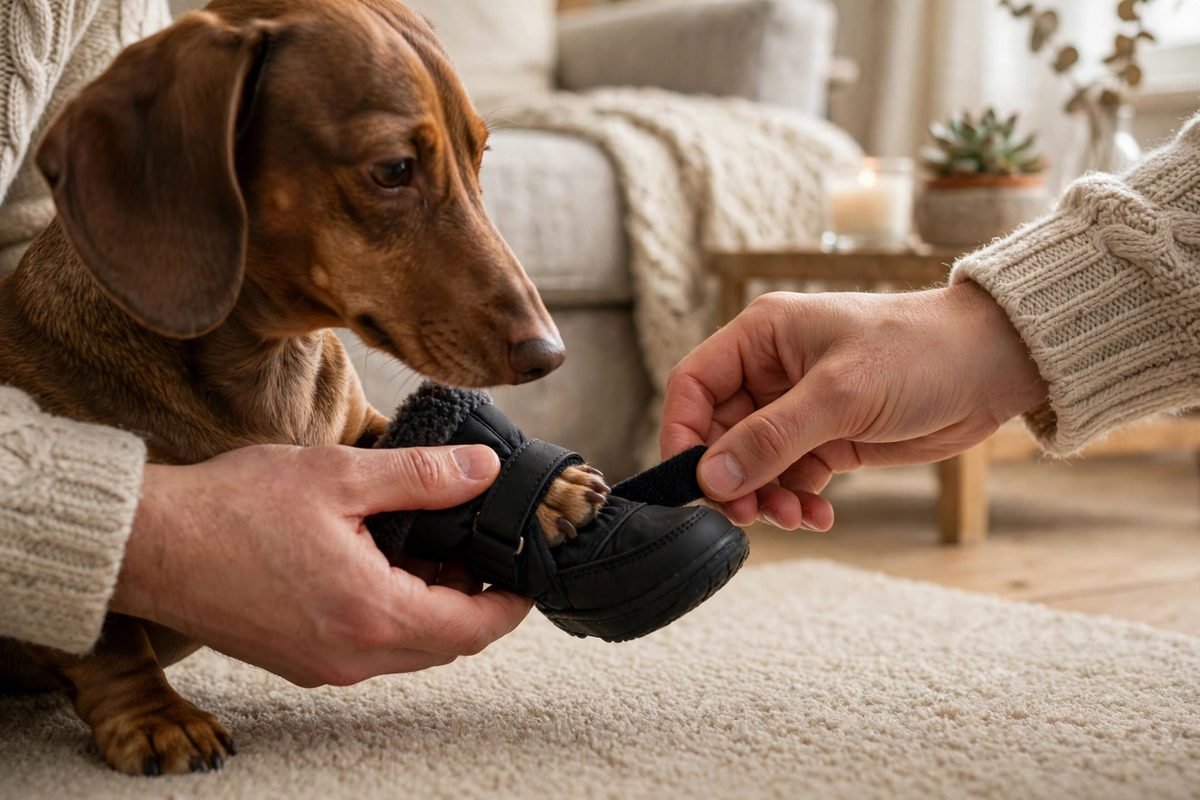
Try the boots on indoors, on a carpeted floor, and watch the dog stand and walk. The boot should cover the whole paw, including the nails, and sit snugly around the ankle without pinching. Check the toes: they should lie flat and spread naturally, not curl or press against the front of the boot. Check the ankle: the strap should close firmly, with the boot staying in place when the dog lifts the leg. Walk the dog across the room and back, and watch for a boot that twists, slips, or comes off.
Watch the dog for the first hour in new boots. A dog that walks normally after a few minutes is wearing the right pair. A dog that limps, chews at a boot, or holds a paw up may have a boot that is too tight, too stiff, or rubbing in one spot. Take the boots off and check the paws for red marks, especially around the toes and the ankle. A little awkwardness at first is normal, but pain is not, and a boot that causes redness should be swapped for a different size or a softer design.
4. Teaching a Dachshund to Walk in Boots
Introduce the boots indoors, one paw at a time, and keep the first session to five minutes. Put a single boot on a front paw, give the dog a treat, and let it walk around the living room. Most dogs lift the booted paw high and walk strangely at first, which is normal and usually passes within a few minutes. Add a second boot, then a third, then a fourth, over a few days, with treats and calm praise at each step. End each session before the dog gets frustrated, and take the boots off while the mood is still good.
Once the dog walks normally indoors with all four boots on, try a short walk outside. Pick a dry, familiar path, keep the walk to five minutes, and bring treats. The dog may walk slowly or stop often at first, and that is fine: the goal is a calm, comfortable walk, not a long one. Check the boots after the walk, and look for any that slipped or twisted. Repeat short walks for a week, building up the distance gradually, until the dog walks at its normal pace without thinking about the boots.
Some dogs never enjoy boots, and that is worth knowing before winter arrives. If the dog freezes, panics, or chews the boots off every time, try a different style: a softer boot, a lighter boot, or a boot with a thinner sole. A paw wax or balm can be a backup for dogs that refuse boots, though it does not protect against salt and ice the way a boot does. Keep trying patiently for a week or two, but do not force the issue on a freezing day, since a stressed dog on an icy pavement is worse off than a dog with bare paws on a short walk.
5. Paw Care After Winter Walks, With or Without Boots
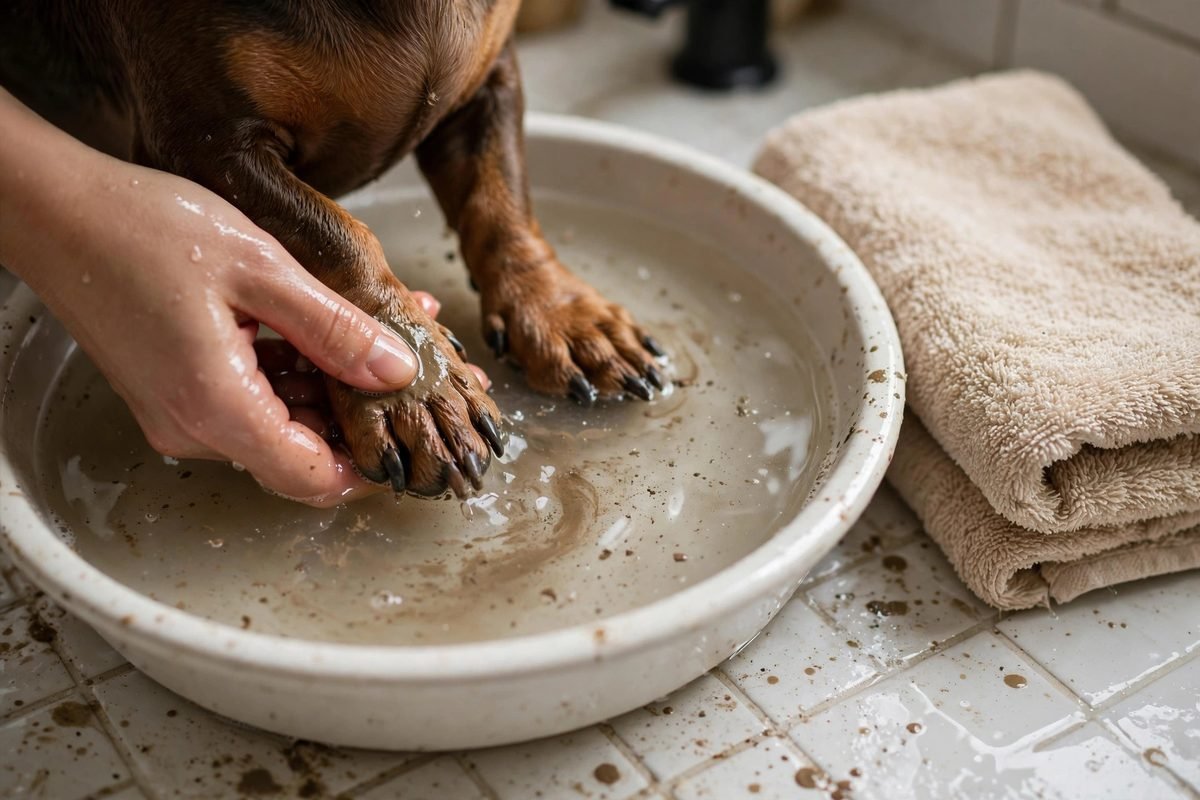
Wash the paws after every winter walk, boots or not. Salt and grit find their way into the fur between the toes even when boots are worn, so rinse each paw in lukewarm water and dry it gently with a towel. Check the pads for cracks, redness, and small cuts, and look between the toes for packed snow, salt crystals, or grit. A guide to paw care on winter salt and grit covers the full wash-and-check routine in detail, including what to look for on the pads after a gritty walk.
Moisturise dry pads, but do it with care. A thin layer of paw balm after washing helps cracked pads heal, and it keeps the skin supple through the winter. Apply it at a time when the dog will rest, such as after the evening walk, so the dog does not lick it straight off. If a pad is cracked and bleeding, skip the balm and seek veterinary advice instead.
Keep the boots themselves in good condition through the season. Rinse off salt and mud after each walk, and let the boots air dry away from direct heat, since a radiator can warp the sole and shrink the fabric. Check the straps and seams weekly for wear, and replace a boot that has lost its grip or will no longer stay fastened. Trim the fur between the toes once a month, so snow and salt have less to cling to, and keep the nails short, since long nails change how the paw sits inside the boot.
Winter Boots and Paw Care Checklist
| Step | What to Do | What to Watch For |
|---|---|---|
| Measure | Trace all four paws; measure width and length | Front paws larger than back; size up if between sizes |
| Choose | Flexible sole, waterproof upper, wide strap | No stiff soles; no rough seams inside |
| Fit | Try on indoors; walk across the room | Toes flat; boot stays on; no twisting |
| Teach | One boot at a time; short sessions; treats | Normal walk within minutes; no chewing |
| After walks | Rinse paws in lukewarm water; dry gently | Cracks, redness, salt between toes |
| Weekly check | Rinse boots; check straps and seams | Grip kept; straps close firmly |
Follow the checklist in the same order every time. Boots that are measured, fitted, taught slowly, and rinsed after every walk keep the paws warm and comfortable all winter.
Common Mistakes
- Buying boots without measuring all four paws first.
- Choosing stiff boots that change how the dog walks.
- Putting all four boots on for the first time on a freezing day.
- Skipping the paw wash after a walk because boots were worn.
- Using boots with a smooth sole that slides on ice.
- Leaving salt and grit packed between the toes after a walk.
- Forgetting to trim the fur between the toes through winter.
- Keeping the dog out too long in bitter cold, even with boots on.
When to Call Your Vet
Contact a veterinarian if a paw looks red, cracked, swollen, or sore after a winter walk, or if the dog limps, licks one paw constantly, or refuses to walk. Contact a veterinarian promptly if a pad is bleeding, or if the dog seems weak or unwell after being out in the cold. A veterinarian can check whether the problem comes from the cold, the salt, the boots, or a health issue, and advise on the next step. This article gives general information only and is not a diagnosis.
Pin This: Winter Boots and Paw Care Checklist
- Measure all four paws before buying boots.
- Pick a flexible sole and a waterproof upper.
- Introduce boots indoors, one paw at a time.
- Rinse paws in lukewarm water after every walk.
- Check pads for cracks and redness weekly.
- Call a veterinarian if a paw stays sore or swollen.
Frequently Asked Questions
Do Dachshunds really need winter boots?
Most do, on cold, salty, or icy walks. Dachshunds are low to the ground, so their paws spend more time on cold pavement and gritted roads than a taller dog’s paws do. Boots keep salt, grit, and ice off the pads, and they add warmth and grip. A dog that walks only on clean, dry paths in mild weather may not need them, but most Dachshunds benefit from boots in winter.
How should Dachshund winter boots fit?
Each boot should cover the whole paw, including the nails, and sit snugly around the ankle without pinching. The toes should lie flat and spread naturally, and the strap should close firmly, keeping the boot in place when the dog lifts the leg. Measure all four paws first, since the front paws are usually larger than the back paws, and size up if the dog sits between two sizes.
How do I teach my Dachshund to walk in boots?
Introduce them indoors, one paw at a time, with treats and short sessions of about five minutes. Add the boots gradually over a few days, then try a short walk outside on a dry, familiar path. Most dogs walk strangely at first and settle within a few minutes. If the dog panics or chews the boots off every time, try a softer or lighter style before giving up.
What if my Dachshund refuses to wear boots?
Try a different style first: a softer boot, a lighter boot, or a thinner sole. Some dogs accept one design and reject another. A paw balm can be a backup, though it does not protect against salt and ice the way a boot does. Keep walks short on the coldest days, wash the paws after every walk, and keep trying patiently for a week or two before deciding boots are not for the dog.
How do I care for winter boots and paws through the season?
Rinse the boots after each walk and let them air dry away from direct heat. Check the straps and seams weekly, and replace a boot that no longer stays fastened. Wash the paws in lukewarm water after every walk, dry them gently, and check the pads for cracks and redness. Trim the fur between the toes monthly, and keep the nails short.
Conclusion
Dachshund winter boots work when the size fits all four paws, the sole is flexible and grippy, and the dog learns them slowly indoors first. The next step is a small one: trace the dog’s paws on paper today, then compare those numbers with the size chart before buying anything.