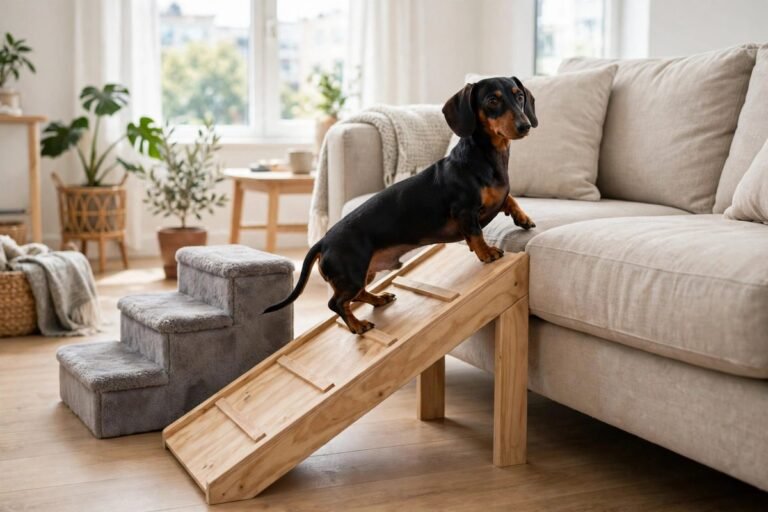
Dachshund Pet Stairs: Buying Guide for Sofa and Bed
Quick Answer
- Dachshund pet stairs are a short set of steps that help a long, low dog reach the sofa and bed without jumping up or dropping down.
- Pick stairs that match the height of the sofa or bed, with deep, non-slip steps that suit short legs and a long back.
- Check stability first: the stairs should sit flat, stay still when the dog climbs, and hold the dog’s weight without wobbling.
- Measure the furniture height and the floor space before buying, since stairs that are too tall or too steep will not be used.
- Contact a veterinarian if the dog hesitates, limps, or cries when climbing, since pain or stiffness needs a professional check.
Contents
- 1. Why Dachshund Pet Stairs Suit a Sofa and Bed Home
- 2. Choosing the Right Stairs: Height, Steps, and Size
- 3. Materials, Grip, and Stability: What to Check Before Buying
- 4. Teaching a Dachshund to Use Pet Stairs
- 5. Placing and Caring for Pet Stairs at Home
- Pet Stairs Buying Checklist
- Common Mistakes
- When to Call Your Vet
- Pin This: Pet Stairs Buying Checklist
- Frequently Asked Questions
- Conclusion
1. Why Dachshund Pet Stairs Suit a Sofa and Bed Home
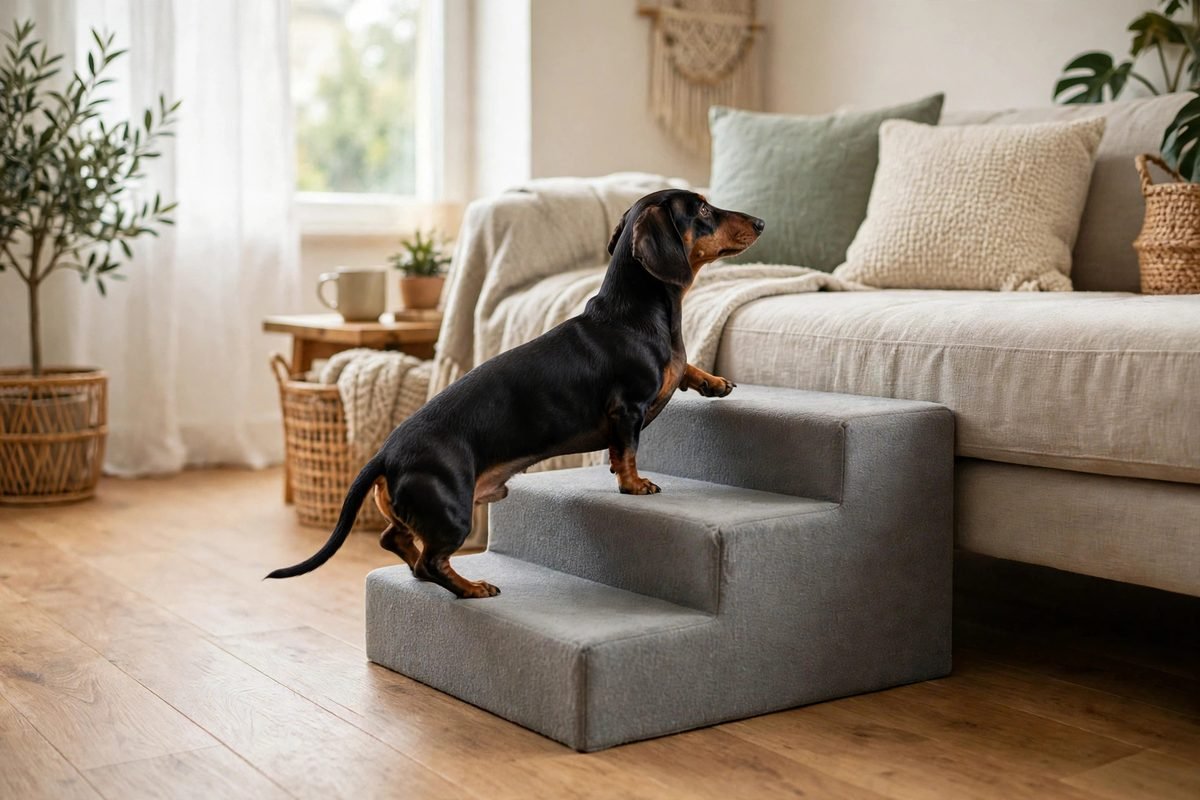
Dachshund pet stairs give a short-legged dog a gentle way up to the two places it loves most: the sofa and the bed. A Dachshund is long and low, with short legs and a deep chest, so a sofa seat or a bed edge that looks low to a person is a big climb for the dog. A set of steps breaks that climb into small, easy rises, so the dog can walk up one step at a time instead of launching upward or dropping down to the floor. The result is a calmer routine at the two spots where the dog settles most often.
Stairs suit a sofa and bed setup for a practical reason: they take up very little floor space. A set of three or four steps stands against the front of the sofa or the side of the bed and leaves the rest of the room free, which matters in an apartment where every square metre counts. Stairs also stay in one place, so the dog learns exactly where to go, and the owner does not have to move anything before the dog can climb up.
There is also a back-care reason to give the dog a stepped route. Dachshunds are a chondrodystrophic breed, which means disc degeneration in short-legged breeds can begin in the first year of life, and the spine benefits from routines that avoid repeated hard landings. A set of steps does not treat or prevent any disease, and it is not a substitute for veterinary care, but it does replace a jump with a walk, and that gentler daily pattern is a sensible part of a back-friendly home. For more on disc disease in this breed, the Cornell guide to chondrodystrophy and intervertebral disc disease explains how the condition develops.
2. Choosing the Right Stairs: Height, Steps, and Size
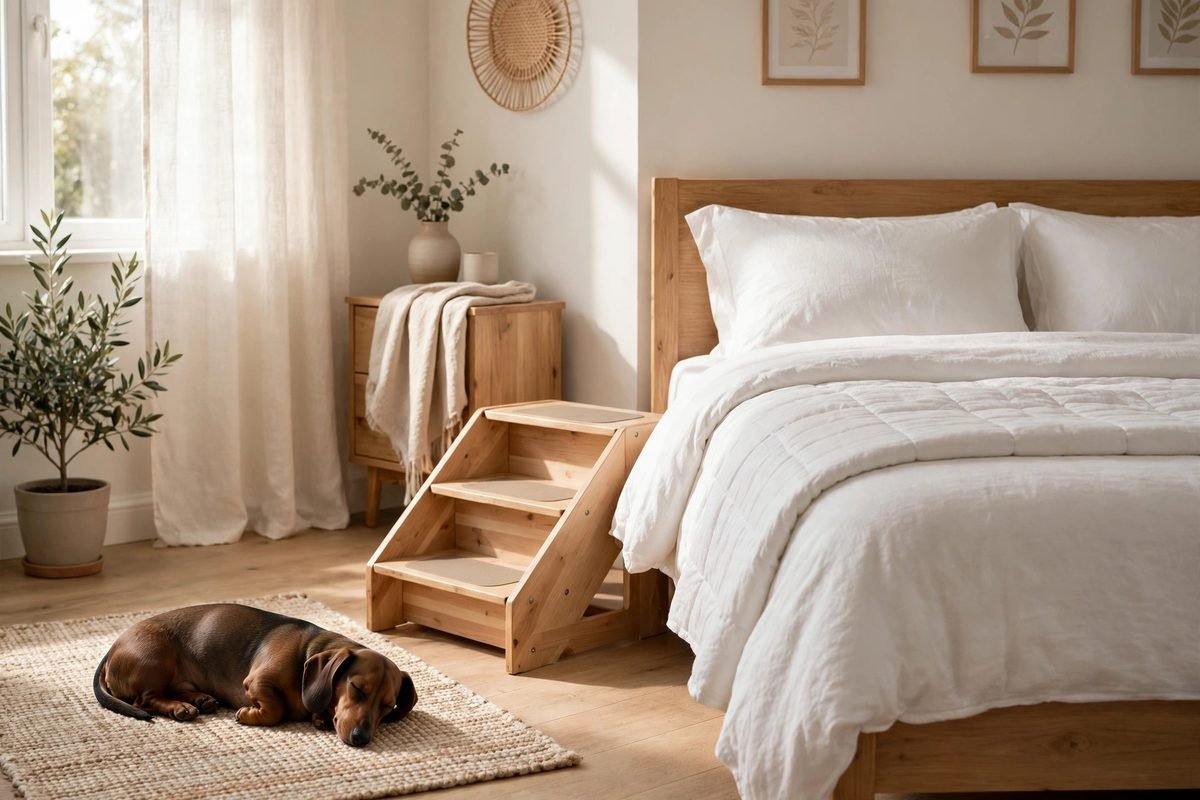
Start with height, because the stairs must match the furniture they serve. Measure from the floor to the top of the sofa seat cushion, pressing the cushion down as the dog’s weight would, and do the same for the bed, measuring to the top of the mattress where the dog climbs on. Write both numbers down. The top step of the stairs should land level with the seat or mattress, or just a finger’s width below it, so the dog steps across onto the furniture instead of climbing up a final tall gap or dropping down onto the seat.
Next, look at the number of steps and the height of each rise. A Dachshund climbs most easily when each step rises about ten to fifteen centimetres, which is a comfortable lift for short legs. A three-step set suits a low sofa, while a four-step or five-step set suits a standard bed. Watch out for sets where each step is tall and the tread is shallow, since the dog must stretch up and balance on a small surface at the same time. Deep treads give the whole paw a place to land, and that matters more than the total number of steps.
Width matters too. The steps should be wide enough for the dog’s whole body to stand sideways if needed, which usually means a tread at least thirty centimetres wide for a standard Dachshund and wider still for a larger dog. A guide to choosing the right ramp for a Dachshund covers the ramp alternative, which suits some homes better when the dog prefers a slope to steps.
3. Materials, Grip, and Stability: What to Check Before Buying
Most pet stairs are made from foam, wood, or plastic, and each material has a different feel underfoot. Foam steps are light, quiet, and soft, and they suit a dog that is nervous about hard surfaces, but they can sag under a heavier dog and they soak up spills. Wooden steps are firm and durable, and they look like furniture, but they are heavy to move and can be slippery without a covering. Plastic steps are light and easy to wipe clean, but cheap plastic can flex and creak.
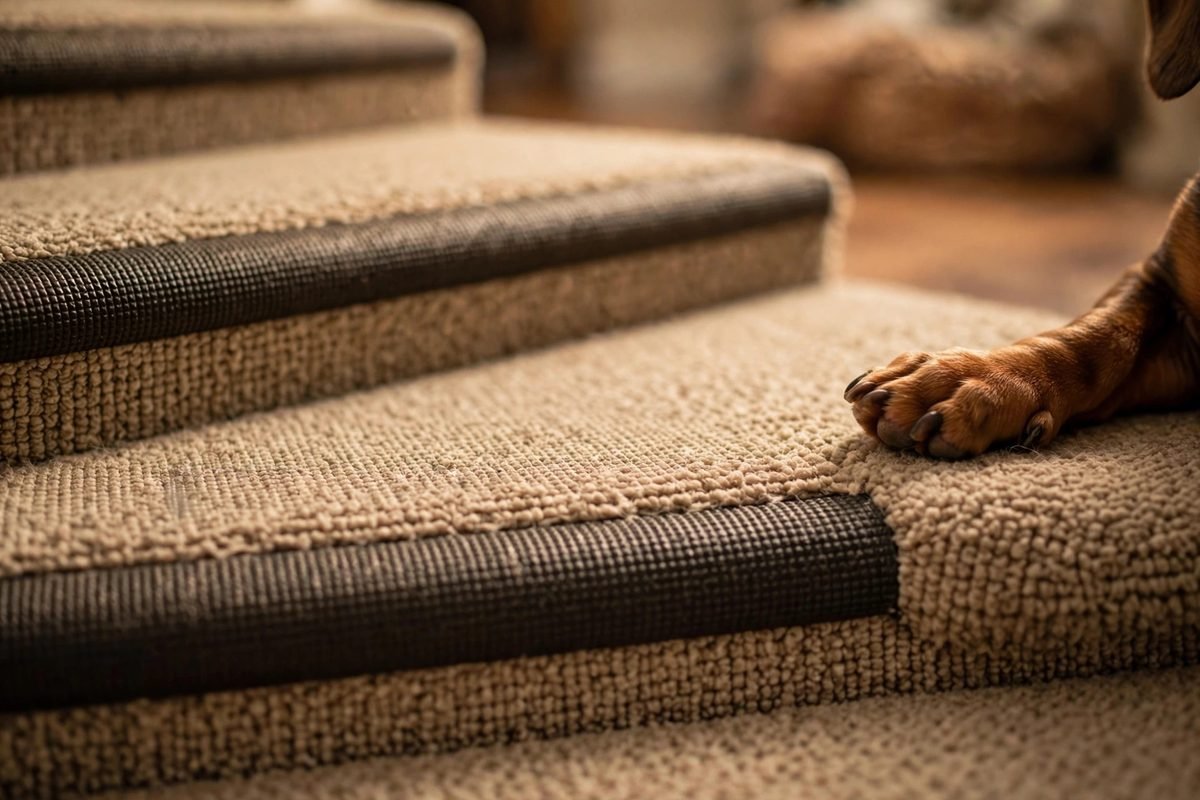
Grip is the detail that decides whether the dog will actually use the stairs. Look for a non-slip surface on every tread, such as carpet, a textured mat, or a rubberised covering, and run a hand across it: it should feel grippy, not smooth or shiny. Check the bottom of the stairs as well, since the whole set must grip the floor. Rubber feet or a non-slip base stop the stairs from sliding forward when the dog pushes off the bottom step, and that single detail prevents most of the slips that put a dog off using stairs.
Stability deserves a hands-on test before the stairs become part of the daily routine. Press down on the top step with one hand and push the set gently from the side with the other. The stairs should not rock, tip, or slide across the floor. If the set wobbles, it will feel unsafe to the dog, and the dog will go back to jumping. A solid, heavy-based set that never moves is worth more than a clever folding design that shifts.
4. Teaching a Dachshund to Use Pet Stairs
Introduce the stairs slowly, and let the dog explore them before asking for a climb. Place the stairs against the sofa, put a small treat on the first step, and let the dog sniff the set and take the treat at its own pace. Repeat this for a day or two, placing treats one step higher each time, until the dog walks up the whole set to reach the sofa. Keep sessions short, calm, and positive, and end on a success, even if that success is only one step. A dog that is rushed or lifted onto the top step will often refuse the stairs for days.
Guide the dog down the stairs the same way, since going down is often harder than going up. Stand beside the stairs, place a treat on the floor a short distance away, and let the dog find its own way down one step at a time. Some dogs hesitate at the top and need a treat placed on each step for the first few descents. Never push the dog down the stairs or lift it off the top step, since a fright on the stairs can undo a week of patient work. Slow, treat-led practice builds a habit that lasts.
Once the dog uses the stairs on its own, keep the routine consistent. Leave the stairs in the same place every day, and keep the route to them clear of shoes, bags, and laundry baskets. Praise the dog calmly each time it uses the steps, and keep treats handy for the first month, so the stairs stay more rewarding than the jump.
5. Placing and Caring for Pet Stairs at Home
Place the stairs where the dog actually climbs on and off. At the sofa, set them against the front edge where the dog usually approaches, not tucked around the side where the dog never goes. At the bed, set them on the side the owner uses, so the dog can follow the usual path to the pillow. Keep the floor in front of the stairs clear and dry, since a wet or cluttered landing makes the first step feel unsafe. A stair gate for apartments can keep the dog from using the household stairs unsupervised, while the pet stairs give the dog a safe route to the furniture it is allowed to use.
Check the stairs every week as part of a normal home routine. Look for loose treads, worn grip surfaces, sagging foam, and wobbly joints, and tighten or replace anything that has worked loose. Vacuum carpeted treads to keep them grippy, and wipe plastic or wooden treads with a damp cloth so dust does not make them slippery. If a tread cover is washable, take it off and wash it once a month, and let it dry fully before putting it back, since a damp cover can smell and lose its grip.
Plan for the dog’s changing needs over time. A puppy may need a lower set while it grows, an older dog may need deeper treads and a gentler rise as its legs stiffen, and a dog recovering from a vet-advised rest period may need the stairs moved to the exact spot where it sleeps.
Pet Stairs Buying Checklist
| Step | What to Do | What to Watch For |
|---|---|---|
| Measure | Floor to sofa seat and to bed mattress, cushion pressed down | Top step level with the seat or mattress |
| Count steps | Three steps for a low sofa, four or five for a bed | Each rise about 10 to 15 cm; deep treads |
| Check width | Tread at least 30 cm wide for a standard Dachshund | Whole paw lands; body fits across the tread |
| Check grip | Non-slip tread surface and non-slip base | No sliding when the dog pushes off |
| Test stability | Press the top step; push the set from the side | No rocking, tipping, or sliding |
| Teach slowly | Treats one step at a time for a few days | Calm climbs up and down; no pushing |
Follow the checklist in the same order every time. Stairs that are measured, grippy, stable, and taught slowly become part of the dog’s daily route within a week.
Common Mistakes
- Buying stairs without measuring the sofa or bed height first.
- Choosing tall, shallow steps that short legs cannot climb comfortably.
- Picking smooth, slippery treads with no grip surface.
- Using a light set that slides across the floor when the dog climbs.
- Lifting the dog onto the top step instead of teaching it step by step.
- Moving the stairs around, so the dog never learns one fixed route.
- Ignoring a wobble or a loose tread until the dog stops using the stairs.
- Forgetting that a bed usually needs a taller set than a sofa.
When to Call Your Vet
Contact a veterinarian if the dog hesitates, limps, cries, or refuses the stairs after using them happily, since pain, stiffness, or a recent injury needs a professional check. Contact a veterinarian promptly if the dog’s back seems sore, the dog cannot settle, or the dog shows weakness in the back legs. A veterinarian can check whether the problem comes from the stairs, the fit of the set, or a health issue, and advise on the next step. This article gives general information only and is not a diagnosis.
Pin This: Pet Stairs Buying Checklist
- Measure the sofa seat and bed mattress height first.
- Pick deep, non-slip steps with a rise of 10 to 15 cm.
- Make sure the top step lands level with the seat.
- Test stability: no rocking, tipping, or sliding.
- Teach the stairs with treats, one step at a time.
- Call a veterinarian if the dog limps or refuses the stairs.
Frequently Asked Questions
Are pet stairs or a ramp better for a Dachshund?
Both work, and the home decides. Stairs suit a sofa or bed in a small room because they take up little floor space and give the dog a short, stepped climb. A ramp suits a dog that prefers a slope, or a spot where there is plenty of floor length for a gentle incline.
How tall should Dachshund pet stairs be?
As tall as the furniture they serve. Measure from the floor to the top of the sofa seat cushion or the bed mattress, with the cushion pressed down. The top step should land level with that surface, or just below it. A low sofa usually needs three steps, while a standard bed usually needs four or five, with each rise around ten to fifteen centimetres.
How do I teach my Dachshund to use pet stairs?
Go slowly, with treats. Place the stairs against the sofa, put a treat on the first step, and let the dog take it at its own pace. Over a few days, place treats one step higher until the dog walks the whole set. Teach the way down the same way, with a treat on each step at first. Never push the dog or lift it onto the top step, since a fright can put the dog off the stairs for days.
What makes pet stairs safe for a Dachshund?
Three things: deep, non-slip treads, a stable base that never slides, and a rise that suits short legs. Check the treads for grip, check the base for rubber feet, and press the top step to test for wobble before the dog uses the set. Check the stairs weekly for loose treads, worn grip, and sagging foam, and fix problems before the dog loses confidence in them.
Can pet stairs be used for both the sofa and the bed?
Yes, if the heights match, but most homes need two sets, since a bed is usually taller than a sofa. A set that fits the sofa will be too short for the bed, leaving a final gap the dog must jump. Measure both pieces of furniture, and buy one set per spot, or pick a set with an adjustable height if the difference is small.
Conclusion
Dachshund pet stairs work when the height matches the furniture, the treads are deep and grippy, and the set never wobbles. The next step is a small one: measure the sofa seat and the bed mattress today, then compare those numbers with the size chart before buying anything.