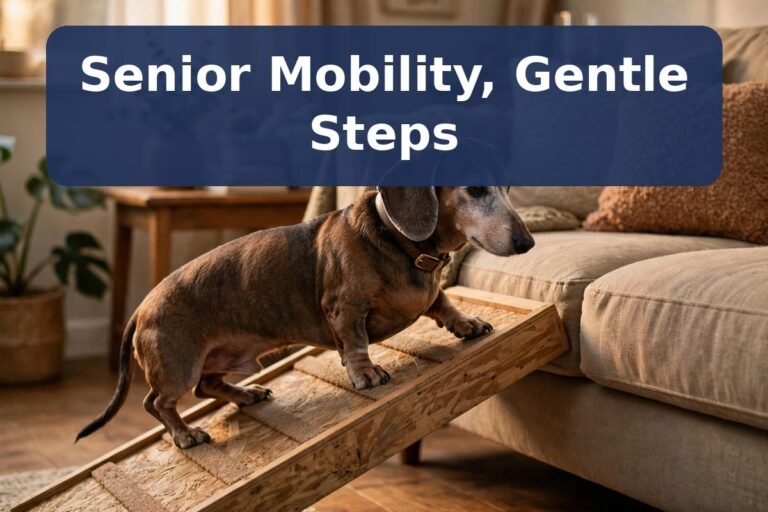
Dachshund Weight Gain After Neutering: Food and Portions
Quick Answer
- Dachshund weight gain after neutering is common, because the surgery lowers energy needs while appetite often rises, so the same portion that was right before can be too much after.
- The fix starts with food, not exercise: measure every meal, cut the portion by a small amount, and count every treat in the daily total.
- Weigh the dog every two weeks and feel the ribs monthly — ribs that are easy to feel under a thin layer of fat, with a visible waist from above, mean the weight is on track.
- Keep treats small and useful, such as a piece of the daily kibble, and skip table scraps and extra chews while the weight settles.
- Call a veterinarian if the weight keeps rising despite a measured diet, if the dog is very tired, or before starting any weight-loss plan.
Contents
- 1. Why Dachshund Weight Gain After Neutering Happens
- 2. How to Tell If the Weight Is Creeping Up
- 3. The Food and Portion Plan After Neutering
- 4. Treats, Chews, and Table Scraps: The Hidden Calories
- 5. When Weight Gain Needs a Veterinarian
- Dachshund Weight Gain After Neutering: Weekly Check
- Common Mistakes
- When to Call Your Vet
- Pin This: Weight After Neutering
- Frequently Asked Questions
- Conclusion
1. Why Dachshund Weight Gain After Neutering Happens
Dachshund weight gain after neutering happens because the surgery changes the body’s energy balance in two ways at once. The hormones that drive the reproductive cycle fall away, and with them falls the energy the body spends on that cycle. At the same time, many dogs feel hungrier after the surgery and ask for food more often. The result is a dog that burns fewer calories and wants more food, and if the portion stays the same, the extra food is stored as fat.
The change is gradual, and that is why it is easy to miss. A few grams a week do not show in the mirror, and a long, low dog can carry extra weight under a thick coat before anyone notices. The ribs get a little harder to feel, the waist from above gets a little less clear, and the belly from the side hangs a little lower. By the time the change is obvious, the dog may already be carrying a kilogram or more of extra weight, and a kilogram on a small Dachshund is a large share of its body weight.
Extra weight matters more for a Dachshund than for many other breeds, because of the long spine. Extra weight adds load to the back with every step, every jump, and every climb, and a spine that is already at risk does not need the extra strain. In short-legged breeds, disc degeneration can begin in the first year of life, so the spine is vulnerable from an early age, and keeping the weight steady is one of the most useful things an owner can do for it. Weight gain after neutering is not a failure, and it is not the dog’s fault — it is a predictable change that needs a planned answer.
2. How to Tell If the Weight Is Creeping Up
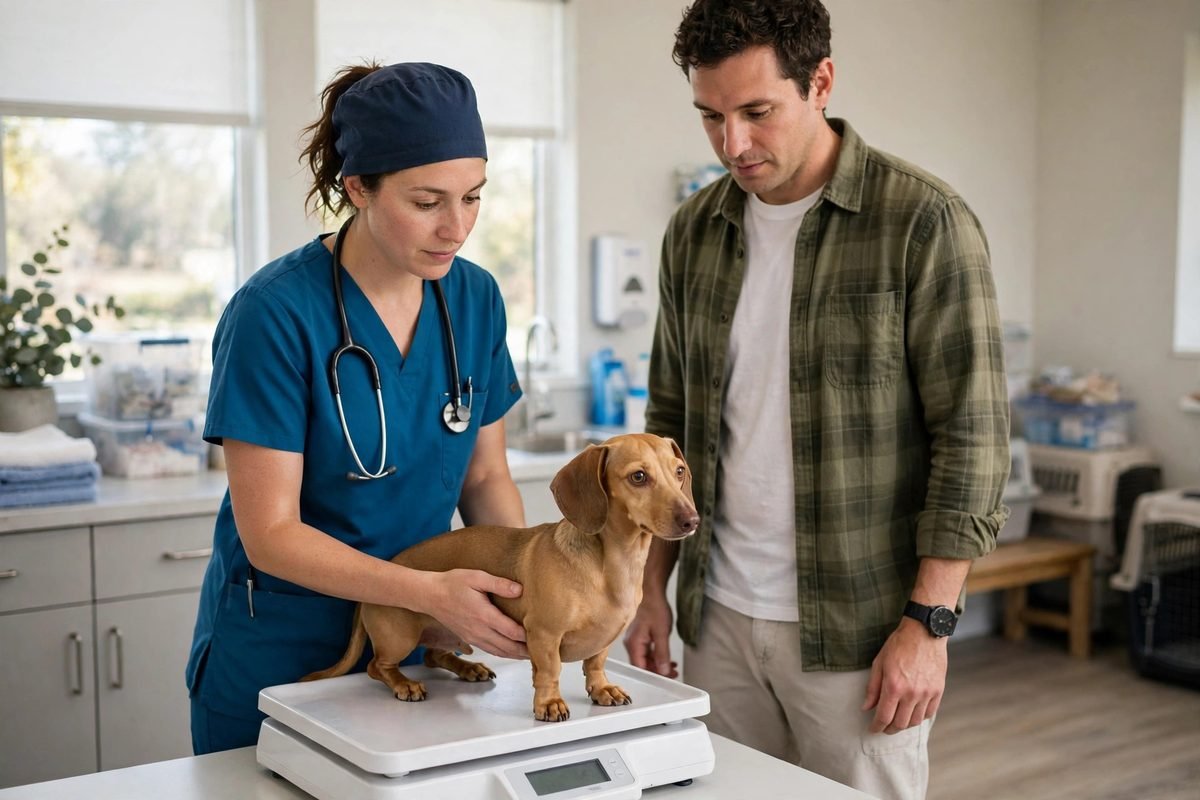
The scales tell the truth, so weigh the dog every two weeks and write the number down. Use the same scales, at the same time of day, and weigh the dog the same way each time — held in the owner’s arms with the owner’s weight subtracted, or on a pet scale if one is available. A single weighing can be thrown off by a full meal or a full bladder, but a line of weighings over a month shows the real direction. A slow, steady rise is the sign to act on, even if the dog still looks fine.
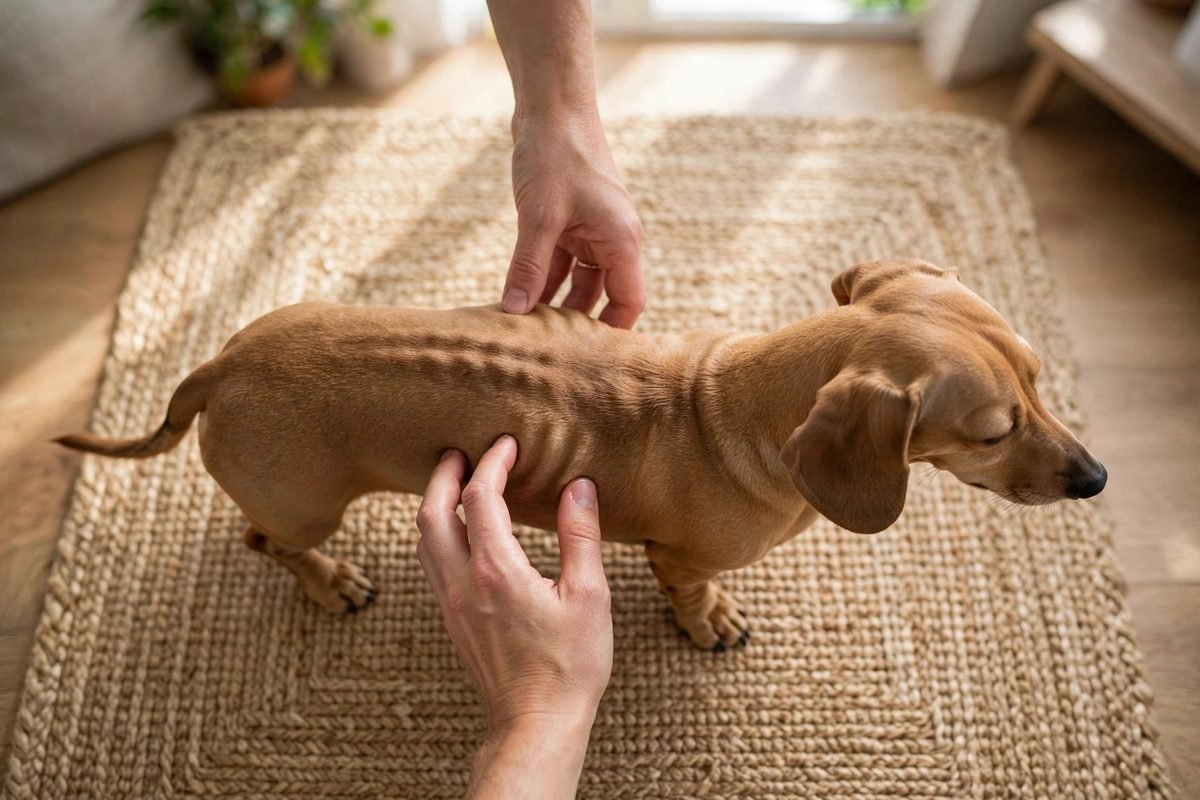
The hands tell the next part of the story. Run a hand along the ribs: on a dog at a healthy weight, the ribs are easy to feel under a thin layer of fat, like pencils under a thin cloth. If the ribs are hard to find, or if they can only be felt by pressing firmly, the dog is carrying extra weight. Look at the dog from above: there should be a gentle waist behind the ribs, a slight narrowing before the hips. Look from the side: the belly should tuck up behind the ribs, not hang in a straight line or sag down.
Behaviour gives the last clues. A dog that tires sooner on walks, that pants more on a warm day, that hesitates before a step it used to take easily, or that sleeps more and plays less may be carrying extra weight. These signs are easy to blame on age or weather, but when they appear in the months after neutering, weight is the first thing to check. The weight control guide explains how extra weight strains the back, and why a small gain matters so much on a long, low dog.
3. The Food and Portion Plan After Neutering
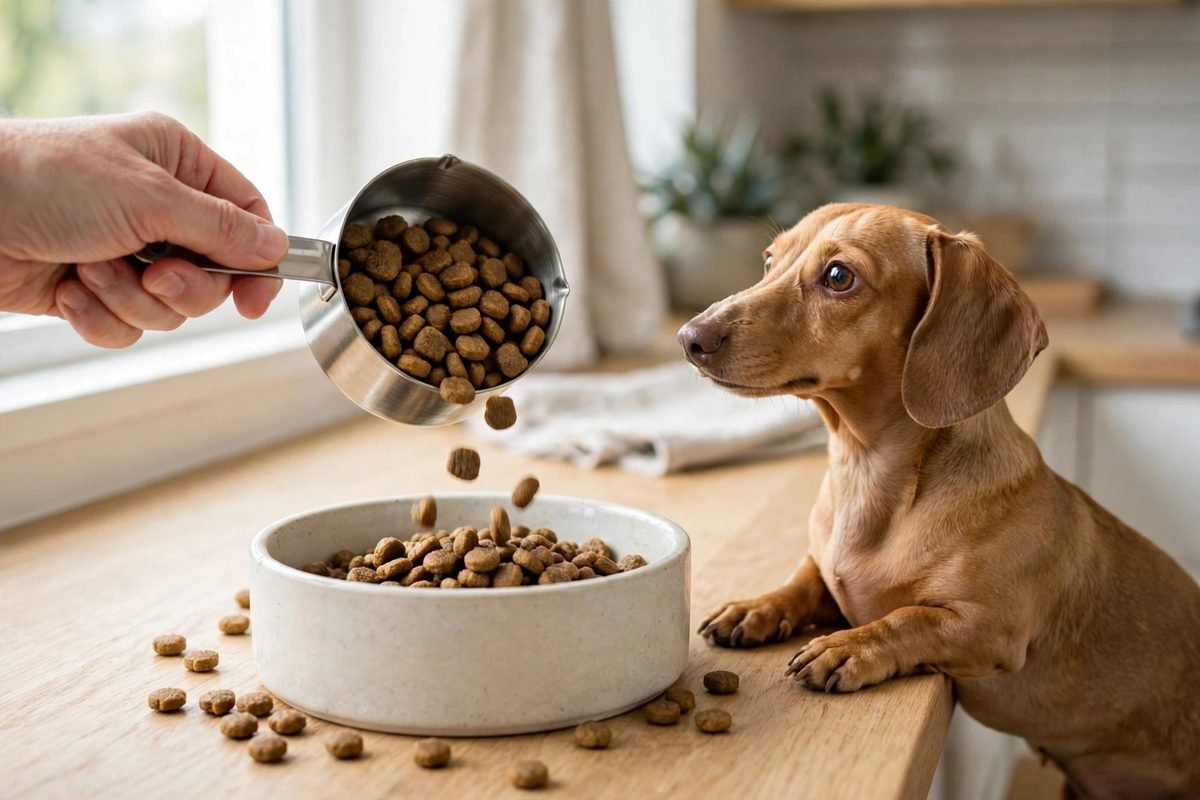
The food plan after neutering starts with measuring, because a portion judged by eye is almost always too large. Use a measuring cup or kitchen scales, and feed the amount the food bag suggests for the dog’s target weight and activity level, not for the weight the dog is now. If the dog is already gaining, cut the portion by a small amount — around a tenth — and hold that amount steady for two weeks before judging the result. A small cut, held steady, works better than a large cut that leaves the dog hungry and begging.
Feed twice a day at the same times, and keep the food the same. Two measured meals are easier to control than one large meal or food left down all day, and a steady food means the weight changes can be read clearly. If the food bag gives a range, start at the lower end of the range for a dog that is gaining weight, and adjust only after two weeks of weighings. Do not switch foods at the same time as cutting the portion, because two changes at once make it impossible to tell which one worked.
Some owners ask about a food made for neutered dogs, and those foods can help because they are lower in calories and higher in fibre, so the dog feels full on fewer calories. A switch like that is worth discussing with a veterinarian, who can advise on a food that fits this dog’s age, weight, and health. Whatever the food, the rule stays the same: measure every meal, weigh every two weeks, and change only one thing at a time. The safe weight loss guide covers the slow, steady approach to bringing weight down, and the same patience applies to keeping it from going up.
4. Treats, Chews, and Table Scraps: The Hidden Calories
Treats are the hidden calories in most Dachshunds’ diets, and they add up fast on a small dog. A biscuit here, a chew there, a piece of cheese from the table, and a treat from every visitor can easily add up to a quarter of the daily food, and none of it is counted in the measured meals. The fix is simple: count treats as part of the daily food, not on top of it. Take the day’s treats out of the measured meals, so the total stays the same, and keep each treat small.
The best treats are often the simplest. A few pieces of the dog’s own kibble, given one at a time as a reward, cost nothing extra and keep the daily total exact. A small piece of carrot or cucumber can work for some dogs, and a lick mat with a thin smear of wet food can keep a dog busy without adding much food. Big biscuits, large chews, and fatty table scraps are the ones to skip while the weight settles, because a single large chew can hold as many calories as a whole meal for a small dog.
Everyone in the home needs to follow the same rule, or the plan fails. A dog that gets a measured diet from one person and treats from three others is not on a diet at all. Put the day’s treats in a small tub each morning, so everyone can see how many are left, and when the tub is empty, the treats are done for the day. Table scraps stop altogether while the weight is being managed, and visitors are told the rule before they reach for a treat. A plan the whole household follows is the only kind that works.
5. When Weight Gain Needs a Veterinarian
Weight gain needs a veterinarian when it keeps rising despite a measured diet, when it comes with other changes, or before any weight-loss plan begins. A dog that gains weight while eating a measured portion, that is very tired, that drinks much more water than usual, or that loses hair and seems cold all the time should be checked, because those signs can point to a medical problem rather than a portion problem. A veterinarian can weigh the dog, check the body condition, and run tests if the pattern points that way.
A veterinarian should also be part of the plan before the portion is cut by a large amount, and before any new food is tried. A large cut can leave a small dog short of nutrients, and a sudden switch to a new food can upset the stomach. A veterinarian can set a target weight, suggest a safe daily amount, and set a schedule for reweighing. Bring the weighing log, the food name and amount, and a list of every treat and scrap the dog gets, because that record shows the veterinarian exactly what the dog eats.
The visit is also a chance to talk about movement. A dog that is gaining weight needs gentle, regular activity, but a Dachshund’s back needs care too, so the exercise plan should be built around short walks, calm play, and no jumping or rough play. A veterinarian can advise on the right amount of activity for this dog, and on how to build it up slowly. Weight gain after neutering is common, and it is manageable — with a measured diet, a weighing routine, and a veterinarian’s guidance, most dogs settle back to a steady weight within a few months.
Dachshund Weight Gain After Neutering: Weekly Check
| What to Check | How to Check It | What It Shows |
|---|---|---|
| Weight | Same scales, same time, every two weeks | Whether the weight is rising, steady, or falling |
| Ribs | Feel along the ribs once a month | Ribs easy to feel means the weight is on track |
| Waist | Look from above for a waist behind the ribs | A clear waist means less extra fat |
| Belly tuck | Look from the side for a tuck behind the ribs | A sagging belly means extra weight |
| Food measured | Cup or scales, same amount, twice a day | Whether the portion is really controlled |
| Treats counted | Daily tub, treats taken from the meals | Whether hidden calories are sneaking in |
A weighing log kept every two weeks, with the ribs and waist checked monthly, shows the trend early. Bring the log to the vet visit.
Common Mistakes
- Keeping the same portion after neutering, even though energy needs have fallen.
- Judging the portion by eye instead of measuring it with a cup or scales.
- Counting treats on top of the meals instead of as part of the daily total.
- Cutting the portion by a large amount all at once, leaving the dog hungry.
- Switching foods and cutting the portion at the same time, so nothing can be judged.
- Letting visitors and family members hand out treats outside the plan.
- Weighing the dog once, on different scales, and drawing a conclusion from one number.
- Waiting until the weight gain is obvious before doing anything about it.
When to Call Your Vet
Contact a veterinarian if the weight keeps rising despite a measured diet, if the dog is very tired, drinks much more water than usual, or loses hair. Contact a veterinarian before starting any weight-loss plan or switching to a new food, so the target weight and daily amount are set safely. Contact a veterinarian soon if the dog seems stiff, sore, or reluctant to move, because extra weight adds strain to the back. A veterinarian can weigh the dog, check the body condition, and advise on a safe food and activity plan. This article gives general information only and is not a diagnosis.
Pin This: Weight After Neutering
- Energy needs fall after neutering while appetite often rises.
- Measure every meal and cut the portion by a small amount.
- Weigh the dog every two weeks and write the number down.
- Feel the ribs monthly and look for a waist from above.
- Count every treat in the daily total, and skip table scraps.
- Call a veterinarian before starting a weight-loss plan.
Frequently Asked Questions
How do I stop my Dachshund gaining weight after neutering?
Measure every meal, cut the portion by a small amount, count every treat in the daily total, and weigh the dog every two weeks. A steady routine, with the whole household following the same rule, is what keeps the weight from creeping up.
How much should I feed my Dachshund after neutering?
Start with the amount the food bag suggests for the dog’s target weight and activity level, and use a measuring cup or scales every time. If the weight still rises after two weeks, cut the portion by around a tenth and ask a veterinarian to set the right daily amount.
Will my Dachshund definitely gain weight after neutering?
Not always, but weight gain after neutering is common, because energy needs fall while appetite often rises. A measured diet, regular weighing, and a calm activity routine keep most dogs at a steady weight.
Are treats the problem after neutering?
Treats are often the hidden part of the problem, because they add calories on top of the measured meals. Take the day’s treats out of the meals, keep each treat small, and use a few pieces of the dog’s own kibble as rewards.
When should I call the vet about weight gain?
Call a veterinarian if the weight keeps rising on a measured diet, if the dog is very tired or drinks much more water than usual, or before starting any weight-loss plan. A veterinarian can set a target weight and a safe daily amount.
Conclusion
Dachshund weight gain after neutering is common and manageable: measure every meal, count every treat, weigh the dog every two weeks, and keep the routine steady. The next step is simple — weigh the dog today, write the number down, and ask a veterinarian to set a target weight if the line is rising.