Dachshund Weight Control: How Extra Weight Strains the Back
Weight is one of the most important parts of Dachshund back care, and it is also one of the easiest to overlook. A few extra pounds may not look dramatic on a small dog, but for a long-backed breed, that extra load is carried every day. Good weight control is not about a perfect shape or a strict diet. It is about steady habits, honest portion sizes, and movement that protects the spine.
Why weight matters for a long back
A Dachshund has a long spine supported by relatively short legs. Extra body weight increases the load on the back, joints, and muscles, and it can make everyday movement harder. A heavier dog may tire sooner, move less, and find it harder to use a ramp or walk calmly. Over time, that combination can raise the risk of back strain and make Dachshund IVDD prevention more difficult.
Weight gain often happens slowly. A little extra food here, a few more treats there, and less play on busy days can add up over weeks. In a mini Dachshund apartment home, where space for running is limited, the balance between food and activity needs more attention than it does in a large house with a garden.
How to tell if your Dachshund is overweight
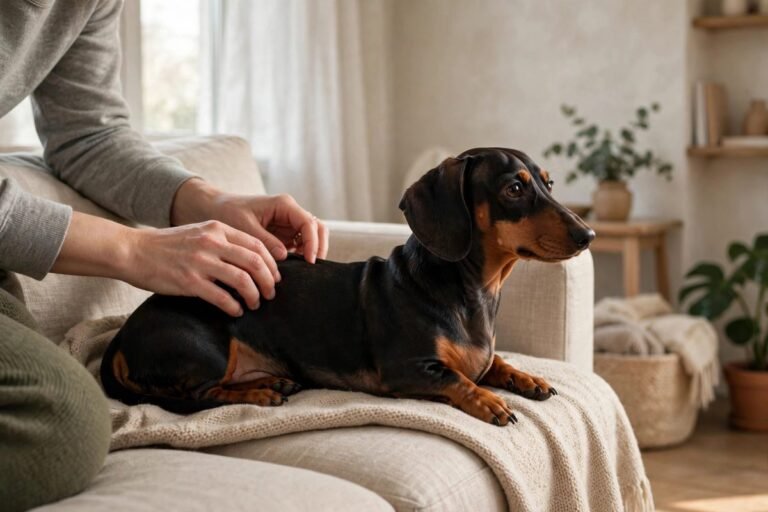
You can start with a gentle hands-on check at home. You should be able to feel the ribs easily under a thin layer of fat, without pressing hard. From above, your dog should have a visible waist behind the ribs, rather than a straight or bulging outline. From the side, the belly should tuck up slightly instead of hanging low.
These checks are useful, but they are not a diagnosis. Coat thickness, body shape, and age can all affect what you feel and see. A vet check is the best way to confirm a healthy weight range for your individual dog, especially if you are unsure or if your dog has gained weight quickly. Ask your vet to weigh your dog and talk through body condition at a routine visit.
Measured food and feeding routine for apartments
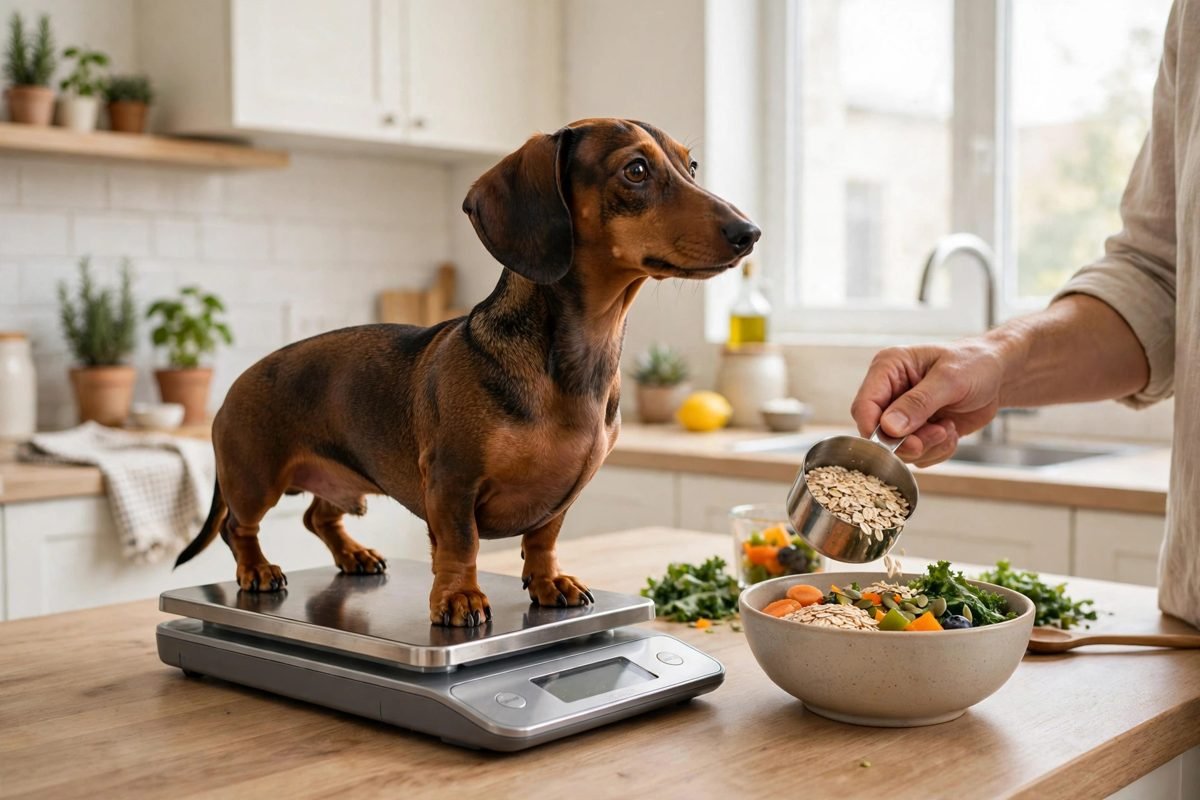
Measured food is the foundation of weight control. Use a measuring cup or kitchen scale, and follow the feeding guide for your dog’s current weight and activity level as a starting point, not as a fixed rule. Divide the daily amount into two regular meals, and avoid topping up the bowl between meals.
Keep a simple routine. Feed at the same times each day, store food out of reach, and be careful with table scraps, which can add calories quickly. If more than one person feeds your dog, agree on who gives each meal so portions are not doubled by accident. In an apartment, it also helps to keep the food bowl in one quiet spot, away from the sofa where begging can become a habit.
Healthy treats and exercise without jumping
Treats can still be part of a happy life, but they should count toward the daily total. Choose small, low-calorie treats, break larger treats in half, and use part of the daily food allowance for training rewards. Fresh options your vet approves, such as small pieces of carrot or cucumber, can work well for some dogs, but check first if your dog has any dietary needs.
For exercise, focus on gentle, regular movement without jumping. Short walks, sniffing games, slow hallway walks, and calm play on the floor are good choices for a mini Dachshund apartment routine. Use a ramp for the sofa and bed, a harness for walks, and avoid repeated jumping on and off furniture. If your dog is reluctant to move, seems stiff, or tires very quickly, slow down and seek vet advice rather than pushing on.
When to ask your vet
Ask your vet before starting any weight-loss plan, and do not put a dog on a strict diet without vet advice. Sudden food cuts can leave a dog hungry, low in energy, or missing nutrients, and they do not fix the habits that caused the gain. Your vet can suggest a safe target, a feeding amount, and a realistic pace, and can check for health issues that affect weight.
Small, steady changes usually work best: measured meals, fewer extra treats, daily gentle walks, and a ramp instead of jumping. With patience, most Dachshunds can reach a healthier weight without stress. If you notice back pain, wobbliness, yelping, stiffness, or sudden weakness, have your dog seen by a vet promptly. This article is general information only, not a diagnosis.