How to Lift a Dachshund Correctly Without Hurting Its Back
For a Dachshund, being lifted is part of everyday life. In a mini Dachshund apartment, that lift can happen many times a day: up onto the sofa, up onto the bed, into the car, up a short flight of stairs, or onto the table at the vet. Because Dachshunds have long backs and short legs, good Dachshund back care starts with how you pick them up. A quick, careless lift can put sudden strain on the spine, while a calm, supported lift keeps the back level and safe. Learning the correct lift is one of the simplest forms of Dachshund IVDD prevention you can practise at home, and it costs nothing but a little care and patience.
Why the wrong lift hurts a Dachshund’s back
A Dachshund’s long spine is supported by discs between the vertebrae, and those discs can be stressed when the body hangs or twists without support. When you lift a Dachshund by its front legs or under its armpits only, the back half of the body is left to hang. Gravity then pulls the hindquarters down, the spine sags in the middle, and the muscles and discs take more load than they should. The same problem happens when you let the back legs dangle during a lift, even if you meant to be gentle.
Twisting while lifting adds another risk. If you turn quickly to put your dog on the sofa, or swing them around, the spine twists under their weight. Repeated strain from small, everyday lifts can add up, especially for a dog that jumps on and off furniture or carries extra weight. That is why Dachshund back care is not only about ramps and rest. It is also about slowing down for the few seconds a lift takes and keeping the whole body supported.
The correct two-hand lift, step by step
The safest lift uses both hands and keeps your Dachshund level. Move calmly and let your dog see you coming, so the lift is not a surprise.
- Place one hand under the chest, behind the front legs. This hand supports the front of the body and stops your dog from slipping forward.
- Place your other hand under the back legs and hindquarters. This hand supports the rear of the body, so the spine stays level from chest to tail.
- Hold your Dachshund close to your body, keep their back straight, and do not twist as you stand or turn. Move your feet instead of twisting at the waist.
- Set them down gently on a ramp, a flat surface, or the floor. Let all four feet settle before you let go, and never drop them or let them jump down from your arms.
With practice, this two-hand lift becomes automatic. It is far kinder than a one-handed scoop, and a dog that feels secure is less likely to wriggle, which makes the next lift even safer.
Lifting in small apartments
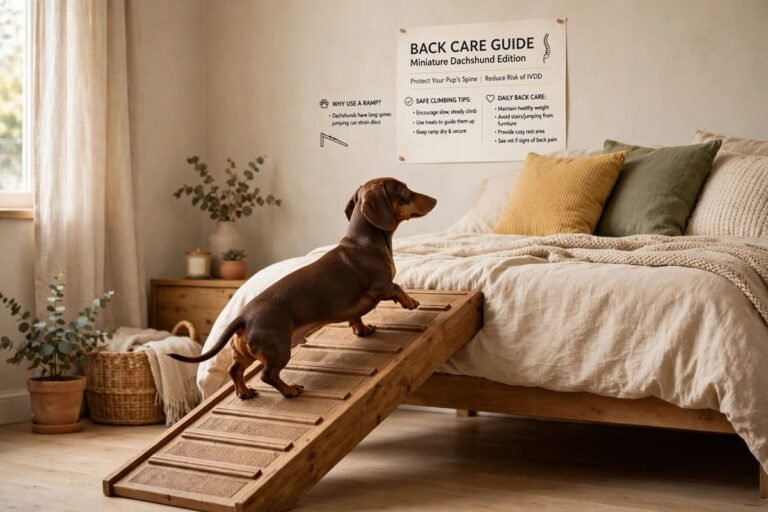
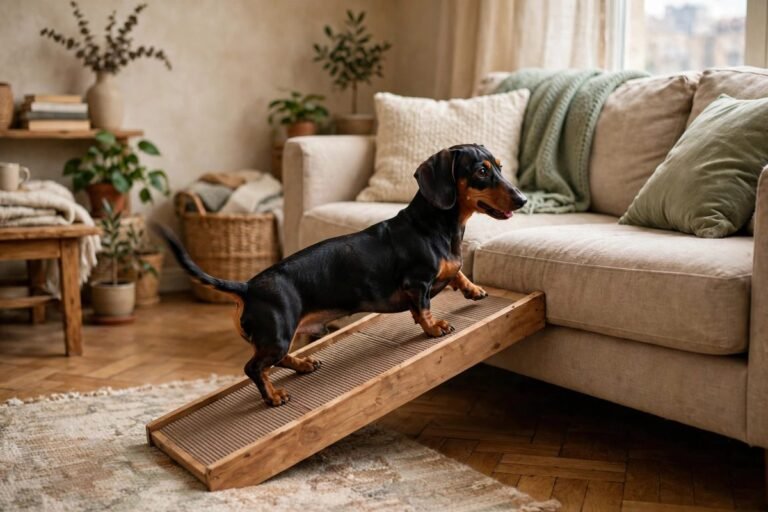
In a small apartment, space is tight, so plan ahead. Use a ramp for the sofa and bed whenever you can, and lift only when you really need to, for example into the car or onto a vet table. A ramp means fewer lifts each day, and fewer chances for a rushed lift. Keep the path to the ramp clear, and guide your dog calmly rather than hurrying them.
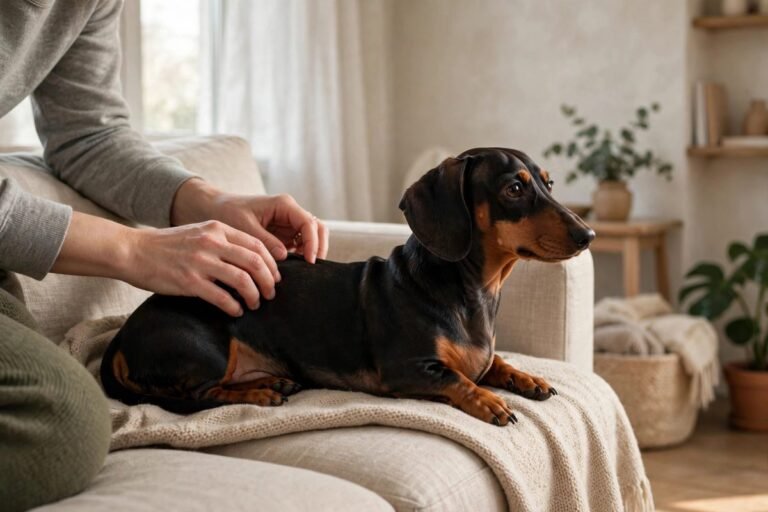
Teach children the same two-hand lift, and supervise them until they can do it confidently. Children should sit or kneel first, support both chest and hindquarters, and stay still while holding the dog. Avoid picking up a sleeping or startled Dachshund suddenly. Speak softly, let them wake and notice you, then lift gently. A calm dog is easier to hold level, and a calm lift is part of everyday Dachshund IVDD prevention in a mini Dachshund apartment.
Mistakes to avoid
It helps to know the common mistakes, because most happen in a hurry. Avoid lifting by the front legs, by the armpits, or with one hand while the rest of the body hangs. Do not swing your dog, toss them onto a bed, or lift them by the collar or harness only. A harness is useful for walking, but not a handle for lifting, and lifting by it alone can pull unevenly on the body.
Good Dachshund back care is a daily habit, not a single perfect lift. Small, steady choices, a ramp where it helps, a level two-hand lift when you must lift, and a calm pace all protect the long back that makes Dachshunds so distinctive. If you see back pain, wobbliness, yelping, stiffness or sudden weakness, see a vet promptly. This post is general information, not a diagnosis, and a vet can check your dog in person and advise on the right next step.