
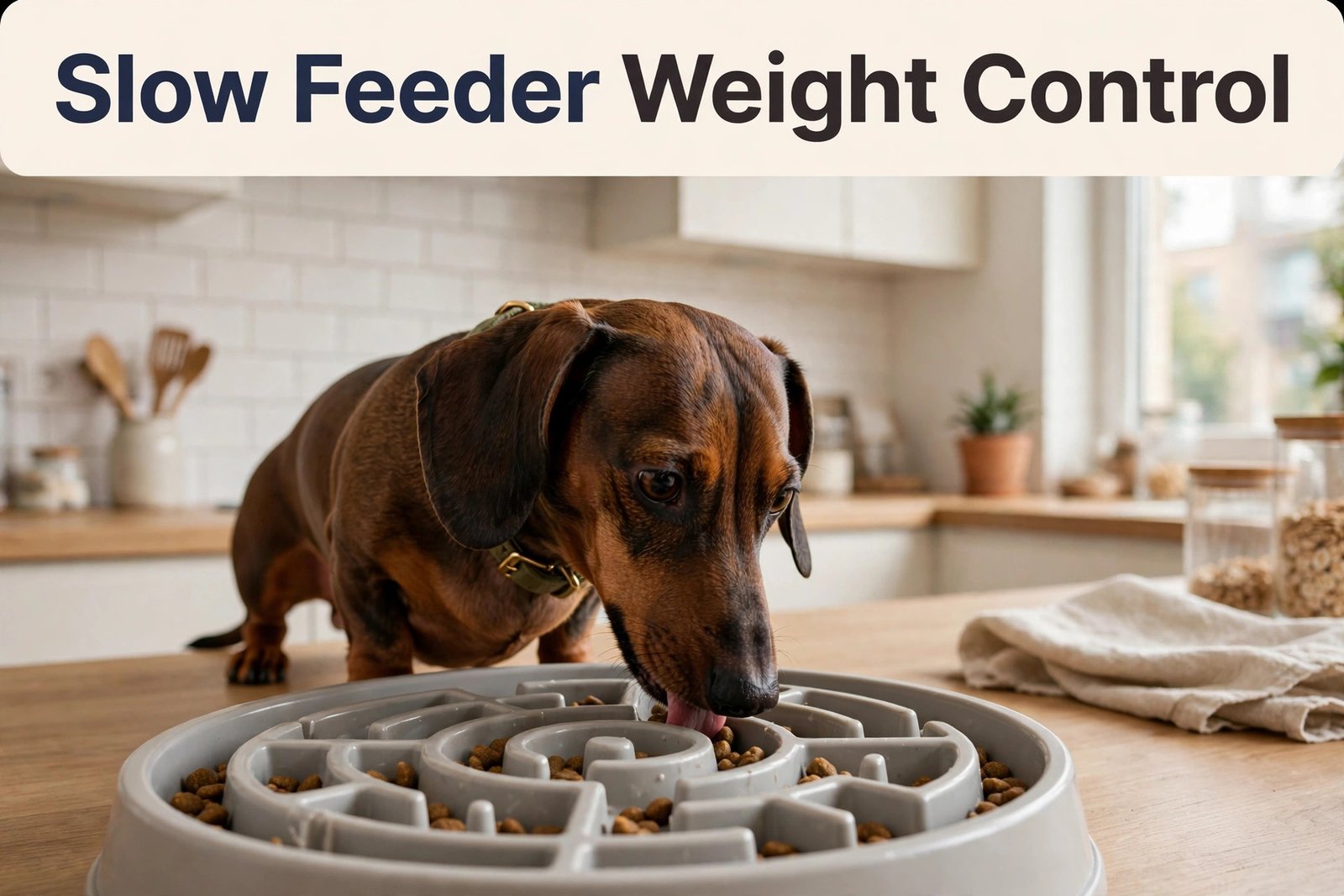
Slow Feeder Bowl for Dachshunds and Weight Control
Quick Answer
- A slow feeder bowl slows eating by spreading food around ridges, mazes, or raised sections, so a fast-eating Dachshund takes longer to finish a meal.
- Choose a bowl that fits the measured portion, suits the food type, stays stable on the floor, and is easy to clean after every meal.
- A slow feeder supports weight control only as part of a wider plan: measured portions, a feeding schedule, and veterinary guidance on weight.
- Watch for frustration, food guarding, or skipped meals, and change the bowl difficulty or feeding routine if eating becomes stressful.
Contents
- 1. Why Fast Eating Matters for Weight Control
- 2. Slow Feeder Bowl Types and How They Work
- 3. Choosing Size, Depth, Material, and Stability
- 4. Portions, Schedules, and Treats in a Weight Plan
- 5. Cleaning, Safety Checks, and Calm Feeding Routine
- Slow Feeder Comparison Checklist
- Common Mistakes
- When to Call Your Vet
- Pin This: Slow Feeder Checklist
- Frequently Asked Questions
- Conclusion
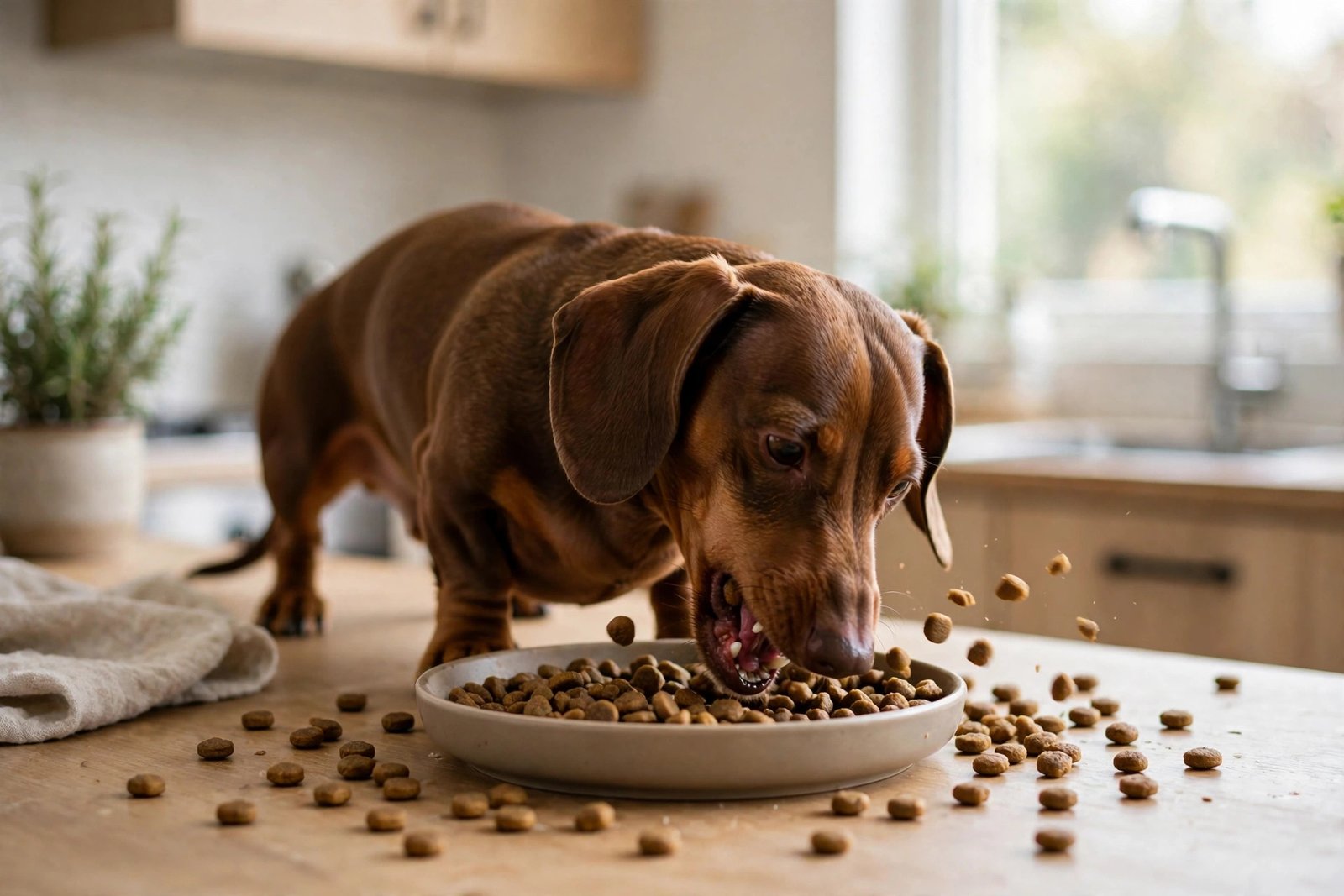
Many Dachshunds eat quickly. A bowl can be empty in under a minute, followed by begging, scavenging, or restlessness. Fast eating does not by itself cause weight gain, but it can make portion control harder to judge, because the dog seems hungry again soon after eating. It can also lead to gulping, coughing, or discomfort after meals. A slow feeder bowl changes the pace of eating, giving the dog time to eat calmly and giving the owner a clearer view of how much food is actually served.
This guide explains slow feeder bowls for Dachshunds from a weight-control angle, without overstating what a bowl can do. It covers bowl types, sizing, materials, cleaning, and feeding routines, and it explains how a bowl fits into a wider weight plan. A bowl is a tool. Portion size, food choice, treats, exercise, and veterinary advice decide the outcome.
1. Why Fast Eating Matters for Weight Control
Weight matters for a Dachshund because extra weight adds load to a long back and short legs. A dog that carries extra weight may move less comfortably, tire sooner, and place more strain on the spine during daily activity. Weight control is therefore a back-care issue as well as a general health issue, and feeding pace is one small part of that picture.
Fast eating can hide portion problems. When food disappears quickly, an owner may add more food, offer extra treats, or feed again sooner, because the dog still acts hungry. A slower meal gives a clearer stopping point and a calmer post-meal period. It also reduces gulping and the discomfort that can follow a rushed meal, such as burping, coughing, or restlessness.
General background on disc disease helps explain why weight and back care are linked. The Animal Medical Center explains intervertebral disc disease in dogs, including signs that need veterinary attention. Cornell information on chondrodystrophy and intervertebral disc disease describes added disc risk in this breed group. The DachsLife research on disc calcification in Dachshunds, available through DachsLife 2015 research on disc calcification, gives background on disc changes in the breed. A slow feeder is not a medical treatment and does not prevent disc disease. It supports a calmer feeding routine within a wider, veterinarian-guided weight plan.
Apartment life adds its own feeding challenges. Food is often served in a kitchen corner, treats are given during training, and family members may each offer a small extra. A slow feeder, a measuring scoop, and a written feeding note help keep the daily total consistent, even when more than one person feeds the dog.
2. Slow Feeder Bowl Types and How They Work
Slow feeder bowls use obstacles to spread food and slow access. A maze bowl has raised walls that form channels, so the dog must lick or nose food from different sections. A ridge bowl has low bumps that separate kibble into small groups. A lick mat spreads wet food thinly, so the dog licks rather than gulps. Each type slows eating in a different way, and each suits a different food type.
Maze bowls suit dry kibble well, because kibble sits in channels and moves slowly. They come in different difficulty levels, from shallow channels to deeper, complex patterns. Start with a shallow maze, and increase difficulty only if the dog eats calmly and finishes meals without frustration. A bowl that is too hard can cause stress, food guarding, or skipped meals, which defeats the purpose.
Ridge bowls suit dogs that are new to slow feeding or that have a short muzzle. The obstacles are lower, so food is still accessible, but eating takes longer than from a flat bowl. Lick mats suit wet food, soft food, or a small amount of spreadable food, and they work well as a calm enrichment activity rather than a main meal bowl. Check that any mat or bowl is food-safe, sturdy, and suitable for the dog’s chewing style.
Some bowls combine a slow feeder with a raised base or a non-slip bottom. A raised bowl can help a dog that struggles to bend low, but height should be chosen carefully and discussed with a veterinarian if the dog has back or neck issues. For most apartment dogs, a stable bowl on the floor, placed on a non-slip mat, is a simple and safe starting point.
3. Choosing Size, Depth, Material, and Stability
Size should match the measured portion, not the dog’s appetite. A bowl that is far too large for a small portion spreads food so thinly that the dog may become frustrated, while a bowl that is too small for the portion defeats the slow-feeding design. Check the bowl capacity against the daily portion, and remember that a slow feeder is used for one meal at a time, not for a full day of food.
Depth and muzzle fit matter for a Dachshund. A deep, narrow bowl can make it hard for a dog to reach food at the bottom, while a wide, shallow bowl gives easier access and still slows eating through ridges or channels. Test the bowl with a small amount of food first, and watch whether the dog can reach all sections without straining, twisting, or pushing the bowl across the floor.
Material choices affect cleaning, durability, and safety. Stainless steel is durable and easy to clean, but slow feeder shapes in steel are less common. Ceramic is heavy and stable, but can chip if dropped. Food-safe plastic is common for maze designs, but check for scratches, cracks, and odours over time, and replace a damaged bowl promptly. Avoid bowls with sharp edges, loose parts, or small pieces that a chewing dog could break off.
Stability is essential. A slow feeder that slides across a smooth floor will frustrate the dog and scatter food. Choose a bowl with a non-slip base, or place it on a non-slip mat. Test stability on the actual kitchen floor, not only on a shop counter. If the bowl still moves, try a heavier bowl, a larger mat, or a different floor location with more grip.
4. Portions, Schedules, and Treats in a Weight Plan
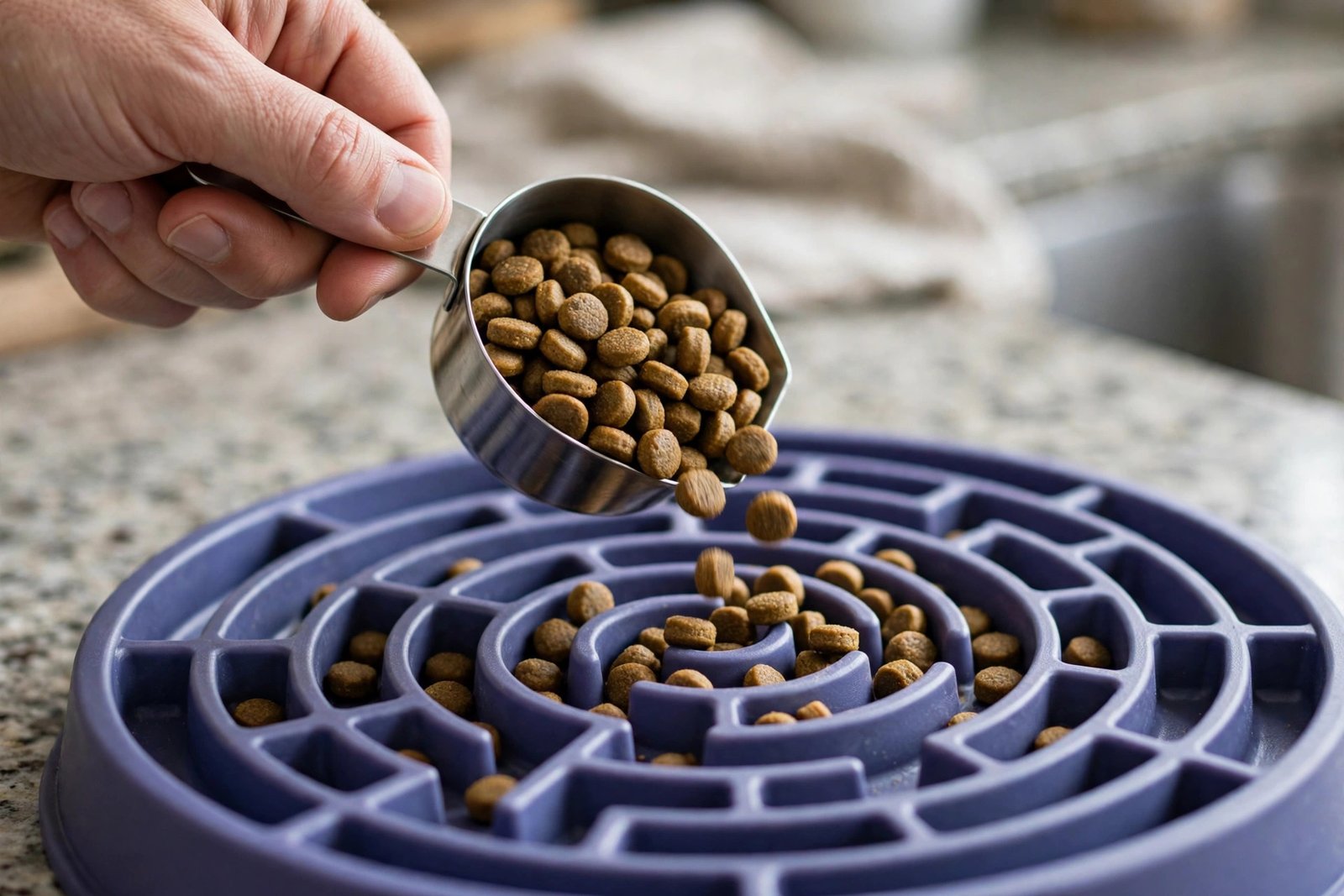
A slow feeder does not control weight on its own. Portion size decides how many calories the dog receives, and that portion should be based on veterinary guidance, the dog’s weight, activity, and food type. Use a measuring scoop or kitchen scale for consistency, and write the portion down where everyone who feeds the dog can see it. Guessing portions, even with a slow feeder, will not give a reliable result.
A regular schedule helps. Feed at consistent times, in the same place, with the same bowl, so the dog learns when meals happen and does not beg constantly between meals. Avoid free-feeding, where food stays available all day, because it makes portion tracking impossible and can lead to overeating. If the dog seems hungry between meals, ask a veterinarian about portion, food type, or feeding frequency, rather than adding extra food.
Treats count toward the daily total. Training treats, dental chews, table scraps, and family extras all add calories, and small dogs reach a daily limit quickly. Keep treats small, count them in the daily plan, and choose low-calorie options where appropriate. A treat jar with a daily limit, rather than an open supply, helps everyone in the household stay consistent.
Track weight and body condition over time, with regular weigh-ins and veterinary checks. Note the portion, the bowl type, and any changes in appetite, energy, or movement. A slow feeder that helps the dog eat calmly is a good sign, but weight change over weeks, not a single meal, shows whether the wider plan is working. Adjust the plan only with veterinary guidance.
5. Cleaning, Safety Checks, and Calm Feeding Routine
Cleaning matters more for slow feeders than for flat bowls, because food hides in channels, ridges, and corners. Wash the bowl after every meal with warm water and a suitable detergent, rinse fully, and dry before the next use. Use a brush for maze channels, and check for stuck kibble, mould, or odour. A dirty slow feeder can cause stomach upset and will lose its benefit if the dog refuses to eat from it.
Check the bowl regularly for damage. Look for cracks, chips, worn ridges, loose parts, and scratches that trap bacteria. Replace a damaged bowl, even if the damage looks small, because a chewing dog can break off a piece. Also check the non-slip base and mat, and replace them when they lose grip or become worn.
Build a calm feeding routine around the bowl. Place the bowl in a quiet corner, away from high traffic and other pets, and allow the dog to eat without interruption. Avoid picking up the bowl mid-meal, hovering over the dog, or adding food during the meal, because those actions can increase guarding behaviour. After the meal, allow a calm rest period before play or a walk.
If the dog shows frustration, such as pawing, barking, tipping the bowl, or refusing to eat, reduce the difficulty. Use a shallower maze, a ridge bowl, or a smaller portion spread in a lick mat, and increase difficulty only gradually. A calm meal in a simple bowl is better than a stressful meal in a difficult bowl. The wider apartment routine, including ramps and safe movement after meals, is covered in the guide to Dachshund apartment essentials, and a safe path to a resting area after feeding pairs well with a calm routine. For movement after meals, the guide to choosing the right ramp for a Dachshund explains how a gentle ramp reduces jumping in daily life.

Slow Feeder Comparison Checklist
| Type | Best for | Limit to watch |
|---|---|---|
| Maze bowl | Dry kibble, steady slowing | Too hard can cause frustration |
| Ridge bowl | New slow feeders, short muzzles | Milder slowing effect |
| Lick mat | Wet food, calm enrichment | Not a main meal bowl for all dogs |
| Raised slow feeder | Dogs that struggle to bend low | Height needs care with back issues |
| Stable base and mat | All types on smooth floors | Base wear reduces grip over time |
Common Mistakes
- Expecting a slow feeder alone to control weight, without measuring portions.
- Choosing a maze that is too difficult, causing frustration or skipped meals.
- Ignoring treats and extras, which quickly exceed a small dog’s daily total.
- Leaving food available all day, which makes portion tracking impossible.
- Skipping cleaning, so food builds up in channels and causes stomach upset.
- Using a damaged or sliding bowl that frustrates the dog.
When to Call Your Vet
Contact a veterinarian promptly if the dog shows sudden weight loss or gain, vomiting, diarrhoea, coughing or choking during meals, food refusal for more than a day, pain, a hunched back, wobbliness, or any sudden change in appetite or movement. This article gives general information only and does not diagnose any condition. A veterinarian can advise on portions, food type, feeding frequency, and weight checks, and can examine the dog if signs are present. Do not start a restricted feeding plan for a puppy, a senior dog, or a dog with a health condition without veterinary guidance.
Pin This: Slow Feeder Checklist
- Measure the portion with a scoop or scale, every meal.
- Start with a shallow maze or ridge bowl.
- Check muzzle fit, stability, and floor grip.
- Count treats in the daily total.
- Feed at consistent times in a quiet spot.
- Wash and dry the bowl after every meal.
- Track weight over weeks with veterinary guidance.
Frequently Asked Questions
Does a slow feeder bowl help with weight control?
A slow feeder helps by slowing meals and making portions clearer, but weight control depends on measured portions, treats, activity, and veterinary guidance. The bowl alone does not control weight.
What type of slow feeder suits a Dachshund?
Start with a shallow maze or ridge bowl that fits the portion and allows easy access to all sections. Increase difficulty only if the dog eats calmly and finishes meals without frustration.
Can a slow feeder be used for wet food?
Yes, but choose a design suited to wet food, such as a shallow maze or a lick mat, and clean it thoroughly after every meal to prevent build-up.
How often should a slow feeder be cleaned?
Wash it after every meal, brush maze channels, rinse fully, and dry before reuse. Check regularly for cracks, chips, and worn ridges.
What if the dog refuses the slow feeder?
Reduce difficulty, try a ridge bowl or lick mat, and keep meals calm and consistent. If refusal lasts more than a day, or other signs appear, contact a veterinarian.
Conclusion
A slow feeder bowl for a Dachshund is a useful part of a weight-control routine when it fits the portion, suits the food, stays stable, and is cleaned after every meal. Pair the bowl with measured portions, a consistent schedule, counted treats, and veterinary guidance. That combination gives calmer meals and a clearer, steadier path to a healthy weight.





5 Comments