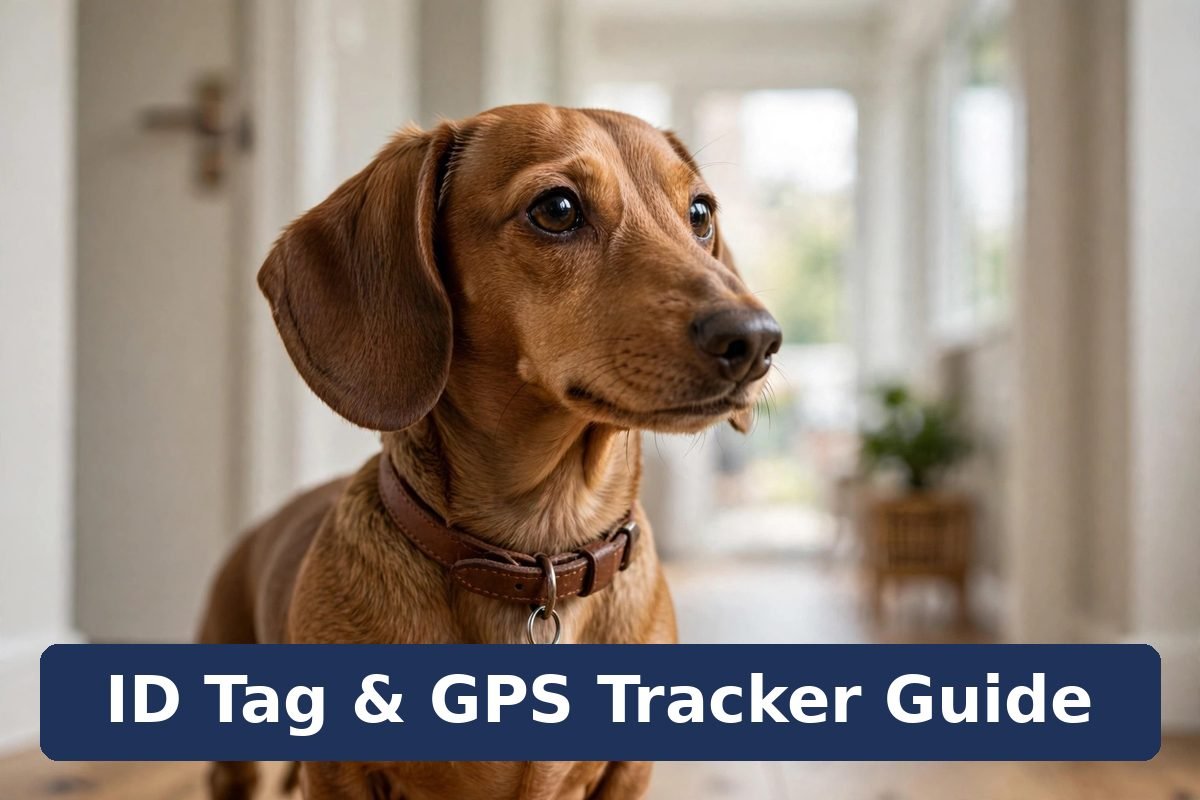
Dachshund ID Tag and GPS Tracker Guide: Find Your Doxie Fast
Quick Answer
- Every Dachshund should wear an ID tag with the owner’s phone number, even indoors, because doors open, leads slip, and small dogs move fast.
- Engrave the dog’s name, two phone numbers, and a short line such as “needs medication” only if it is true, and keep the text large enough to read.
- A small GPS tracker clipped to a harness shows the dog’s location on a phone, but it needs charging, a signal, and a secure attachment to work.
- Check the tag and tracker weekly, update details the day they change, and keep a recent photo of the dog ready for a lost-dog notice.
Contents
- 1. Why Identification Matters for an Apartment Dachshund
- 2. Choosing and Engraving an ID Tag
- 3. Choosing a GPS Tracker That Fits a Small Dog
- 4. Fitting, Charging, and Testing the Tracker
- 5. Keeping Details Current and What to Do If a Dog Is Lost
- ID Tag and GPS Tracker Comparison Checklist
- Common Mistakes
- When to Call Your Vet
- Pin This: ID Tag and GPS Tracker Checklist
- Frequently Asked Questions
- Conclusion
A Dachshund can slip through a half-open door, out of a loose harness, or away from a distracted owner in seconds. In an apartment building, that may mean a stairwell, a lift, a car park, or a busy street. An ID tag is the simplest way for a stranger to return the dog, and a GPS tracker adds a live location when the tag alone is not enough.
This guide explains what to put on an ID tag, how to choose a tracker that suits a small, low-bodied dog, and how to keep both working. It is general information about identification products, not a promise that a lost dog will be found. A tag and a tracker help, but a secure harness, a careful door routine, and quick action matter just as much.
1. Why Identification Matters for an Apartment Dachshund
Apartment life creates more escape chances than a fenced garden. Delivery riders, visitors, cleaners, and neighbours open the front door, lifts arrive with people and dogs, and a Dachshund can slip between legs before anyone reacts. A dog that escapes indoors may reach a stairwell, a basement car park, or the street, where traffic and other dogs add danger.
An ID tag works without batteries, signal, or an app. Anyone who finds the dog can read the phone number and call, which is why a tag should be worn at all times, not only on walks. A microchip, fitted by a veterinarian, is a useful backup, but it needs a scanner and a vet or shelter visit, while a tag works in the hands of any neighbour on the stairs.
A GPS tracker adds a second layer. It shows where the dog is on a phone map, which helps when the dog has run out of sight in a park or a car park. It does not replace the tag, because a tracker can run out of battery, lose signal in a basement, or fall off. Together, tag and tracker give a lost dog two ways home. The guide to pet cameras for apartment owners covers another way to keep track of a dog at home, and identification covers the moments when the dog is away from home.
2. Choosing and Engraving an ID Tag
Choose a tag that is light, flat, and sized for a small dog. A round or bone-shaped metal tag, about the size of a coin, suits most Dachshunds without pulling on the collar. Stainless steel and brass last well and stay readable, while plastic tags are lighter but scratch and fade faster. Avoid heavy tags, sharp edges, and tags that hang low enough to catch on grates or furniture.
Engrave the dog’s name and at least one phone number, and add a second number if space allows. Use large, deep engraving that can be read in poor light, and avoid tiny text that wears away. Some owners add the building name or flat number, which helps a neighbour return the dog without a phone call, but never add a full home address if that feels unsafe. Add a short medical note, such as “needs daily medicine”, only when it is true and important for whoever finds the dog.
Check the tag every week. Rub it clean, check that the engraving is still readable, and check the ring or clip that holds it to the collar. A tag that is worn smooth, loose, or missing is no help at all. Keep a spare tag ready, so a worn tag can be replaced the same day, and update the engraving the day a phone number changes, not weeks later.
3. Choosing a GPS Tracker That Fits a Small Dog
Choose a tracker made for small dogs. It should weigh little, sit flat against the collar or harness, and attach firmly without swinging or pulling. A tracker that is too heavy or too large will annoy the dog, slide around, and may be chewed or rubbed off. Look for a secure clip or a holder that fits the tracker exactly, rather than a loose loop that lets it dangle.
Check the battery life and the charging routine. Some trackers last days, others weeks, and some need a monthly plan for the mobile signal they use. A tracker that needs charging every day will be flat on the day it is needed, so choose a battery life that fits a routine the owner will actually keep. Check whether the tracker works indoors and in basements, where signal is weaker, and whether it sends a clear alert when the dog leaves a set safe area.
Check the app before buying. It should show the dog’s location clearly, update often enough to follow a moving dog, and work on the owner’s phone without constant errors. A tracker with a loud ring or light can help find a dog hiding in a car park or a stairwell. Avoid trackers that need a subscription the owner did not expect, and check the size and weight against the dog’s collar before ordering, because a tracker that looks small in a photo may still be large on a mini Dachshund.

4. Fitting, Charging, and Testing the Tracker
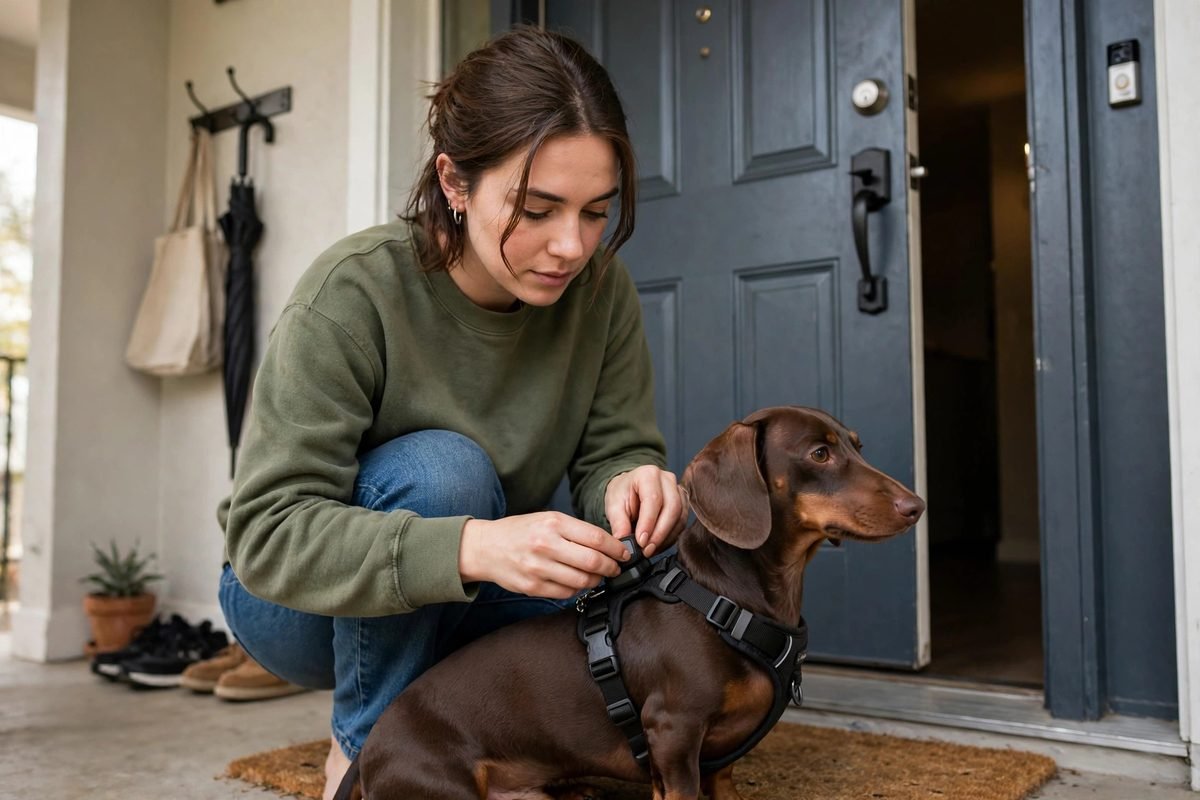
Fit the tracker to a harness, not to a collar alone, when the dog pulls or slips collars. A harness spreads the weight, keeps the tracker stable, and supports the back better than a collar. Clip the tracker so it sits on the back of the harness, flat and snug, where it cannot swing into the dog’s legs or catch on furniture. Check the fit every time the harness goes on, and check that the tracker has not loosened after a walk.
Build charging into a weekly routine. Pick a fixed time, such as Sunday evening, charge the tracker fully, and check the battery level in the app before the next walk. Keep the charger in the same place as the lead and harness, so charging becomes part of the walk routine rather than a forgotten task. A tracker with a low battery warning is useful, but the warning only helps if the owner acts on it the same day.
Test the tracker before relying on it. Walk the dog around the block and watch the location update on the phone. Test it in the building stairwell, the lift, and the car park, where signal may drop, and learn where it works and where it does not. Set a safe area around the home and check that leaving it sends an alert. The guide to travel carriers for vet visits explains safe transport for trips, and a tested tracker adds safety on the walk to and from the car. Testing once a month keeps the system honest.
5. Keeping Details Current and What to Do If a Dog Is Lost
Update details the day they change. A new phone number, a move to a new flat, or a change in the dog’s medicine all need a new tag or an updated tracker profile. Check the tag engraving and the app details together every month, and check the microchip registration at the same time, so all three agree. A tag with an old number is worse than no tag, because it wastes the finder’s time.
Keep a recent photo of the dog on the phone, showing the coat colour, size, and any markings, and keep a note of the dog’s name, age, and any health needs. If the dog is lost, that photo and those details go straight into a lost-dog notice for neighbours, the building group, and local shelters. Act fast: search the building, stairwells, and car park first, then the streets nearby, while a family member or neighbour calls the vet, shelters, and the microchip register.
When a dog is found, check it calmly before celebrating. Look for limping, cuts, or signs of back pain, keep the dog still, and contact a veterinarian if anything seems wrong. A lost dog may have run, jumped, or fallen, and a Dachshund back can be injured without obvious signs. Replace any lost tag or tracker the same week, and review how the escape happened, so the door routine, harness fit, or gate can be fixed before it happens again.

ID Tag and GPS Tracker Comparison Checklist
| Option | Best for | Limit to watch |
|---|---|---|
| Engraved metal ID tag | Every dog, every day, no battery needed | Needs readable engraving and a secure ring |
| Microchip | Permanent backup if the tag is lost | Needs a scanner and updated registration |
| GPS tracker on harness | Live location on walks and after escape | Needs charging, signal, and a firm fit |
| Tag plus tracker | Two ways home, tag and live location | Both need weekly checks and updates |
Common Mistakes
- Wearing the tag only on walks instead of at all times.
- Engraving text so small it cannot be read in poor light.
- Choosing a tracker too heavy or too large for a small dog.
- Forgetting to charge the tracker until the battery is flat.
- Never testing the tracker in stairwells, lifts, and car parks.
- Leaving old phone numbers on the tag after a change.
- Trusting the tracker alone and skipping the tag.
When to Call Your Vet
Contact a veterinarian promptly if a lost dog returns with limping, cuts, swelling, or signs of back pain, weakness, or wobbliness, and seek urgent help for collapse, heavy bleeding, or breathing difficulty. Contact a veterinarian also to fit or check a microchip, and to update the chip registration after a move or a change of phone number. This article gives general information only and does not diagnose any condition. A veterinarian can examine a recovered dog, treat injuries, and advise on safe identification for dogs with skin sensitivity or back problems. Do not delay veterinary help for a dog that has been lost and may have been hurt.
Pin This: ID Tag and GPS Tracker Checklist
- Fit a light metal tag with a readable phone number.
- Wear the tag at all times, not only on walks.
- Choose a small, light tracker that fits the harness.
- Charge the tracker on a fixed weekly routine.
- Test the tracker around the building and park.
- Update tag, app, and chip details the day they change.
- Keep a recent photo ready for a lost-dog notice.
Frequently Asked Questions
Does a Dachshund need an ID tag indoors?
Yes. Doors open for deliveries, visitors, and cleaners, and a small dog can slip out in seconds. A tag worn at all times means a neighbour who finds the dog can call immediately, without a trip to a vet or shelter.
What should I engrave on the tag?
The dog’s name and at least one phone number, in large deep engraving. Add a second number if space allows, and a short medical note only when it is true and important, such as daily medicine the finder should know about.
Is a GPS tracker enough on its own?
No. A tracker needs battery and signal, and it can fall off or lose signal in a basement. A tag works without any of those, so the two together give a lost dog the best chance of getting home.
Where should the tracker sit on a Dachshund?
On the back of a harness, flat and snug, where it cannot swing or catch. A harness spreads the weight better than a collar and supports the back, and the tracker should be checked for looseness after every walk.
How often should I check the tag and tracker?
Check the tag ring, engraving, and tracker fit every week, charge the tracker on a fixed weekly routine, and test the location and safe-area alert once a month. Update all details the day a phone number or address changes.
Conclusion
An ID tag and a GPS tracker give a Dachshund two ways home: a readable phone number for anyone who finds the dog, and a live location for the owner. Keep the tag light and readable, the tracker small and charged, and the details current, and both will be ready on the day they are needed.