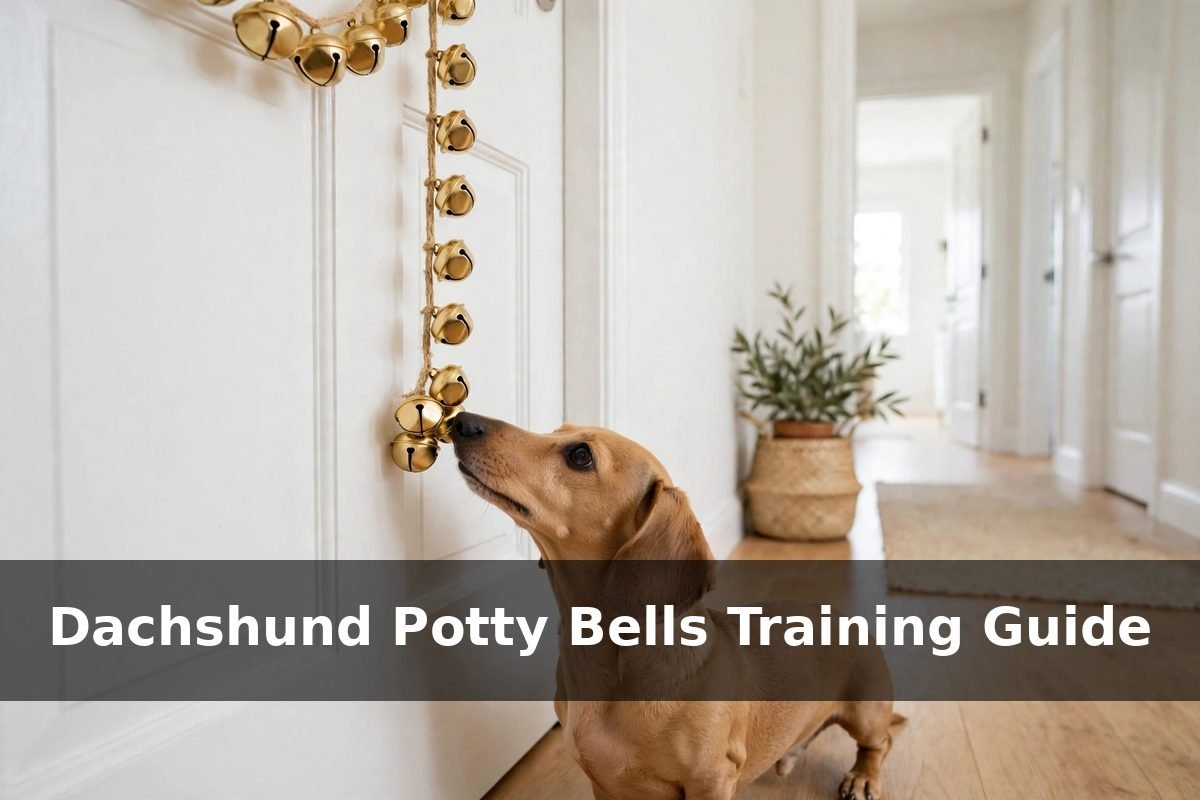
Dachshund Potty Bells: Doorbell Training Guide at Home
Quick Answer
- Dachshund potty bells are a strip of bells hung by the door that a dog learns to ring with its nose or paw when it needs to go out.
- Pick bells that are loud enough to hear from the next room, with a strap that hangs at the dog’s nose height and a fixing that holds firm.
- Teach the bells in short sessions: show the bells, reward a touch, then open the door every time the dog rings.
- Answer every ring at first, even at night, so the dog learns that ringing always means the door opens.
- Contact a veterinarian if the dog suddenly needs the toilet far more often, or has accidents after being trained.
Contents
- 1. Why Dachshund Potty Bells Help at Home
- 2. Choosing the Right Potty Bells: Types, Sound, and Strap
- 3. Hanging Potty Bells at the Right Height
- 4. Teaching a Dachshund to Ring the Potty Bells
- 5. Living With Potty Bells: Routines, False Alarms, and Night Rings
- Potty Bells Buying and Training Checklist
- Common Mistakes
- When to Call Your Vet
- Pin This: Potty Bells Training Checklist
- Frequently Asked Questions
- Conclusion
1. Why Dachshund Potty Bells Help at Home
Dachshund potty bells give a small dog a clear, polite way to ask for the door. Many Dachshunds signal that they need the toilet by standing silently by the door, pacing, or circling, and an owner in another room can easily miss those quiet signals. A set of bells turns that silent wait into a sound the owner can hear from the kitchen or the bedroom, so the door opens in time and the dog is not left waiting. The dog learns that ringing means going out, and the owner learns to listen for it.
Bells help most in apartments and small homes, where the door to the outside is often a lift ride or a walk down the hall away. In a house with a garden, the dog may have a pet door, but in an apartment the owner must open the door, so a clear signal matters more. A pet door guide for apartments covers the flap and door options for homes where that suits, while potty bells suit homes where the owner opens the door and the dog needs a way to ask.
Bells also help the dog feel understood. A dog that has asked clearly and been answered learns to trust the routine, and that trust reduces accidents and stress for both the dog and the owner. The bells do not train the dog on their own: they work only when the owner answers them every time, takes the dog out promptly, and rewards the dog for going in the right place. Used that way, the bells become a simple shared language between the dog and the owner, and the daily toilet routine gets calmer and more reliable.

2. Choosing the Right Potty Bells: Types, Sound, and Strap
There are two main types of potty bells: a strip of jingle bells on a fabric strap, and a single doorbell button the dog presses with its nose or paw. A bell strip is simple, cheap, and easy to hang, and most dogs learn to nudge it quickly. A doorbell button gives a louder, clearer sound and suits a larger home, but it needs batteries and a receiver, and some dogs find the button harder to press. For most Dachshunds in an apartment, a bell strip is the easier place to start.
Sound matters more than looks. Ring the bells in the shop, or listen to a recording, and check that the sound carries from the door to the room where the owner usually sits. Small, quiet bells may not be heard from the bedroom, while very loud bells can startle a nervous dog. Look for bells with a clear, pleasant ring, and count the bells on the strip: three to five bells give a good sound without tangling. Avoid bells with sharp edges or loose parts, since a curious dog may chew them.
Check the strap and the fixing. The strap should be strong, adjustable, and easy to wipe clean, since it hangs by a door that gets touched with muddy paws. A loop that fits over the door handle is the simplest fixing, while a hook or an adhesive mount suits a door without a handle. Test the fixing before buying: tug the strap firmly, and make sure it stays put when a dog pushes against it. A bell strip that falls off the door every day will never become a habit.
3. Hanging Potty Bells at the Right Height
Hang the bells at the dog’s nose height, so the dog can touch them with a small nudge. For a standard Dachshund, that usually means the lowest bell sits about fifteen to twenty centimetres above the floor, with the strap adjusted so the bells hang free and swing when touched. If the bells hang too high, the dog must jump or stretch to reach them, which is awkward and can put the dog off. If they hang too low, they drag on the floor, tangle, and ring by accident when the dog walks past.
Choose the door the dog already uses for toilet trips, and hang the bells on the inside of that door, on the handle or a hook beside it. The dog should meet the bells on the way to the door, not have to search for them in another room. Keep the bells on the same door every day, and do not move them between rooms, since the dog learns the place as part of the routine. A back-safe potty routine in apartments covers the wider toilet routine, including the lift, the stairs, and the walk to the usual spot.
Check the height again after a week, since the dog may grow, or the strap may stretch. Watch the dog ring the bells: the dog should touch them with a gentle nose nudge or a light paw tap, without jumping or straining. If the dog has to rear up to reach the bells, lower the strap. If the bells ring every time the dog walks past the door, raise them slightly or move them a few centimetres to the side, so they ring only when the dog means it.

4. Teaching a Dachshund to Ring the Potty Bells
Start by teaching the dog to touch the bells. Hold a treat near the bells, so the dog’s nose brushes them and they ring, then give the treat straight away. Repeat this a few times a day for two or three days, until the dog touches the bells on purpose to earn the treat. Keep sessions short, calm, and positive, and use small, soft treats the dog can eat quickly. The goal at this stage is simple: bells ring, treat arrives.
Next, link the ring to the door. Each time the dog rings the bells, open the door at once and take the dog out to its usual toilet spot. Praise the dog calmly when it goes, and bring it straight back inside. Do this every time, without exception, for the first few weeks, so the dog learns that ringing always means the door opens. If the owner ignores a ring, the dog learns that ringing does not work, and the training stalls. Consistency at this stage matters more than anything else.
Once the dog rings the bells on its own before a toilet trip, stop rewarding the ring itself, and reward only the toilet trip. The treat moves from the bells to the moment the dog goes outside, so the dog rings to ask, not to earn a treat. Watch for the pattern: most dogs ring, wait by the door, and look at the owner. Answer quickly, take the dog out, and keep the trip short and purposeful, so the bells stay linked to toilet trips and not to playtime.
5. Living With Potty Bells: Routines, False Alarms, and Night Rings
False alarms are normal, and every dog tries them. A dog that has learned the bells open the door will ring them to go out and play, to chase a sound, or simply because it is bored. The fix is a calm, boring response: open the door, take the dog to the toilet spot, wait two minutes, and come straight back inside if nothing happens. Do not play, do not walk further, and do not make a fuss. The dog soon learns that a false ring earns a dull trip, while a real ring earns relief and praise.
Night rings need the same calm answer, at least at first. A dog that rings at night may genuinely need the toilet, and ignoring the ring can cause an accident and undo the training. Keep a lead and shoes by the door, answer the ring quietly, and take the dog out without turning on bright lights or talking much. Over time, most dogs stop ringing at night once their bladder control settles, but a puppy or an older dog may need a night trip for months, and that is normal.
Keep the bells clean and in good repair. Wipe the strap and bells once a week, since they collect dust and muddy paw prints, and check the fixing monthly, since a strap that slips will change the hanging height. If the household has visitors, tell them about the bells, so a guest does not remove them or tie them up. A set of bells that is always there, always answered, and always at the right height becomes part of the home, and the dog will use it for years.

Potty Bells Buying and Training Checklist
| Step | What to Do | What to Watch For |
|---|---|---|
| Choose | Bell strip or button; clear, pleasant ring | Heard from the next room; no sharp edges |
| Hang | Lowest bell 15 to 20 cm above the floor | Nose nudge reaches it; no dragging or tangling |
| Teach touch | Treat near bells; reward every ring | Dog touches bells on purpose within days |
| Link to door | Open the door every time the dog rings | No ignored rings in the first weeks |
| False alarms | Short, boring trip; back inside in two minutes | Dog learns ringing means toilet, not play |
| Care | Wipe weekly; check fixing monthly | Strap holds; height stays right |
Follow the checklist in the same order every time. Bells that are hung at nose height, taught with treats, and answered every time become a reliable way for the dog to ask for the door.
Common Mistakes
- Hanging the bells too high, so the dog must jump to reach them.
- Ignoring a ring, so the dog learns that ringing does not work.
- Rewarding the ring forever, instead of rewarding the toilet trip.
- Turning a false alarm into a walk or a play session.
- Moving the bells between doors, so the dog never learns one place.
- Choosing bells too quiet to hear from the next room.
- Forgetting to answer night rings, which causes accidents.
- Expecting the bells to train the dog without a consistent routine.
When to Call Your Vet
Contact a veterinarian if the dog suddenly needs the toilet far more often, has accidents after being trained, or strains without passing urine. Contact a veterinarian promptly if the dog cries when urinating, passes blood, or seems weak or unwell. A veterinarian can check whether the problem comes from a health issue or a training problem, and advise on the next step. This article gives general information only and is not a diagnosis.
Pin This: Potty Bells Training Checklist
- Hang the bells at the dog’s nose height.
- Teach a touch with treats for a few days.
- Open the door every time the dog rings.
- Keep false-alarm trips short and boring.
- Answer night rings calmly at first.
- Call a veterinarian if toilet habits change suddenly.
Frequently Asked Questions
Do Dachshund potty bells really work?
Yes, when the owner answers every ring. Bells give the dog a clear, audible way to ask for the door, which suits owners who are often in another room. The bells work only with a consistent routine: ring, door opens, dog goes to the toilet spot, praise follows. A dog that is ignored when it rings will stop ringing, so the owner’s consistency is the part that makes the bells work.
How do I teach my Dachshund to ring potty bells?
Start by holding a treat near the bells, so the dog’s nose brushes them and they ring, then give the treat straight away. Repeat this a few times a day for two or three days, until the dog touches the bells on purpose. Then open the door every time the dog rings, and take the dog to its usual toilet spot. Once the dog rings on its own, reward the toilet trip, not the ring.
What if my Dachshund rings the bells just to play?
That is normal, and every dog tries it. Answer with a short, boring trip: take the dog to the toilet spot, wait two minutes, and come straight back inside if nothing happens. Do not play or walk further. The dog soon learns that a false ring earns a dull trip, while a real ring earns relief and praise, and the false alarms fade.
Where should I hang potty bells?
On the inside of the door the dog already uses for toilet trips, on the handle or a hook beside it. Hang the lowest bell about fifteen to twenty centimetres above the floor, so the dog can touch it with a gentle nose nudge without jumping. Keep the bells on the same door every day, and check the height again after a week, since straps can stretch.
Should I answer potty bells at night?
Yes, at least at first. A dog that rings at night may genuinely need the toilet, and ignoring the ring can cause an accident and undo the training. Answer quietly, take the dog out without bright lights or much talking, and come straight back. Most dogs stop ringing at night once their bladder control settles, but puppies and older dogs may need a night trip for months.
Conclusion
Dachshund potty bells work when they hang at nose height, the dog learns the touch with treats, and the owner answers every ring. The next step is a small one: hang a bell strip on the toilet door today, then spend a few minutes teaching the touch with treats.