
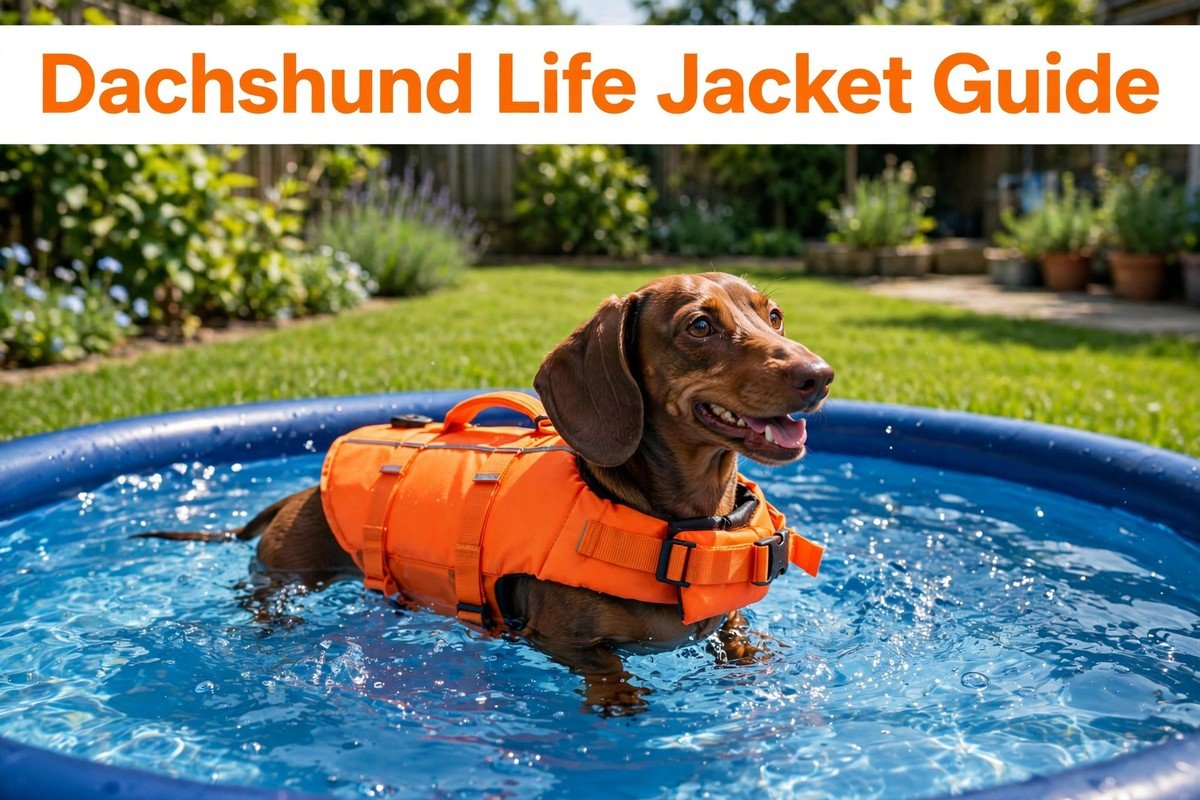
Dachshund Life Jacket Guide for Safe Water Play at Home
Quick Answer
- A Dachshund life jacket, or swim vest, keeps a small, long-backed dog floating level in the water, so gentle water play stays calm and does not strain the back.
- Choose a vest with foam panels on the chest, the back, and the belly, a snug fit, a strong handle on the back, and a bright color that is easy to see in the water.
- Fit the vest snugly with two fingers under every strap, test it in shallow water first, and never leave the dog unsupervised in or near water, even with a vest on.
- Keep water play short, calm, and in warm, shallow, still water, with the owner close enough to lift the dog out by the handle at any moment.
- Contact a veterinarian if the dog swallows water, coughs, vomits, or shows back pain, stiffness, or weakness in the back legs after water play.
Contents
- 1. Why a Dachshund Needs a Life Jacket in the Water
- 2. Choosing a Life Jacket for a Long, Low Body
- 3. Fitting the Swim Vest and Testing It in Shallow Water
- 4. Gentle Water Play: Short, Calm, and Close
- 5. Drying, Cleaning, and Storing the Life Jacket
- Dachshund Life Jacket Comparison Checklist
- Common Mistakes
- When to Call Your Vet
- Pin This: Dachshund Life Jacket Checklist
- Frequently Asked Questions
- Conclusion
Water play can be a joy for a Dachshund, and a risk too. A small dog with a long back and short legs is not a natural swimmer, and in deep or moving water it can tire fast, panic, and swallow water, while a sudden twist or a jump into a pool can strain the spine. A life jacket, also called a swim vest, turns that risk into a calm, floating play session, and this guide explains how to choose one, fit it, and use it for gentle water play at home. This article is general information only, not a diagnosis.
1. Why a Dachshund Needs a Life Jacket in the Water
A Dachshund’s body shape works against it in the water. The legs are short, so the dog has to paddle hard to stay up, the back is long, so the body can tip nose-down or tail-down, and the chest is deep and heavy, so the front end can sink. A dog that swims like that tires in minutes, and a tired dog panics, thrashes, and twists. A life jacket fixes the balance: foam panels under the chest and along the belly hold the dog level, so the head stays up and the legs paddle evenly.
A life jacket also gives the owner a way to help. A strong handle on the back of the vest lets the owner lift the dog straight out of the water in one smooth movement, with the back level, instead of grabbing the dog by the neck, the legs, or the collar. A bright color, such as yellow, orange, or red, makes the dog easy to see in the water, and a reflective strip helps on a cloudy day. A vest does not make a dog safe alone in the water, and it never replaces watching the dog, but it buys time and calm when both are needed.
Disc degeneration in short-legged breeds can begin in the first year of life, so water play needs the same care as any other exercise. A dog that jumps into deep water, twists in a panic, or scrambles out of a pool with a leap puts a sudden load on a long spine, and the Animal Medical Center guide to intervertebral disc disease in dogs explains why that sudden loading matters. Gentle water play, in shallow, warm, still water, with a vest that keeps the dog level, is the kind of play that suits a Dachshund.

2. Choosing a Life Jacket for a Long, Low Body
Start with buoyancy, not looks. A good life jacket for a Dachshund has foam panels on the chest, the back, and the belly, with more foam under the chest and the neck, so the head stays up and the body floats level. Look for thick, even foam that does not fold or bunch, and check that the foam covers the belly from the chest to the hips.
Check the handle, the straps, and the fastenings next. The handle on the back should be wide, padded, and stitched firmly to the vest, so the owner can lift the dog’s full weight with one hand without the handle tearing. The straps should be wide, adjustable, and fastened with strong buckles, with a strap around the chest and the belly. The guide to gentle water play and paddling at home covers the calm, shallow play that suits a Dachshund, and a vest that fits that kind of play is the right choice.
Choose a bright color and the right size. A yellow, orange, or red vest is easy to see in the water, while a blue or dark vest can vanish in a pool or a lake, and a reflective strip on the back and the sides helps on a cloudy day. Measure the chest behind the front legs, the length from the neck to the tail, and the weight of the dog, and check the maker’s size guide, because a Dachshund’s long body and deep chest mean the size on the label is often wrong.
3. Fitting the Swim Vest and Testing It in Shallow Water
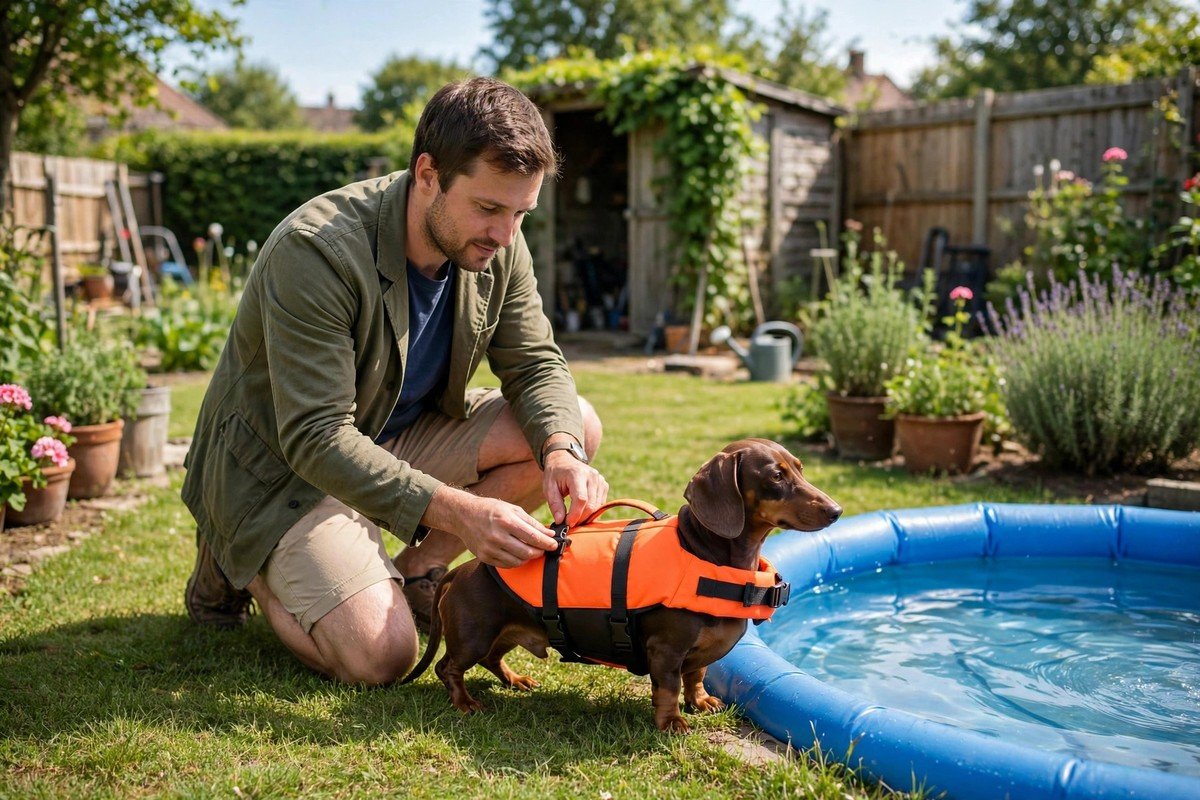
Fit the vest at home, on dry land, before the dog ever touches the water. Put the vest on the dog, fasten every strap, and check that it sits flat, with no foam bunching under the chest, no strap pressing on the throat, and no edge rubbing behind the front legs. Slip two fingers under every strap, and check that each one is snug but not tight. Let the dog wear the vest around the house for ten minutes, so it gets used to the feel.
Test the vest in shallow water first. Stand the dog in a paddling pool or a shallow bath with only a few centimeters of water, with the vest on, and let it walk, paddle, and get used to the feeling of floating. Then move to water deep enough for the dog to float, with the owner kneeling beside it, one hand on the handle, and watch how the dog sits: the head should stay above the water, the back should stay level, and the legs should paddle evenly underneath.
Teach the dog how to get out. Show the dog the steps, the ramp, or the shallow end where it can walk out, and guide it there every time, so the dog learns the way out before it ever needs it in a hurry. A dog that knows where the exit is will swim toward it calmly, while a dog that does not know will swim in circles and try to climb out over a steep edge. Keep the first sessions to five minutes.
4. Gentle Water Play: Short, Calm, and Close
Keep water play short, calm, and close. A session of ten to fifteen minutes, in warm, shallow, still water, is enough for most Dachshunds, and a dog that is still happy at the end is a dog that will enjoy the next session. Use a paddling pool, a shallow bath, or a calm, shallow part of a lake, and avoid fast rivers, deep pools, cold water, and waves. Keep games gentle: a floating toy to nose, or a slow walk through the shallows.
Stay close enough to lift the dog out at any moment. The owner should be in the water, or kneeling at the edge with a hand near the handle, for the whole session, and the dog should never be left alone in or near water, even with a vest on, even for a minute. Watch the dog the whole time: a dog that paddles evenly, holds its head up, and looks relaxed is enjoying the water, while a dog that thrashes, gasps, or tries to climb out is tired or frightened, and the session should end at once.
Keep fresh water nearby, and keep the dog hydrated. A dog that plays in a pool or a lake will swallow some water, and pool water or lake water can make a dog feel sick, so offer fresh drinking water before and after the session. The guide to a portable travel water bottle covers carrying fresh water on outings, and the same bottle suits a water play session. After the session, dry the dog, check the ears for water, and let it rest in a warm bed.
5. Drying, Cleaning, and Storing the Life Jacket
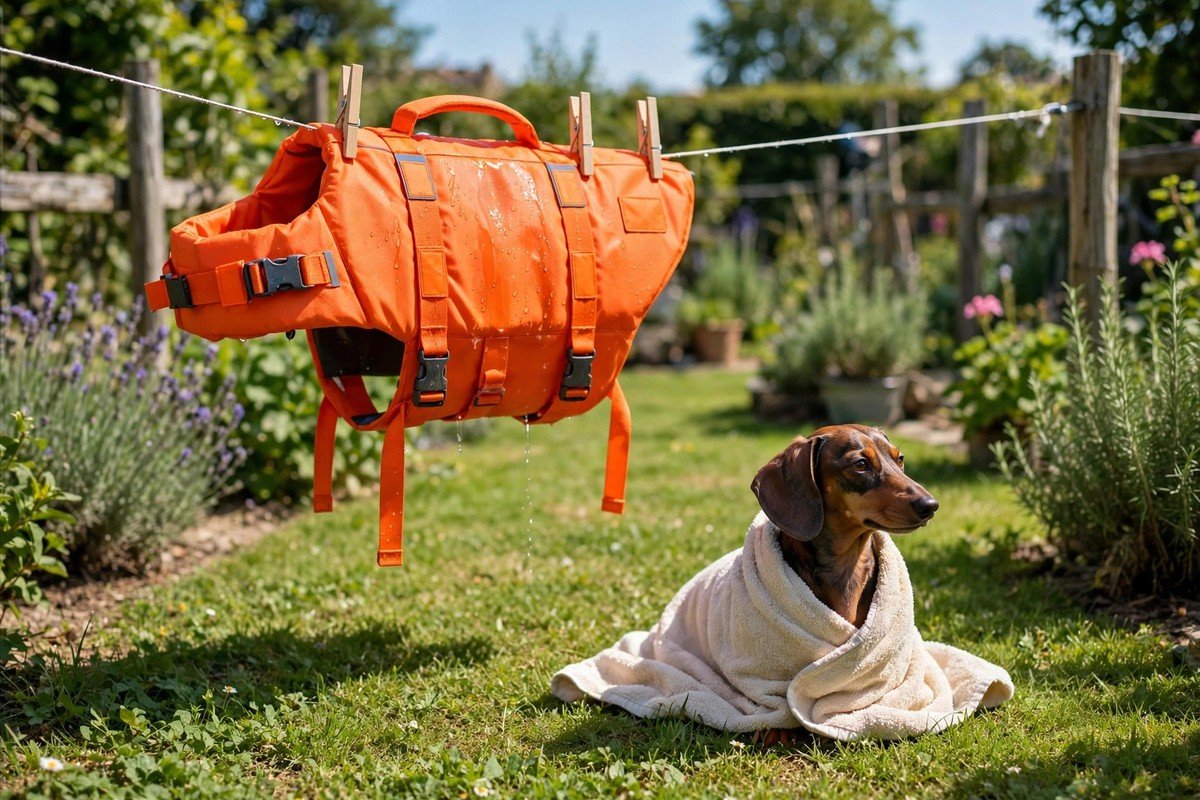
Dry the vest after every use. Rinse it in fresh water, especially after a pool or a lake, to wash out chlorine, salt, or mud, and then hang it up to dry in the air, away from direct sun and radiators, with the straps undone so the foam dries evenly. A vest that is put away wet will smell, grow mold, and weaken, and a vest with damp foam will not float as well next time, so a full dry matters as much as the rinse.
Clean the vest weekly during the water season. Wash it by hand in warm water with a mild soap, rinse it well, and let it dry flat, away from heat, because hot water and harsh soap can break down the foam and dull the bright color. Do not put a life jacket in a washing machine or a tumble dryer, because the spin and the heat can tear the foam, crack the buckles, and weaken the handle.
Store the vest where the owner can reach it. Keep it on a hook near the door, with the water bottle and the towels, so it is easy to grab, and keep it out of the dog’s reach when it is not in use, because a dog that chews the straps will damage the vest. Cornell’s information on chondrodystrophy and intervertebral disc disease explains why this breed’s discs are vulnerable, and a life jacket that is clean, dry, and checked keeps water play calm and safe. The DachsLife study, published in 2015, supports calm, low-impact play over jumping in deep water.
Dachshund Life Jacket Comparison Checklist
| Vest type | Best for | Limit to watch |
|---|---|---|
| Foam vest with handle, bright color | Paddling pools, lakes, gentle swims | Must fit the long body; check the handle weekly |
| Vest with neck float | Dogs new to water, dogs that tire fast | Must not press on the throat; check the fit |
| Light vest, belly panel only | Shallow paddling, confident dogs | Less buoyancy; not for deep water |
| Vest plus ramp or steps out | Pools, safe exit every time | Teach the exit before the first swim |
Common Mistakes
- Letting a Dachshund swim without a vest, in deep or moving water.
- Choosing a vest by color and ignoring a poor fit that rides up or squeezes.
- Leaving the dog unsupervised in or near water, even with a vest on.
- Keeping a water session going after the dog is tired or frightened.
- Skipping the shallow-water test, and trusting a new vest in deep water.
- Putting a wet vest away without rinsing and drying it.
When to Call Your Vet
Contact a veterinarian if a Dachshund swallows a lot of water, coughs, vomits, or breathes fast after water play, or if it is limp, cold, or unusually quiet after a swim. Contact a veterinarian also if the dog shows back pain, stiffness, weakness in the back legs, or loss of bladder control after water play. This article gives general information only and does not diagnose any condition. A veterinarian can examine the dog and advise whether water play or a life jacket suits that individual dog.
Pin This: Dachshund Life Jacket Checklist
- Pick a vest with foam on chest, back, and belly, plus a strong handle.
- Choose a bright color and measure the chest and body length.
- Fit it snugly with two fingers under every strap.
- Test it in shallow water before any deeper swim.
- Teach the dog the way out, and guide it there every time.
- Keep sessions short, calm, and close, ten to fifteen minutes.
- Never leave the dog unsupervised near water, vest or no vest.
Frequently Asked Questions
Can Dachshunds swim without a life jacket?
Some can paddle for a short time, but most tire fast, float unevenly, and panic in deep water, because short legs and a long body are not built for swimming. A life jacket keeps the dog level, holds the head up, and gives the owner a handle to lift the dog out, so it is the safe choice for any swim beyond a shallow paddle.
How long can my Dachshund wear a life jacket?
For the water session only, ten to fifteen minutes of play, plus the time to dry off. Do not leave the vest on the dog all day, because the straps can rub and the foam can trap heat. Take the vest off as soon as the dog is out of the water and dried.
What size life jacket does a Dachshund need?
Measure the chest behind the front legs, the length from the neck to the tail, and the weight of the dog, and check the maker’s size guide. A Dachshund’s long body and deep chest mean the size on the label is often wrong, so measure first and test the fit at home.
Can my Dachshund swim in a river or the sea?
Still, shallow, warm water is the safe choice. Rivers have currents that tire a small dog fast, and the sea has waves, salt, and a pull that can carry a dog away. A paddling pool, a shallow bath, or a calm, shallow lake suits a Dachshund far better, with a vest on and the owner close.
How do I clean a dog life jacket?
Rinse it in fresh water after every use, wash it by hand in warm water with a mild soap weekly, and let it dry in the air, away from direct sun and radiators. Do not use a washing machine or a tumble dryer, because heat and spinning can tear the foam and weaken the handle.
Conclusion
A Dachshund life jacket turns water play from a risk into a calm, floating joy: a bright vest with foam on the chest, the back, and the belly, a strong handle for a level lift, a snug fit tested in shallow water, and short, close, supervised sessions in warm, still water. Keep the vest clean and dry, teach the way out, and the water stays a gentle, back-safe pleasure.




One Comment