

Dachshund Portable Travel Water Bottle Guide for Walks
Quick Answer
- A portable travel water bottle with a bowl top lets a Dachshund drink fresh water on walks, in parks, and on warm days, without searching for a tap or a puddle.
- Choose a leak-proof bottle sized for a small dog, with a wide, shallow bowl top, a simple one-hand squeeze or button, and a clip or strap for the lead hand.
- Fill the bottle with fresh, cool water before every walk, offer small drinks often, and pour leftover water away at home rather than saving it for days.
- Clean the bottle and bowl top daily with warm water and mild soap, rinse well, and let it dry fully, so the bottle stays fresh and safe to drink from.
- Contact a veterinarian if a Dachshund pants heavily, refuses water, vomits, or seems weak or confused after a hot walk, or drinks far more or far less than usual.
Contents
- 1. Why a Dachshund Needs Water on Walks
- 2. Choosing a Portable Travel Water Bottle
- 3. Filling, Carrying, and Offering Water on Walks
- 4. Using the Bottle in Heat, Parks, and Travel
- 5. Cleaning, Drying, and Replacing the Bottle
- Travel Water Bottle Comparison Checklist
- Common Mistakes
- When to Call Your Vet
- Pin This: Travel Water Bottle Checklist
- Frequently Asked Questions
- Conclusion
A Dachshund on a walk has no tap to turn to. A small dog walks close to hot pavement, pants to cool down, and loses water with every breath, and a twenty-minute walk on a warm day can leave a small dog thirsty long before it reaches home. A portable travel water bottle solves the problem in one small package: fresh water, carried on every walk, ready whenever the dog needs a drink. This article is general information only, not a diagnosis.
1. Why a Dachshund Needs Water on Walks
A small dog dehydrates faster than a large dog. A Dachshund has a small body, a small water reserve, and a long walk in warm weather can use that reserve quickly, especially when the dog pants, which loses water with every breath. A dog that is even mildly short of water may slow down, lag behind, pant harder, or lie down in the shade, and a dog that is very short of water may become weak, confused, or unsteady. Fresh water on the walk, offered often and in small amounts, keeps a small dog walking comfortably for longer.
Heat makes the need greater. A warm pavement, a sunny path, and a thick coat all raise a dog’s temperature, and panting is the main way a dog cools down, so a hot walk uses more water than a cool walk of the same length. A dog that pants heavily, drools, or seeks shade is already hot, and water alone will not cool it down, but regular small drinks through the walk help the dog stay hydrated while it cools in the shade. A walk in heat should always be short, shaded, and paired with water, and a walk in strong midday sun should be skipped altogether.
Puddles and shared bowls are not a safe substitute. A puddle can hold dirt, oil, chemicals, and germs from the road, and a shared bowl in a park can carry germs from other dogs, so a dog that drinks from a puddle or a shared bowl may pick up a stomach upset. The Animal Medical Center explains intervertebral disc disease in dogs, and disc problems are a known risk for this long-backed breed, with disc degeneration in short-legged breeds able to begin in the first year of life, so a tired, dehydrated dog that stumbles, slips, or strains on a walk is a back risk as well as a heat risk, and fresh water on the walk helps keep a small dog steady on its feet.

2. Choosing a Portable Travel Water Bottle
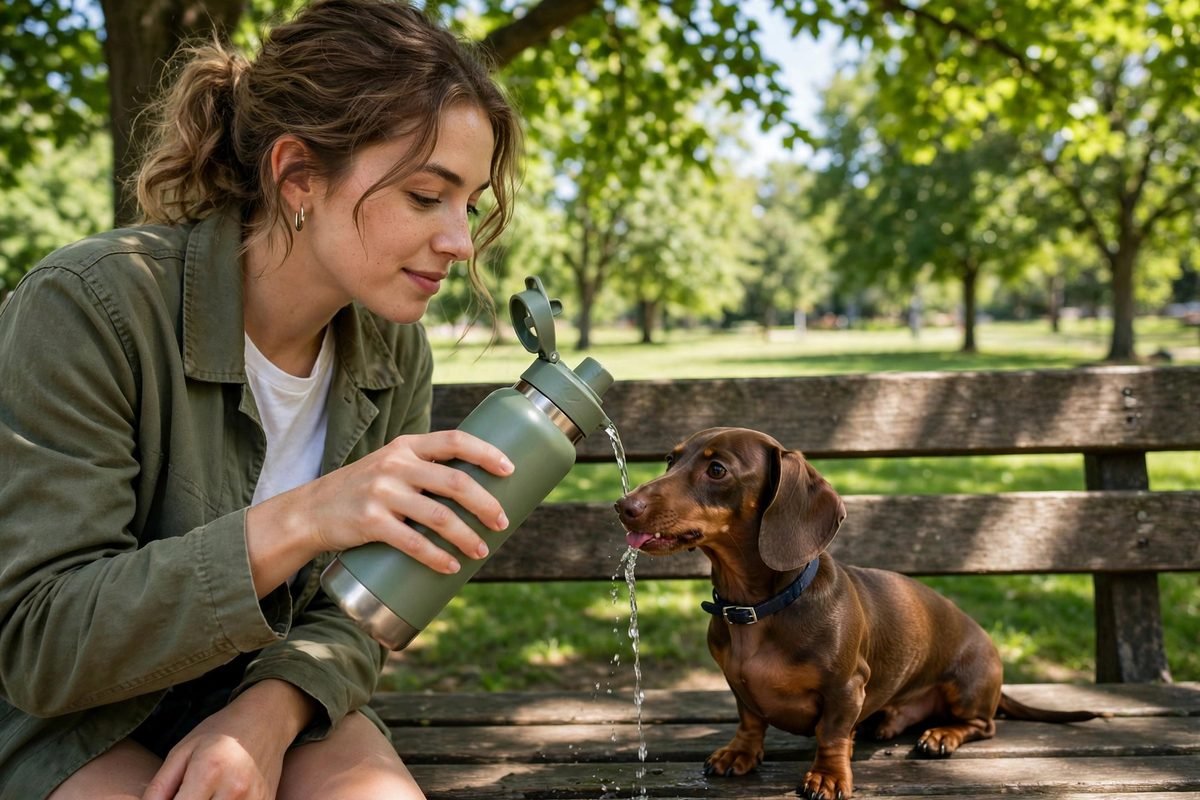
Start with the bowl top. A travel bottle for a Dachshund should have a wide, shallow bowl or trough that folds out or flips open, so the dog can lap water without pushing its nose into a narrow neck. A small, deep bowl suits a small dog, while a large, deep bowl can be hard for a short-muzzled dog to drink from, and a bowl that is too wide can spill when the bottle is tipped.
Look for a leak-proof seal and a simple control. A bottle that leaks in a bag soaks the lead, the treats, and the owner’s pocket, so check the seal by filling the bottle, closing it, and turning it upside down over a sink. A bottle with a one-hand squeeze, a push button, or a simple valve lets the owner offer water while holding the lead, while a bottle that needs two hands, a twist, and a pour is hard to use on a busy pavement. A bottle that locks shut when not in use is safer than a bottle that can open in a bag.
Choose a size that fits the walk. A small bottle of around 350 millilitres suits a short walk, while a larger bottle suits a long walk, a hot day, or a park visit, but a large bottle is heavier to carry, so the owner should choose the smallest bottle that covers the walk, and refill it at a tap if the walk runs long. The guide to a hydration and water routine for apartments covers fresh water at home, bowl hygiene, and daily drinking, and the guide to a walk essentials kit for apartments explains what to pack for every walk, including water, bags, and a lead.
3. Filling, Carrying, and Offering Water on Walks
Fill the bottle with fresh, cool water before every walk. Use tap water that is fresh from the tap, not water left in the bottle for days, and fill the bottle to the level the maker suggests, leaving a little air at the top so the bottle can be squeezed. A bottle filled the night before and left in a warm room is not fresh water, so fill it fresh each time.
Carry the bottle where it is easy to reach. A bottle clipped to a belt, a bag strap, or the lead hand is ready in seconds, while a bottle buried at the bottom of a bag is hard to reach when the dog is already thirsty. Keep the bottle upright when possible, keep the bowl top closed until it is needed, and keep a small cloth with it, so spills can be wiped quickly. A bottle that is easy to carry is a bottle that goes on every walk, and a bottle left at home helps no dog.
Offer small drinks often, not one big drink at the end. Stop in the shade every few minutes on a warm walk, open the bowl top, and let the dog drink for a few seconds, then close the bottle and walk on. A dog that drinks a little, often, stays hydrated through the walk, while a dog that drinks a large amount at once after a hot walk may gulp, cough, or feel sick.
4. Using the Bottle in Heat, Parks, and Travel
Use the bottle more in heat. On a warm day, shorten the walk, choose a shaded route, and offer water twice as often as on a cool day, and carry a larger bottle or a spare bottle if the walk is long.
Use the bottle in parks and on travel days. A park visit can last an hour or more, with play, sniffing, and running, and a bottle carried to the park lets the dog drink without leaving the play area. A car journey, a vet visit, or a trip to a friend’s home all benefit from a bottle in the bag, so the dog can drink at a rest stop or on arrival, without waiting for a bowl at the destination. A bottle that travels in the car should be kept upright, out of direct sun, and refilled with fresh water at each stop.
Share the bottle safely between dogs. A bottle used by two dogs should be cleaned between dogs, or each dog should have its own bottle, because a shared bowl top can pass germs from one dog to another. A personal bottle for each dog is a small cost for a clear hygiene gain, and it also avoids arguments over a shared bowl.
5. Cleaning, Drying, and Replacing the Bottle
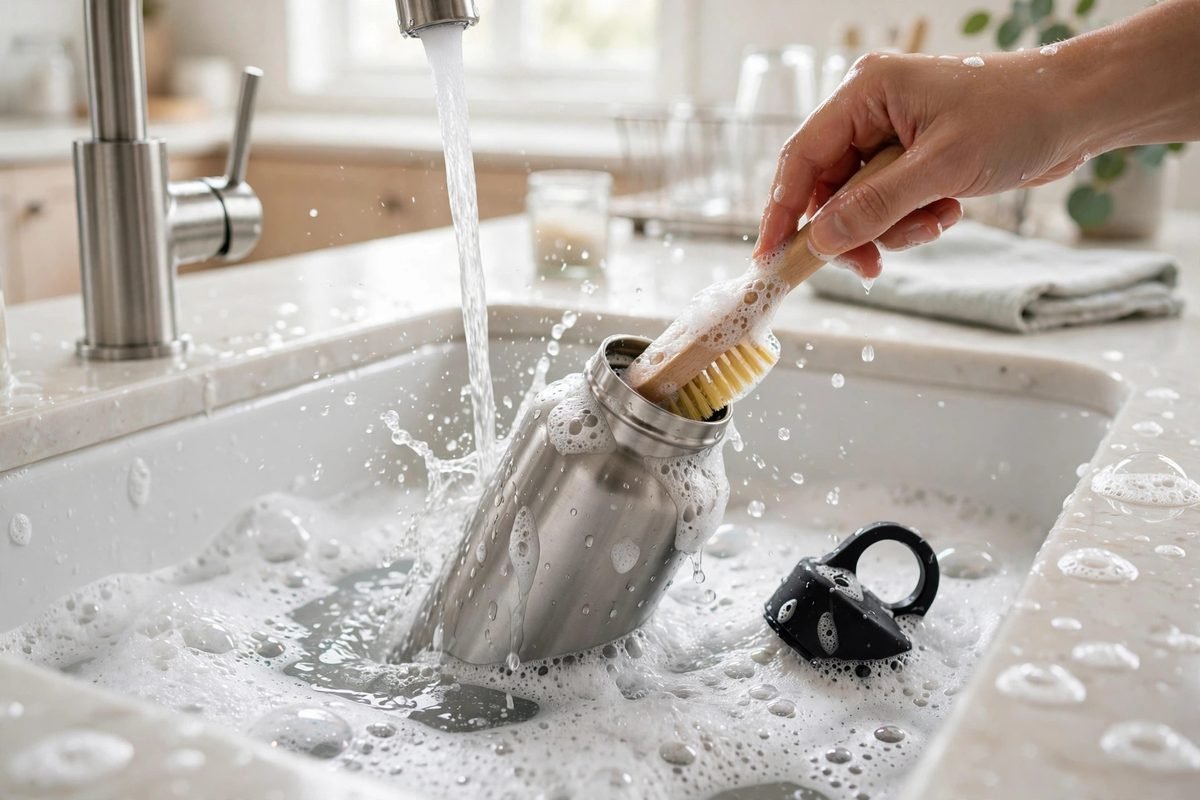
Clean the bottle and the bowl top daily. Empty the bottle after every walk, wash it with warm water and a small amount of mild soap, scrub the bowl top and the valve with a small brush, rinse well with clean water, and let it dry fully with the top open, so no damp corners grow smells or germs.
Check the seal and the bowl top weekly. A seal that no longer closes tightly, a valve that sticks, a bowl top that cracks, or a bottle that smells even after washing all mean the bottle needs replacing, and a cracked bottle can leak or cut a dog’s tongue. Keep a spare bottle at home, so a damaged bottle can be replaced the same day, and replace the bottle at least once a year, or sooner if it is used daily. A clean, sound bottle is safe to drink from, and a worn bottle is not.
Store the bottle dry and open. After washing, leave the bottle upside down on a rack, with the bowl top open, until it is fully dry, then store it with the top off or loose, in a dry place, away from direct sun. A bottle stored closed while damp grows smells quickly, and a bottle stored in a hot car can warp, so a dry shelf in the home is the best store. Cornell’s information on chondrodystrophy and disc disease explains why this breed’s discs are vulnerable, and a hydrated dog that walks steadily, without stumbling or tiring, protects that vulnerable back better than a dehydrated dog that lags, trips, or collapses on a hot walk.
Travel Water Bottle Comparison Checklist
| Bottle type | Best for | Limit to watch |
|---|---|---|
| Squeeze bottle with bowl top | One-hand use on walks | Check seal, must not leak in a bag |
| Button-release bottle | Quick drinks, less squeezing | Valve must be easy to clean |
| Collapsible bowl plus bottle | Long park visits, two dogs | Two parts to carry and clean |
| Large bottle, 500 millilitres or more | Hot days, long walks | Heavier to carry, choose the smallest that fits |
Common Mistakes
- Leaving the bottle at home on a short walk.
- Letting the dog drink from puddles or shared bowls.
- Offering one big drink at the end instead of small drinks often.
- Refilling a bottle that was never washed or dried.
- Using a bowl top too deep or too narrow for a small dog.
- Carrying the bottle buried at the bottom of a bag.
- Keeping a cracked or smelly bottle in use.
- Storing the bottle closed while still damp.
When to Call Your Vet
Contact a veterinarian if a Dachshund pants heavily, refuses water, vomits, or seems weak, confused, or unsteady after a hot walk, and seek urgent help for collapse, seizures, or a very high body temperature. Contact a veterinarian also if the dog drinks far more or far less than usual over several days, or if it has diarrhoea, blood in the stool, or a stomach upset after drinking from a puddle or a shared bowl. This article gives general information only and does not diagnose any condition. A veterinarian can examine the dog, check for heat illness, dehydration, or infection, and advise how much water that individual dog needs on walks and at home.
Pin This: Travel Water Bottle Checklist
- Pick a leak-proof bottle with a wide, shallow bowl top.
- Fill with fresh, cool water before every walk.
- Clip the bottle where it is easy to reach.
- Offer small drinks often, in the shade.
- Carry a larger bottle on hot days.
- Wash with soap daily and dry fully.
- Replace a cracked or smelly bottle at once.
Frequently Asked Questions
How much water does a Dachshund need on a walk?
A small dog needs small drinks often, rather than a fixed amount, and the need grows on warm days, long walks, and park visits. Offer water every few minutes in the shade, let the dog drink for a few seconds, and carry a bottle of around 350 millilitres for a short walk, or a larger bottle for a long or hot walk.
Can my Dachshund drink from a puddle?
It is better not to let a dog drink from puddles, because a puddle can hold dirt, oil, chemicals, and germs from the road, and a dog that drinks from one may pick up a stomach upset. Carry a personal bottle with fresh water instead, so the dog always has a clean drink on the walk.
Bottle or collapsible bowl — which is better?
A bottle with a built-in bowl top is easiest for a short walk, because it is one piece, one hand, and no extra bowl to carry. A collapsible bowl plus a bottle suits a long park visit or two dogs, because the bowl is wider and holds more water, but it is two parts to carry, open, and clean.
How often should the travel bottle be cleaned?
Wash the bottle and the bowl top daily with warm water and mild soap, rinse well, and let it dry fully with the top open. A bottle that is only rinsed can grow a slimy layer inside, and a bottle stored damp can grow mould, so a full wash and a full dry matter every day.
What if my Dachshund will not drink from the bottle?
Try the bottle at home first, with fresh water in a calm spot, and let the dog sniff and lick the bowl top without pressure.
Conclusion
A portable travel water bottle is a small habit with a large return: fresh, cool water, carried on every walk, offered in small drinks often, and kept clean and dry between outings. Give a Dachshund that bottle, and the walks grow longer, the hot days grow safer, and the small dog stays hydrated, steady, and happy.



2 Comments