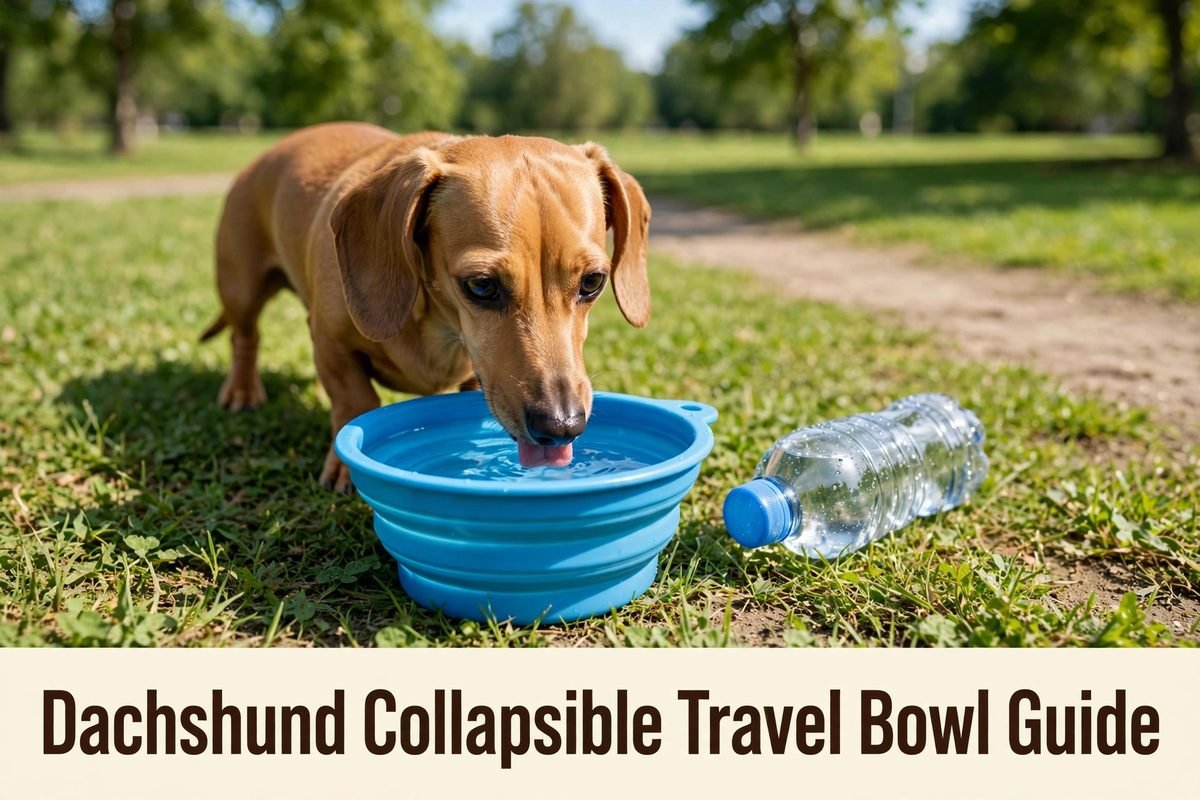
Dachshund Collapsible Travel Bowl Guide for Walks and Trips
Quick Answer
- A Dachshund collapsible travel bowl is a soft bowl that folds flat for a pocket or a bag and pops open for water or food on a walk, a car trip, or a park visit.
- Choose food-grade silicone, a flat base, a size that holds enough water for a short walk, and a clip or carabiner so the bowl can hang from a lead bag.
- Rinse the bowl after every use and wash it with warm water and mild soap at home. A bowl left damp in a bag grows a smell fast.
- Offer water often on warm days, after play, and after a long walk, and let the dog drink at its own pace.
- Contact a veterinarian if the dog drinks far more or far less than usual, vomits after drinking, or seems weak or unsteady after a walk.
Contents
- 1. What a Collapsible Travel Bowl Is
- 2. Choosing the Right Bowl for a Dachshund
- 3. Using the Bowl on Walks and Car Trips
- 4. Cleaning and Drying the Bowl
- 5. When a Travel Bowl Is Not Enough
- Collapsible Travel Bowl Checklist
- Common Mistakes
- When to Call Your Vet
- Pin This: Collapsible Travel Bowl Guide
- Frequently Asked Questions
- Conclusion
1. What a Collapsible Travel Bowl Is
A Dachshund collapsible travel bowl is a soft bowl that folds down flat and opens up when it is needed. It is usually made from silicone, with a firm rim and a base that sits flat on the ground. When folded, it is about the size of a small saucer and slips into a coat pocket, a lead bag, or a car door pocket. When opened, it holds enough water for a small dog to drink properly, without the dog having to lap from a bottle or a cupped hand. It is a simple product, and its value is that it is always there.
A travel bowl is different from the bowl at home. The home bowl is heavy, stable, and always in the same place, and the dog knows where to find it. A travel bowl is light and portable, and it goes where the dog goes: to the park, on a car trip, to a friend’s home, or on a long walk on a warm day. The portable travel water bottle guide covers the bottle that carries the water, and the bowl is the other half of the pair. A bottle without a bowl means water poured into a hand, so the two belong together in the same bag.
The bowl is also useful for food. A small amount of food can be served in the bowl at a rest stop on a long car trip, or at a friend’s home where there is no dog bowl. The bowl is not a replacement for the home bowl, and it should not be used as the only bowl for days at a time, because it is light and can tip over. It is a travel tool, for water and a small meal away from home, and it works best when it is cleaned after every use and stored dry.
2. Choosing the Right Bowl for a Dachshund
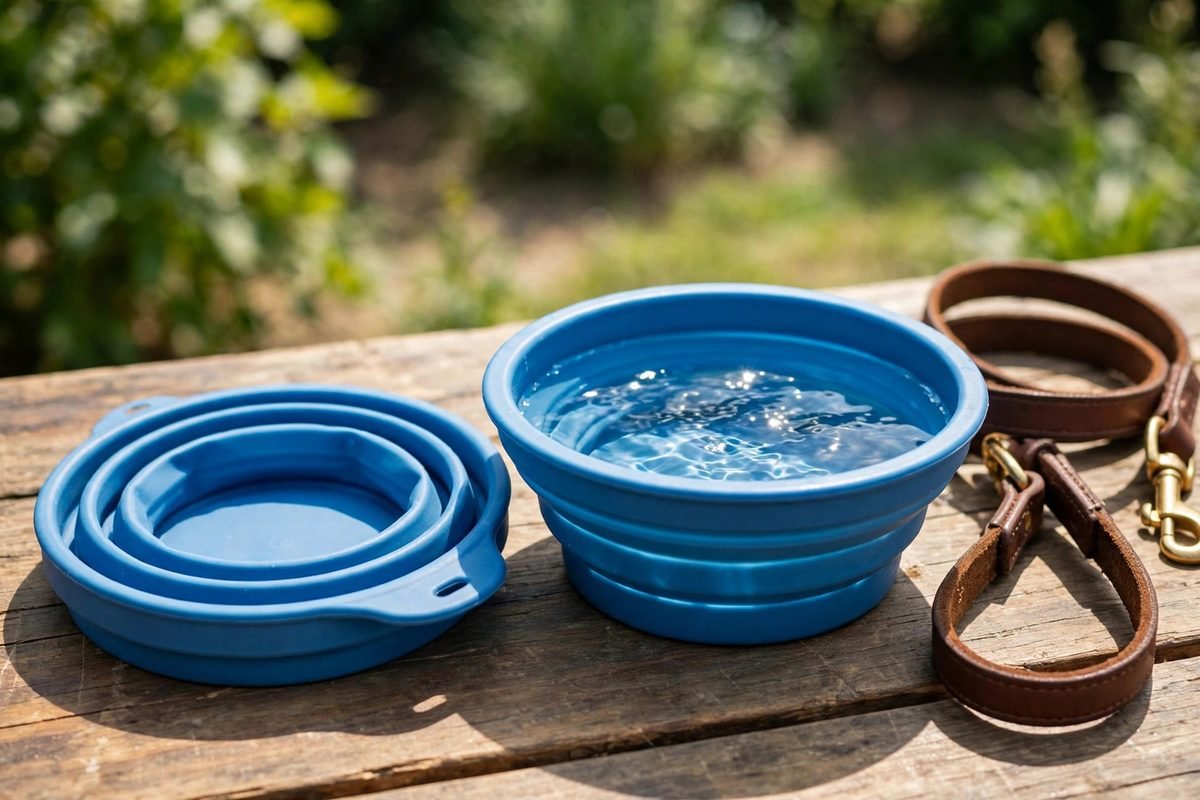
Start with the material. Food-grade silicone is the best choice for a travel bowl: it folds without cracking, it has no sharp edges, it does not rust, and it can be washed in warm soapy water. Avoid bowls made from thin plastic that cracks when folded, and avoid bowls with a strong chemical smell when first opened. A bowl that smells strongly when new should be washed well and left to air, and if the smell stays, it should be returned. The rim should be firm enough to hold its shape when full, and the base should be wide enough that the bowl does not tip when the dog drinks.
Size matters for a Dachshund. A bowl that holds about 350 to 500 millilitres is enough for water on a short walk, and a larger bowl is only needed for a long walk or a hot day. A bowl that is too deep can be hard for a short-legged dog to drink from, because the dog must reach over a high rim. A shallow, wide bowl is easier: the dog can drink without stretching its neck, and the bowl is less likely to tip. A bowl with a clip or a carabiner is easier to carry, because it can hang from a lead bag or a belt loop instead of taking up pocket space.
Check the details before buying. The bowl should fold flat and open with one hand, because the other hand may be holding a lead. The inside should be smooth, with no seams or folds where dirt can hide. A bowl in a bright colour is easier to spot on grass or a car seat, and a bowl with a lid or a cover stays clean in a bag. Price is not a good guide: a plain silicone bowl with a firm rim and a flat base often works better than a fancy bowl with extra parts that are hard to clean. Buy one bowl first, try it on a few walks, and only then buy a spare.
3. Using the Bowl on Walks and Car Trips
On a walk, offer water before the dog is thirsty. A Dachshund that has walked for twenty minutes on a warm day needs water, even if it is still walking happily. Stop in the shade, open the bowl, pour in a small amount of water, and put the bowl on flat ground. Let the dog drink at its own pace, and pour more if the bowl empties. Do not pour a large amount at once, because a bowl full to the brim spills when the dog drinks, and the water is wasted. A little water, offered often, is better than a full bowl offered once.
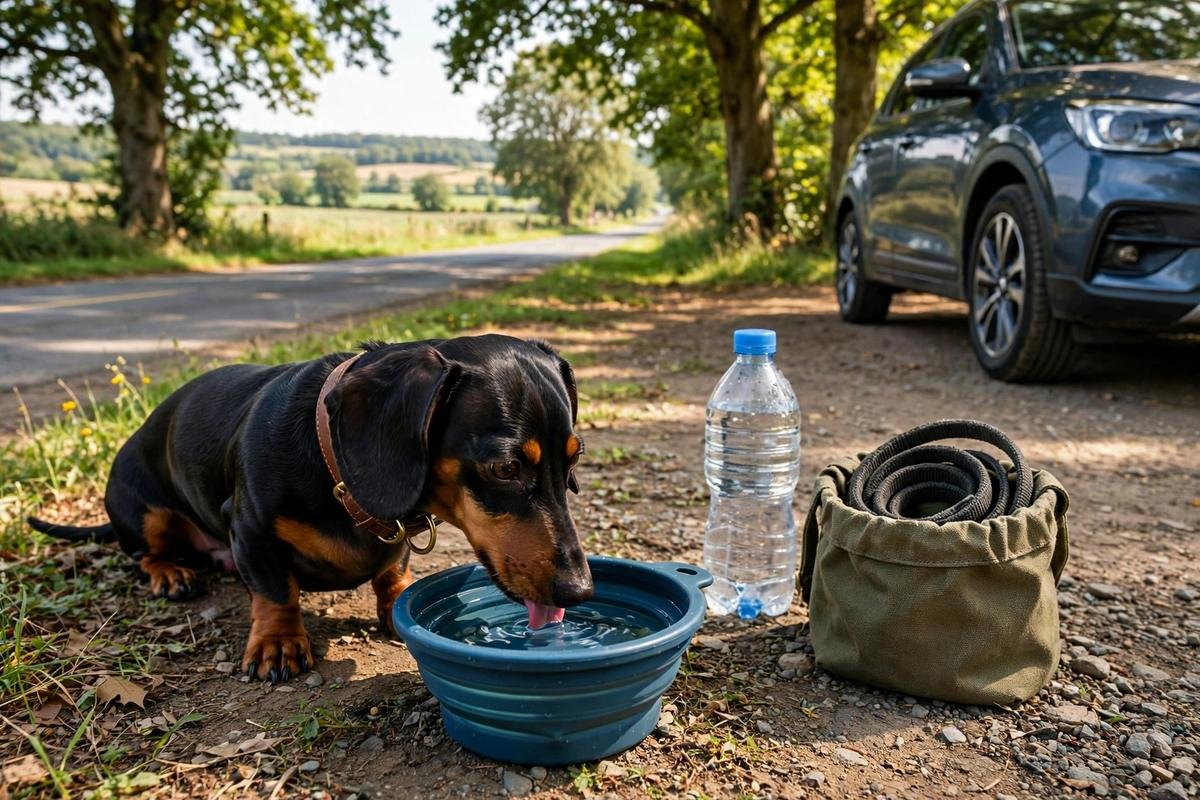
On a car trip, use the bowl at rest stops, not while the car is moving. Stop the car, open the bowl on a flat surface, and offer water and a short toilet break. A dog that has been lying in a car for hours may be stiff when it steps out, so let it walk slowly for a few minutes before offering food. Keep the bowl and the water bottle in the same bag, so they are found together at each stop. On a long trip, offer water at every stop, and watch how much the dog drinks, because a change in drinking can be a sign of a problem.
At a park or a friend’s home, the bowl gives the dog a clean place to drink. A shared water bowl at a park can carry germs, and a puddle can carry dirt and chemicals, so a clean bowl with clean water is the safer choice. Put the bowl on flat ground, away from the path, so it is not kicked over. If the dog will not drink from the bowl at first, try putting the bowl on the ground at home for a few days, so the dog learns that the bowl means water. A dog that knows the bowl at home will use it happily away from home.
4. Cleaning and Drying the Bowl
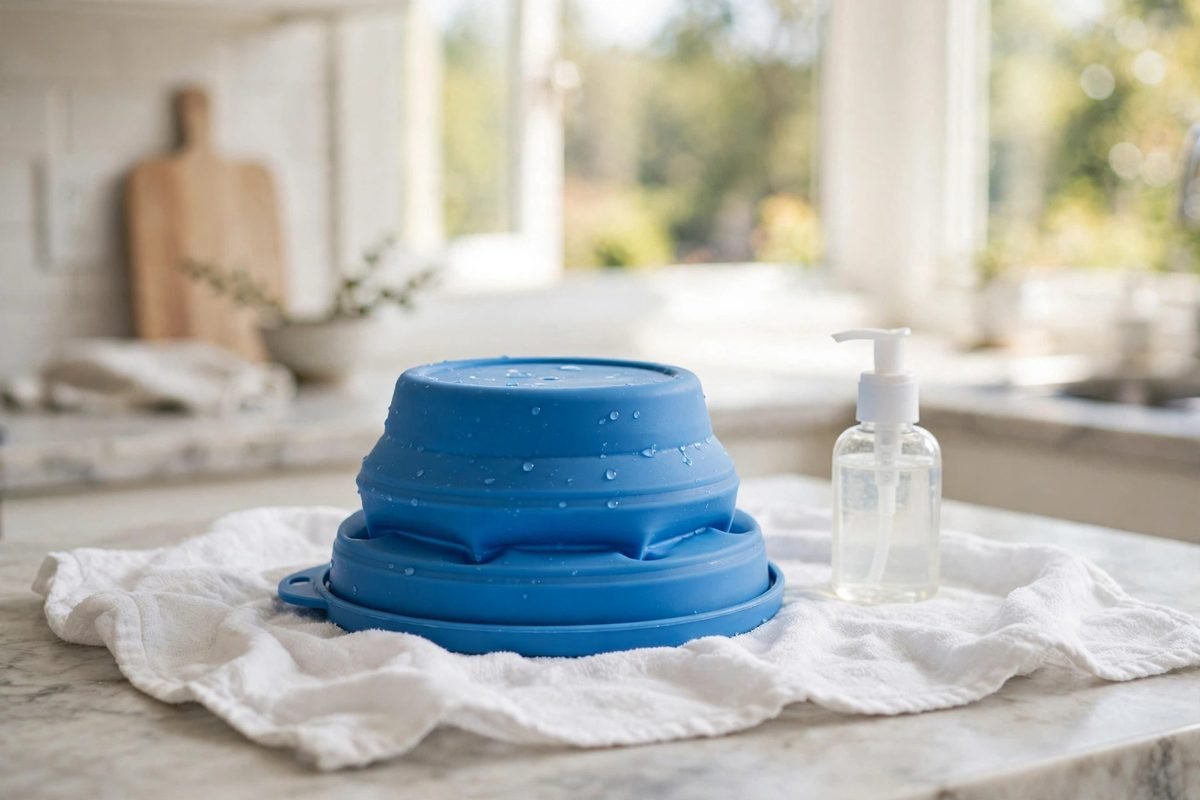
Rinse the bowl after every use. Tip out any leftover water, rinse the bowl with clean water, and shake it dry. A bowl left with water in it in a warm bag grows a smell within hours, and a smelly bowl can put a dog off drinking. At home, wash the bowl with warm water and a mild soap, and rinse it well so no soap is left behind. The water bowl cleaning and hygiene routine covers the same steps for the home bowl, and the travel bowl needs the same care, because it is the same water going into the same dog.
Dry the bowl fully before it is folded and put away. Open the bowl, stand it upside down on a clean towel, and let it air dry. A bowl folded while damp stays damp inside the folds, and damp folds grow mould and smell. Check the folds and the rim for dirt, because grit can hide in the creases of a silicone bowl. If the bowl has a stain or a smell that will not wash out, soak it in warm water with a little baking soda, rinse it well, and let it dry in the air. If the smell stays after soaking, replace the bowl.
Store the bowl where it will be found. A hook by the door, a pocket in the lead bag, or a car door pocket all work, as long as the place never changes. Keep a second bowl in the car if the family travels often, so a forgotten bowl at home does not mean no water on the trip. Check the bowl once a month for cracks, tears, or a rim that no longer holds its shape, and replace it if the silicone feels sticky or torn. A clean, dry, well-stored bowl is ready every time, and a dirty bowl is worse than no bowl at all.
5. When a Travel Bowl Is Not Enough
A travel bowl solves the problem of water away from home, but it cannot solve every problem on a walk. A dog that is hot, panting hard, and will not drink needs shade and rest first, and water second. Move the dog into the shade, offer a small amount of water, and let it cool down slowly. Do not pour cold water over the dog, and do not force it to drink. If the dog is unsteady, vomits, or seems confused, contact a veterinarian, because heat can affect a small dog fast.
A change in drinking is worth watching. A dog that drinks far more than usual, far less than usual, or refuses water on a warm day may have a problem that a bowl cannot fix. Note how much the dog drinks, how often it asks for water, and whether it also eats less or seems tired. Those notes help a veterinarian see the pattern. Disc degeneration in short-legged breeds can begin in the first year of life, so a dog that stops on a walk, will not move, or yelps when lifted should be treated with care, and a veterinarian should be contacted, because the problem may be the back, not thirst.
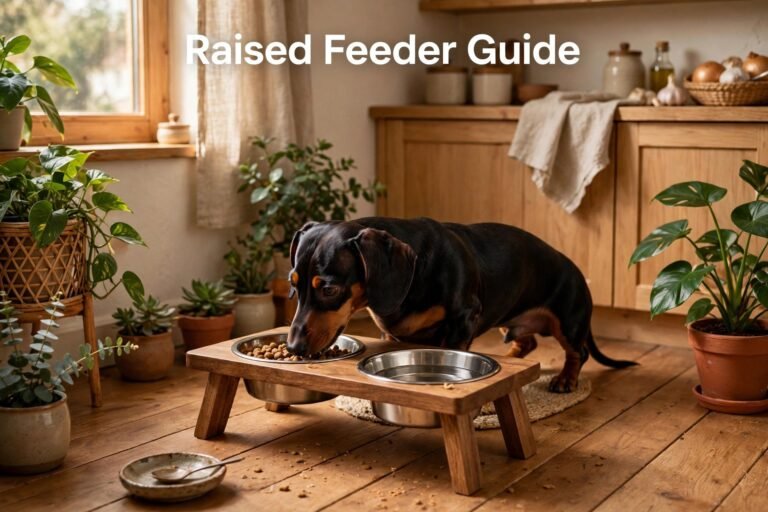
A travel bowl is also the wrong tool for a dog that needs a raised feeder or a no-spill bowl at home. A dog with a sore back or a stiff neck may need a bowl at a set height, and a light travel bowl on the floor does not give that support. Use the travel bowl for travel, and use the home bowl for home, and do not try to make one bowl do both jobs. The right bowl in the right place keeps drinking easy, and easy drinking keeps a small dog well hydrated on walks and trips alike.
Collapsible Travel Bowl Checklist
| Step | What to Do | When |
|---|---|---|
| Choose | Food-grade silicone, flat base, shallow and wide | Before buying |
| Carry | Bowl and water bottle in the same bag | Every walk and trip |
| Offer | Small amounts of water, often, in the shade | On walks and at stops |
| Rinse | Tip out leftover water; rinse after every use | After every use |
| Wash | Warm water and mild soap; rinse well | At home, daily |
| Dry | Air dry fully before folding and storing | Before storing |
Common Mistakes
- Buying a bowl that is too deep, so a short-legged dog struggles to drink from it.
- Carrying the bowl but forgetting the water bottle, so the bowl stays empty.
- Offering a full bowl once, instead of small amounts of water often.
- Letting the dog drink from a shared park bowl or a puddle instead of its own clean bowl.
- Folding the bowl away while it is still damp, so it grows mould and smell.
- Using the travel bowl as the only bowl at home for days at a time.
- Ignoring a change in how much the dog drinks on walks and trips.
When to Call Your Vet
Contact a veterinarian if the dog drinks far more or far less than usual, vomits after drinking, seems weak or unsteady after a walk, or refuses water on a warm day. Contact a veterinarian urgently if the dog collapses, pants hard and will not cool down, or shows weakness in the back legs. A veterinarian can check whether the problem is heat, illness, or a back problem, and can advise the next steps. This article gives general information only and is not a diagnosis.
Pin This: Collapsible Travel Bowl Guide
- Choose food-grade silicone, a flat base, and a shallow, wide shape.
- Carry the bowl and the water bottle in the same bag.
- Offer small amounts of water often, in the shade.
- Rinse after every use; wash and dry fully at home.
- Store the bowl in the same place every time.
- Call a veterinarian if drinking changes sharply or the dog seems unwell.
Frequently Asked Questions
What size collapsible bowl suits a Dachshund?
A bowl that holds about 350 to 500 millilitres is enough for water on a short walk. A shallow, wide bowl is easier for a short-legged dog than a deep one, and a larger bowl is only needed for a long walk or a hot day.
Can a collapsible bowl be used for food as well as water?
Yes, for a small meal at a rest stop or at a friend’s home. It is not a replacement for the home bowl, because it is light and can tip over, so it should only be used for travel meals.
How should a travel bowl be cleaned?
Rinse it after every use, wash it at home with warm water and mild soap, rinse it well, and let it air dry fully before folding it away. A bowl folded while damp grows mould and smell.
Why will a Dachshund not drink from a new travel bowl?
Try the bowl at home first, on the floor where the dog usually drinks, for a few days. A dog that learns the bowl means water at home will use it happily away from home.
When should a vet be called about drinking on walks?
Call if the dog drinks far more or far less than usual, vomits after drinking, or seems weak or unsteady. Call urgently if the dog collapses or pants hard and will not cool down.
Conclusion
A Dachshund collapsible travel bowl is a small, light tool that makes water easy away from home. Choose silicone, a flat base, and a shallow shape, carry it with the water bottle, clean it after every use, and the next step is to try it on the next walk.