

Calming Pheromone Diffuser Guide for Dachshunds at Home
Quick Answer
- A calming pheromone diffuser or spray copies a natural scent signal that mother dogs give off, and many Dachshunds relax a little more when it is in the air, especially during alone time, storms, or noisy evenings.
- A plug-in diffuser suits one room the dog uses most, while a spray suits a bed, a blanket, a carrier, or a car ride, and many apartment owners use both together.
- Place a diffuser low on a wall in the room where the dog rests, away from open windows and air vents, and spray bedding at least fifteen minutes before the dog lies on it.
- Pheromones work best as part of a calm routine: steady departures, a comfortable bed, gentle background sound, and no sudden changes in the home.
- Contact a veterinarian if anxiety is severe, if the dog injures itself, stops eating, or shows back pain, stiffness, or weakness in the back legs.
Contents
- 1. How Pheromones Calm a Dachshund
- 2. Diffuser or Spray: Which Suits an Apartment
- 3. Placing the Diffuser and Using the Spray Safely
- 4. Building a Calm Routine Around the Pheromone
- 5. Watching for Results and Knowing When to Change Course
- Calming Pheromone Comparison Checklist
- Common Mistakes
- When to Call Your Vet
- Pin This: Calming Pheromone Checklist
- Frequently Asked Questions
- Conclusion
An apartment can be noisy for a small dog: lifts hum, neighbors pass the door, delivery drivers knock, and the owner leaves each morning. Calming pheromones are one quiet tool for that problem, a scent the dog can smell but the owner cannot, and this guide explains how diffusers and sprays work and how to use them in a small home. This article is general information only, not a diagnosis.
1. How Pheromones Calm a Dachshund
Pheromones are scent signals that animals use to send messages to each other, and dogs are experts at reading them. A mother dog gives off an appeasing pheromone after her puppies are born, and that scent tells the puppies they are safe, warm, and close to their mother. A calming pheromone product copies that signal, so when a grown dog smells it, the message is the same: this place is safe. That is why pheromones are often the first calming aid owners try.
A Dachshund smells the world far more keenly than a person, and it picks up the pheromone from the air as it breathes. The effect is gentle rather than dramatic: a pheromone will not put a dog to sleep or stop barking on its own. What it can do is take the edge off, so the dog settles faster, paces less, and rests more, and that small change matters in an apartment, because a dog that settles in five minutes instead of twenty barks less and chews less.
Disc degeneration in short-legged breeds can begin in the first year of life, so calm matters for the back as well as for the mood. A stressed Dachshund jumps, spins, paces, and scrambles at doors, and each of those sudden movements loads a long spine. A dog that rests quietly in its bed puts far less strain on its back than a dog that paces the flat for an hour, and the Animal Medical Center guide to intervertebral disc disease in dogs explains why protecting that long back matters at every age. A pheromone is not back care on its own, but a calmer dog is a dog that moves less frantically, and that is a real benefit.

2. Diffuser or Spray: Which Suits an Apartment
A plug-in diffuser fits into a wall socket and warms a liquid refill, releasing the pheromone into one room, day and night, for about a month per refill. It suits an apartment because it works on its own once plugged in, covering the room where the dog spends most of its time, usually the living room or the bedroom. A diffuser covers one room, not a whole flat, so a large open-plan room may need it placed close to the dog’s bed, and an empty refill means it does nothing at all.
A spray is the same scent in a bottle, sprayed onto bedding, a blanket, a bandana, a carrier, or the inside of a car, and it works for a few hours before it fades. It suits short, sharp moments: a storm, a vet visit, a car ride, or the first half hour after the owner leaves. The limit is time: a spray fades, so it needs reapplying, and it should never be sprayed directly onto the dog or into the dog’s face.
Many owners use both, and that is a sensible combination. The diffuser keeps the main room calm around the clock, and the spray adds extra help on a hard day, on the dog’s bed before a departure, or in the carrier before a trip. The guide to a calming music and white-noise machine covers another gentle tool that pairs well with pheromones, because scent and sound together can make a room feel steadier than either one alone. Start with one product, give it a fair trial of two to four weeks, and only then decide whether to add the second.
3. Placing the Diffuser and Using the Spray Safely
Place the diffuser in the room where the dog rests most, plugged into a low wall socket, with the unit upright and clear of furniture, curtains, and bedding. A diffuser needs air to move around it, so do not hide it behind a sofa, a bookcase, or a closed door, and do not plug it in above a radiator or next to an open window, where heat or a draft will push the scent out of the room. Put it near the dog’s bed, but not right beside the dog’s nose: a meter or two away is close enough for the dog to smell it without the scent being strong at nose level. In a small flat, one diffuser in the living room is usually enough, and a second one is only needed if the dog sleeps in a separate bedroom.
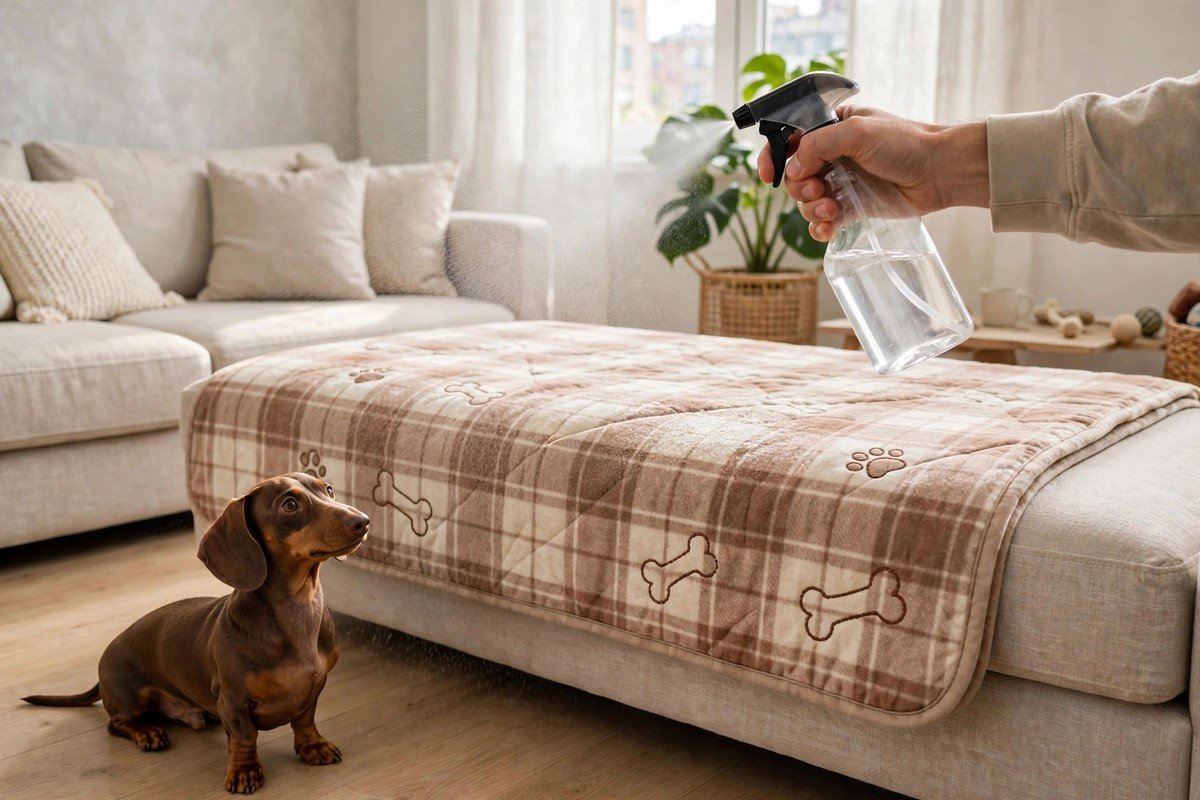
Use the spray with the same care. Spray the dog’s bed, blanket, or carrier from about thirty centimeters away, with two or three short sprays, and wait at least fifteen minutes before the dog lies on it, so the spray has dried. Never spray the dog itself, near its eyes or nose, or onto food, water bowls, or chew toys. Keep the bottle out of the dog’s reach and wash hands after spraying.
Keep the home safe around the diffuser too. Check the plug and the unit weekly for heat, cracks, or a loose fit, and unplug it at once if it feels hot or smells odd. Do not use an extension lead or hide it behind a bed where it cannot be seen, and keep refills away from children and pets. In a flat full of beds and blankets, a small plug-in heater deserves the same respect as any other electrical device.
4. Building a Calm Routine Around the Pheromone
A pheromone works best inside a routine, not instead of one. Start with departures, because leaving the flat is the hardest moment for many Dachshunds. Keep departures short, boring, and the same every time: pick up keys, put on shoes, and leave without a long goodbye, and come back the same way, calmly, without a big greeting. Put the dog in its bed with a chew or a food puzzle a few minutes before leaving, with the diffuser already running in the room and the spray already dried on the blanket. A dog that is busy with a chew when the door closes has something to do, and a room that smells safe helps it settle once the chew is finished.
Add sound and light to the routine. A white-noise machine or soft music covers the sounds of the hallway, the lift, and the neighbors, and a curtain left half open lets in daylight without a view of every passer-by. The calm leaving routine for separation anxiety barking explains the full departure pattern, and pheromones fit into it as the scent layer, alongside sound, a comfortable bed, and a predictable schedule. Keep feeding, walks, and bedtime at the same times each day, because a Dachshund that can predict its day is a Dachshund that worries less about it.
5. Watching for Results and Knowing When to Change Course
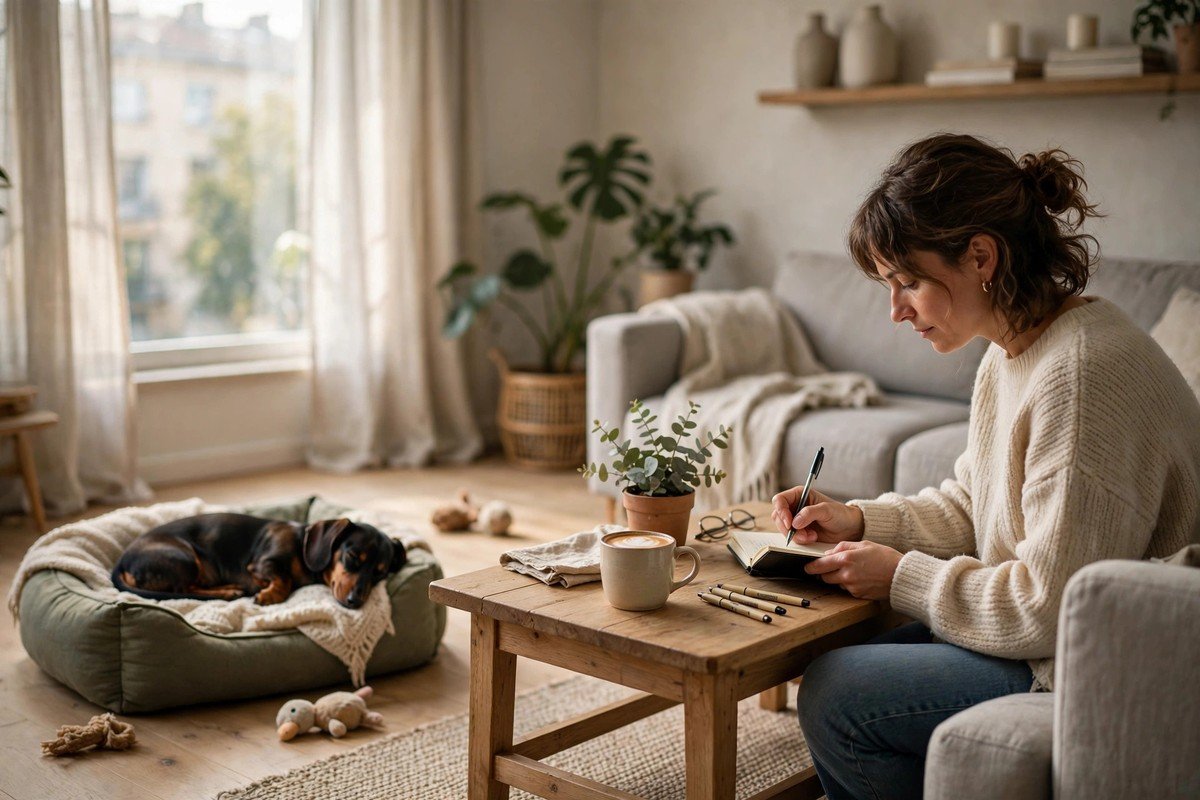
Give the pheromone a fair trial of two to four weeks, and judge it by small, concrete changes, not by a feeling. Keep a short note each day: how long the dog took to settle after the owner left, how much it barked, and how it slept. A result looks like the dog settling in ten minutes instead of thirty, or sleeping through a storm that used to keep it shaking.
If nothing changes after a month, the pheromone may not be the right tool for that dog, and that is useful information, not a failure. Some dogs respond strongly, some a little, and some not at all. Before giving up, check the basics: is the diffuser in the right room, is the refill full, and is the spray used early enough? A diffuser in a hallway the dog never uses will not show a result.
If the dog’s anxiety is severe, the next step is a veterinarian, not a stronger scent. A dog that injures itself, breaks teeth on a crate, escapes the flat, stops eating, or panics every time the owner leaves needs more than a diffuser, and a veterinarian can check for pain, discuss behavior work, and, where needed, talk about medication. The Cornell guide to chondrodystrophy and intervertebral disc disease is a reminder that pain and anxiety often travel together in this breed, and a dog that is anxious may also be sore. The DachsLife study, published in 2015, looked at disc disease in Dachshunds, and its findings support treating the whole dog, not just one symptom.
Calming Pheromone Comparison Checklist
| Product | Best for | Limit to watch |
|---|---|---|
| Plug-in diffuser | One main room, day and night calm | Covers one room only; refill runs out in about a month |
| Spray | Beds, carriers, cars, storms, short events | Fades in a few hours; needs reapplying |
| Diffuser plus spray | Daily calm plus extra help on hard days | Two products to buy and to check |
| Collar with pheromone | Calm that travels with the dog | Must fit well; check for rubbing on the neck |
Common Mistakes
- Expecting a pheromone to cure barking or fear on its own, with no routine around it.
- Placing the diffuser in a hallway or behind furniture, where the dog never smells it.
- Spraying the bed while the dog is already lying on it, or spraying the dog itself.
- Forgetting to check the refill, and running an empty diffuser for weeks.
- Judging the product after two days instead of giving it two to four weeks.
- Skipping the veterinarian when anxiety is severe or getting worse.
When to Call Your Vet
Contact a veterinarian if a Dachshund’s anxiety is severe, if the dog injures itself trying to escape, stops eating, or paces and pants for hours. Contact a veterinarian urgently if the dog shows back pain, stiffness, weakness in the back legs, or loss of bladder control, because pain can look like anxiety in this breed. This article gives general information only and is not a diagnosis.
Pin This: Calming Pheromone Checklist
- Choose a diffuser for the main room and a spray for beds and trips.
- Place the diffuser low, near the bed, away from windows and vents.
- Spray bedding fifteen minutes before the dog lies on it.
- Keep departures short, boring, and the same every time.
- Add soft sound and a steady daily routine.
- Judge the result over two to four weeks with short notes.
- Call a veterinarian if anxiety is severe or getting worse.
Frequently Asked Questions
Do calming pheromones really work for Dachshunds?
They help many dogs a little, and a few dogs a lot, but they are not a cure. Most owners who see a benefit notice the dog settling faster or barking less. Give the product two to four weeks, keep short notes, and judge it by concrete changes in settling time and barking.
Is a diffuser or a spray better for an apartment?
A diffuser is better for daily calm in the room the dog uses most, because it works all day without any effort. A spray is better for short events such as storms, car rides, and vet visits. Many apartment owners use both: the diffuser for the room, the spray for the bed and the carrier.
Can humans smell a pheromone diffuser?
Most people smell nothing at all, or only a very faint scent close to the unit. The scent is made for a dog’s nose, not a person’s. If the unit smells odd, feels hot, or looks cracked, unplug it and check the maker’s guide.
Is a pheromone diffuser safe to leave on all day?
Yes, when it is used as directed: plugged upright into a wall socket, clear of furniture and curtains, and checked weekly for heat or damage. Do not use it on an extension lead, do not hide it behind a bed, and keep refills away from children and pets.
What if the pheromone does not help my Dachshund?
Check the placement and the refill first, then give it a full month. If there is still no change, the dog may simply not respond to pheromones, and that is common. Talk to a veterinarian about behavior work and other options, and check whether pain is behind the anxiety.
Conclusion
A calming pheromone diffuser or spray is a quiet, simple tool for an apartment Dachshund: a diffuser for the room the dog rests in, a spray for the bed and the hard days, and a calm, steady routine around both. Judge it over a month, keep short notes, and call a veterinarian when anxiety is severe.






One Comment