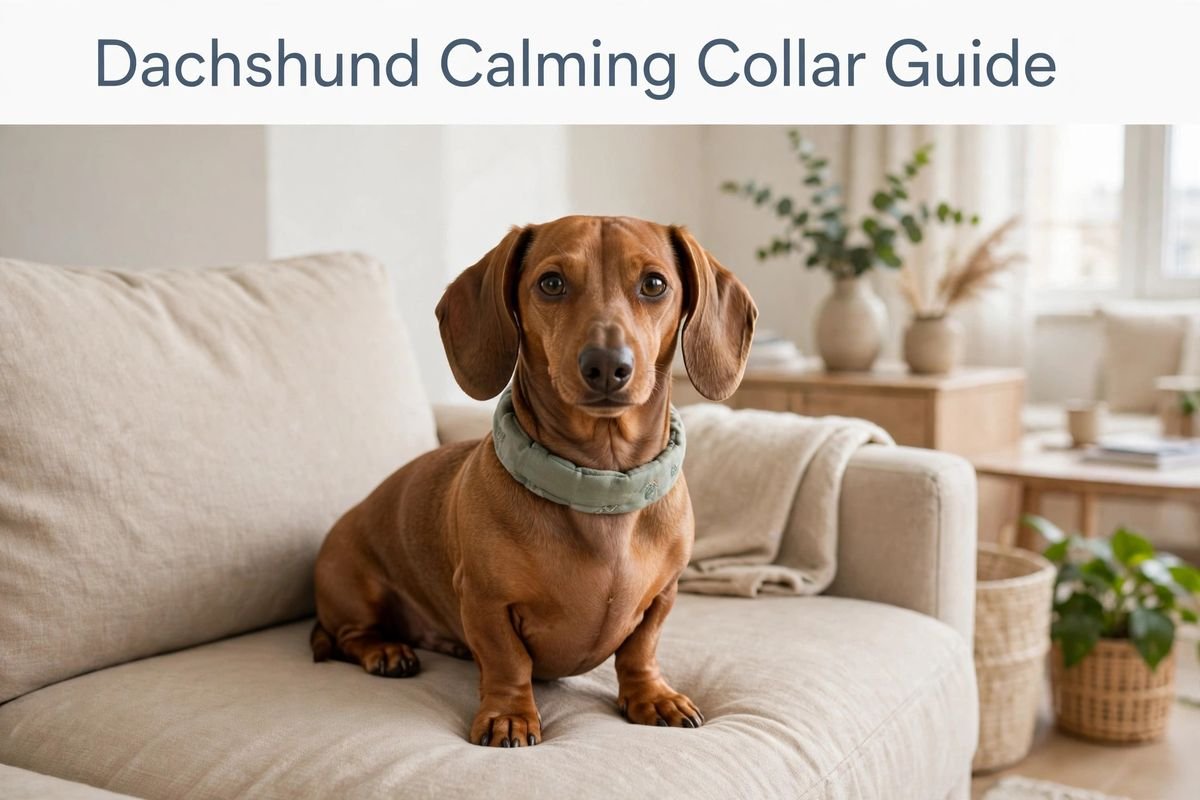
Dachshund Calming Collar Guide: Fit, Use, and Care
Quick Answer
- A Dachshund calming collar releases a gentle scent, usually a pheromone copy or a plant-based blend, that the dog smells close to its nose all day, and the familiar scent can help the dog feel settled in a busy apartment.
- Fit matters more than the scent: the collar should sit snug against the neck, with room for two fingers underneath, so the scent stays near the nose.
- Most calming collars work for about a month, then the scent fades, so the collar needs a fresh one on a set date rather than waiting for the dog to look stressed again.
- A calming collar can help with mild, everyday stress such as visitors, hallway noise, or short absences, but it is not a fix for panic, aggression, or fear that stops the dog from eating or moving.
- Contact a veterinarian if stress signs last for weeks, get worse, or come with shaking, hiding, loss of appetite, or house-training accidents.
Contents
- 1. How a Dachshund Calming Collar Works
- 2. Choosing the Right Collar: Size, Scent, and Duration
- 3. Fitting a Calming Collar the Right Way
- 4. When a Calming Collar Helps, and When It Does Not
- 5. Daily Care, Replacement, and Apartment Routine
- Calming Collar Checklist: Fit, Use, and Replacement
- Common Mistakes
- When to Call Your Vet
- Pin This: Calming Collar Fit Checklist
- Frequently Asked Questions
- Conclusion
1. How a Dachshund Calming Collar Works
A Dachshund calming collar is a soft collar that gives off a light scent near the dog’s nose for most of the day. The scent is usually a copy of the pheromone a mother dog produces after giving birth, or a blend of plant oils such as lavender or valerian. The dog smells something familiar and safe, and that steady signal helps the dog stay calm. The scent follows the dog from room to room, which is useful in an apartment where the dog moves between the couch, the kitchen, and the door all day.
The scent works through the nose, not through the skin, so the collar has to sit close to the neck for the dog to smell it. A loose collar lets the scent drift away, and a tight one rubs the skin, which adds stress instead of reducing it. The collar does not drug the dog or change its personality. A worried dog may simply look a little less tense, with softer ears and less pacing at the door. The change is usually small and slow, over days rather than minutes, and some dogs show no clear change at all.
Most calming collars start to give off their scent as soon as the collar is taken out of its sealed pack, and the scent is strongest in the first week. Body heat from the dog’s neck warms the collar and keeps the scent moving, which is why a collar worn all day works better than one put on only for an hour. A calming collar is one tool among several. A pheromone diffuser or spray for apartments can cover a room, while a collar covers the dog, and the two can work side by side in a home with a nervous Dachshund.
2. Choosing the Right Collar: Size, Scent, and Duration
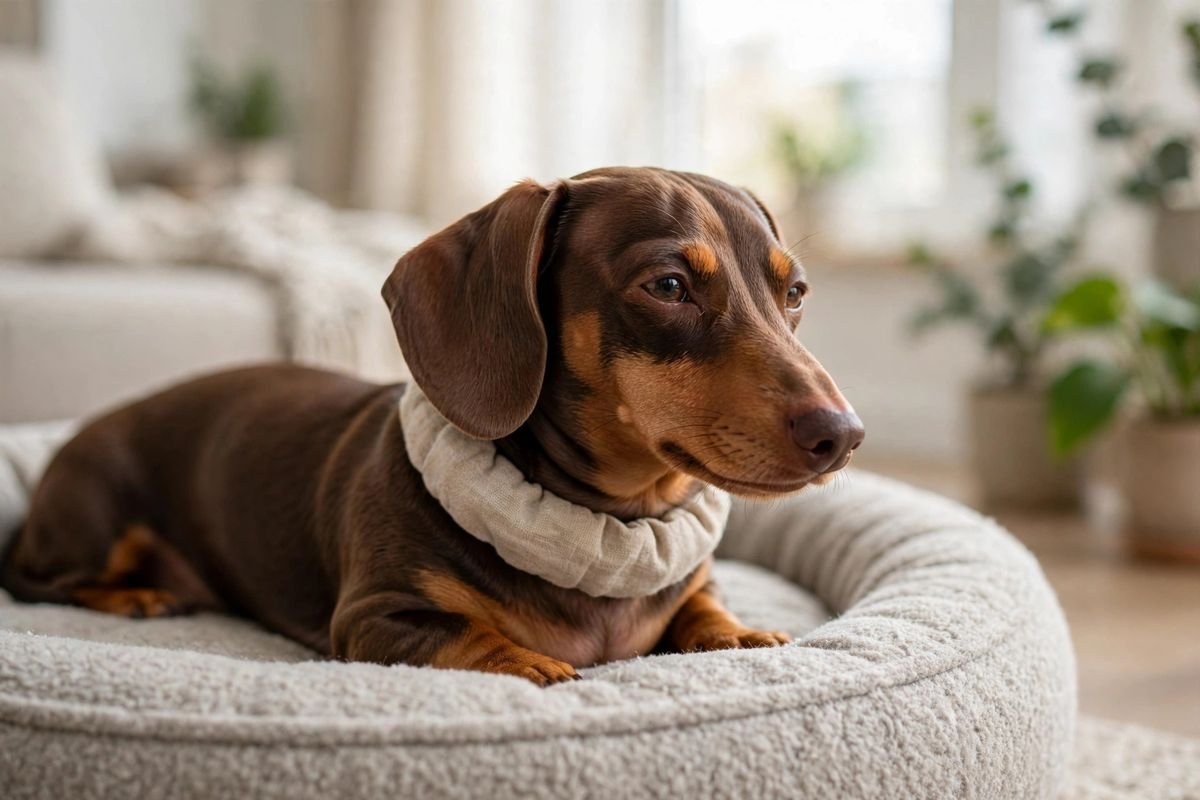
Size comes first, because a calming collar that does not fit cannot do its job. Measure the dog’s neck with a soft tape, snug against the fur, then add about two finger widths for comfort. Dachshunds have thick necks for their size, and a mini Dachshund often needs a size made for a small dog rather than a toy size. Check the size range on the pack, and if the dog sits between two sizes, take the larger one and trim the extra length.
The scent type is the next choice. Pheromone collars copy a natural scent and are usually odorless to people, which suits a small apartment. Plant-based collars smell of herbs or flowers, and the scent is easy for people to notice. If the home has other pets, check that the collar type is safe for them too, since cats in particular react to some plant oils, and a collar meant for a dog should never be put on a cat.
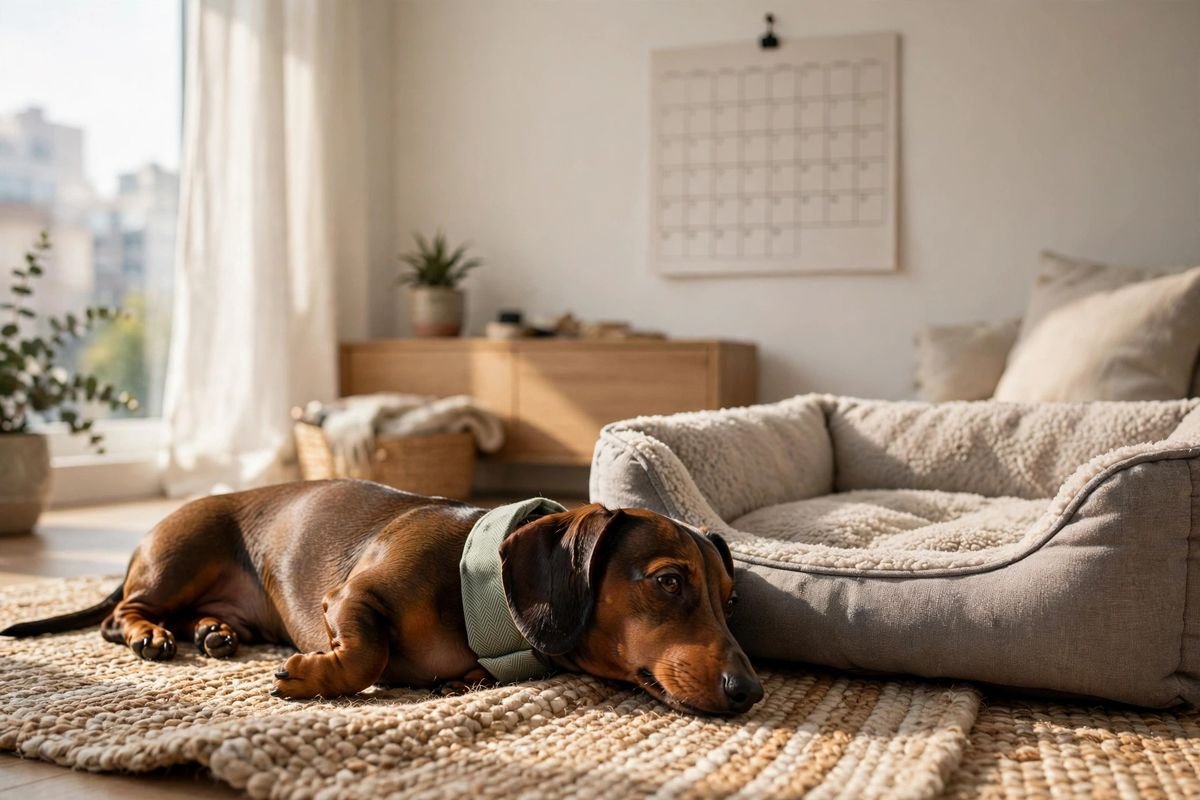
Duration is the third point to check. Most calming collars last about four weeks, and the scent fades slowly, so the dog may look a little more restless in the fourth week without the owner noticing why. Write the start date on the calendar and set the replacement date at the same time. A collar that stays on past its life still looks like a collar, but it gives off little scent, so it does the job of a normal collar and nothing more. Keep a spare collar in a sealed pack, so a lost or chewed collar can be replaced at once instead of leaving a gap of several days.
3. Fitting a Calming Collar the Right Way
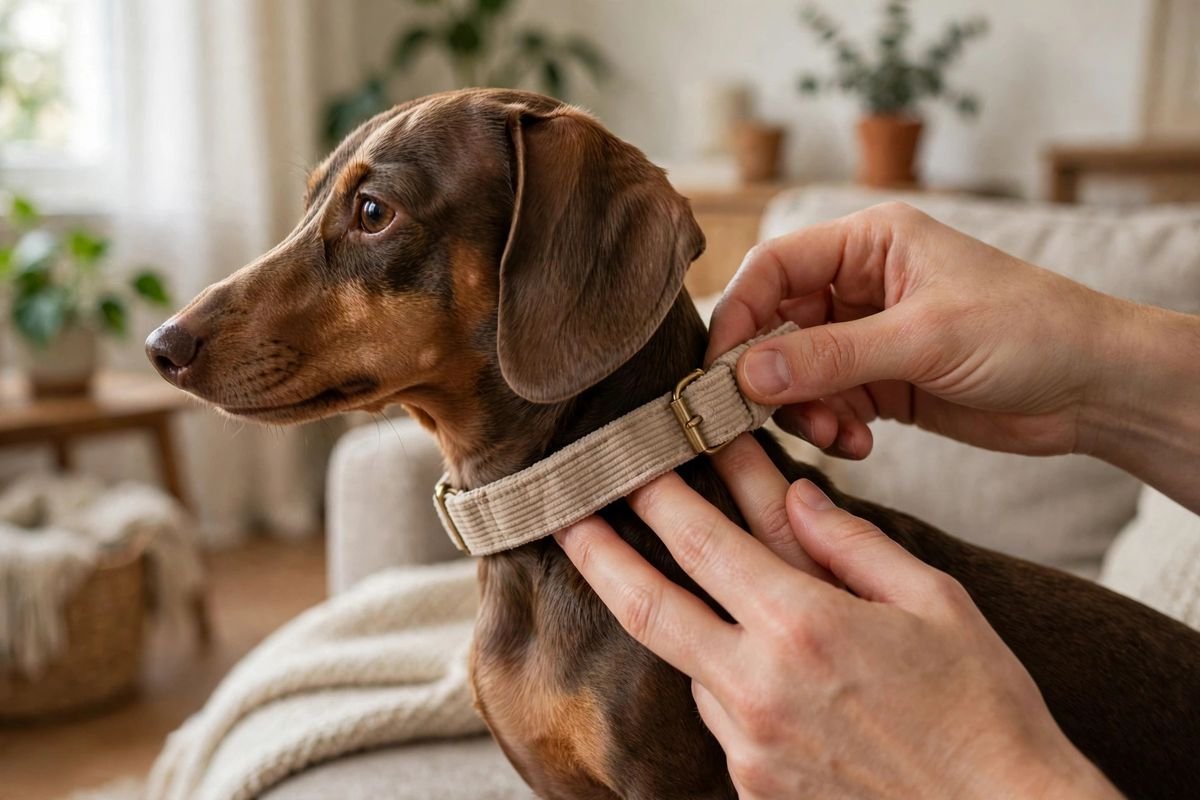
Fitting a calming collar takes five minutes and one calm moment. Wait until the dog is settled, not excited or just back from a walk, and clip the collar around the neck with the scent side facing the skin. Slide two fingers flat under the collar at the throat: they should fit snugly, without forcing, and without a gap wide enough for the collar to slide over the head. Trim extra length past the buckle so the dog cannot chew the loose end, and round off the cut edge.
Check the fit again after a day. A collar that fit in the shop may sit differently after a night of wear, as coat thickness and weight shift how it sits. Run a finger under the collar each morning for the first week, and look for red marks, damp fur, or a rubbed patch under the chin. If the skin looks sore, take the collar off for a day and let the skin rest, then refit it a little looser. A dog that scratches at the collar all day is not getting used to it; the fit needs to change.
The calming collar sits next to the regular collar and leash, not instead of them. It is not made for walking and cannot hold a leash, so the dog still wears its normal collar or harness for walks. At home, the calming collar can stay on through the day and night, since the scent works best when it is steady. Take it off for baths and swimming, and let the neck dry fully before putting it back on, because a wet collar can trap dampness against the skin.
4. When a Calming Collar Helps, and When It Does Not
A calming collar helps most with mild, predictable stress. Fireworks season, a new neighbor in the hallway, a house guest, a short absence, or the first weeks in a new apartment are all moments when a steady, familiar scent can take the edge off. The signs are small: the dog settles faster after a noise, paces less at the door, or lies down sooner after the owner leaves the room. Keep a short note for the first two weeks, one line a day, so the change can be seen clearly instead of guessed at.
The collar helps less with deep fear or sudden panic. A dog that shakes, hides under the bed for hours, refuses food, or panics at every sound needs more than a scent, and a collar alone will not change that. The same goes for barking that comes from boredom or a lack of exercise: a calming collar does not replace walks, play, or training. A calming music or white noise machine can cover hallway sounds that a collar cannot, and the two together often work better than either one alone.
Give the collar a fair trial of two to four weeks before judging it. A collar put on the day of a thunderstorm and taken off the next morning has not had a chance to work, and a collar judged after one bad day tells the owner nothing. If the dog looks no calmer after a full month, with the collar fitted right and worn every day, the collar is probably not the right tool for that dog, and the money is better spent on a different approach. Stop using the collar if the dog develops a rash, loses fur under the collar, sneezes often, or seems more restless with it on, and let the skin recover before trying a different type.
5. Daily Care, Replacement, and Apartment Routine
Daily care for a calming collar is light. Check the collar each morning when the dog is fed: run a finger under it, look at the skin, and make sure the buckle is closed. Wipe the collar with a damp cloth once a week to remove dirt and loose fur, and let it dry before putting it back on. A collar that smells stale or looks cracked has lost its scent, and it is time for a fresh one. Store spare collars in their sealed packs, away from heat and sunlight.
Replacement works best on a fixed date. Mark the start date on the pack with a pen, add four weeks, and put the new date on the calendar or a phone reminder. Replace the collar on that date even if the dog seems calm, because the scent fades slowly and the dog may grow tense again before the owner notices the link. Keep the old collar for a day after the new one goes on, so a lost or chewed replacement can be swapped back in a pinch.
In an apartment, the collar fits into a wider calm routine. Put the collar on as part of the morning, next to feeding and the first walk, so it becomes a habit rather than a special event. Keep the dog’s rest spot quiet and away from the front door, and keep comings and goings low-key, without long goodbyes at the door. The collar is a small part of that routine, and it works best when the rest of the day is steady too.
Calming Collar Checklist: Fit, Use, and Replacement
| Step | What to Do | What to Watch For |
|---|---|---|
| Measure | Soft tape around the neck, snug against the fur | Thick Dachshund neck; check the size range on the pack |
| Fit | Two fingers flat under the collar at the throat | No slipping over the head; no red marks or rubbing |
| Trim | Cut extra length past the buckle; round the edge | Dog cannot chew the loose end |
| Daily check | Finger under the collar; look at the skin | Soreness, damp fur, scratching, or a loose buckle |
| First two weeks | One short note a day about the dog’s behavior | Settles faster; paces less; lies down sooner |
| Replace | New collar every four weeks, on a set date | Faded scent in week four; restlessness returning |
| Stop and rest | Remove the collar if skin is sore or the dog is worse | Rash, fur loss, sneezing, or more restlessness |
Follow the checklist in the same order every time. A collar that is measured, fitted, checked daily, and replaced on time gives the scent its best chance.
Common Mistakes
- Buying the wrong size and leaving the collar loose, so the scent drifts away from the nose.
- Using the calming collar as a walking collar and clipping a leash to it.
- Leaving the same collar on for months after the scent has faded.
- Judging the collar after one day, instead of giving it two to four weeks.
- Ignoring red skin or constant scratching and leaving the collar on anyway.
- Putting a dog calming collar on a cat, or using a collar with plant oils around cats without checking safety.
- Expecting the collar to fix barking, panic, or fear on its own, without walks, training, or a calm routine.
- Storing spare collars open or in sunlight, so the scent is gone before the pack is used.
When to Call Your Vet
Contact a veterinarian if stress signs last for weeks, get worse, or come with shaking, hiding, loss of appetite, house-training accidents, or a dog that refuses to eat or move. Contact a veterinarian promptly if the collar causes a rash, swelling, fur loss, breathing trouble, or constant sneezing, and take the collar off first. A veterinarian can check whether the behavior comes from fear, pain, or a health problem, and advise on the next step for that dog. This article gives general information only and is not a diagnosis.
Pin This: Calming Collar Fit Checklist
- Measure the neck snug, then add two finger widths.
- Fit two fingers flat under the collar at the throat.
- Trim the extra length past the buckle.
- Check the skin under the collar every morning.
- Replace the collar every four weeks, on a set date.
- Call a veterinarian if stress signs last for weeks.
Frequently Asked Questions
How long does a Dachshund calming collar take to work?
Most owners who see a change notice it over one to two weeks, not in the first hour. The scent works best when the collar is worn every day and fitted snugly. If nothing has changed after a full month of steady use, the collar is probably not the right tool for that dog.
Can my Dachshund wear a calming collar all day and night?
Yes, most calming collars are made for all-day wear, and the steady scent is part of how they work. Take it off for baths and swimming, and check the skin under it each morning. If the skin looks red or sore, leave the collar off for a day and refit it a little looser.
Can a calming collar replace training for a nervous Dachshund?
No. A collar can take the edge off mild stress, but it does not teach a dog to cope with visitors, noises, or being alone. Training, regular walks, and a calm daily routine do that work, and the collar simply supports them. A dog with deep fear or panic needs a veterinarian’s advice, not a collar alone.
Is a calming collar safe around other pets?
Most pheromone collars are made for dogs and are fine around other dogs, but plant-based collars need more care, since some plant oils are unsafe for cats. Check the pack before use, and never put a dog collar on a cat.
How do I know when to replace the calming collar?
Replace it every four weeks, on a set date written on the calendar when the collar goes on. The scent fades slowly, so waiting for the dog to look stressed again means the collar has already stopped working. A fresh collar on a fixed schedule keeps the scent steady.
Conclusion
A Dachshund calming collar is a simple, low-effort tool: measure the neck, fit it snug with two fingers underneath, wear it daily, and replace it every four weeks. The next step is a small one: measure the dog’s neck today and write the replacement date on the calendar.