
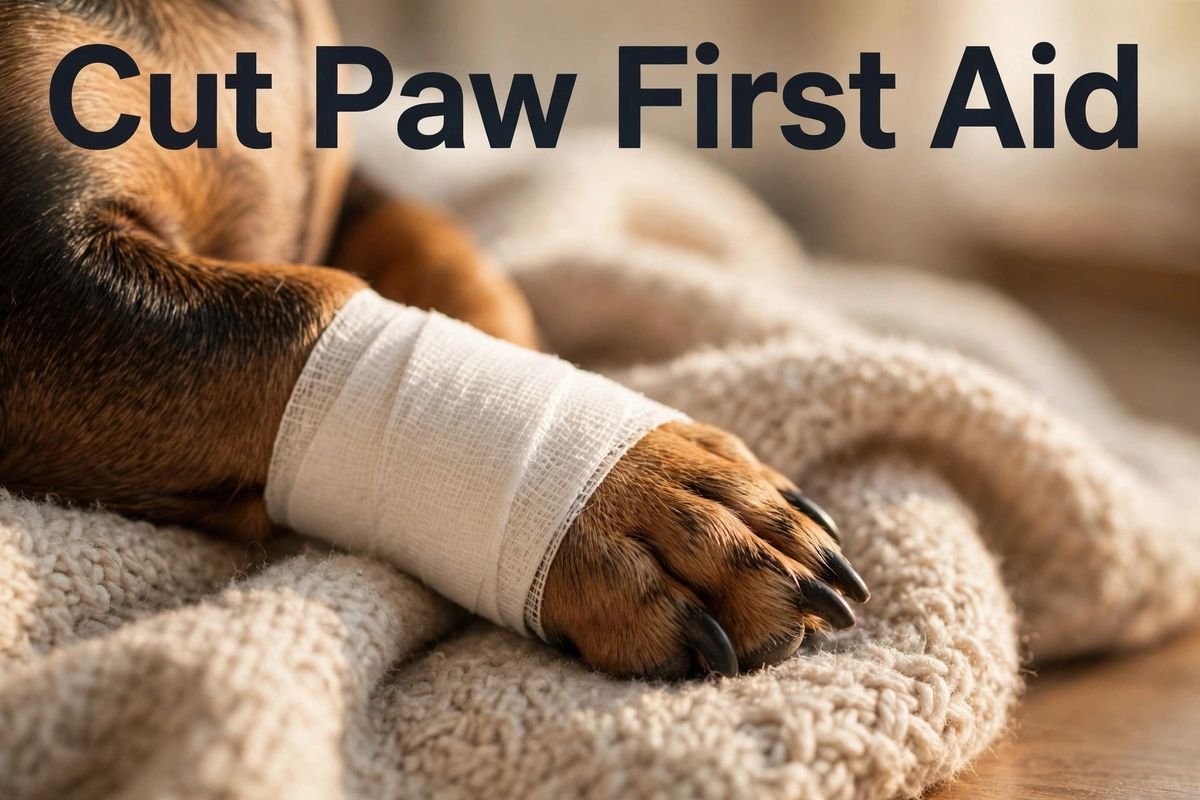
Dachshund Cut Paw First Aid at Home: Clean and Cover
Quick Answer
- Dachshund cut paw first aid at home starts with staying calm, holding the paw still, and looking at the cut before doing anything else.
- Clean a small cut with lukewarm water and a clean cloth; do not use harsh products on an open cut.
- Press a clean cloth on the cut for a few minutes to slow bleeding, then cover it with a light bandage or a clean sock.
- Watch the paw for swelling, redness, heat, smell, or limping over the next day or two.
- Call a veterinarian if the cut is deep, the bleeding will not stop, the dog will not put weight on the paw, or the paw looks infected.
Contents
- 1. What to Do First When a Dachshund Cuts Its Paw
- 2. Cleaning a Cut Paw Safely at Home
- 3. Covering and Protecting the Paw
- 4. Watching the Paw Heal: What Normal Looks Like
- 5. When a Cut Paw Needs a Veterinarian
- Dachshund Cut Paw First Aid at Home: Checklist
- Common Mistakes
- When to Call Your Vet
- Pin This: Cut Paw First Aid Checklist
- Frequently Asked Questions
- Conclusion
1. What to Do First When a Dachshund Cuts Its Paw
Dachshund cut paw first aid at home starts with a calm minute, not a rush to the bathroom cabinet. A dog that has cut its paw is usually more scared than hurt, and a scared dog will pull the paw away and lick the cut. Sit down with the dog, speak in a low, steady voice, and hold the paw gently in one hand. A small treat on the floor helps a wriggly dog settle. The first job is to look: where is the cut, how big is it, and is it still bleeding.
Most paw cuts are small: a nick on a pad from a sharp stone, a scrape between the toes, or a torn nail. A small cut that bleeds slowly can be handled at home. A deep cut, a cut that gapes open, a cut with something stuck in it, or a cut that bleeds fast needs a veterinarian, not a home kit. Do not pull anything out of a deep cut. A dog that yelps, snaps, or pulls away hard is telling the owner the paw hurts more than a small cut should.
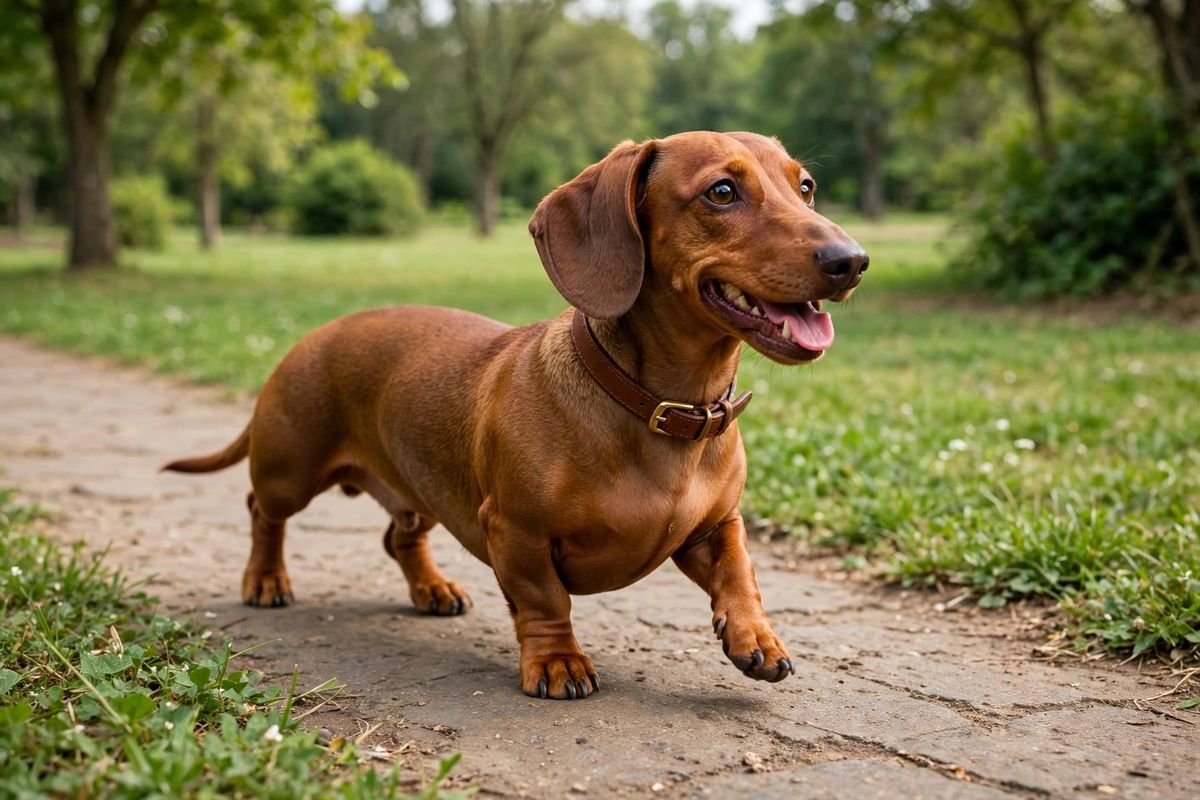
Keep a first aid kit ready before a cut happens, not after. A pet first aid kit for apartments holds the basics in one place: clean cloths, gauze, a light bandage, a clean sock, and the clinic’s phone number. A kit kept by the door is easy to grab when the dog comes in from a walk with a bloody paw. Check the kit every few months, and replace anything that is used up or dirty.
2. Cleaning a Cut Paw Safely at Home
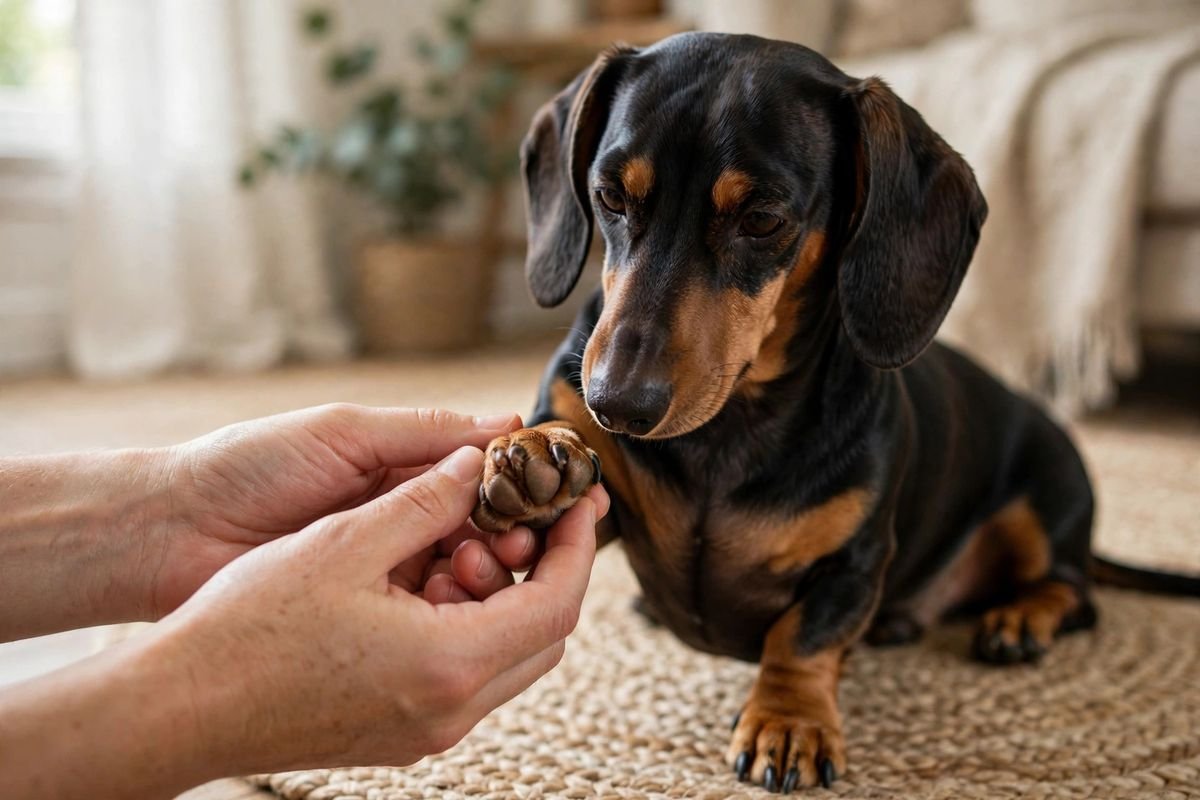
Cleaning starts with water, not with a product. Hold the paw under lukewarm running water for a minute or two, or pour lukewarm water gently over the cut from a jug. Lukewarm water washes away dirt, grit, and blood without stinging. Use a clean cloth or gauze to dab around the cut, not to scrub it. Scrubbing hurts, and it can push dirt deeper into the cut.
Do not use harsh products on an open cut. Alcohol, hydrogen peroxide, and strong antiseptics sting, and they can damage the tissue that needs to heal. Plain lukewarm water and a clean cloth are enough for a small cut. If the cut has grit or a small stone in it, rinse it out with water and pick out only what comes away easily with clean fingers or tweezers. If something is stuck deep, or the cut will not rinse clean, stop and call a veterinarian. A cut that still holds dirt after rinsing is a cut that may need a vet’s look.
After cleaning, dry the paw gently with a clean towel, and check the cut again. A small cut should look like a clean line or a shallow scrape, with slow bleeding or none at all. Check between the toes too, because grit and small cuts hide there, and check the nails: a torn nail bleeds a lot and looks worse than it is, but it still needs covering. If the bleeding has slowed to a stop and the cut looks clean, the paw is ready to be covered. If the bleeding starts again as soon as the cloth comes off, press the cloth back on and keep pressure for a few more minutes.
3. Covering and Protecting the Paw
Covering a cut paw keeps dirt out and stops the dog from licking it. A light bandage works well: wrap a piece of gauze around the paw, then a bandage over it, snug but not tight. Two fingers should fit under the bandage, and the toes should look normal, not swollen or cold. A bandage that is too tight cuts off circulation, so check the toes after a few minutes: if they are swollen, cool, or spread apart, the bandage is too tight and needs to be redone looser. A clean sock over the bandage adds a second layer, and it stops the dog from pulling the bandage off with its teeth.
A dog that licks the cut will slow healing, because licking keeps the cut wet and can push dirt into it. A sock, a bandage, or a cone from the veterinarian keeps the tongue away. Watch the dog for the first hour after covering: a dog that chews at the bandage needs a sock over it, and a dog that chews through the sock needs a cone. Do not use tape directly on fur. Change the bandage once a day, or sooner if it gets wet or dirty, and check the cut each time.
Keep the paw dry and clean while it heals. Skip the muddy walk, the puddle, and the wet grass for a day or two, and take the dog out on a dry path for short bathroom breaks instead. A plastic bag over the bandage, held loosely, keeps the paw dry on a wet day, but the bag should come off indoors so the paw can breathe. Indoors, a clean floor and a dry bed are the best healing spot. The dog can walk around the apartment normally, as long as the bandage stays on and stays dry.
4. Watching the Paw Heal: What Normal Looks Like
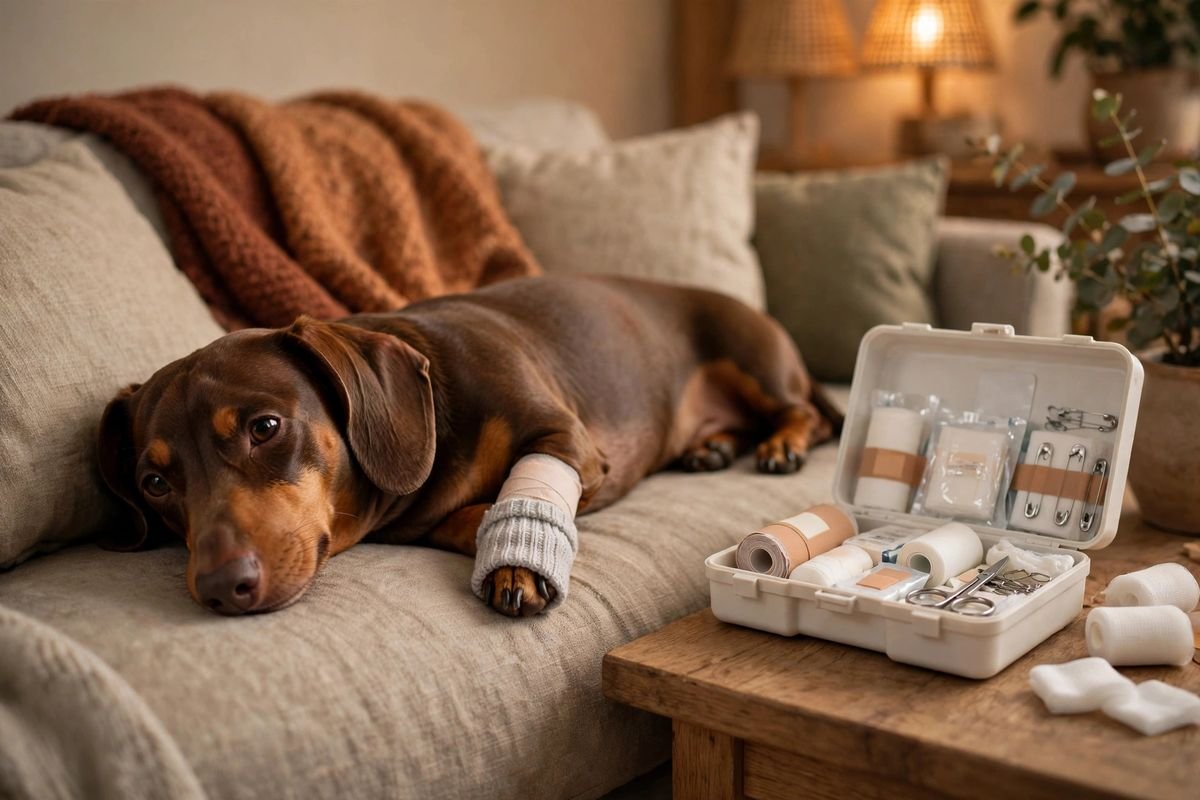
A small cut paw heals in a few days, and the signs of normal healing are easy to spot. The bleeding stops, the cut dries and closes, and the dog puts weight on the paw again within a day. A little tenderness for the first day is normal: the dog may walk carefully, hold the paw up for a moment, or lick the bandage once or twice. By the second day, the dog should be walking more normally, and by the third day, the cut should look dry and closed. A torn nail takes longer, and the nail may look odd for a week or two, but the paw should still get steadier each day.
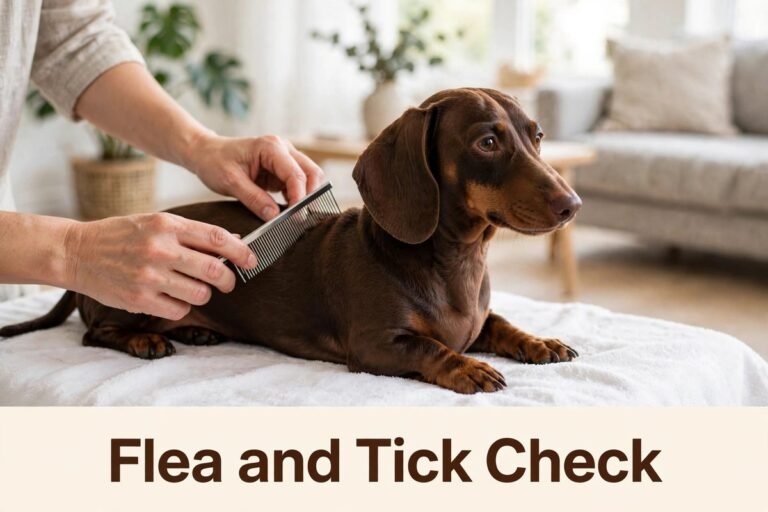
Check the paw twice a day, morning and evening, when the bandage is changed. Look for the signs of healing: the cut getting smaller, the skin around it looking calm, and the dog walking better. The paw care after muddy and rainy walks covers the same kind of daily check. A short note each day shows whether the paw is getting better or not, and the note is useful if a vet visit is needed.
Infection is the thing to watch for, and it shows up as change: swelling that grows instead of shrinking, redness spreading away from the cut, heat in the paw, a bad smell, or discharge. A dog that was getting better and then gets worse — more limping, more licking, less appetite — may have an infection starting, even if the cut looked fine yesterday. Do not wait to see if an infection clears up on its own. A paw infection in a small dog can spread fast, and a veterinarian can advise whether the paw needs to be seen, cleaned, or treated.
5. When a Cut Paw Needs a Veterinarian
Some cuts need a veterinarian from the start, and knowing which ones saves time and pain. A cut that is deep, that gapes open, or that shows tissue under the skin needs a veterinarian, because it may need stitches or a closer look. A cut with glass, a thorn, or a piece of metal stuck in it needs a veterinarian, because pulling it out at home can push it deeper or break it off. A torn nail that bleeds heavily, a paw that the dog will not put weight on at all, or a paw that swells fast after the cut all need a veterinarian the same day.
Bleeding that will not stop is the clearest sign to call. Press a clean cloth on the cut for five minutes without lifting it to check: if the cloth soaks through, add another cloth on top and keep pressing, and call the clinic. Do not use a tight band to stop the bleeding, and do not lift the cloth every few seconds to look. A cut that bleeds through two cloths in five minutes is a cut that needs a veterinarian, not a third cloth. Keep the dog calm and still while the pressure is on, and carry the dog to the car rather than letting it walk on a bleeding paw.
Call a veterinarian too if the cut is not healing, or if the dog’s mood changes. A dog that eats less, sleeps more, or hides after a paw cut may be in more pain than the cut suggests, and a veterinarian can check for a deeper injury or an infection. Bring the note of how the paw looked each day, and the bandage if it is still on, so the veterinarian can see how the cut was covered. A cut that looks small on the outside can hide a deeper problem, and a veterinarian’s exam is the only way to be sure.
Dachshund Cut Paw First Aid at Home: Checklist
| Step | What to Do | What to Watch For |
|---|---|---|
| 1. Look | Hold the paw gently; find the cut | Deep cut; gaping; something stuck; fast bleeding |
| 2. Clean | Lukewarm water; dab with a clean cloth | Dirt that will not rinse out; bleeding restarts |
| 3. Press | Clean cloth on the cut for a few minutes | Cloth soaking through; bleeding will not stop |
| 4. Cover | Gauze, light bandage, clean sock over it | Toes swollen or cold; bandage too tight |
| 5. Watch | Check twice a day; change bandage daily | Swelling, redness, heat, smell, more limping |
| 6. Call | Call a veterinarian if any warning sign appears | Deep cut; infection signs; dog will not walk |
The checklist works in order, every time. A cut handled calmly, in order, heals faster than one handled in a rush.
Common Mistakes
- Rushing to the cabinet before looking at the cut, and missing a deep cut or something stuck in it.
- Scrubbing the cut hard, which hurts and pushes dirt deeper.
- Using alcohol or hydrogen peroxide on an open cut, which stings and damages healing tissue.
- Wrapping the bandage too tight, so the toes swell or go cold.
- Letting the dog lick the cut, which keeps it wet and slows healing.
- Leaving a wet or dirty bandage on for days, instead of changing it daily.
- Taking the dog for a muddy walk the next day, before the cut has closed.
- Waiting to call a veterinarian while swelling, redness, or smell gets worse.
When to Call Your Vet
Contact a veterinarian if the cut is deep, gaping, or has something stuck in it, if the bleeding will not stop after five minutes of pressure, if the dog will not put weight on the paw, or if the paw shows swelling, redness, heat, smell, or discharge. Contact a veterinarian urgently if the bleeding soaks through two cloths, if the dog cannot breathe, or if it is in severe pain. A veterinarian can clean the cut, check for deeper injury, and advise on care. This article gives general information only and is not a diagnosis.
Pin This: Cut Paw First Aid Checklist
- Stay calm; hold the paw gently and look at the cut first.
- Clean with lukewarm water and a clean cloth.
- Press a clean cloth on the cut to slow bleeding.
- Cover with gauze, a light bandage, and a clean sock.
- Check the paw twice a day and change the bandage daily.
- Call a veterinarian if the cut is deep or the paw looks infected.
Frequently Asked Questions
Can I clean my Dachshund’s cut paw with water only?
Yes. Lukewarm water and a clean cloth are enough for a small cut. Do not use alcohol or hydrogen peroxide on an open cut, because they sting and can damage the tissue that needs to heal.
How do I know if a paw cut needs a veterinarian?
A deep cut, a cut that gapes open, a cut with something stuck in it, or bleeding that will not stop after five minutes of pressure needs a veterinarian. So does a paw the dog will not put weight on.
Should I bandage my Dachshund’s cut paw?
Yes, a light bandage keeps dirt out and stops the dog from licking the cut. Wrap it snug but not tight, check the toes after a few minutes, and add a clean sock over it. Change the bandage daily.
How long does a cut paw take to heal?
A small cut usually heals in a few days. The dog should walk better by the second day, and the cut should look dry and closed by the third. A torn nail takes longer. If the paw gets worse instead of better, call a veterinarian.
Can my Dachshund walk outside with a cut paw?
Short bathroom breaks on a dry path are fine, with the bandage on and a bag over it if the ground is wet. Skip muddy walks, puddles, and wet grass for a day or two until the cut has closed.
Conclusion
Dachshund cut paw first aid at home is three steps in order: look at the cut, clean it with lukewarm water, and cover it with a light bandage and a sock. The next step is simple — check the first aid kit today, and make sure the clinic’s number is in it.



2 Comments