
Feeding an Older Dachshund in an Apartment: Senior Guide
Quick Answer
- Feed an older Dachshund smaller, measured meals that suit lower activity, softer textures if chewing is harder, and a healthy weight.
- Keep meal times consistent, weigh monthly, and adjust portions in small steps by body condition and veterinary advice.
- Make food easy to reach without jumping or straining, keep fresh water close, and watch appetite, stool, thirst, and mobility for changes.
- Contact a veterinarian promptly for weight loss, refusal to eat, increased thirst, vomiting, diarrhea, or new difficulty moving.
Contents
- 1. Adjust Portions for Lower Activity and Slower Metabolism
- 2. Choose Softer, Easy-to-Eat Meals Without Losing Balance
- 3. Set Up a Calm, Low-Strain Feeding Spot in an Apartment
- 4. Track Weight, Appetite, and Body Condition Every Month
- 5. Adapt Meals as Health, Teeth, and Mobility Change
- Common Mistakes
- When to Call Your Vet
- Pin This: Your Senior Feeding Checklist
- Frequently Asked Questions
Older Dachshunds often need less food than they did as young adults, yet they still need a complete, balanced diet every day. Activity usually falls, metabolism slows, and joints and backs may become stiffer, which means extra weight is harder to carry and harder to lose. At the same time, appetite can change in either direction: some older dogs eat less because of dental discomfort or reduced smell and taste, while others beg more out of habit even as activity falls. A senior feeding plan therefore needs two skills at once: portion control that prevents weight gain, and close attention to appetite changes that may signal a health problem. This guide covers both, with practical steps for apartment life.
Senior is not a single age or a single diet. Dogs age at different rates, and a healthy older dog may need only a modest portion adjustment, while a dog with dental disease, kidney concerns, or mobility problems may need a tailored plan from a veterinarian. Use this guide as a framework for daily habits, and use veterinary visits to set the specific food, portion, and monitoring plan for the individual dog. Small, steady adjustments, clear records, and early calls when something changes will serve an older dog better than frequent diet changes made at home.
1. Adjust Portions for Lower Activity and Slower Metabolism
Start senior feeding by reviewing the current daily amount, including treats, chews, and table scraps, and comparing it with current activity. A dog that now takes short, gentle walks instead of long active outings needs fewer calories than before, even if appetite seems unchanged. Reduce portions in small steps, about a tenth at a time, and wait two to four weeks before judging the effect. Weigh monthly on the same scale, check body condition at the same time, and keep a short note of the daily food amount and treat total. A gradual reduction avoids hunger and frustration, and it gives the household time to notice whether energy, coat, and stool quality stay steady.
Body condition is a better guide than weight alone, because muscle loss can hide fat gain on the scale. Ribs should be felt with light pressure under a thin layer of fat, a waist should be visible from above, and the abdomen should tuck up from the side. If ribs become hard to feel, portions need a further small reduction. If ribs, spine, and hip bones become sharply visible, seek veterinary advice before cutting food further, because weight loss in an older dog can have a medical cause. The Cornell page on chondrodystrophy and intervertebral disc disease explains why weight control stays important in later life for this breed, since extra weight adds strain to a back that may already be vulnerable. Pair portion control with gentle activity suited to the dog, following guidance on how much exercise a Dachshund needs without hurting its back, so food and movement change together rather than in opposite directions.
2. Choose Softer, Easy-to-Eat Meals Without Losing Balance
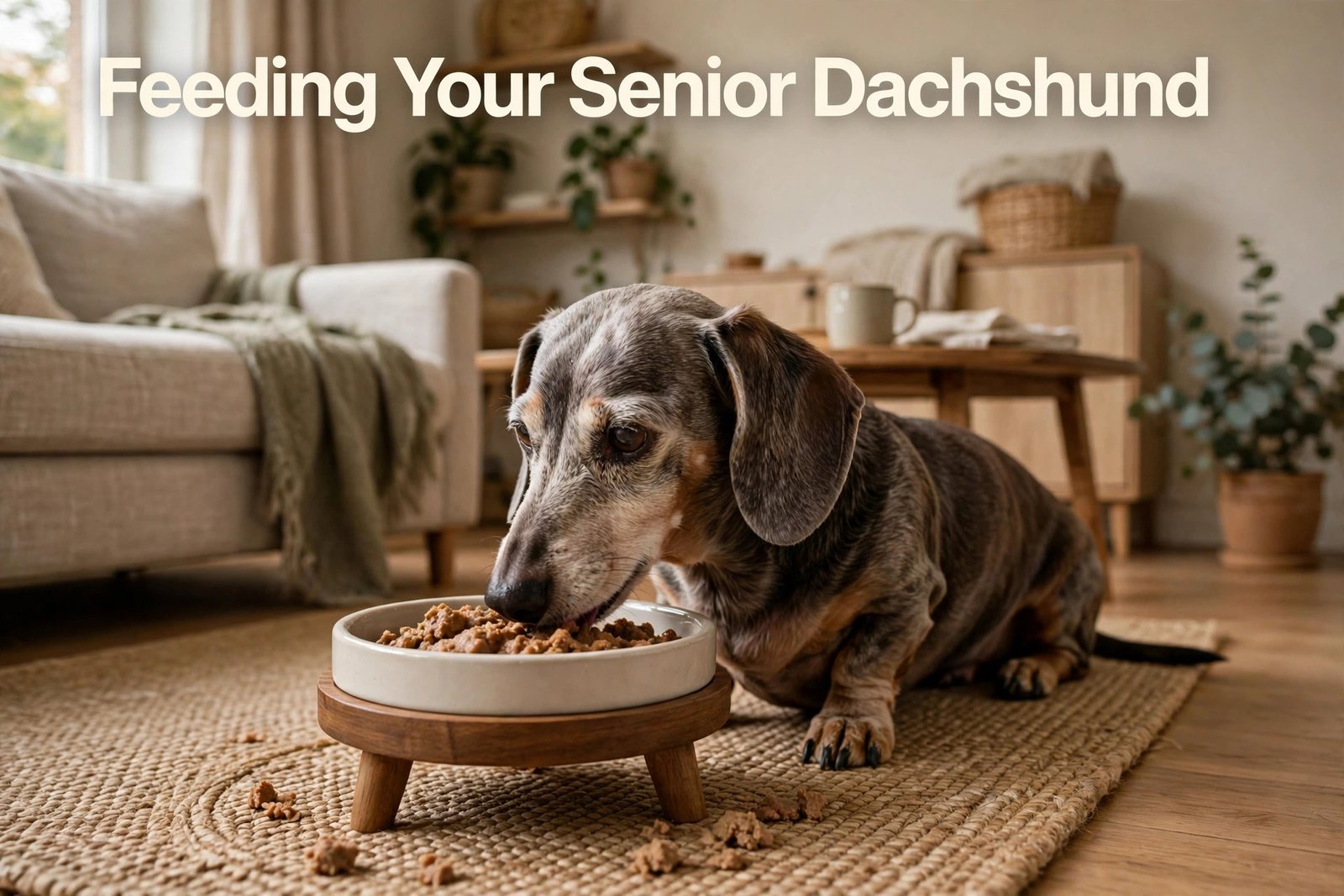
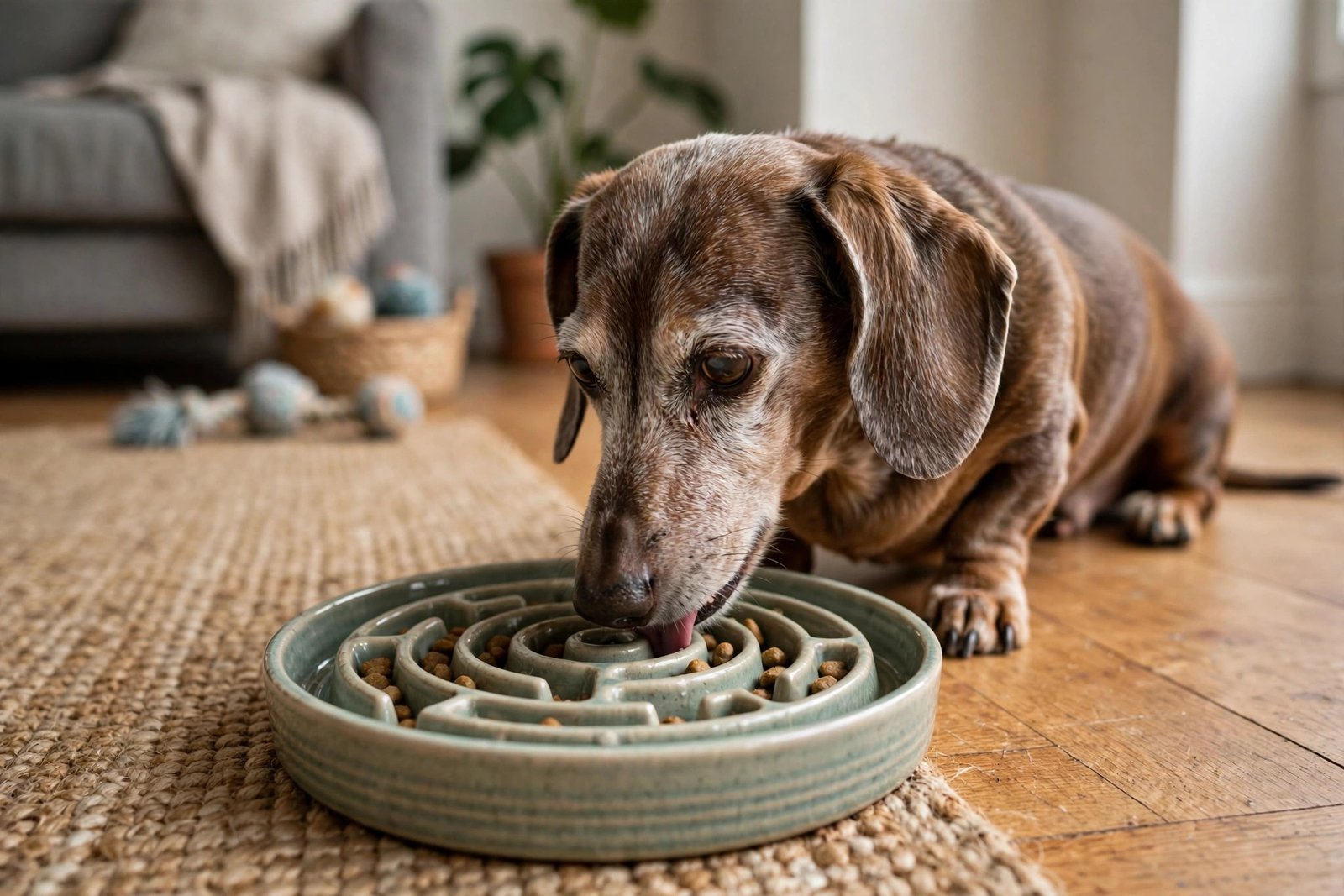
Many older dogs benefit from softer food, but softness alone does not make a diet suitable. Choose a complete food made for senior dogs, or a complete adult food that a veterinarian has confirmed as suitable, and change texture within that complete diet where possible. Dry food can be softened with a little warm water and left to stand for a few minutes, which keeps the same balanced formula while making chewing easier. Wet food can also suit older dogs, provided the daily amount is measured carefully, because wet food looks small in the bowl yet still counts fully toward the daily total. Avoid building a senior diet from unplanned extras such as cooked meat alone, rice alone, or frequent table scraps, because those additions unbalance an otherwise complete diet.
Palatability matters when appetite falls. Warming food slightly, adding a small amount of warm water, or serving at a consistent time in a calm spot can help a reluctant eater. Keep the change small and consistent, and note what helps. If appetite falls suddenly, if the dog drops food, chews on one side, or eats much more slowly than usual, check the mouth and seek veterinary advice, because dental pain is a common and treatable cause of eating difficulty in older dogs. Treats should stay small, soft where chewing is hard, and counted within the daily total. A senior dog does not need larger treats to feel rewarded, and a small treat given calmly works just as well as a large one for training and bonding.
3. Set Up a Calm, Low-Strain Feeding Spot in an Apartment
An older Dachshund should never need to jump, climb, or strain to reach food or water. Place bowls on the floor in a quiet corner, away from doorways and foot traffic, on a non-slip mat that keeps the bowl still. A slightly raised bowl can help some older dogs, but the height should be modest and stable, and the dog should be able to eat with a relaxed neck and back. Avoid placing bowls on a high surface, on a slippery floor, or next to a washing machine or other noisy appliance. If the apartment has more than one level, keep food and water on the level where the dog spends most of the day, so the dog does not need stairs for a basic need.
Keep the routine calm and predictable. Feed at the same times each day, allow about twenty minutes for eating, and then pick up uneaten food so appetite changes are visible. In a multi-pet household, feed the older dog separately, so a faster or younger dog cannot finish the senior dog’s meal unnoticed. Keep fresh water in the same spot, change it at least once a day, and add a second water bowl in another room if the apartment is large or the dog moves slowly between rooms. A calm feeding spot, a stable bowl, and a consistent routine reduce stress at meals and make it easier to notice when eating speed, appetite, or behavior changes.

4. Track Weight, Appetite, and Body Condition Every Month
Monthly tracking is the core of senior feeding. Weigh on the same scale, check ribs, waist, and abdomen, and write down the food name, daily amount, treats, appetite, stool quality, thirst, and energy in a few lines. A short monthly note reveals slow trends that daily observation misses, such as a gradual weight rise over three months, a slow fall in appetite, or increased drinking that has crept up unnoticed. Bring the record to veterinary visits, because a trend over months is far more useful than a single weight or a general impression that the dog is eating well.
Watch for changes that need a call rather than a portion adjustment. Weight loss despite a good appetite, weight gain despite measured portions, increased thirst and urination, vomiting, diarrhea, bad breath, drooling, or a sudden change in mobility can all point to a medical issue. Appetite changes deserve the same attention as weight changes: a dog that suddenly eats much less, much more, or much faster than usual is giving information, not simply being fussy. Keep treats and table scraps out of the record and the problem becomes harder to solve, so honesty in the record matters. A complete, accurate note helps a veterinarian decide whether the plan needs a small food change, a different portion, or an examination for another cause.
5. Adapt Meals as Health, Teeth, and Mobility Change
Senior feeding is not a fixed plan. It is a plan that adapts as teeth wear, joints stiffen, and health conditions appear. When chewing becomes harder, move to softer textures within a complete diet and check the mouth regularly. When mobility falls, reduce portions a little further and keep food and water easy to reach. When a veterinarian recommends a specific diet for a health condition, follow that diet carefully and ask how treats, chews, and any other foods fit within it. Change only one thing at a time, and allow two to four weeks to judge the effect, unless a veterinarian advises a faster change for medical reasons.
Keep the household consistent through these changes. If several people feed the dog, write the current food, portion, and treat limit in one visible place, such as on the fridge, so no one accidentally doubles a meal or adds extra treats. Review the plan at each veterinary visit and after any illness, dental treatment, or change in medication, because all of these can change appetite and nutritional needs. The guide to healthy food for Dachshunds remains a useful background reference for balanced main diets and treat limits, while the veterinarian’s advice sets the specific plan for the senior dog in front of you. A feeding plan that adapts gently, with records and regular checks, supports comfort and condition through the later years.

Common Mistakes
- Keeping young-adult portions unchanged as activity falls, so weight rises slowly over months.
- Feeding table scraps and large treats on top of full meals, which unbalances the diet and adds weight.
- Switching to an unbalanced homemade diet when chewing becomes harder, instead of softening a complete food.
- Placing food where the dog must use stairs, jump, or cross a slippery floor to reach it.
- Treating weight loss or appetite loss as normal aging without a veterinary check.
- Changing food, portion, and treats all at once, so the cause of any improvement or problem cannot be identified.
When to Call Your Vet
Contact a veterinarian promptly for weight loss, refusal to eat for more than a day, vomiting or diarrhea that persists, increased thirst and urination, bad breath, drooling, dropping food, difficulty chewing, or new difficulty walking, jumping, or rising. Also seek advice if weight cannot be kept in a healthy range despite measured portions, or if appetite changes suddenly in either direction. A veterinarian can examine the mouth, check for pain and other medical causes, and set a diet and portion plan for the individual dog. This article provides general information only and is not a substitute for veterinary advice. It does not diagnose any condition, and no feeding change can be presented as a treatment for illness. The Animal Medical Center page on intervertebral disc disease in dogs is useful background on back signs to watch for separately, including reluctance to move, jump, or climb, because back pain can change appetite and activity and deserves prompt veterinary attention when it appears.
Use routine senior visits to review the whole feeding plan together. Bring the monthly record, the food name and daily amount, and a note of treats, supplements, and any medications. Ask whether the current portion still fits activity and body condition, whether texture needs to change, and what signs should trigger an earlier visit. A veterinarian who sees the trend can adjust the plan in small steps, and the household can keep feeding with confidence between visits.
Pin This: Your Senior Feeding Checklist
- Review the full daily amount, including treats and scraps, before adjusting portions.
- Reduce portions in small steps and wait two to four weeks before judging the effect.
- Choose a complete senior diet and soften texture within it if chewing is harder.
- Place food and water on the floor in a calm, non-slip spot, with no stairs or jumping needed.
- Feed at consistent times and pick up uneaten food after about twenty minutes.
- Weigh monthly, check body condition, and keep a short note of appetite, thirst, and stools.
- Keep treats small, soft where needed, and counted within the daily total.
- Contact a veterinarian promptly for weight loss, appetite loss, increased thirst, or new mobility problems.
Frequently Asked Questions
How much less should an older Dachshund eat?
There is no single amount, because activity and body condition vary. Reduce portions in small steps, weigh monthly, and adjust by body condition and veterinary advice rather than by a fixed percentage.
Should senior food be soft or dry?
Either can suit an older dog, provided the diet is complete and measured. Dry food can be softened with warm water, and wet food can help a reluctant eater, but both count fully toward the daily total.
What if an older dog refuses food?
Check for dental pain, illness, and medication effects, and seek veterinary advice if refusal lasts more than a day. Warming food slightly and keeping meals calm sometimes helps, but sudden refusal needs a check, not a series of new foods.
How often should a senior dog be weighed?
Monthly weighing, with a body condition check at the same time, is a sensible routine. Weigh more often after a portion change or an illness, and bring the record to veterinary visits.
Can treats still be given to a senior dog?
Yes, in small amounts, counted within the daily total. Choose soft treats if chewing is hard, keep them small, and avoid table scraps, which unbalance the diet and add weight.
Conclusion
Feeding an older Dachshund in an apartment works best as a measured, adaptable routine: smaller portions for lower activity, softer textures when chewing is harder, a calm low-strain feeding spot, monthly weight and appetite checks, and prompt veterinary advice when something changes. Each step is small, and together they support a healthy weight, comfortable eating, and early notice of problems. Start with the next practical step today, whether that is weighing the dog, reviewing the full daily food total, or moving bowls to a calmer spot, and keep the routine steady as needs change. Comfort at mealtimes is a daily gift to an older dog, and a steady plan delivers it.





2 Comments