Dachshund Drinking Too Little Water in Winter at Home
Quick Answer
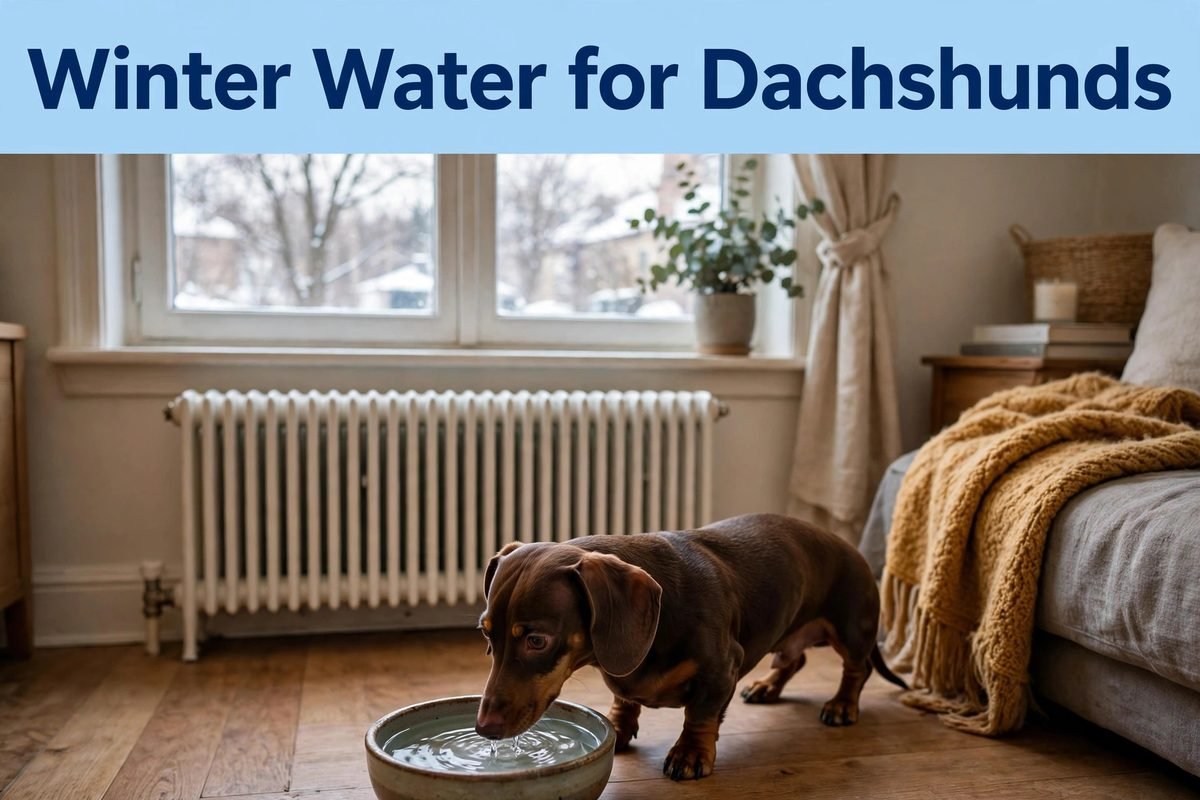
Many Dachshunds drink less water in winter, because cold weather reduces thirst, heated rooms dry the air, and a dog that walks less may simply feel less need to drink. A small drop in intake is common, yet a dog that drinks very little, has dry gums, passes dark or very little urine, or seems tired and dull needs attention. Encourage drinking with fresh water in several places, a clean bowl, lukewarm water rather than cold, water added to food, and a calm drinking spot away from noise.
Table of Contents
- 1. Why Dachshunds Drink Less Water in Winter
- 2. How to Tell Whether Intake Is Too Low
- 3. Fresh Water, the Right Bowl, and the Right Place
- 4. Simple Ways to Encourage Drinking at Home
- 5. Dry Indoor Air, Heating, and the Winter Routine
- Winter Hydration Checklist
- Common Mistakes
- When to Call Your Vet
- FAQs
- Conclusion
1. Why Dachshunds Drink Less Water in Winter
Cold weather reduces thirst. A dog that is not hot does not feel the same urge to drink, and a dog that spends most of the day indoors in a warm apartment may not feel thirsty even when the body needs water. Shorter walks also play a part: a dog that walks less uses less water, and a dog that is less active may drink less simply because it is not working hard. That lower intake is often normal, yet it can slide into too little when the apartment air is very dry or the water is cold and unappealing.
Heated indoor air is a hidden cause of winter dehydration. Central heating, radiators, and heaters dry the air, and dry air dries the skin, the nose, and the mouth. A dog living in a dry, heated apartment loses moisture with every breath, yet it may not feel thirsty enough to replace it. The effect is stronger in a small apartment with the heating on all day, and stronger still when the dog sleeps near a radiator or a heater. A room that feels comfortable to a person can still be dry enough to affect a small dog.
Age and health change the picture. A senior Dachshund may drink less because it moves less, because its sense of thirst is weaker, or because it finds it hard to reach the bowl. A dog with back pain may avoid walking to the bowl, and disc degeneration in short-legged breeds can begin in the first year of life, so a Dachshund that stops walking to the water bowl should be watched for back pain as well as for thirst. The Animal Medical Center explains intervertebral disc disease in dogs, and Cornell University publishes guidance on intervertebral disc disease. A dog that suddenly drinks far more water, rather than less, also needs a veterinary check, because increased thirst can signal a medical problem. The change in either direction is what matters, and a diary of drinking helps the owner see it.

2. How to Tell Whether Intake Is Too Low
There is no single number that fits every Dachshund, because water needs depend on size, age, activity, food, and the weather. A rough guide is that a dog needs about fifty millilitres of water per kilogram of body weight each day, including the water in food, yet the exact amount varies and a veterinarian can advise for a particular dog. A more practical approach is to measure what the dog drinks: fill the bowl to a marked level in the morning, note how much is gone by the evening, and repeat for a few days. That simple measure shows the daily pattern and makes a drop easy to spot.
The gums are the quickest check at home. Lift the lip and look: healthy gums are pink and moist. Gums that are dry, sticky, or pale suggest the dog needs more water, and gums that stay dry after drinking deserve a veterinary call. Press a fingertip gently on the gum and watch the colour return within about two seconds. Pinch the skin gently at the back of the neck and watch it fall back into place; skin that stays tented suggests dehydration. Sunken eyes, a dry nose that stays dry, and a dog that seems tired or dull are further signs.
Urine is another useful guide. A well-hydrated dog passes pale yellow urine several times a day, while a dehydrated dog passes darker yellow urine, less often, and in smaller amounts. Very dark urine, very little urine, or no urine at all needs a veterinarian the same day. Note the colour and the frequency in the diary, alongside the water measure, because the two together give a clear picture. A dog that is drinking very little and passing very little urine is not replacing what it loses, and that balance needs attention.
3. Fresh Water, the Right Bowl, and the Right Place
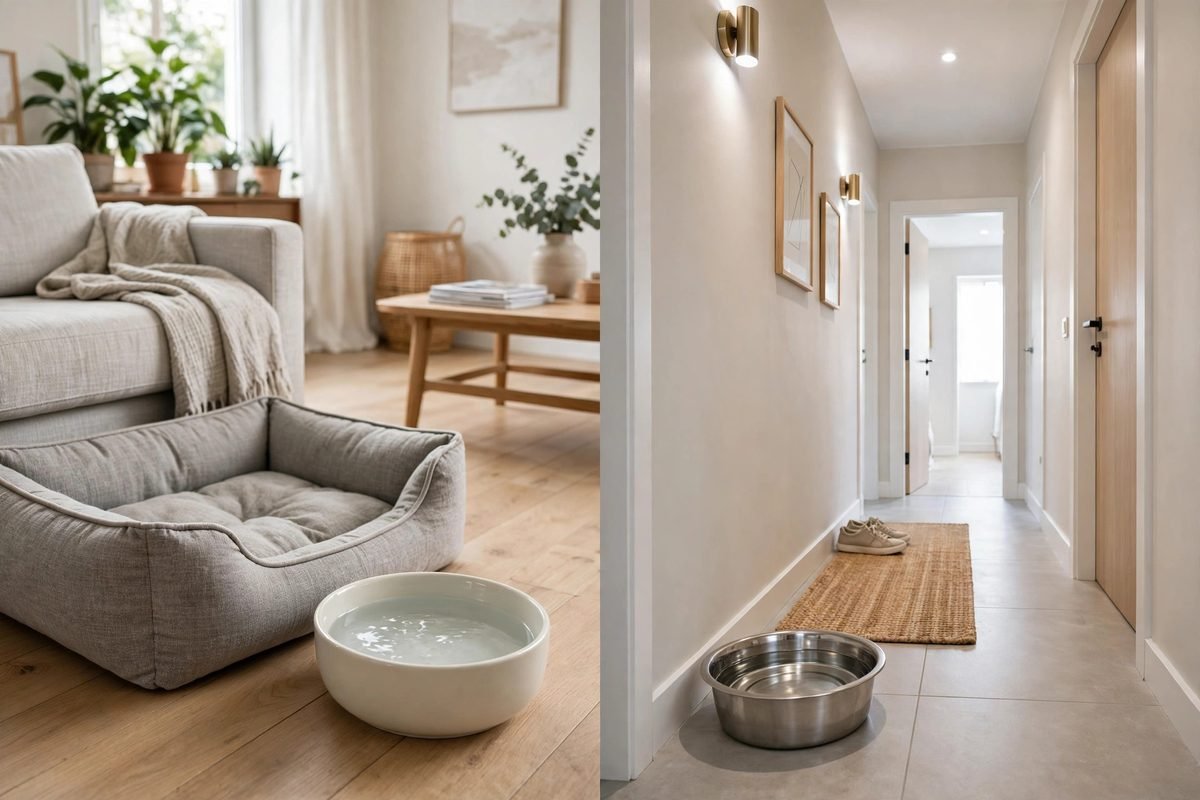
Fresh water is the foundation. Change the water at least twice a day in winter, and wash the bowl daily, because a stale bowl with a slimy film puts many dogs off drinking. A clean bowl with fresh water is more inviting than a bowl that has sat all day, and the water bowl cleaning routine explains washing and hygiene in detail. Use a bowl that is wide and stable, so the dog can drink without tipping it, and choose a material that is easy to clean, such as ceramic or stainless steel.
Temperature matters in winter. Lukewarm water, or water at room temperature, is often more appealing than very cold water on a cold day. Fill the bowl with fresh water and let it stand for a few minutes so it is not icy, especially when the tap water is very cold. Avoid hot water, which can burn the mouth, and avoid adding anything to the water unless a veterinarian has advised it. Plain fresh water, at a comfortable temperature, is the safest choice.
Place matters as much as the bowl. Put a bowl in the room where the dog spends most of its time, and add a second bowl in another room, so the dog never has to walk far for a drink. A senior dog or a dog with back pain may avoid a bowl that is up or down stairs, or in a distant room, so keep at least one bowl on the same floor as the bed. The drinking spot should be calm and quiet, away from the washing machine, the television, or a busy doorway, because a nervous dog may avoid a noisy corner. The hydration routine for apartments offers more ideas for bowl placement in a small home.
4. Simple Ways to Encourage Drinking at Home
Adding water to food is the simplest way to increase intake. Stir a little lukewarm water into dry food and let it soak for a few minutes, so the meal becomes moist and appealing. Offer a small amount of wet food alongside dry food, when the dog diet allows it, because wet food contains far more water than dry food. A veterinarian can advise on the right balance for a particular dog, especially when the dog has a sensitive stomach or a weight concern. A small amount of low-salt broth made for dogs can also make water more appealing, yet it should be an occasional addition rather than a daily habit, and a veterinarian should confirm it suits the dog.
Ice can help a dog that likes to lick and play. A few ice cubes in the bowl, or a frozen treat made from water and a little dog-safe food, can encourage a dog to take in water while playing. Some dogs prefer to drink from a running tap or a pet water fountain, because moving water is more interesting than still water. A fountain should be cleaned regularly, and the water should be changed daily, so it stays fresh and hygienic. Try one change at a time, and watch whether the dog drinks more, because each dog has its own preference.
5. Dry Indoor Air, Heating, and the Winter Routine
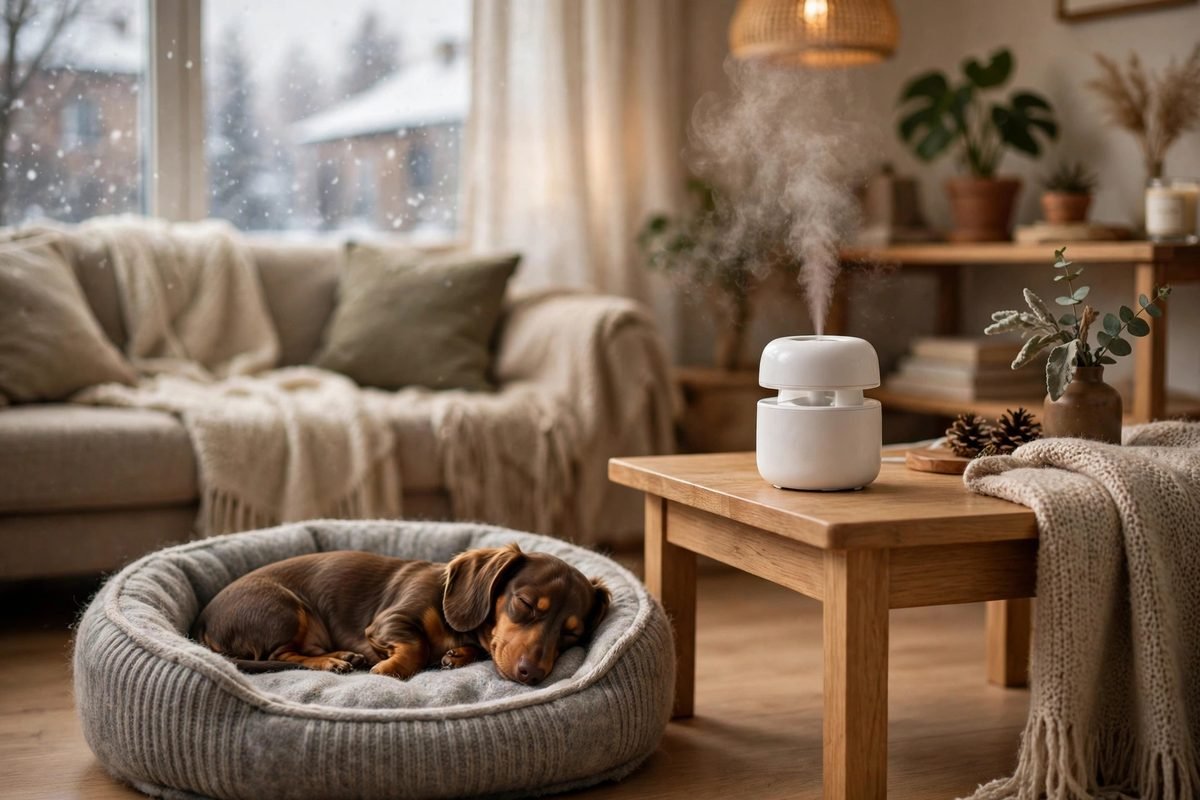
Dry indoor air is a winter problem that deserves a direct answer. A humidifier in the room where the dog sleeps can raise the humidity to a comfortable level, and a bowl of water near a radiator can add a little moisture to the air. Avoid placing the dog bed right beside a radiator or a heater, because the dry heat can dry the skin and the mouth, and a dog that sleeps in a hot spot may wake thirsty. Keep the room warm but not overheated, and air the apartment briefly each day so fresh air replaces stale, dry air.
Heating routines can be adjusted for the dog. Lower the temperature slightly at night, when the dog is asleep under a blanket, and keep the heating steady rather than swinging between hot and cold. A stable, comfortable temperature is easier on the dog than a room that is very hot in the evening and cold by morning. Check the dog skin for dryness, because dry, flaky skin can signal that the air is too dry, and a veterinarian or a groomer can advise on coat care when the skin looks dry.
Winter Hydration Checklist
| Daily step | What to do | What to watch for |
|---|---|---|
| Morning | Fresh lukewarm water, clean bowl | How much was drunk overnight |
| Meals | Add a little water to dry food | Appetite, stool, willingness to eat |
| After walks | Offer water, praise calm drinking | Whether the dog drinks after exercise |
| Gum check | Pink and moist, colour returns fast | Dry, sticky, or pale gums |
| Urine | Note colour and frequency | Dark urine, very little urine, straining |
| Evening | Fresh water, second bowl in main room | How much is gone by bedtime |
| Room air | Comfortable humidity, bed away from heater | Dry skin, dry nose, restless sleep |
Common Mistakes
One common mistake is leaving the same water in the bowl all day, which becomes stale and unappealing. Another is placing the only bowl in a cold, draughty, or noisy corner that the dog avoids. A third is adding sugary drinks, milk, or flavoured water to the bowl, which can upset the stomach and does not replace fresh water.
When to Call Your Vet
Call a veterinarian when drinking drops sharply, when the dog refuses water, when the gums are dry, sticky, or pale, when the urine is very dark, very little, or absent, when the dog vomits after drinking, or when low intake comes with vomiting, diarrhoea, appetite change, weight loss, or lethargy. Seek care the same day when the dog cannot keep water down, when the skin stays tented after a gentle pinch, or when the dog collapses or cannot stand. A veterinarian can assess hydration, check for pain and for medical causes, and advise on fluids, food, and care for that individual dog. Only a veterinarian can diagnose the cause of low water intake, and an early call gives the dog the best chance of a quick recovery.
FAQs
How much water should a Dachshund drink in winter?
A rough guide is about fifty millilitres per kilogram of body weight each day, including the water in food, yet the exact amount varies with size, age, activity, food, and weather. A veterinarian can advise for a particular dog. Measuring the daily intake for a few days, and watching the gums and the urine, gives a clearer picture than a single number.
Is it normal for a Dachshund to drink less in winter?
A small drop is common, because cold weather reduces thirst and shorter walks use less water. A sharp drop, a refusal to drink, dry gums, dark urine, or a tired and dull dog is not normal and needs attention. A diary of intake, urine, and energy helps separate a normal seasonal change from a problem.
Does wet food replace a water bowl?
No, wet food adds water to the diet, yet fresh water should always be available in a clean bowl. A dog that eats wet food may drink less from the bowl, and that can be normal, yet the bowl should still be fresh, clean, and easy to reach, and the gums and urine should still be checked.
Should winter water be warm or cold?
Lukewarm water or water at room temperature is often more appealing in winter than very cold water. Fill the bowl with fresh water and let it stand for a few minutes so it is not icy, especially when the tap water is very cold. Avoid hot water, which can burn the mouth.
When is low water intake an emergency?
Low intake becomes an emergency when the dog refuses water entirely, cannot keep water down, passes very little or no urine, has dry pale gums and skin that stays tented, collapses, or shows vomiting, diarrhoea, or severe lethargy alongside the low intake. In those situations, seek veterinary care the same day.
Conclusion
A Dachshund that drinks too little water in winter is a common concern, and it is usually fixed with small, steady changes. Offer fresh lukewarm water in a clean bowl, in a calm spot, with a second bowl where the dog spends its time.
This article is for general information only and is not a diagnosis. When a Dachshund drinks very little, refuses water, or the owner is unsure, a veterinarian should be consulted for advice about that individual dog.
Pin This: Save this guide to your Dachshund care board on Pinterest so the winter hydration checklist and the encouragement ideas are easy to find on a cold day.