Dachshund Senior Chewing Difficulty: Sore Teeth Help
Quick Answer
- Dachshund senior chewing difficulty means an older dog eats slowly, drops food, chews on one side, or walks away from the bowl.
- Sore teeth, gum disease, or a loose tooth are the most common causes, and they make hard kibble and chews painful.
- Soft-food steps at home are smaller pieces, food softened with warm water, and a calm, unhurried mealtime in a quiet place.
- Check the mouth gently in good light, and look for red gums, bad breath, a loose tooth, or swelling on one side of the face.
- Call a veterinarian if the dog stops eating, loses weight, drools blood, or cries when it chews, because dental pain needs treatment.
Contents
- 1. What Dachshund Senior Chewing Difficulty Looks Like
- 2. Why Older Dachshunds Get Sore Teeth
- 3. Checking the Mouth Gently at Home
- 4. Soft-Food Steps for Easier Mealtimes
- 5. Daily Dental Care for a Senior Dachshund
- Dachshund Senior Chewing: Mealtime Check Log
- Common Mistakes
- When to Call Your Vet
- Pin This: Senior Chewing Difficulty
- Frequently Asked Questions
- Conclusion
1. What Dachshund Senior Chewing Difficulty Looks Like
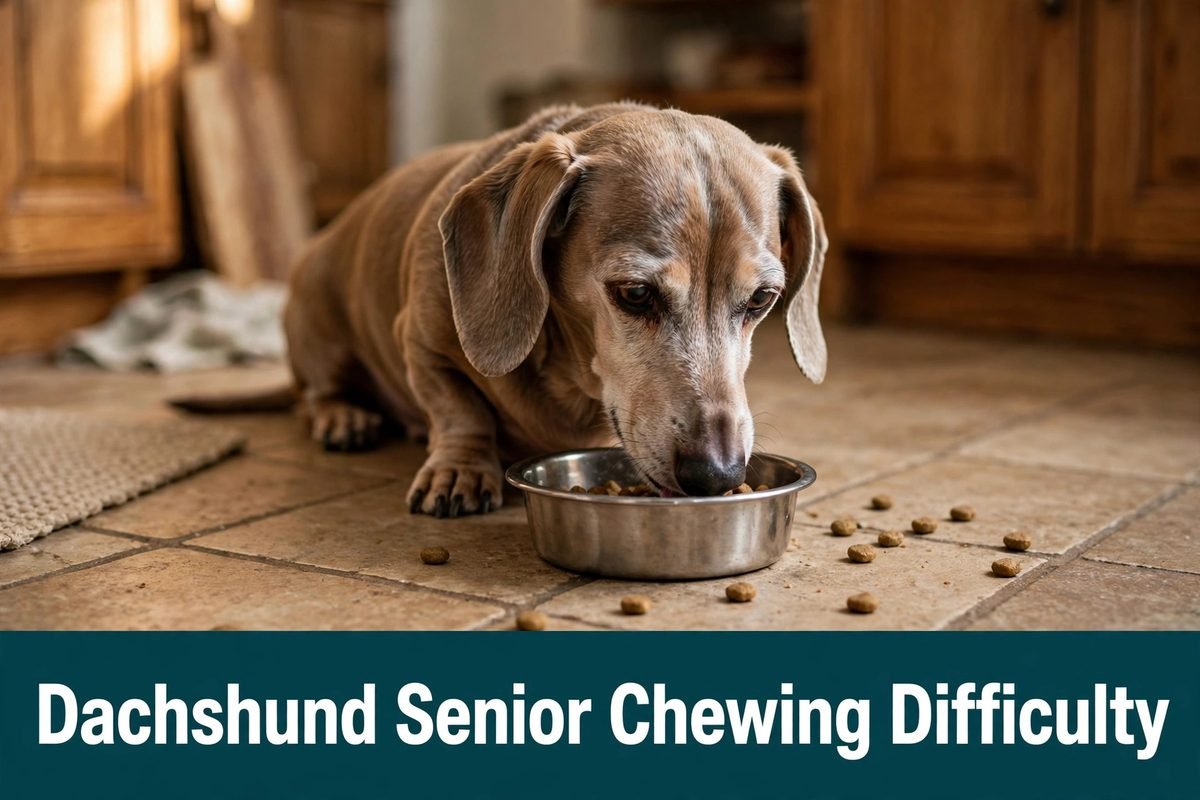
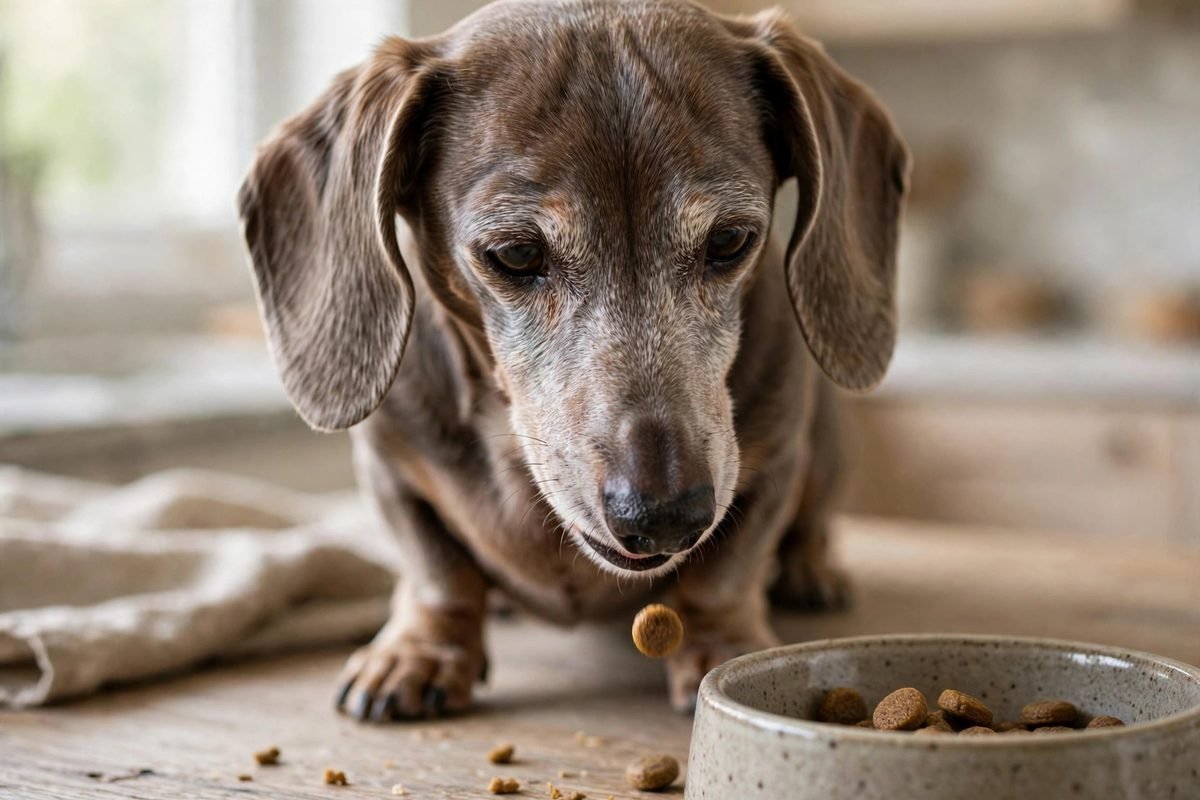
Dachshund senior chewing difficulty shows up first at the food bowl. The dog that once finished a meal in minutes now eats slowly, stops halfway, or walks away and comes back later. It may pick up a piece of kibble, drop it, and try again, or it may chew only on one side of the mouth. Some dogs push the food around the bowl with their nose, or lick at the food instead of biting it. These small changes are easy to miss at first, but they are often the first sign of a sore mouth.
The dog’s behaviour away from the bowl gives more clues. A senior dog with sore teeth may drool more than usual, paw at its face after eating, or flinch when its muzzle is touched. It may refuse hard treats and chews it once loved, or it may take a treat and then drop it on the floor. Some dogs eat only the soft food and leave the hard pieces behind. A dog that once loved a dental stick each evening may now ignore it or give up after a minute. The change is gradual, and it is easy to blame old age, but sore teeth are not a normal part of ageing.
Weight and mood can change too. A dog that finds eating painful may eat less, and a dog that eats less over weeks will lose weight, even if the loss is slow. The dog may seem quieter after meals, or less keen to come to the kitchen. Some dogs become grumpy when their face is touched, or when another pet comes near the food bowl. If the dog is eating less or losing weight, the mouth is the first place to look, and a veterinarian should check it.
2. Why Older Dachshunds Get Sore Teeth
Teeth wear down over a lifetime of chewing, and a senior Dachshund has had many years of it. The hard outer layer of the tooth wears thin, the tooth underneath shows through, and the tooth becomes sensitive to cold, heat, and pressure. A worn tooth can crack, and a cracked tooth can expose the nerve, which is painful every time the dog bites down. Dogs that chew hard objects, such as bones or stones, wear their teeth faster, and a tooth can break without warning.
Gum disease is the most common cause of sore teeth in older dogs. Food and bacteria build up along the gum line, the gums become red and sore, and over time the gum pulls away from the tooth. The tooth loosens, and chewing on that side hurts. Bad breath is often the first sign, and it is easy to dismiss as normal for an old dog, but it is not. A dog with gum disease may also have bleeding gums or a swollen face on one side. The dental treats and chews guide explains which chews are safe for older teeth.
Other causes are less common but worth knowing. A tooth can become infected at the root, which causes deep pain and sometimes a swelling under the eye or on the jaw. A mouth tumour can make chewing painful on one side. A jaw problem, or pain from the neck and back, can also make a dog chew less, because the dog holds its head in a way that hurts. In short-legged breeds, disc degeneration can begin in the first year of life, so a senior dog that eats slowly and also moves stiffly may have back pain as well, and a veterinarian should sort out which is which.
3. Checking the Mouth Gently at Home
A mouth check at home takes a minute, and it needs good light, a calm dog, and a gentle hand. Sit with the dog in a quiet place, lift the lip on one side, and look at the teeth and gums. Healthy gums are pink, not red or white, and the teeth should be whole, not cracked or missing. Look for tartar, the hard brown crust on the back teeth, and for redness where the gum meets the tooth. Smell the breath too, because a strong, foul smell points to gum disease or an infected tooth.
Check both sides of the mouth, and then the front teeth, which are small and easy to miss. Look for a tooth that is loose, broken, or a different colour from the rest, because a grey or pink tooth may be dead or damaged inside. Look for swelling on the face, or a lump under the jaw, and run a finger gently along the outside of the cheek to feel for heat or tenderness. If the dog flinches, pulls away, or cries when you touch a spot, note which tooth or side it was, because that is useful for the veterinarian.
Do not force the mouth open, and do not poke at a loose tooth. A senior dog with a sore mouth will not let you look for long, and forcing it will make the next check harder. A few seconds on each side, once a week, is enough to spot change. Write down what you see: which teeth look worn, whether the gums are red, whether the breath smells bad, and whether the dog flinched. A short note, or a photo in good light, helps the veterinarian and shows whether the mouth is getting better or worse.

4. Soft-Food Steps for Easier Mealtimes
The first soft-food step for Dachshund senior chewing difficulty is to make the food easier to bite. Soak the usual kibble in warm water for ten minutes until it is soft, and mash it lightly with a fork. Serve it lukewarm, not hot, and in smaller pieces, so the dog does not have to bite hard. Some dogs do better with a wet food made for seniors, or with the usual food mixed with a little wet food. Keep the same brand and flavour, because a sudden change can upset the stomach; only the texture needs to change.
Feed smaller meals, more often, in a quiet place. A senior dog with a sore mouth may manage three small meals better than two large ones, because each meal is shorter and less tiring. Put the bowl on a low stand or a non-slip mat, so the dog does not have to bend far down or chase the bowl across the floor. Give the dog time to eat, and do not rush it or take the bowl away early. A calm mealtime, with no other pets nearby, helps a sore-mouthed dog eat more, because it does not have to hurry or guard its food.
Choose treats and chews that fit a sore mouth. Skip hard biscuits, bones, antlers, and hard dental sticks, and offer soft treats that break apart easily, or a small piece of soft cooked food as a treat. A lick mat with a thin spread of wet food can give the dog something to enjoy without biting at all. The feeding an older Dachshund guide covers portions, timing, and weight for senior dogs. Do not add new foods, oils, or supplements without a veterinarian’s advice, because the wrong extra can upset the stomach.
5. Daily Dental Care for a Senior Dachshund
Daily dental care matters even more for a senior dog, but it must be gentle. Brush the teeth with a soft finger brush or a small soft toothbrush, using a toothpaste made for dogs, and use slow, short strokes along the gum line. Start with a few seconds on the front teeth, and build up over days, so the dog accepts the routine. If the gums bleed, or the dog cries, stop and ask a veterinarian, because the gums may be too sore for brushing, and the dog may need treatment first.
If brushing is not possible, there are gentler options. A dental wipe, rubbed softly over the outside of the teeth, can remove some plaque without a brush. A soft dental chew made for seniors can help, if the dog can chew it without pain. Fresh water after meals rinses the mouth, and a clean water bowl matters, because a dirty bowl adds bacteria to a sore mouth. Never use a human toothpaste, because it contains ingredients that are harmful if swallowed.
Keep a routine, and keep it short. A minute of gentle brushing each evening, after the last meal, is enough, and a weekly mouth check in good light shows whether the gums are improving. Note any change: less drooling, a better appetite, or a tooth that looks worse. A senior dog that accepts dental care will keep its teeth longer, and a dog that keeps its teeth will eat better and feel better. Dental care at home cannot fix a loose tooth or an infected root, but it can slow the damage, and it gives the veterinarian a clearer picture at the next visit.

Dachshund Senior Chewing: Mealtime Check Log
| What to Note | How to Record It | Why It Helps |
|---|---|---|
| How the dog eats | Slow, drops food, chews one side, or walks away | Shows which side of the mouth hurts |
| How much is eaten | All, most, half, or almost none of the meal | Tracks weight loss before it shows |
| What the mouth looks like | Red gums, tartar, loose or broken tooth | Points to gum disease or a damaged tooth |
| Breath and drooling | Bad smell, extra drool, or blood in drool | Bad breath often means gum disease |
| Mood after meals | Quiet, grumpy, pawing at the face, or normal | Links pain to mealtimes for the vet |
Common Mistakes
- Blaming slow eating on old age, when sore teeth are the cause and need treatment.
- Offering hard bones, antlers, or hard chews to a senior dog, which can crack worn teeth.
- Changing the whole diet at once, when only the texture needs to change.
- Forcing the mouth open to check a sore tooth, which makes the dog dread the next check.
- Using a human toothpaste, which contains ingredients that are harmful if swallowed.
- Waiting until the dog stops eating altogether, when dental pain should be treated much sooner.
When to Call Your Vet
Call a veterinarian if the dog stops eating, loses weight, drools blood, cries when it chews, or has a swollen face, a loose tooth, or breath that smells foul. Call sooner for a dog that eats less for more than a few days, or that chews only on one side. A veterinarian can check the teeth and gums, take an X-ray if a root is infected, and advise on a safe diet and dental care for this dog. This guide is general information only and not a diagnosis; only a veterinarian who examines the dog can say what the chewing difficulty means.
Pin This: Senior Chewing Difficulty
Save this guide for the senior years: soften the food, feed small meals in a quiet place, skip hard chews, and check the mouth gently each week. Call a veterinarian if the dog stops eating, loses weight, or cries when it chews.
Frequently Asked Questions
Why does my senior Dachshund drop food while eating?
Dachshund senior chewing difficulty often makes a dog drop food, because a sore or loose tooth hurts when the dog bites down. The dog picks up a piece, feels the pain, and drops it, then tries again. Check the mouth gently, soften the food with warm water, and call a veterinarian if the dropping goes on.
Should I switch my senior Dachshund to wet food?
Wet food can help a senior dog with sore teeth, because it needs little chewing, but it is not the only option. Soaking the usual kibble in warm water until it is soft keeps the same diet with an easier texture. Keep the brand the same, change only the texture, and ask a veterinarian before switching foods completely.
Can I still give my senior Dachshund dental chews?
Only if the dog can chew them without pain. Hard dental sticks can crack worn teeth, so choose a soft chew made for seniors, and give it only while the dog is watched. If the dog drops the chew, cries, or chews on one side, stop giving it and ask a veterinarian what is safe for this dog.
How do I brush a senior Dachshund’s sore teeth?
Use a soft finger brush or a small soft toothbrush, with a toothpaste made for dogs, and use slow, short strokes along the gum line. Start with a few seconds and build up over days. If the gums bleed, or the dog cries, stop and ask a veterinarian.
Is bad breath normal in an old Dachshund?
No, bad breath is not a normal part of ageing, and it often means gum disease or an infected tooth. A healthy mouth should not smell foul. If the breath smells bad, the gums are red, or the dog eats slowly, the mouth needs a veterinarian’s check, because dental disease can be treated and the pain can be eased.
Conclusion
Dachshund senior chewing difficulty is a common problem in older dogs, and it is usually a sign of sore teeth, not just old age. The home steps are simple: check the mouth gently each week, soften the food with warm water, feed smaller meals in a quiet place, and skip the hard chews that crack worn teeth. Gentle daily dental care can slow the damage, but it cannot fix a loose tooth or an infected root. If the dog stops eating, loses weight, drools blood, or cries when it chews, a veterinarian should take a look, because dental pain can be treated, and a dog that eats without pain is a happier dog.