Dachshund Drinking From Tap and Toilet: Is It Safe?
Quick Answer
- Dachshund drinking from tap water is usually fine, because tap water is treated and safe for people and pets.
- Dachshund drinking from toilet water is not safe, because the bowl can hold cleaning chemicals, bacteria, and germs from the flush.
- Keep the toilet lid down, keep a clean bowl of fresh water where the dog can reach it, and change it daily.
- A dog that suddenly drinks much more than usual, or that seeks out odd water sources, may be unwell and needs a veterinarian.
- Never add anything to the water, and never let the dog drink from a toilet that has a cleaning block, bleach, or a blue tablet in it.
Contents
- 1. Why Dachshunds Drink From Taps and Toilets
- 2. Is Tap Water Safe for a Dachshund?
- 3. Why Toilet Water Is a Risk
- 4. A Clean Water Routine at Home
- 5. When Odd Drinking Means a Vet Visit
- Dachshund Drinking: Home Water Safety Checklist
- Common Mistakes
- When to Call Your Vet
- Pin This: Tap and Toilet Drinking
- Frequently Asked Questions
- Conclusion
1. Why Dachshunds Drink From Taps and Toilets
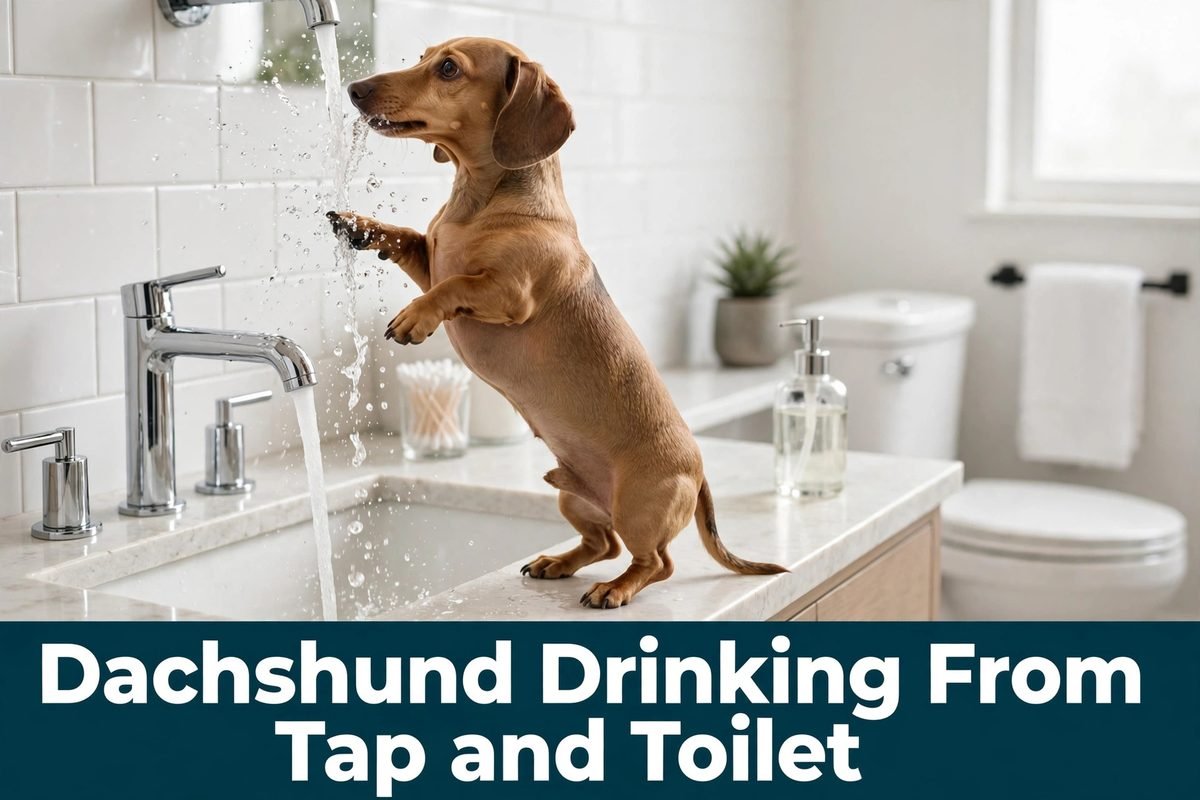
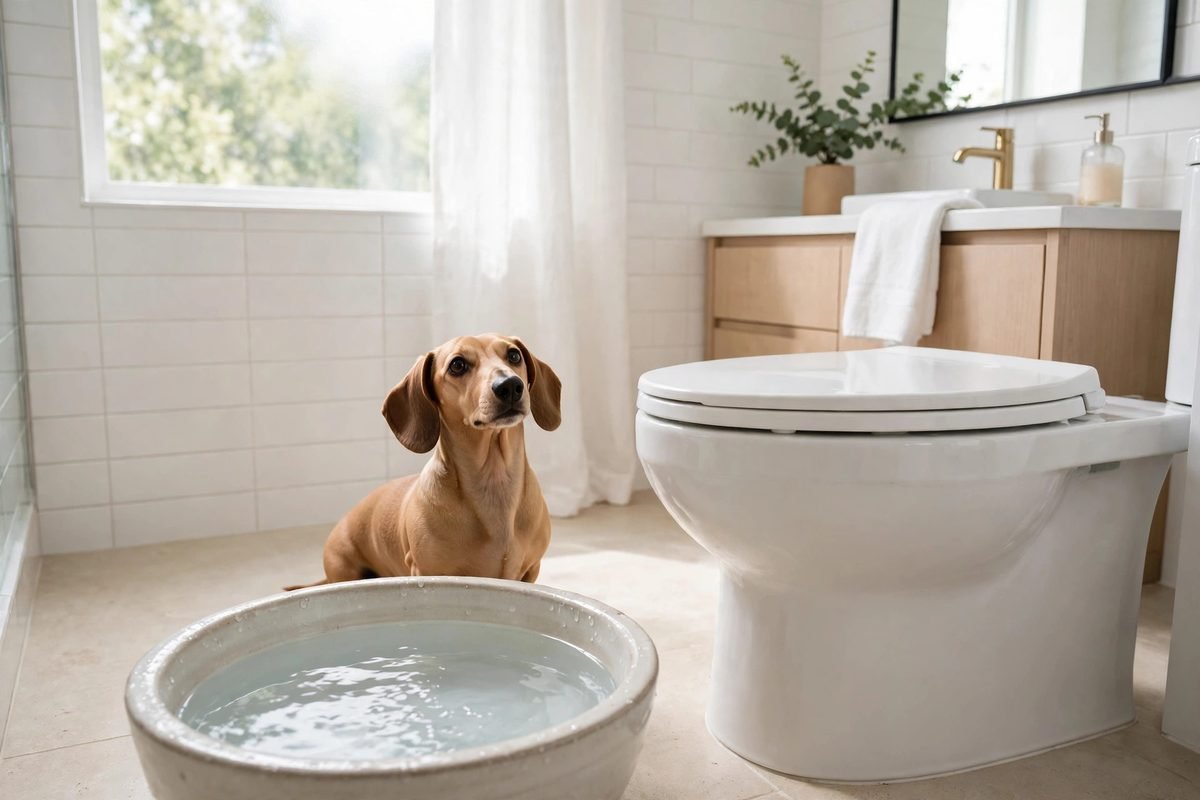
Dachshund drinking from tap and toilet water usually starts with curiosity. A dripping tap or an open toilet bowl is new, moving, and interesting to a small dog, and the water looks fresh. The dog tries it once, likes the cool taste, and comes back again. A toilet bowl is at just the right height for a Dachshund, and the water is always there, even when the bowl is empty. Once the habit forms, the dog will head for the bathroom every time it is thirsty.
Sometimes the habit starts because the water bowl is not doing its job. A bowl that is empty for part of the day, or placed where the dog rarely goes, will push a thirsty dog to look elsewhere. Some dogs prefer running water to still water, and a tap gives them the movement they like. Some dogs drink from the toilet after a walk, when they are hot and thirsty and the bathroom is cool. The habit is rarely about bad behaviour; it is usually about a dog finding water where it can.
The habit can also be a sign of a change in the dog. A dog that suddenly starts drinking from taps, toilets, and puddles may be drinking much more than usual, and that is different from a dog that has always liked the bathroom tap. A senior dog, a dog on new medicine, or a dog that has been unwell may drink more, and the extra thirst shows up as odd drinking habits. If the habit is new or sudden, or comes with eating less or needing to go out more often, the dog needs a veterinarian, not just a closed lid.
2. Is Tap Water Safe for a Dachshund?
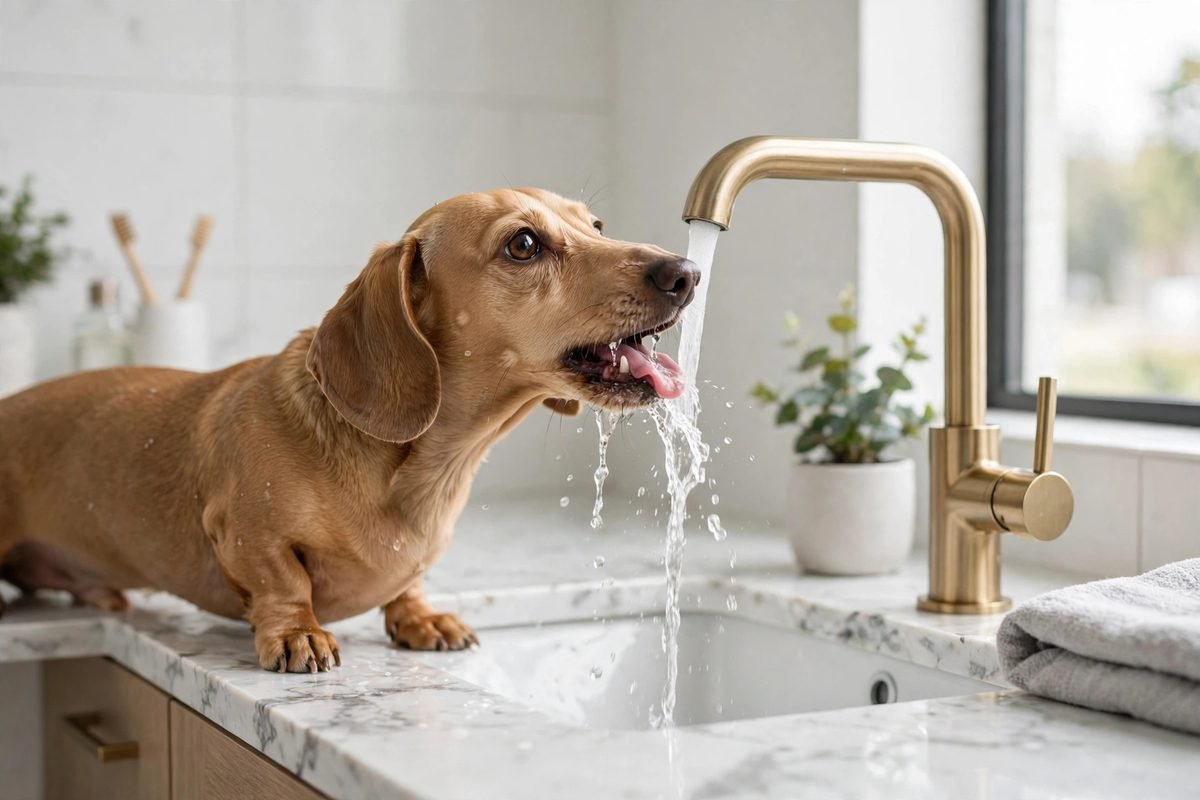
Tap water in most homes is treated to be safe to drink, and it is usually safe for a Dachshund too. The kitchen tap gives the same water the people in the house drink, tested and treated by the local supplier. A dog that drinks from the tap, or from a bowl filled from the tap, is drinking water that is meant for drinking. The main risk is where the dog drinks it from, because a garden tap or a hose may carry dirt.
There are a few exceptions worth knowing. In a home with very old pipes, the water can pick up lead, which is harmful to dogs too. Where the tap water smells strongly of chlorine, the water is still usually safe, but some dogs drink less of it. A home with a water softener should be checked, because some softeners add salt to the water. If you are unsure, ask the water supplier, or fill the bowl from the kitchen tap.
A tap can also be a sign of a dog that prefers fresh, moving water. Many dogs drink more from a running tap than from a bowl. A pet water fountain gives the same moving water in a safe form, and it can break the tap habit without a fight. The drinking water fountain guide explains which type suits a Dachshund and how to keep one clean. A fountain is a good middle ground: the dog gets the moving water it likes, and the owner knows the water is clean.
3. Why Toilet Water Is a Risk
Dachshund drinking from toilet water is not safe, and the risk comes from what lives in the bowl. A toilet bowl holds bacteria from every flush, even when it looks clean, and a dog that drinks from it swallows those germs. The water can also carry cleaning products, such as bleach or a blue cleaning block, which can upset the stomach, cause vomiting, or burn the mouth. A toilet with a cleaning tablet in the tank is the worst case, because every flush fills the bowl with treated water.
The risk is higher for some dogs than for others. A puppy, a senior dog, or a dog with a weak stomach is more likely to become unwell after drinking toilet water. A dog that drinks from the toilet every day takes in germs and chemicals each time, and that can add up to a stomach upset or diarrhoea. A dog that drinks just after the toilet has been cleaned is at the highest risk, because the product is at its strongest then. If the dog vomits, has diarrhoea, or drools after drinking from the toilet, keep the lid down and call a veterinarian for advice.
There is also a risk that has nothing to do with germs. A small dog can slip into a toilet bowl while trying to drink, and a Dachshund is short enough for that to happen. A dog that falls into a bowl can panic, swallow water, or hurt itself trying to climb out. A lid left up is also a risk for a puppy still learning the house. The fix is simple: keep the lid down, always, and teach everyone in the house to close it. A lid lock, made for homes with small children, works for a determined dog too.
4. A Clean Water Routine at Home
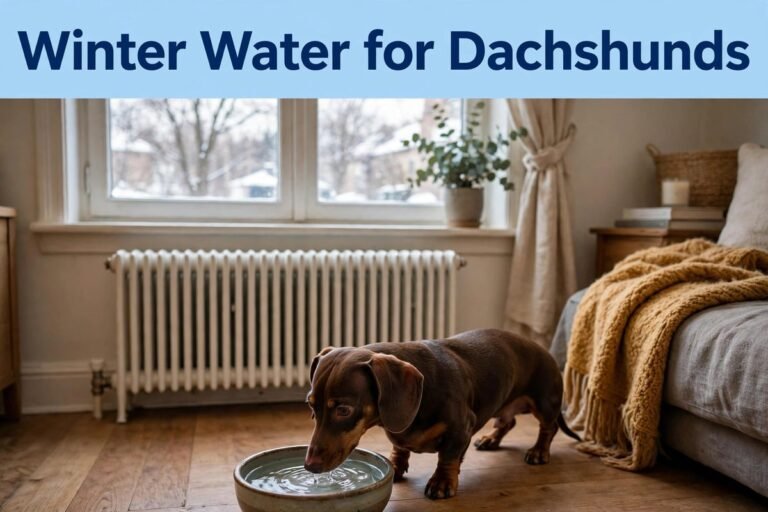
A clean water routine starts with the bowl. Keep a wide, heavy bowl that the dog cannot tip over, in a place the dog can reach easily, and fill it with fresh water from the kitchen tap at least once a day. Wash the bowl daily with hot water and a little washing-up liquid, rinse it well, and dry it before refilling, because an unwashed bowl grows a slimy film. A second bowl near where the dog sleeps means it never has to walk far for a drink, and is less likely to head for the bathroom.
Keep the bathroom closed off, or at least keep the toilet lid down. A shut door, or a baby gate across the bathroom door, stops the dog reaching the toilet. If the dog must use the bathroom, a lid lock is the safest fix. Check the toilet for cleaning blocks or tablets, and remove them if the dog can reach the bowl. Tell visitors and children to close the lid too, because one open lid is all the dog needs.
Watch how much the dog drinks, and make the routine steady. A Dachshund with fresh water will drink what it needs, and a dog that drinks from the tap can be gently led to the bowl or a fountain instead. Praise the dog when it drinks from its bowl, and do not scold it for the toilet, because scolding does not teach it where to drink. The drinking from puddles guide covers the same risks outdoors, where puddle water can carry germs and chemicals from the road.
5. When Odd Drinking Means a Vet Visit
A dog that suddenly drinks much more than usual needs a veterinarian. The signs are a bowl that empties twice as fast, a dog that asks for water at night, and a dog that needs to pass urine far more often. These changes can mean diabetes, kidney trouble, or a side effect of a medicine, and they need a blood test and a urine test to sort out. Do not limit the water to test the dog, because taking it away can make things worse.
Other warning signs come with the drinking. A dog that drinks a lot and also eats less, loses weight, seems tired, or vomits should be checked soon. A dog that drinks from the toilet and then vomits or drools may have swallowed a cleaning chemical, and that needs a veterinarian at once, with the product name in hand. A dog that drinks and then coughs or struggles to breathe may have swallowed water the wrong way, and that needs care too. Keep a note of how much the dog drinks and how often it passes urine, because that record helps the veterinarian.
A change in drinking can also come from pain. A dog with a sore back may drink less, because it hurts to bend to the bowl, and may then seek water from a tap that is easier to reach. In short-legged breeds, disc degeneration can begin in the first year of life, so a dog that changes how it drinks and also moves stiffly should be checked for back pain as well. A raised bowl or a fountain can help a dog that finds bending painful, but the cause still needs a veterinarian.
Dachshund Drinking: Home Water Safety Checklist
| What to Do | How to Do It | Why It Matters |
|---|---|---|
| Keep the toilet lid down | Close it every time, or fit a lid lock | Stops the dog drinking germs and chemicals |
| Fresh water daily | Fill the bowl from the kitchen tap each morning | Clean water is safer than stale water |
| Wash the bowl | Hot water and washing-up liquid, rinse well | Stops the slimy film that upsets stomachs |
| Two bowls | One by the food, one where the dog sleeps | The dog never has to walk far for a drink |
| Watch the amount | Note how fast the bowl empties each day | Sudden thirst can mean illness |
Common Mistakes
- Leaving the toilet lid up, so the dog can drink from the bowl whenever it wants.
- Leaving a cleaning block or tablet in the toilet, when the dog can reach the bowl.
- Leaving the water bowl empty, stale, or dirty, so the dog looks for water elsewhere.
- Scolding the dog for drinking from the toilet, which does not teach it where to drink.
- Limiting the water when the dog drinks more, which can make an illness worse.
- Ignoring a sudden change in thirst, when it can be an early sign of illness.
When to Call Your Vet
Call a veterinarian at once if the dog vomits or drools after drinking from a toilet with a cleaning product in it, and bring the product name with you. Call the same day if the dog suddenly drinks much more than usual, passes urine far more often, eats less, or loses weight. A veterinarian can test the blood and urine, check for diabetes and kidney trouble, and advise on a safe water routine. This guide is general information only and not a diagnosis; only a veterinarian who examines the dog can say what the drinking means.
Pin This: Tap and Toilet Drinking
Save this guide for the bathroom door: tap water is usually fine, toilet water is not, and a clean bowl of fresh water is the fix. Keep the lid down, wash the bowl daily, and call a veterinarian if the dog suddenly drinks much more than usual.
Frequently Asked Questions
Is it safe for my Dachshund to drink tap water?
Tap water in most homes is treated and safe to drink, and it is usually safe for a Dachshund too. Fill the bowl from the kitchen tap, which is the safest supply in most homes. If the home has very old pipes, or the water has a strong smell, ask the water supplier, or use a filter and change it as the maker advises.
What should I do if my Dachshund drank toilet water?
Keep the lid down so it cannot happen again, and watch the dog for the next few hours. If the dog vomits, has diarrhoea, drools, or seems unwell, call a veterinarian, and bring the name of any cleaning product used in the toilet. A dog that drank plain toilet water once will usually be fine, but a dog that drank water with a cleaning block in it needs advice.
Why does my Dachshund prefer the toilet to its bowl?
Dachshund drinking from tap and toilet water is often about the bowl, not the toilet. The bowl may be empty, stale, dirty, or in a place the dog rarely goes, while the toilet is always full and cool. Some dogs also prefer moving water. Give the dog fresh water in a clean bowl, or try a pet fountain, and keep the lid down.
How much water should a Dachshund drink each day?
Most dogs drink roughly a small bowl a day, but the amount changes with the weather and the food. A dog on wet food drinks less than a dog on dry food. What matters most is a sudden change: a dog that starts drinking much more, or much less, should be checked by a veterinarian.
Can I put ice cubes in my Dachshund’s water?
A few ice cubes in the bowl on a hot day are usually fine, and some dogs like them. Do not give ice to a dog that is overheated and panting hard, and do not use ice to limit how much the dog drinks. Fresh, cool water in a clean bowl is enough for most days.
Conclusion
Dachshund drinking from tap and toilet water is a common home habit, and the two sources are very different. Tap water is usually safe, and a dog that likes moving water can be given a fountain instead. Toilet water is not safe, because the bowl holds germs and cleaning chemicals, and a small dog can even fall in. The fix is simple: keep the lid down, keep a clean bowl of fresh water where the dog can reach it, and wash the bowl every day. If the dog suddenly drinks much more than usual, or becomes unwell after drinking from the toilet, a veterinarian should take a look.