
Dachshund Coat and Skin Care at Home: Grooming Guide
Quick Answer
- Brush a Dachshund regularly with a tool suited to its coat type, bathe only when needed with shampoo made for dogs, and dry thoroughly afterward.
- Check the skin weekly, including belly, ears, paws, and skin folds, and note redness, flakes, sores, lumps, or new itching.
- Keep grooming calm, short, and positive, support the back during handling, and never use people shampoo or harsh products on a dog.
- Contact a veterinarian promptly for persistent itching, hair loss, sores, swelling, bad odor, or any lump that grows or changes quickly.
Contents
- 1. Brush by Coat Type: Smooth, Wire, and Long Coats
- 2. Bathe Only When Needed, With Dog Shampoo and Careful Drying
- 3. Check Skin, Paws, Ears, and Folds Every Week
- 4. Feed, Hydrate, and Groom for a Healthy Coat
- 5. Keep Grooming Calm and Safe in a Small Apartment
- Common Mistakes
- When to Call Your Vet
- Pin This: Your Coat and Skin Care Checklist
- Frequently Asked Questions
Coat and skin care is about more than appearance. The coat protects the skin, the skin protects the body, and regular grooming is also a health check in disguise. Brushing removes loose hair and dirt, distributes natural oils, and gives the household a chance to feel for lumps, sores, and parasites. Bathing, when done correctly, keeps the skin clean without stripping it. A weekly skin check finds small changes early, when they are simpler to assess. Dachshunds come in three coat types, smooth, wire, and long, and each needs a slightly different approach, but the principles stay the same: gentle handling, suitable tools, products made for dogs, and prompt veterinary advice when something changes.
Apartment grooming has its own advantages. The space is small, the tools can stay together, and the routine can become part of the weekly pattern. It also has its own risks: slippery bathroom floors, a dog lifted awkwardly onto a high surface, and grooming sessions that run too long in a warm room. This guide covers coat-specific brushing, bathing, weekly skin checks, the role of food and water, and safe handling at home, so grooming stays calm, useful, and kind to both coat and back.
1. Brush by Coat Type: Smooth, Wire, and Long Coats
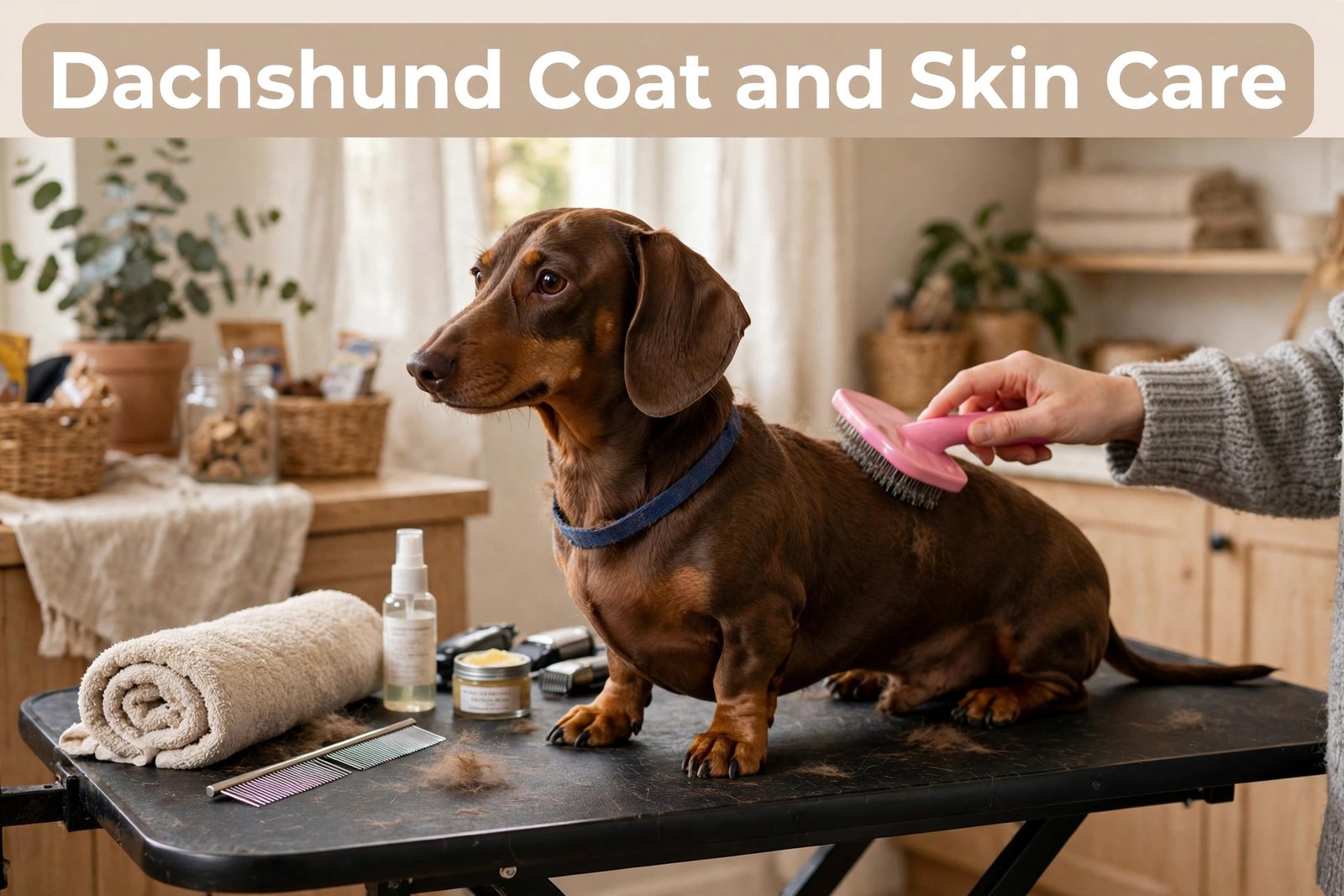
Smooth-coated Dachshunds need the least brushing, usually once or twice a week with a soft brush or a rubber grooming mitt. Short, gentle strokes in the direction of hair growth remove loose hair and surface dirt, and a wipe with a damp cloth can finish the session. Even a short coat sheds, and regular brushing reduces loose hair on furniture and clothing in an apartment. Check the skin as the brush moves, especially along the belly and inner thighs, where the coat is thinner and the skin is easier to see.
Wire-coated Dachshunds need more attention, with brushing two to three times a week using a slicker brush or a pin brush, followed by a comb to check for tangles. The wiry outer coat can trap dirt and loose hair, and the softer undercoat can mat if it is neglected, particularly behind the ears, under the legs, and around the collar area. Work through small sections, hold the base of a tangle gently so pulling does not tug the skin, and use a comb to confirm the section is clear. Long-coated Dachshunds need the most regular brushing, several times a week, with a pin brush and a comb, paying special attention to the feathering on the ears, chest, belly, legs, and tail, where tangles and mats form most easily. For all coat types, keep sessions short at first, reward calm behavior, and end while the dog is still relaxed. A grooming session that ends calmly is easier to repeat than a long session that ends in frustration.

2. Bathe Only When Needed, With Dog Shampoo and Careful Drying
Most Dachshunds do not need frequent baths. Bathing every few weeks, or when the dog is dirty or smelly, is enough for many dogs, while over-bathing can dry the skin and strip natural oils. Use lukewarm water, shampoo made for dogs, and a gentle, thorough rinse. People shampoo has a different acidity from dog skin and can cause irritation, so it should never be used, even for a quick wash. Wet the coat fully, apply a small amount of shampoo, lather gently with the hands, and avoid getting shampoo and water into the ears and eyes. Rinse until the water runs clear and the coat feels clean rather than slippery, because shampoo left in the coat can irritate the skin and cause itching after the bath.
Drying matters as much as washing. Towel dry gently first, pressing rather than rubbing hard, then allow the coat to finish drying in a warm, draft-free room. A hair dryer on a low, cool setting, held at a distance, can help for longer coats, but many dogs dislike dryers, so introduce one slowly and stop if the dog becomes stressed. Check the skin after a bath, once the coat is dry, for redness or flaking that was hidden when the coat was wet. Never bathe a dog with an open sore, a skin infection, or a painful area without veterinary advice, and never bathe immediately after a veterinary procedure unless the veterinarian has said it is safe. A calm bath, with warm water, gentle handling, and thorough drying, keeps the coat clean without harming the skin beneath it.

3. Check Skin, Paws, Ears, and Folds Every Week
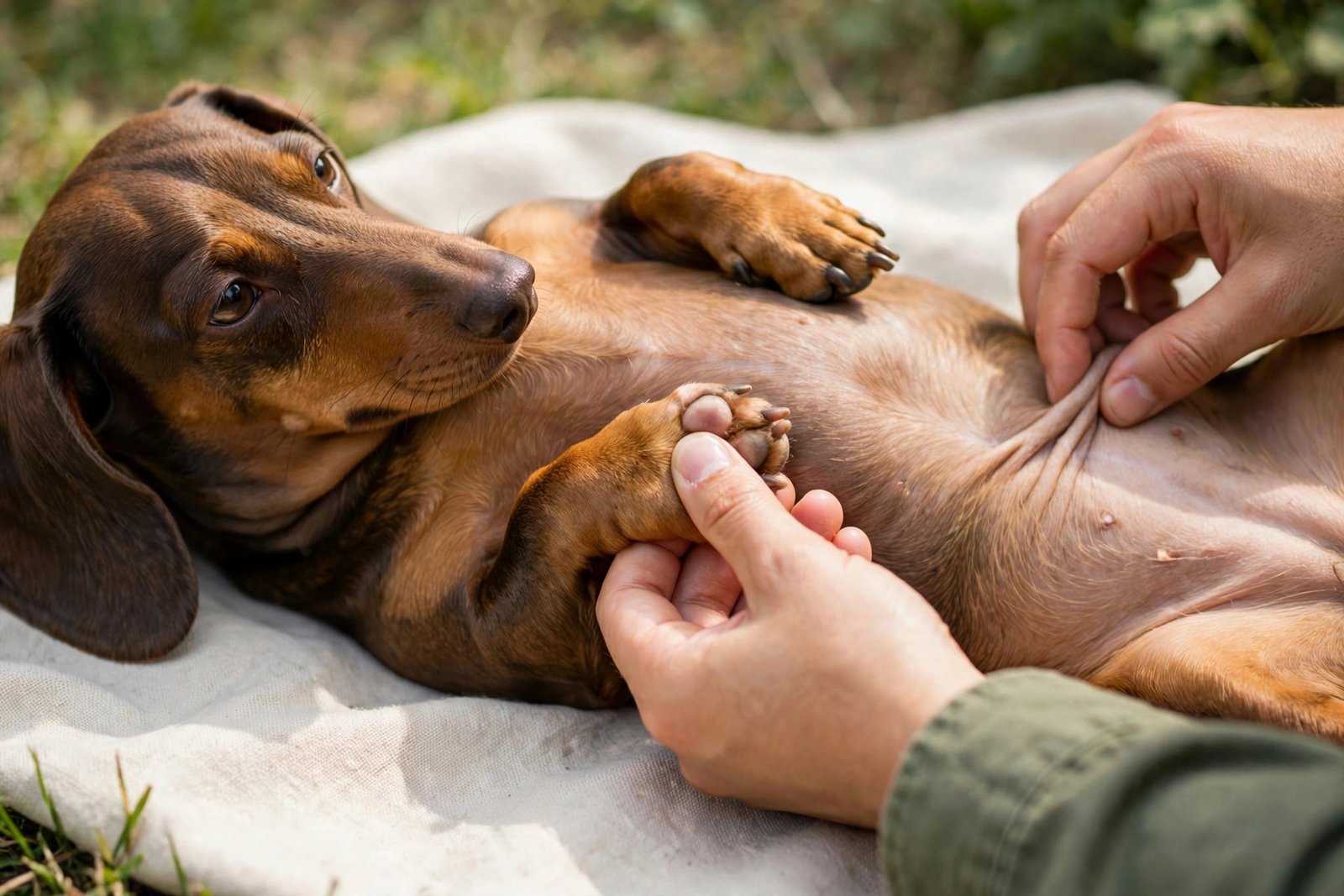
A weekly skin check takes only a few minutes once grooming is routine, and it is the most valuable part of home coat care. Run the hands over the whole body, part the coat in sections, and look at the belly, groin, armpits, ears, paws, and tail base. Healthy skin is usually even in color for the individual dog, free from sores, swelling, and strong odor, with no large flakes or bald patches. Note anything new: redness, bumps, scabs, flakes, hair loss, a lump, a sore that does not heal, or an area the dog licks or scratches repeatedly. A short written note, with the date and location, turns a vague worry into a clear record for a veterinary visit.
Paws deserve special attention in apartment life, where pavements, salt in winter, and indoor cleaning products can irritate pads. Check between the toes, look for cracks, redness, swelling, or foreign material, and wipe paws after walks in wet or salty conditions. Ears should be checked for odor, discharge, redness, and excess wax, and cleaned only with a product a veterinarian has recommended, using a gentle method the veterinarian has shown. Never insert cotton buds deep into the ear canal, and never clean ears aggressively, because the ear is delicate and easy to injure. Skin folds, where present, should be kept clean and dry, and checked for redness or odor. A weekly check that covers coat, skin, paws, and ears finds problems early, when advice is simplest and treatment is usually least disruptive.
4. Feed, Hydrate, and Groom for a Healthy Coat
A healthy coat starts with a complete, balanced diet and fresh water every day. Nutrients from food support skin repair, hair growth, and the natural oils that keep a coat glossy, while dehydration and poor nutrition can show up as dull coat, dry skin, and increased shedding. Feed a complete diet suited to the dog’s age, weight, and activity, measure portions, and keep treats small and counted, following the guidance in the healthy food for Dachshunds guide. Ask a veterinarian before adding any oil, supplement, or coat product to the diet, because a complete food already contains balanced nutrients, and extra products can disturb that balance or add unwanted calories. A coat that changes suddenly, with dullness, flaking, or hair loss, deserves a veterinary check rather than a new supplement tried at home.
Grooming and nutrition work together. Regular brushing distributes oils and removes loose hair, so the coat looks better without extra products. Fresh water supports skin hydration, and a clean living space reduces dirt and allergens that settle on the coat. Wash bedding regularly, vacuum soft furnishings in the apartment, and keep grooming tools clean, so brushing does not transfer dirt back onto a clean coat. During seasonal shedding, brush more often for a short period rather than bathing more often, because extra baths can dry the skin while brushing alone removes the loose hair. A simple pattern, balanced food, fresh water, regular brushing, and a clean home, supports a healthy coat more reliably than a shelf of special products.
5. Keep Grooming Calm and Safe in a Small Apartment
Safe handling is essential during grooming, because a Dachshund’s long back is vulnerable to awkward lifting and twisting. Groom on a stable, non-slip surface at a comfortable height, such as a low table with a mat, or on the floor if that is safer for the dog. Support the chest and hindquarters when lifting, keep the back level, and never lift by the front legs, scruff, or a single point. Keep sessions short, especially at first, and take breaks if the dog becomes restless. A grooming session that is paused and resumed calmly teaches the dog that grooming is manageable, while a forced session teaches resistance.
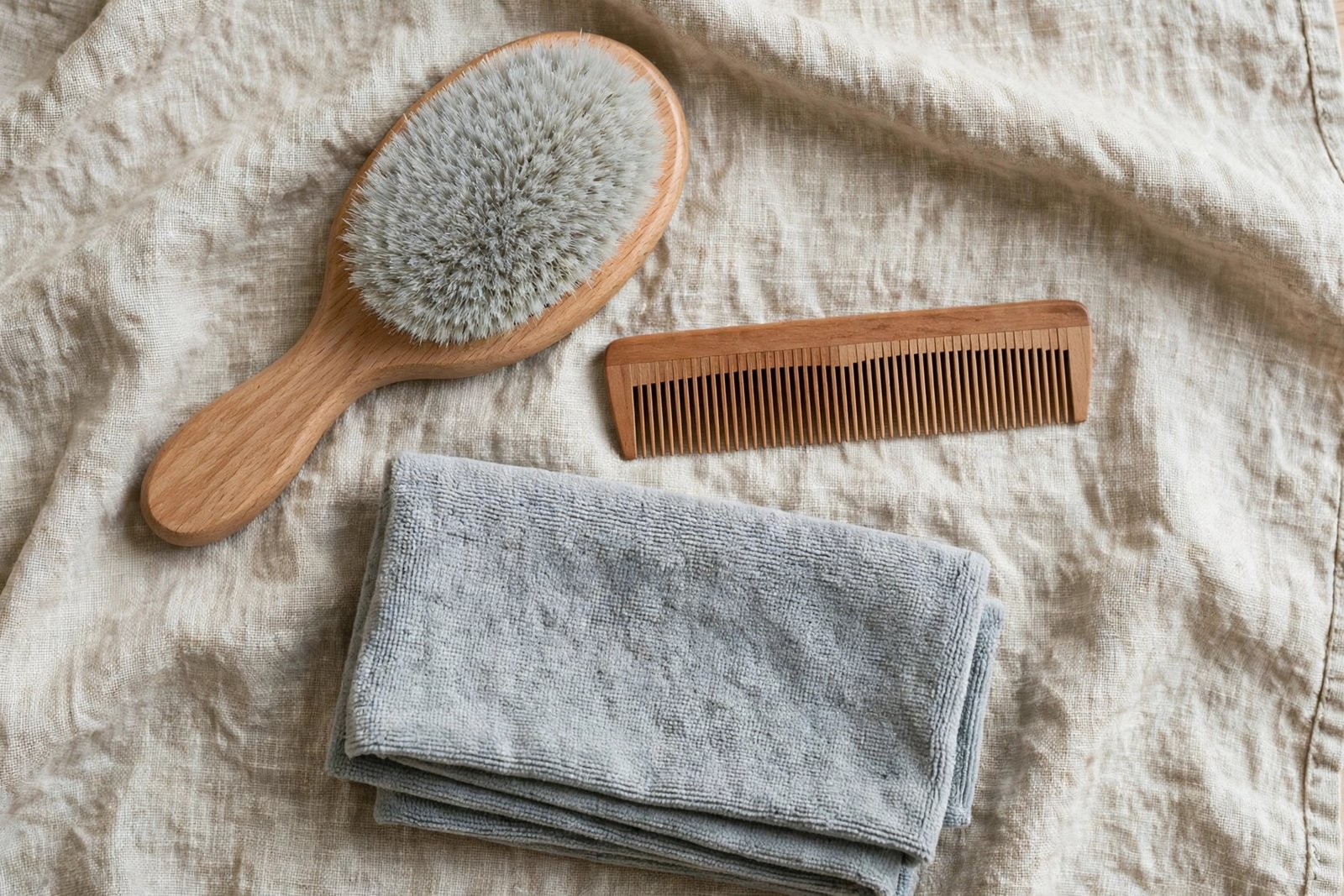
Keep tools together in one container near the grooming spot: the right brush, a comb, towels, dog shampoo, and a cloth for paw wiping. Check tools before use, and replace a brush with bent or broken bristles, which can scratch skin. Keep grooming products out of reach of children, and keep the bathroom door closed during baths so a wet dog cannot slip on a hard floor elsewhere in the apartment. The everyday health checklist for apartment owners places coat and skin checks alongside weight, mouth, and mobility checks in one weekly round, which helps grooming stay part of routine care rather than a forgotten chore. Over time, a calm, predictable grooming routine becomes a bonding time as well as a health check, and a dog that accepts grooming calmly is easier to examine at veterinary visits too.
Common Mistakes
- Using people shampoo, or bathing too often, which dries and irritates the skin.
- Brushing only the top of the coat and missing tangles behind the ears, under the legs, and in feathering.
- Pulling through a mat instead of working it gently from the edges, which hurts and damages skin.
- Lifting the dog awkwardly onto a high, slippery surface for grooming.
- Cleaning ears deeply with cotton buds, or using an ear product without veterinary guidance.
- Ignoring a new lump, sore, bald patch, or persistent itch and hoping it will pass.
When to Call Your Vet
Contact a veterinarian promptly for persistent itching or licking, hair loss, sores that do not heal, swelling, redness that spreads, bad skin odor, discharge from ears, or any lump that grows, changes shape, or becomes painful. Also seek advice if the coat changes suddenly, if flaking or dullness appears with weight change, appetite change, or lethargy, or if grooming becomes painful for the dog. A veterinarian can examine the skin, check for parasites, infection, allergy, and other causes, and advise on bathing, grooming tools, and diet for the individual dog. This article provides general information only and is not a substitute for veterinary advice. It does not diagnose any condition, and no grooming routine can be presented as a treatment for skin disease. When a sign is unclear, an early call is better than waiting, because skin problems often worsen with scratching and with unsuitable products tried at home.
Use routine veterinary visits to review grooming as well. Bring notes from weekly skin checks, including when a change was first noticed, and ask which brush, shampoo, and ear care method suit the dog’s coat type and skin. A veterinarian who sees the record can adjust the routine in small steps, and the household can keep grooming with confidence between visits. Keep the veterinarian’s guidance as the authority for treatment decisions, and use home grooming as the daily care around it.
Pin This: Your Coat and Skin Care Checklist
- Brush by coat type: smooth weekly, wire two to three times weekly, long several times weekly.
- Bathe only when needed, with lukewarm water, dog shampoo, and a thorough rinse.
- Dry thoroughly after bathing, in a warm, draft-free room.
- Check skin, paws, ears, and folds weekly, and note any new change with its date.
- Feed a complete diet, keep water fresh, and ask a veterinarian before adding supplements.
- Support the back during handling and groom on a stable, non-slip surface.
- Keep tools together, clean, and in good condition.
- Contact a veterinarian promptly for persistent itching, sores, hair loss, swelling, or a changing lump.
Frequently Asked Questions
How often should a Dachshund be brushed?
It depends on coat type. Smooth coats usually need brushing once or twice a week, wire coats two to three times a week, and long coats several times a week, with extra attention to feathering and areas where tangles form.
How often should a Dachshund be bathed?
Every few weeks, or when dirty or smelly, is enough for many dogs. Over-bathing can dry the skin, so brushing more often is usually a better response to shedding than bathing more often.
Can people shampoo be used on a dog?
No. People shampoo has a different acidity from dog skin and can cause irritation. Use shampoo made for dogs, rinse thoroughly, and dry the coat well afterward.
What should a weekly skin check cover?
Run hands over the whole body and look at the belly, groin, armpits, ears, paws, and tail base. Note redness, bumps, scabs, flakes, hair loss, lumps, sores, or areas the dog licks repeatedly.
When is a lump or itch a veterinary matter?
Seek veterinary advice for persistent itching, sores that do not heal, hair loss, swelling, bad odor, ear discharge, or any lump that grows or changes quickly. Early advice is better than waiting or trying unsuitable products at home.
Conclusion
Dachshund coat and skin care at home works best as a calm, regular routine: brushing suited to coat type, bathing only when needed with dog shampoo, a weekly check of skin, paws, and ears, balanced food and fresh water, and safe handling that protects the back. Each step is small, and together they keep the coat healthy, the skin comfortable, and small changes visible early. Start with the next practical step today, whether that is choosing the right brush, setting a weekly skin check, or gathering grooming tools in one place, and keep the routine steady. A well-groomed Dachshund is not only pleasant to look at, it is also a dog whose health is being checked, week after week, at home.






7 Comments