
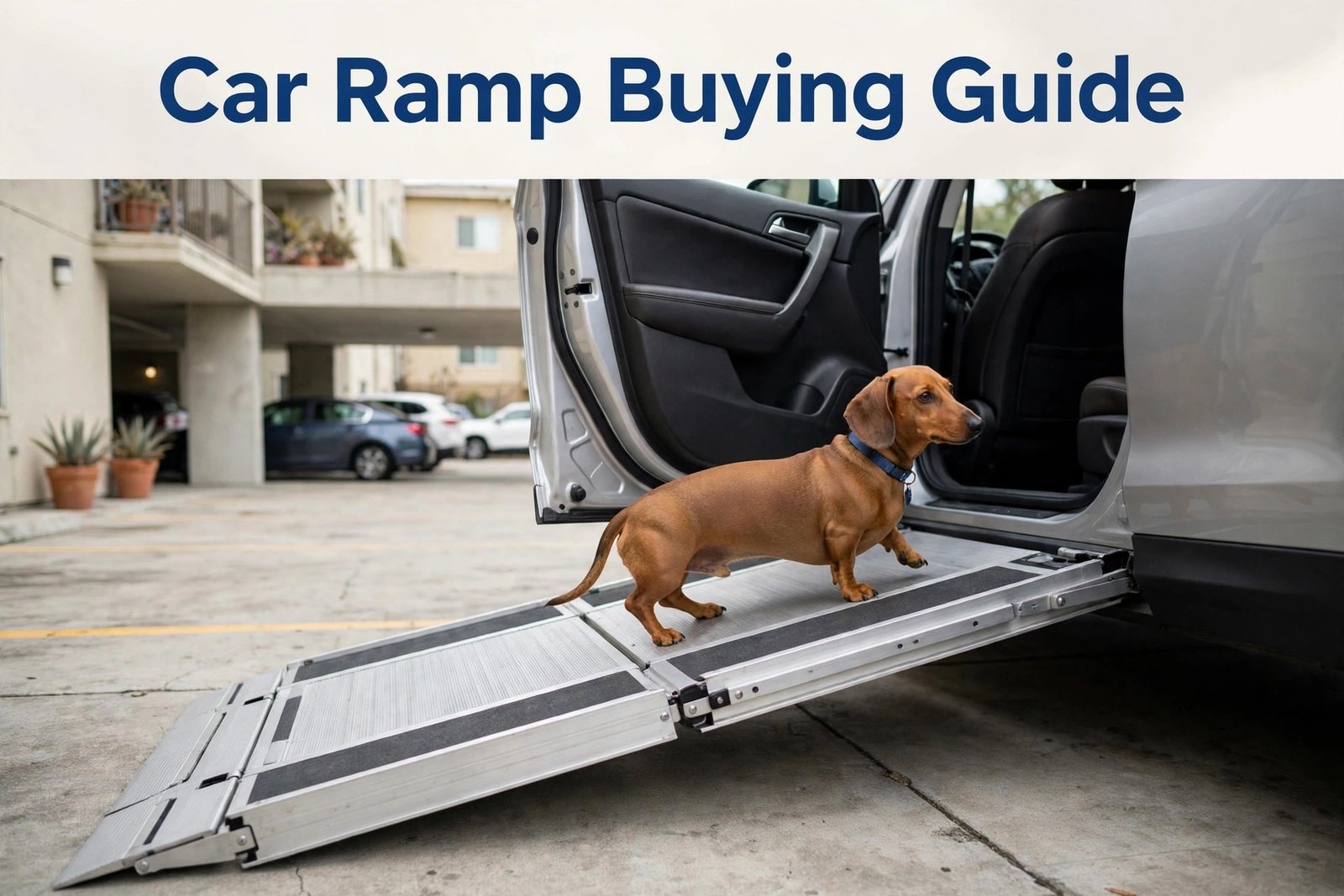
Dachshund Car Ramp Buying Guide for Safe Car Access
Quick Answer
- A Dachshund car ramp should give a gentle slope from the ground to the car, with a non-slip surface, side rails or raised edges, and a weight limit well above the dog.
- Measure the car sill height and the space behind the car before choosing a ramp length, because a short ramp on a tall vehicle creates a steep climb.
- Practice at home on flat ground first, with short, calm sessions and a reward at the end of the ramp, before using the ramp at a busy parking area.
- Check the ramp, the car door, the seat setup, and the harness attachment every trip, and stop using a ramp that wobbles, slips, or feels unstable.
Contents
- 1. Why a Car Ramp Matters for a Dachshund
- 2. Measure the Car and the Space First
- 3. Ramp Length, Slope, and Surface Grip
- 4. Folding, Weight, Storage, and Cleaning
- 5. Teaching Calm Ramp Use and Car Setup
- Car Ramp Comparison Checklist
- Common Mistakes
- When to Call Your Vet
- Pin This: Car Ramp Checklist
- Frequently Asked Questions
- Conclusion
Getting a Dachshund into a car looks simple until the vehicle is tall, the parking surface is wet, or the dog hesitates at the edge. Jumping in and out places repeated load on a long back and short legs, and a single awkward landing can turn a routine trip into a stressful event. A car ramp changes that moment from a jump into a walk. The right ramp does not need to be complicated. It needs to fit the car, suit the space available, stay steady underfoot, and feel predictable for the dog.
1. Why a Car Ramp Matters for a Dachshund
Dachshunds have a long spine and short legs, a body shape that makes repeated jumping a poor daily habit. A car sill, a sport utility vehicle floor, or a trunk edge can be high relative to the dog, and the landing after a jump is harder to control than a steady walk up a ramp. Over time, owners often notice that car trips become the hardest part of the day, not because the dog dislikes travel, but because entry and exit feel uncertain.
A ramp gives the dog a continuous path. The dog can walk at a steady pace, keep four paws in contact with a surface, and stop halfway if needed. That control matters in rain, on gravel, and in tight parking spaces where a dog cannot take a long run-up. A ramp also helps the person handling the dog, because lifting a wriggling dog into a tall car is awkward and can strain the back of the person as well as the dog.
The Animal Medical Center explains intervertebral disc disease in dogs, including signs that need veterinary attention, which is useful background when deciding how much jumping to remove from daily routines. Cornell information on chondrodystrophy and intervertebral disc disease describes why this breed group faces added disc risk. Those sources do not recommend a specific product, and a ramp is not a medical treatment. A ramp is a practical step that reduces one repeated impact in daily life, alongside weight control, sensible exercise, and veterinary guidance.
For apartment living, a car ramp also fits a wider safety routine. A ramp at home for a sofa or bed and a ramp for the car share the same idea: replace jumps with a walk wherever possible. The guide to choosing the right ramp for a Dachshund explains indoor ramp features in detail, and many of the same checks, such as slope and grip, apply to a car model.

2. Measure the Car and the Space First
Before comparing any ramp, measure three things: the height from the ground to the car entry point, the length of flat space behind or beside the car, and the width of the door opening. A ramp that looks generous in a product photo can still be too steep if the vehicle is tall and the driveway is short. A ramp that is too wide for the door opening will not sit straight, and a ramp that is too narrow for the dog will feel unsafe.
Start with the entry point the dog will actually use. For a back seat, measure to the seat edge or the door sill, whichever the dog must clear. For a trunk or cargo area, measure to the cargo floor. Write the number down. Then measure the distance available behind the car in a typical parking spot, not only in an open driveway. Apartment parking areas often leave less room than expected, and a ramp that needs a long run-out will not work in a tight bay.
Also check ramp width and the ground where the ramp foot will sit. A comfortable width allows a straight walk without hugging an edge, and side rails help a nervous dog. A foot on grass, gravel, or a slope behaves differently from a foot on flat concrete, so test the setup on the surfaces used most often.
Keep a short written note of vehicle type, entry height, and available length. That note helps when comparing folding and telescoping ramps, because folded length decides storage and extended length decides slope.
3. Ramp Length, Slope, and Surface Grip
Slope is the most important buying check. A gentle slope feels like a walk. A steep slope feels like a climb, and a nervous dog may rush, slip, or refuse. As a general rule, a longer ramp gives a gentler slope for the same height. That is why a ramp chosen for a low sedan may fail on a taller vehicle, even if the dog is the same size.
Use the measured entry height to judge length. If the available space allows a longer ramp, choose the longer option within the storage limit. If space is tight, look for a design that extends in stages, so the ramp can be used at full length when space allows and shortened only when truly needed. Avoid planning around the shortest setting for daily use, because that setting gives the steepest slope.
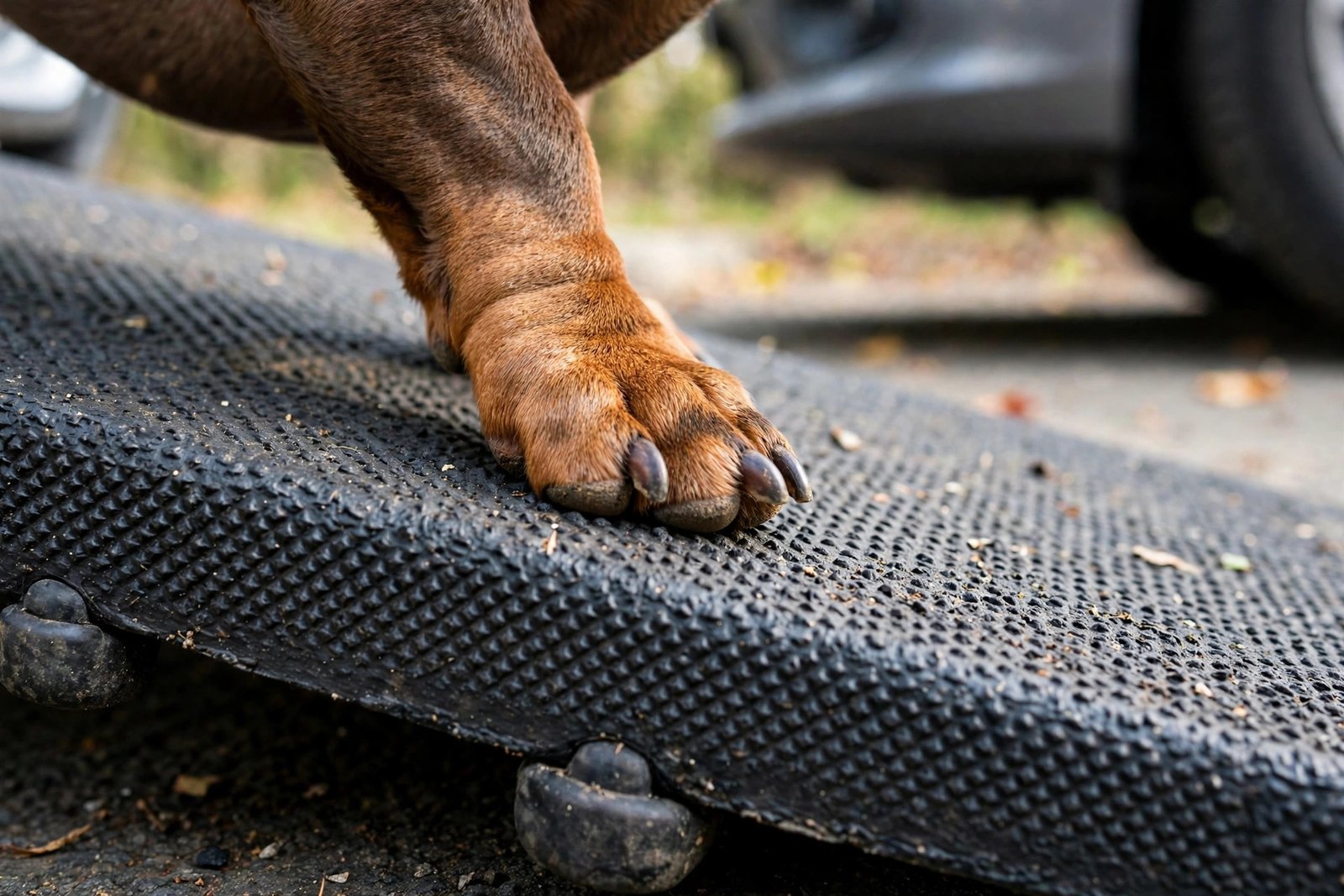
Surface grip decides whether the slope is usable in real weather. A smooth plastic or metal surface becomes slippery when wet, muddy, or dusty. Look for a textured surface, a ribbed pattern, or a replaceable grip layer that stays effective after cleaning. Test grip with a dry hand and a damp cloth during inspection, and check that the surface does not trap grit in a way that makes cleaning difficult. For a dog with long nails, a surface that is rough enough to grip but not so abrasive that it catches nails is a sensible balance.
Stability matters as much as grip. The ramp should sit flat at both ends, without rocking. Rubber feet, a locking hinge, and a firm top edge that rests securely on the car sill all reduce movement. Push the ramp from the side before any training session. If the ramp shifts, slides, or flexes under light pressure, adjust the position or choose a steadier model. A dog that feels movement underfoot will lose confidence quickly, and regaining that confidence takes longer than choosing a steadier ramp in the first place.
Weight limit is a safety check, not a close target. Choose a limit comfortably above the dog, so the ramp does not flex near its maximum load. Also consider who else may step on the ramp during training, such as a person steadying the dog, and follow the maker guidance on total load. A ramp that bends or creaks under load should be retired, even if no visible damage is present.
4. Folding, Weight, Storage, and Cleaning
A car ramp for apartment life must be easy to carry, fold, and store. A heavy ramp that is hard to lift out of a trunk will stay unused, and a bulky ramp that blocks a hallway will become a source of daily friction. Check the folded dimensions and the carry weight before purchase, and lift a similar weight at home to judge whether daily handling is realistic.
Folding designs differ. A bi-fold ramp folds once and often gives a sturdy, simple structure. A tri-fold ramp packs smaller but has more hinges to check. A telescoping ramp adjusts length in stages, which helps when different cars are used. Each design has a trade-off: fewer hinges usually mean fewer moving parts to wear, while more folds usually mean easier storage. Choose the design that matches the storage space and the cars used most often, rather than the smallest folded size alone.
Cleaning is part of safety. Mud, sand, and rain residue reduce grip over time. A surface that wipes clean, or a grip layer that can be rinsed and dried, will stay safer than a surface that traps dirt. Check whether the ramp can be hosed down, wiped with a damp cloth, or needs a specific cleaning method. Dry the ramp fully before folding and storing it, because trapped moisture can damage hinges and grip layers.
Also check hinges, locks, and rubber feet during cleaning. Hinges should move smoothly, locks should engage firmly, and feet should stay attached and flexible. Replace worn parts where offered, and retire a ramp with a cracked hinge or bent frame. Store the ramp in a cool, dry spot where it will not be stepped on or bent under other items.
5. Teaching Calm Ramp Use and Car Setup
Training should start at home, on flat ground, with the ramp lying low or at a very gentle angle. Let the dog sniff the ramp, walk across it at ground level, and receive a calm reward at the end. Keep sessions short, end on a success, and repeat over several days before raising the angle. Rushing this stage often creates avoidance that is harder to undo than the extra days of practice would have cost.
Once the dog walks the flat ramp calmly, raise one end slightly using a stable, low step, then gradually increase the height toward the real car sill. Keep the surface steady, keep the handler position consistent, and avoid pulling the dog forward. A lead can guide direction, but it should not drag the dog up the ramp. If the dog freezes, lower the angle, shorten the session, and return to the last successful step.
Car setup deserves the same care as ramp training. Secure the dog in the car with a suitable harness attachment or a secured carrier, following the vehicle and product guidance for that setup. Keep the seating area non-slip, remove loose items that could slide, and keep the car temperature comfortable before the dog enters. A calm entry followed by a chaotic car interior will undo the benefit of a good ramp.
On the first real trips, choose quiet parking areas and short drives. Set the ramp straight, check stability, and guide the dog down at a walking pace on exit as well as entry. Consistency turns the ramp into a predictable routine.
For a comparison of ramps and steps for home use, the guide on ramps versus steps for Dachshunds explains slope and space trade-offs that also help when judging a car ramp. The same principle applies: a gentle, steady path used every day is more useful than a steep shortcut used only when convenient.

Car Ramp Comparison Checklist
| Check | What to look for | Red flag |
|---|---|---|
| Slope | Longest length that fits the parking space | Steep climb on a tall vehicle |
| Grip | Textured, cleanable, non-slip surface | Smooth surface that slips when wet |
| Width and edges | Straight walkway with side guidance | Narrow path or no edge guidance |
| Stability | Flat contact, rubber feet, firm lock | Rocking, sliding, or flexing |
| Weight limit | Comfortably above the dog | Limit close to the dog weight |
| Folding and storage | Fits car and apartment storage | Too heavy or too bulky to use daily |
| Cleaning | Easy to wipe or rinse and dry | Grip layer traps dirt permanently |
Common Mistakes
- Buying by vehicle type alone, without measuring the actual entry height and parking space.
- Choosing the shortest ramp that fits the trunk, which creates the steepest daily slope.
- Skipping ground-level practice and starting training at full car height.
- Using a ramp with worn grip or loose rubber feet because replacement parts were not checked.
- Allowing the dog to jump out of the car after walking up the ramp, which removes half the benefit.
- Storing a wet ramp folded, which damages hinges and grip over time.
When to Call Your Vet
Contact a veterinarian promptly if the dog shows pain, yelping when lifted, reluctance to walk, a hunched back, wobbliness, weakness in the legs, loss of bladder or bowel control, or any sudden change in movement after a car trip or a fall. This article gives general information only and does not diagnose any condition. A veterinarian can examine the dog, ask about recent activity, and advise on next steps. Do not attempt home treatment for suspected back pain, and avoid repeated car trips until veterinary advice has been received if signs are present.
Pin This: Car Ramp Checklist
- Measure entry height and parking space before buying.
- Choose the longest ramp that fits the space and storage.
- Check grip, width, side edges, and weight limit.
- Test stability on the real ground surface.
- Practice flat, then low, then full height.
- Use the ramp for entry and for exit, every trip.
- Clean, dry, and inspect hinges and feet regularly.
Frequently Asked Questions
How long should a Dachshund car ramp be?
Length depends on entry height and available space. A longer ramp gives a gentler slope for the same height, so measure the car first and choose the longest ramp that fits the parking space and storage.
Is a folding ramp or a telescoping ramp better?
Neither type is better for every home. A folding ramp is often simpler and sturdier, while a telescoping ramp adjusts to different heights. Choose based on storage space, car height, and how easy the ramp is to carry daily.
Can a Dachshund learn to use a car ramp quickly?
Some dogs learn in a few short sessions, while others need a week or more of gradual practice. Start flat, raise the angle slowly, keep sessions short, and end on a calm success.
Should the ramp be used for getting out of the car too?
Yes. Exit involves the same landing impact as entry, so the ramp should be used in both directions on every trip, including short trips.
What should be checked before each trip?
Check that the ramp sits flat, the feet grip the ground, the lock is engaged, the surface is clean and dry, and the car seating area is secure and non-slip.
Conclusion
A good Dachshund car ramp is a measured choice. Measure the car, choose a gentle slope with reliable grip, confirm stability and storage, and train in small steps. That routine removes a daily jump that a long-backed dog does not need.


One Comment