
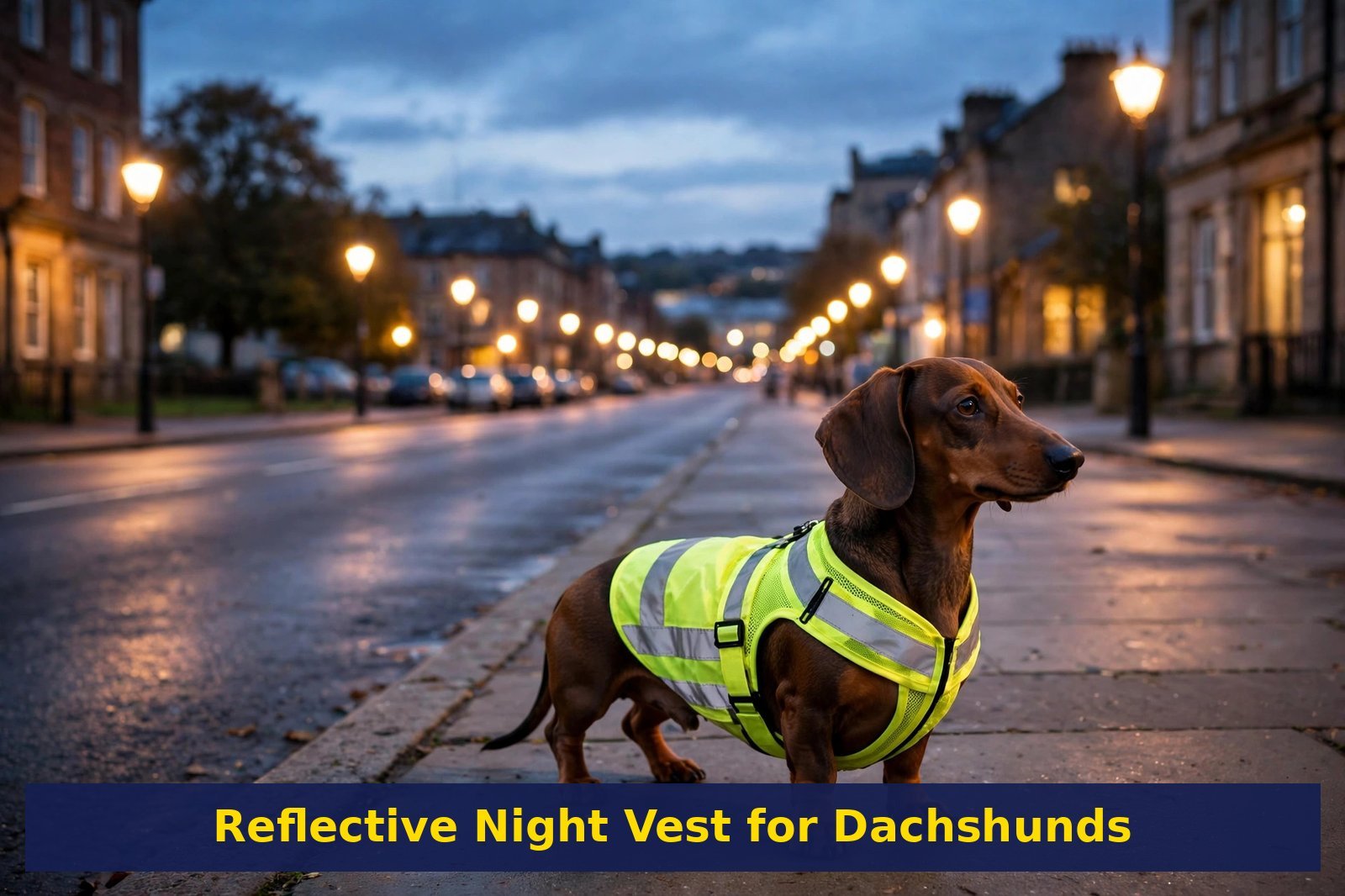
Dachshund Reflective Night Vest Guide: Safer Dark Walks
Quick Answer
- A reflective night vest helps drivers, cyclists, and other walkers see a low, small Dachshund earlier on dark streets and crossings.
- Choose a vest with reflective strips on the sides and back, a snug but comfortable fit over a harness, and no restriction on leg movement.
- A vest improves visibility only; it does not replace a short leash, lit routes, pavement walking, and care at crossings.
- Check fit, reflective strips, and fasteners before every dark walk, and replace a vest whose reflectivity or straps have worn out.
Contents
- 1. Why a Small Dog Needs Extra Visibility at Night
- 2. Vest Types, Reflective Material, and Fit
- 3. Fitting a Vest Over a Harness Without Restriction
- 4. Dark-Walk Routes, Lights, and Crossing Habits
- 5. Cleaning, Wear Checks, and Seasonal Use
- Night Vest Comparison Checklist
- Common Mistakes
- When to Call Your Vet
- Pin This: Night Vest Checklist
- Frequently Asked Questions
- Conclusion
A Dachshund is low to the ground, short-legged, and easy to miss in dark conditions. Car headlights pass over a small dog, cyclists approach quietly, and a dog stepping off a kerb can disappear into shadow. A reflective vest does not change the dog’s size, but it changes how early others notice the dog, and early notice is what makes crossings and shared paths safer.
This guide explains how to choose and use a reflective night vest for apartment walks. It covers visibility, fit, harness use, routes, lights, cleaning, and limits. A vest is one layer of safety, not a promise of safety. Dark walks still need a short leash, a lit route, attention at crossings, and a dog that can move freely and comfortably.
1. Why a Small Dog Needs Extra Visibility at Night
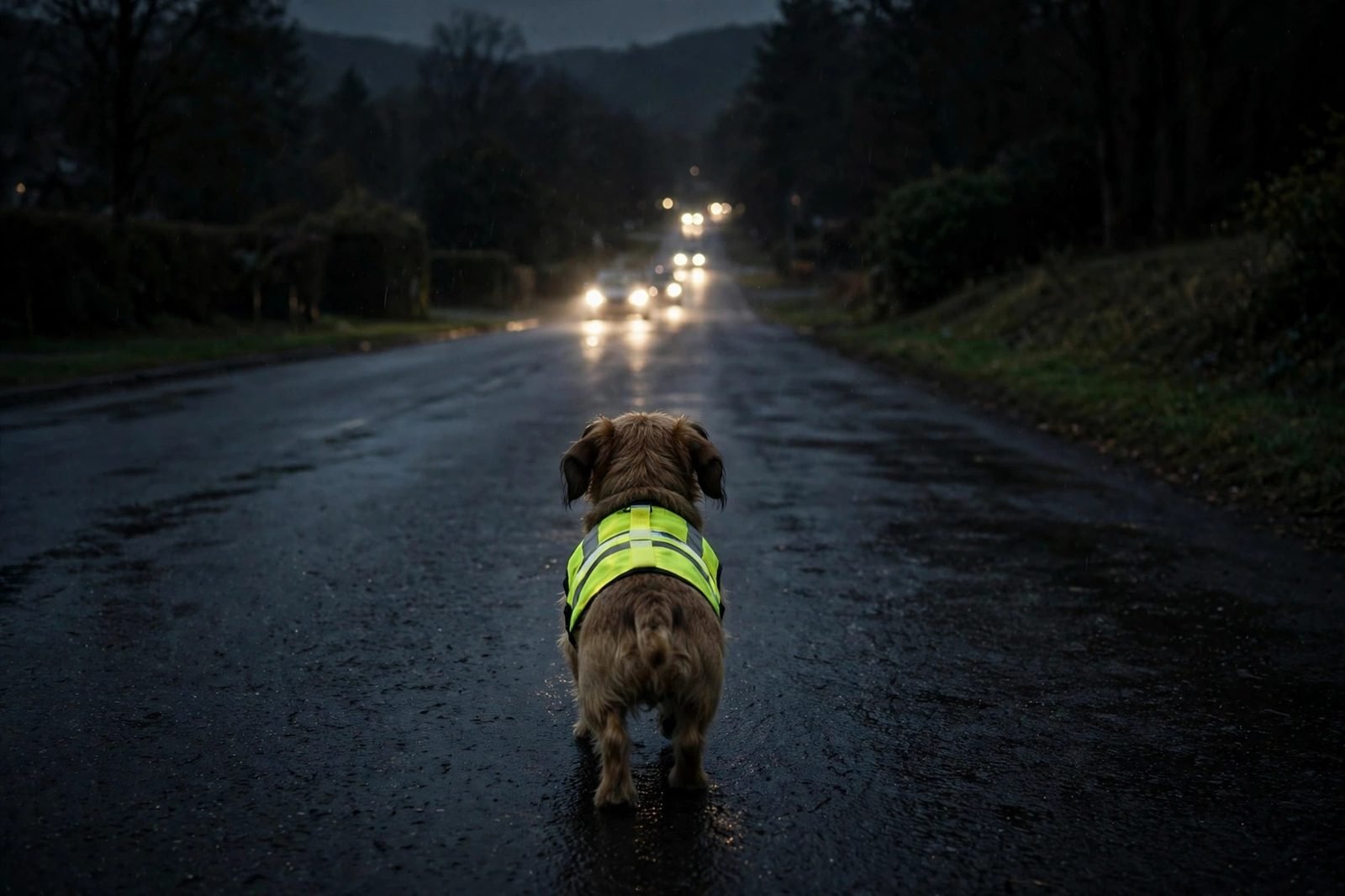
Drivers look for shapes at adult and car height, not for a small shape near the ground. A Dachshund walking beside an owner can be hidden by parked cars, bins, hedges, and kerbs, especially on streets with patchy lighting. Reflective strips catch headlights and return light toward the driver, creating a moving bright shape where a dark coat would blend into the road.
Cyclists and other walkers face a similar problem on shared paths. A bicycle approaches with little sound, and a small dog on a long leash can cross its path before either party notices. A vest with side reflectivity helps from the side as well as from behind, which matters on paths where traffic comes from several directions. Bright colour helps in dusk light, but reflective material matters most in true darkness, when colour alone fades.
Night walks also change a dog’s behaviour. Sounds seem louder, shadows move, and a nervous dog may pull, freeze, or dart. A vest will not calm a nervous dog, but a dog that is visible is easier for others to avoid while the owner manages the walk. Visibility buys time: time for a driver to slow, a cyclist to steer wide, and an owner to shorten the leash and move to the pavement edge.
2. Vest Types, Reflective Material, and Fit
Simple reflective vests slip over the back and fasten under the belly, with reflective strips across the back and sides. They suit most Dachshunds because they are light, easy to put on, and work over a harness. Mesh vests add airflow for warmer evenings, while slightly padded vests suit cooler nights. Choose the lightest vest that still gives full reflective coverage, because a heavy vest can tire a small dog and restrict movement.
Reflective material should cover the back and both sides, not just a small patch at the rear. Hold the vest under a torch or phone light in a dark room: strong, even reflection across the strips is a good sign, while dull or patchy strips suggest poor material. Some vests add fluorescent colour for dusk, which helps before full darkness, but fluorescence alone does not reflect headlights. For night use, reflective strips are the essential feature.
Fit is measured around the chest and along the back, not by weight alone. Dachshunds vary in length and chest depth, so measure the dog and compare with the maker’s size guide. The vest should sit snugly without pressing on the ribs, sliding sideways, or riding up over the shoulders. A vest that twists during a walk will not keep its reflective strips in the right place, and a vest that rubs the armpits will make the dog reluctant to walk.
3. Fitting a Vest Over a Harness Without Restriction
Fit the harness first, then the vest over it, so the leash attaches to the harness as usual. The vest should not cover the harness clip, pull the harness sideways, or press straps into the dog’s legs. Walk the dog indoors for a few minutes after fitting, and watch for limping, leg lifting, freezing, or attempts to chew the vest. Any of those signs means the fit or the layering needs adjustment.
Check leg movement carefully, because Dachshunds need free shoulder and hip movement for a natural gait. The vest edge should sit clear of the front legs and clear of the belly, without hanging so low that it catches on legs. If the vest and harness together feel bulky, choose a thinner vest or a harness with a lower profile. Comfort matters for safety: a dog that walks stiffly in layered gear is not walking safely.
Introduce the vest in daylight first, with short, calm walks and praise for relaxed movement. Do not start vest use on a busy dark street, where the dog must cope with new gear, traffic, and darkness at once. The guide to short leash walking for apartments explains leash length and control, and a vest works best with that same short, controlled leash, which keeps the dog close and visible beside the owner.

4. Dark-Walk Routes, Lights, and Crossing Habits
Choose lit routes for dark walks, even if they are slightly longer. Well-lit pavements, crossings with lights, and streets without fast traffic suit a small dog better than a dark shortcut. Avoid unlit parks, towpaths, and roads without pavements after dark, where a vest alone cannot make a small dog safe. A familiar lit route also helps a nervous dog, because it knows the sounds and turns.
Add a light as well as a vest. A small clip-on light on the harness or collar, or a light on the owner’s clothing, helps others judge distance and direction, while reflective strips help others notice the dog. Carry a torch or phone light for dark corners, drains, and steps, and use it to check the ground ahead. A vest reflects light back to others; it does not light the path for the dog or the owner.
At crossings, shorten the leash, move the dog to the pavement side away from traffic, and wait for a clear gap, even on a green crossing signal. Keep the dog beside the owner, not ahead on a long leash, while crossing. The guide to raincoat and winter coat use covers layering for cold, wet walks, and on cold dark nights a vest may need to fit over a thin coat as well as a harness, so test that full combination indoors before a real walk.
5. Cleaning, Wear Checks, and Seasonal Use
Clean a vest by hand or on a gentle cycle, following its care label, and dry it fully before use. Dirt, mud, and road grime dull reflective strips, so a vest that is never washed gradually loses its main benefit. After washing, check reflectivity again under a torch in a dark room. If strips look dull, cracked, or peeling after washing, the vest needs replacement, even if the fabric still looks fine.
Check fasteners, straps, and stitching before every dark walk, and more thoroughly once a month. Hook-and-loop fasteners lose grip with hair, dirt, and repeated washing; buckles crack; straps fray at the edges. A vest that opens mid-walk leaves a dog unprotected at the worst moment. Replace worn fasteners or the whole vest promptly, and keep a spare vest for evenings when the main vest is drying.
Seasonal use changes the fit. In summer, a mesh vest over a harness is enough for most evenings. In winter, a vest may sit over a coat, which changes chest measurement and strap length. Re-measure and re-fit whenever layers change, and watch for overheating on warm evenings: a dog panting heavily in a vest should have the vest removed and the walk shortened. Visibility must never come at the cost of comfort or breathing.

Night Vest Comparison Checklist
| Vest type | Best for | Limit to watch |
|---|---|---|
| Simple reflective vest | Most night walks, easy fitting | Must cover sides as well as back |
| Mesh reflective vest | Warm evenings, airflow | Less warmth, thinner fabric wear |
| Padded reflective vest | Cool nights, extra visibility | Can feel bulky over harness and coat |
| Vest with clip-on light | Distance judgement, dark paths | Light needs charging and checking |
Common Mistakes
- Choosing a vest with reflection only on the back, not the sides.
- Using a vest that twists, rubs, or restricts leg movement.
- Covering the harness clip so the leash cannot attach properly.
- Walking unlit routes and relying on a vest alone.
- Using a long leash that lets the dog stray into traffic paths.
- Never washing the vest, so reflective strips dull with grime.
- Ignoring worn fasteners until the vest opens mid-walk.
When to Call Your Vet
Contact a veterinarian if the dog shows limping, reluctance to walk, yelping, back pain signs, breathing difficulty, or any sudden change in movement after walks, whether or not a vest was worn. This article gives general information only and does not diagnose any condition. A veterinarian can examine the dog and advise on gait, back care, and safe exercise. Do not continue dark walks with a dog that is limping or in pain in order to test a new vest, and seek prompt veterinary help for sudden weakness, collapse, or injury. A veterinarian should also be consulted about any recurring walking difficulty, because early advice matters for this breed.
Pin This: Night Vest Checklist
- Choose reflection on the back and both sides.
- Measure chest and back, and fit over the harness.
- Check free leg movement indoors before dark walks.
- Walk lit routes with a short leash.
- Add a clip-on light for distance and direction.
- Shorten the leash and wait for clear gaps at crossings.
- Wash the vest and check strips and fasteners often.
Frequently Asked Questions
Is a bright colour enough at night?
No. Bright colour helps at dusk, but in true darkness it fades. Reflective strips that return headlight are the essential night feature, with bright colour as a useful addition for dusk walks.
Should the vest go under or over the harness?
Over the harness, so the leash attaches to the harness as usual. The vest must not cover the clip, pull the harness sideways, or press straps into the legs.
Can a vest replace a light?
No. A vest reflects others’ light back to them, but it does not light the path or show direction clearly. A small clip-on light plus a vest gives better visibility than either alone.
Will my Dachshund accept a vest?
Most dogs accept a light, well-fitted vest introduced indoors with short, calm walks. If the dog freezes, chews, or limps, check fit and layering first, and rebuild with shorter sessions before dark walks.
How often should a vest be replaced?
When reflective strips dull, crack, or peel, when fasteners lose grip, or when straps fray. Washing and torch checks reveal wear early; a vest that no longer reflects strongly should be replaced, even if it looks intact.
Conclusion
A Dachshund reflective night vest makes dark walks safer when it reflects from the back and sides, fits comfortably over a harness, is paired with a short leash and a lit route, and is kept clean and well fastened. That combination gives drivers, cyclists, and walkers the early warning a small, low dog needs after sunset.





3 Comments