
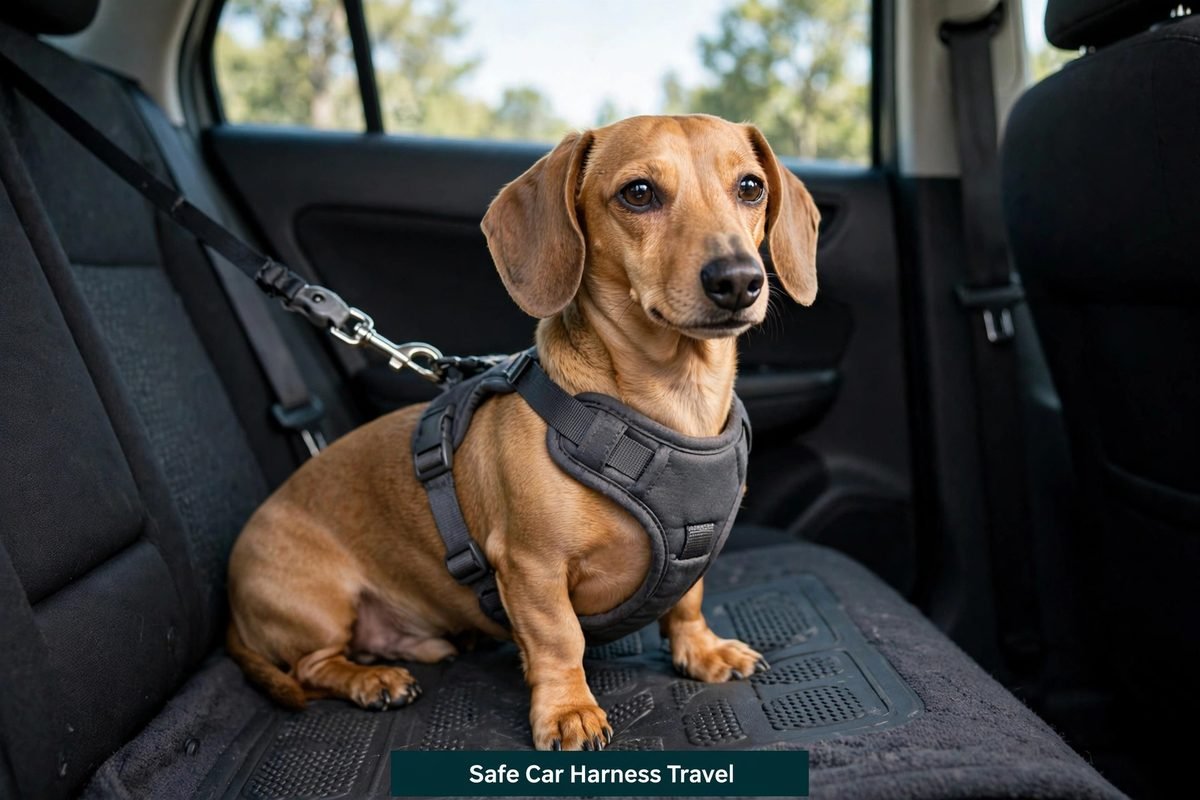
Dachshund Car Seatbelt Harness Guide for Safe Travel
Quick Answer
- A car seatbelt harness is a harness that connects a Dachshund to the car seatbelt system, so the dog stays in one place during a trip instead of moving around the car.
- Choose a harness made for car travel, with wide straps, a padded chest, and a secure attachment, in a size that fits a Dachshund snugly without pressing on the neck.
- Fit the harness at home first, adjust it so two fingers fit under each strap, attach it to the seatbelt, and keep the tether short enough to stop the dog climbing into the front.
- Keep trips short at first, use a calm routine, and never attach a seatbelt tether to a collar, because pressure on the neck is a risk for a small dog.
- Contact a veterinarian if the dog shows back pain, stiffness, limping, or reluctance to move after a trip, or if travel causes vomiting, distress, or injury.
Contents
- 1. Why a Seatbelt Harness Matters in a Car
- 2. Choosing a Car Harness for a Dachshund
- 3. Fitting the Harness at Home First
- 4. Attaching the Harness and Settling the Dog
- 5. Short Trips, Breaks, and Watching the Back
- Car Harness Comparison Checklist
- Common Mistakes
- When to Call Your Vet
- Pin This: Car Seatbelt Harness Checklist
- Frequently Asked Questions
- Conclusion
A car trip with a loose Dachshund can be stressful for everyone in the car. A small dog may climb into the front seat, slip into the footwell, stand on the centre console, or try to look out of every window at once. Each movement distracts the driver, and a sudden stop can throw a loose dog forward, into a seat, a door, or the floor. A seatbelt harness solves the movement problem in a simple way: it keeps the dog in one place, on one seat, for the whole trip, with room to sit or lie down, but not room to roam.
For a Dachshund, staying in one place matters for the back as well as for safety. A dog that is thrown forward in a sudden stop, or that jumps between seats, lands hard on a long back. A dog that stands on a slippery seat, braces against a turn, or climbs over a seatback twists and strains in ways a short-legged, long-bodied dog should avoid. A well-fitted car harness, attached correctly, limits that movement and keeps the dog low and steady. This article explains why a seatbelt harness matters, how to choose one for a Dachshund, how to fit it at home, how to attach it in the car, and how to build a calm travel routine. It is general information only, not a diagnosis, and a dog that is hurt in a car, or that shows pain after travel, needs a veterinarian, not a new harness.
1. Why a Seatbelt Harness Matters in a Car
A car is a moving space, and a loose dog is a moving object inside it. In a sudden stop, a dog that is not secured keeps moving forward at the speed of the car, until it hits a seat, a door, or the floor. In a turn, a loose dog slides sideways, braces with its legs, and twists its body to stay upright. Both movements are hard on a small dog, and both are worse for a long-backed breed, where the spine is long, the legs are short, and a hard landing or a sharp twist can strain muscles or injure a disc.
A harness is also a routine. A dog that wears the same harness for every trip learns that the harness means a calm car ride, with a familiar seat, a familiar blanket, and a familiar place to lie down. That routine reduces excitement, barking, and restless movement, which are common in dogs that travel rarely. A dog that travels calmly is a dog that stays still, and a dog that stays still is a dog that is less likely to be hurt by a sudden stop or a sharp turn. The Animal Medical Center explains intervertebral disc disease in dogs, and disc problems are a known risk for this long-backed breed, with disc degeneration in short-legged breeds able to begin in the first year of life, so limiting sudden movement in a car is a back-care step, not just a safety step.
2. Choosing a Car Harness for a Dachshund
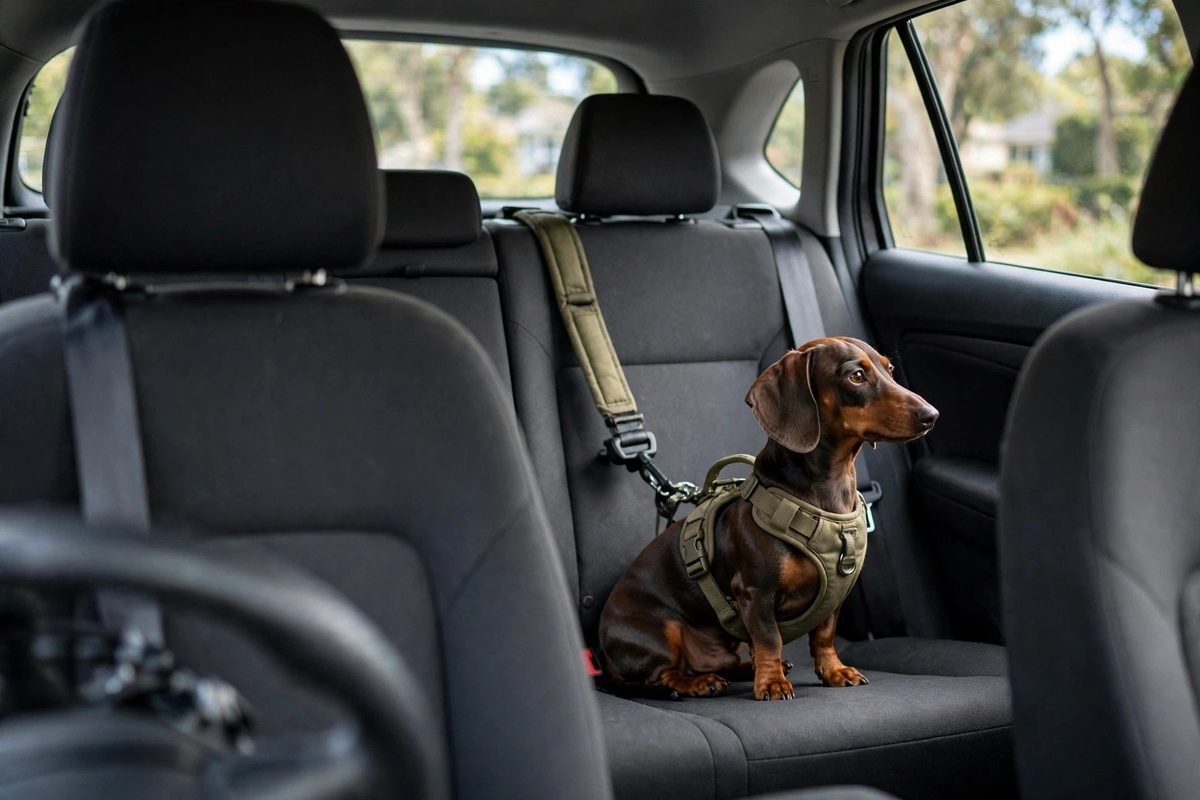
Choose a harness made for car travel, not a walking harness used in the car as an afterthought. A car harness is built with wider straps, stronger stitching, and a secure attachment point that is designed to take force, while a light walking harness may stretch, slip, or break under the same load. Look for a harness that is described by its maker as a car harness or a vehicle restraint, with a padded chest panel, wide straps across the chest and shoulders, and a metal attachment point at the back or chest, depending on the design.
Check the size carefully, because a Dachshund shape is unusual: a long body, a deep chest, and short legs. Measure the chest just behind the front legs, measure the neck, and measure the length from the neck to the base of the tail, then compare those numbers with the maker’s size guide. A harness that fits the chest but is too long in the body will slide, while a harness that is too tight across the chest will press on the ribs and make breathing harder. A snug fit means two fingers fit under each strap, the harness does not twist, and the dog can sit, lie down, and breathe normally.
Look at the attachment system. Some car harnesses connect directly to the car seatbelt, with the seatbelt passing through a loop on the harness. Others use a short tether that clips to the seatbelt buckle or to a child-seat anchor point. A short tether is safer than a long one, because it limits how far the dog can move, and it stops the dog climbing into the front seat or the footwell. Avoid a long, stretchy tether, and avoid any tether that allows the dog to reach the front seats. Check that the clip is metal, that it locks firmly, and that it cannot be opened by a paw.
Choose a harness with padding where it matters. A padded chest panel spreads pressure across the chest, a padded strap across the shoulders reduces rubbing, and smooth edges reduce chafing on a short coat. Avoid a harness with narrow straps that dig in, a harness with a neck strap that pulls, and a harness with plastic buckles that feel flimsy. Try the harness on at home, let the dog move in it, and check for rubbing, slipping, or discomfort before the first car trip. The guide to a harness fitting guide for back support covers the same fitting ideas for everyday walking, and the guide to a car booster seat guide explains how a raised seat can work with a harness for a small dog.
3. Fitting the Harness at Home First
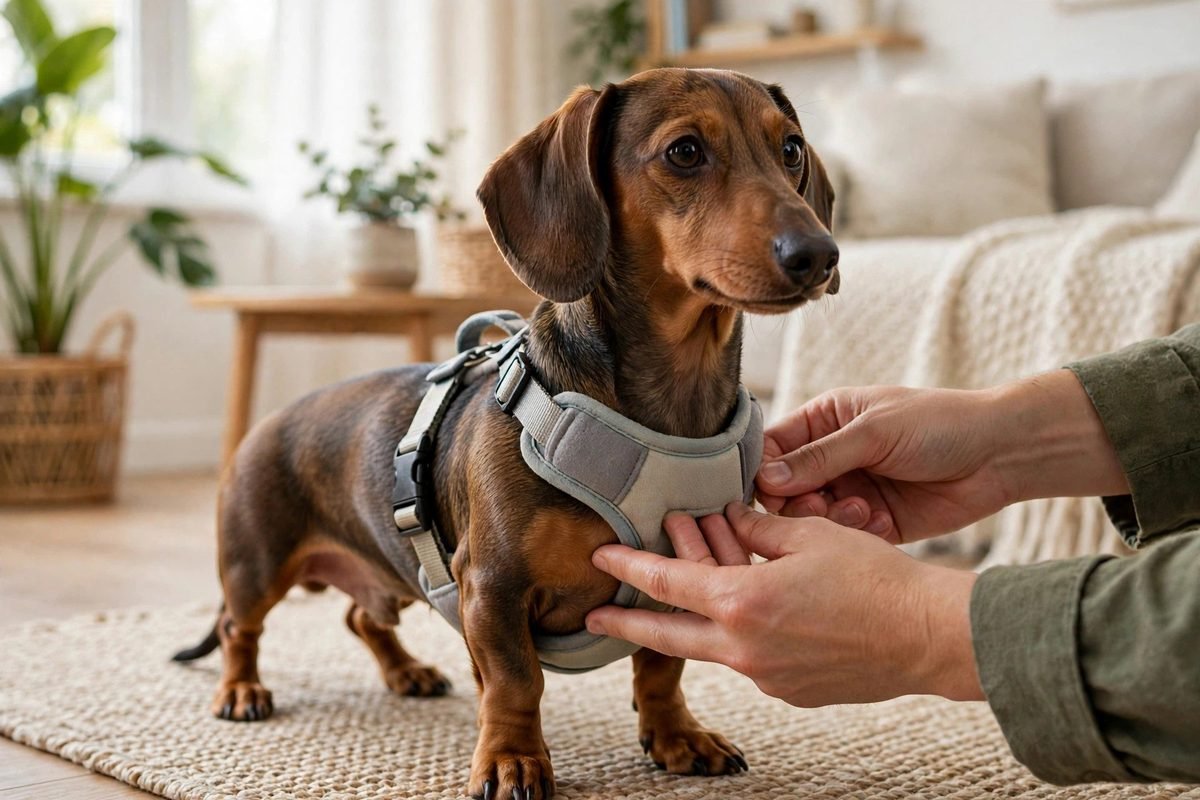
Fit the harness at home, in a calm room, before any car trip. Lay the harness flat, loosen all the straps, and let the dog sniff it. Then slip it on gently, without lifting the dog or forcing a leg through a strap. A dog that is lifted, twisted, or rushed during fitting will associate the harness with stress, and a stressed dog will resist the next fitting. Take the time to fit slowly, with calm words and a treat for standing still.
Adjust the straps one at a time, starting with the chest strap. Tighten it until two fingers fit snugly under the strap, then check that the harness does not twist when the dog walks, sits, or lies down. Adjust the shoulder straps next, so the chest panel sits flat on the chest, not riding up toward the neck or sliding down toward the belly. Check the neck opening, and make sure no strap presses on the throat, because pressure on the neck is a risk for a small dog, and a car harness should never pull on the neck.
4. Attaching the Harness and Settling the Dog
Attach the harness in the car with the engine off and the doors closed, so the dog cannot slip out while the harness is being clipped. Place the dog on the back seat, on a non-slip blanket or a seat cover, and let the dog sit or lie down in its usual spot. Then attach the tether or seatbelt in the way the maker describes, and check that the clip is locked, the seatbelt is not twisted, and the tether is short enough to keep the dog on the back seat. A dog that can reach the front seat is not secured, even if the harness is on.
Keep the dog low and steady. A dog that sits on a slippery leather seat will slide in turns, so use a non-slip seat cover or a blanket with a rubber backing, and keep the seat flat. A booster seat can help a small dog see out of the window without standing, but it must be secured to the car, and the harness must be attached to the car, not only to the booster seat. A dog that stands on a booster seat, leans out of a window, or climbs over a seatback is at risk, so keep windows closed or open only a small gap, and keep the dog seated.
5. Short Trips, Breaks, and Watching the Back
Start with short trips. A five-minute drive around the block, ending with a calm walk and a treat, teaches the dog that car trips are short and pleasant. Build up to ten minutes, then twenty, over a week or two, and keep the first trips to familiar places, such as a quiet street or a nearby park. A long first trip, to a busy place, with a new harness, is too much at once, and a dog that has a bad first trip may resist the next one.
Watch how the dog moves after a trip, every time. A dog that walks normally, drinks, and settles to rest has had a good trip. A dog that walks stiffly, refuses a ramp, yelps when lifted, or lies flat and will not move needs rest and a veterinarian, not another trip. Cornell explains intervertebral disc disease in dogs, and early signs are easy to miss if no one is watching. Keep a short note of trip length, harness fit, and how the dog moved afterwards, and share it with a veterinarian if anything changes.
Car Harness Comparison Checklist
| Harness type | Best for | Limit to watch |
|---|---|---|
| Car harness, seatbelt loop | Direct seatbelt connection, simple fit | Seatbelt must not twist or loosen |
| Car harness, short tether | Limiting movement, back seat use | Tether must be short and metal-clipped |
| Padded chest harness | Spreading pressure, comfort | Check padding for rubbing and wear |
| Harness with booster seat | Small dogs, seeing out, low seat | Booster must be secured, harness to car |
Common Mistakes
- Attaching a seatbelt tether to a collar instead of a harness.
- Using a walking harness as a car harness.
- Using a long tether that lets the dog reach the front seat.
- Fitting the harness in the car for the first time.
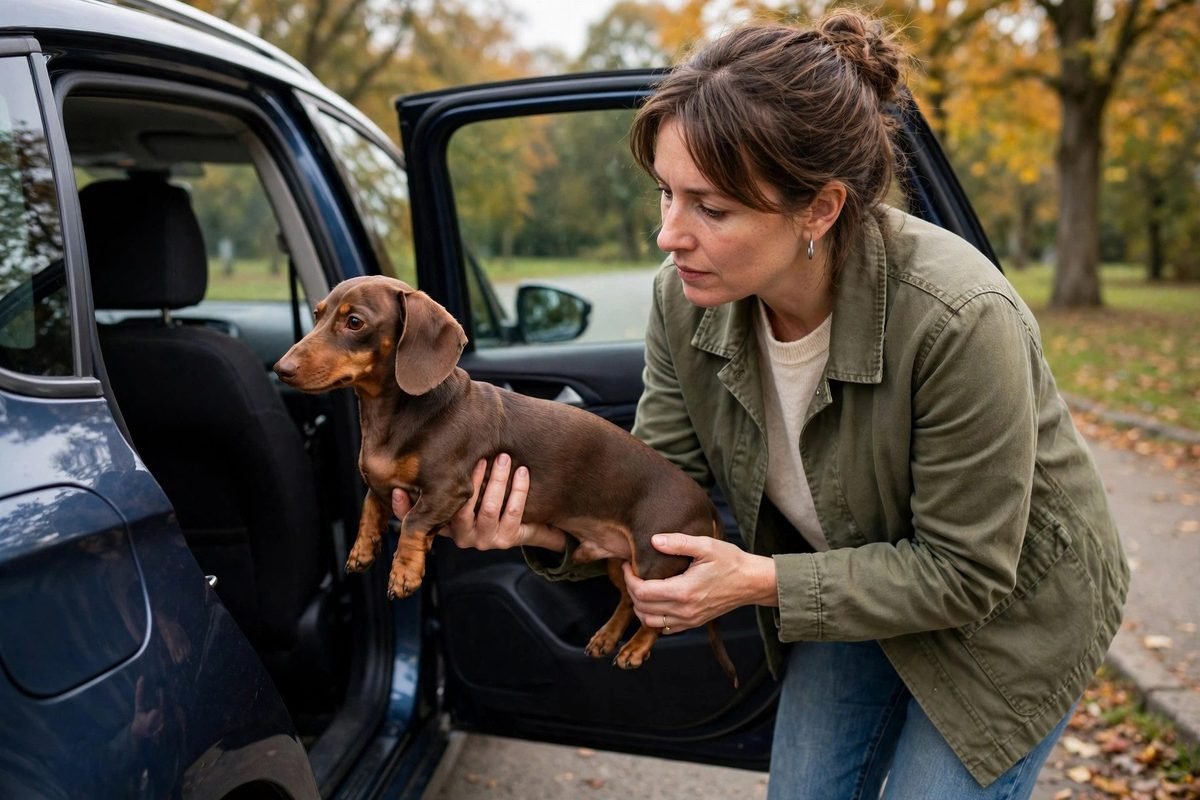
- Letting the dog jump in and out of the car.
- Leaving a dog alone in a parked car.
- Forgetting to check the harness at every stop.
- Ignoring stiffness or pain after a trip.
When to Call Your Vet
Contact a veterinarian if a Dachshund shows back pain, stiffness, limping, weakness in the legs, reluctance to move, or yelping when lifted after a car trip, and seek urgent help for sudden collapse, loss of bladder control, severe pain, or injury in a crash or sudden stop. Contact a veterinarian also if the dog vomits repeatedly in the car, refuses food, or shows distress, panting, or drooling on every trip. This article gives general information only and does not diagnose any condition. A veterinarian can examine the dog, check for disc disease, motion sickness, or anxiety, and advise whether car travel and a particular harness suit that individual dog. Do not delay veterinary help for a dog that is clearly in pain or cannot move normally.
Pin This: Car Seatbelt Harness Checklist
- Choose a harness made for car travel.
- Measure the chest and neck, then fit at home.
- Keep two fingers under each strap.
- Attach to the seatbelt with a short tether.
- Never attach a tether to a collar.
- Use a non-slip seat cover and a calm routine.
- Lift the dog in and out, never let it jump.
Frequently Asked Questions
Can a Dachshund wear a normal walking harness in the car?
A walking harness is not made for car travel, and it may stretch, slip, or break under the force of a sudden stop. Choose a harness made for car travel, with wide straps, a padded chest, and a secure attachment point, and fit it at home before the first trip.
Should the tether attach to a collar or a harness?
Always attach a tether to a harness, never to a collar. A tether on a collar puts pressure on the neck in a sudden stop, which is a risk for a small dog. A harness spreads the force across the chest and shoulders, and keeps the neck free.
How tight should a car harness be?
Snug, with two fingers fitting under each strap, and no twisting when the dog walks, sits, or lies down. The chest panel should sit flat, and no strap should press on the throat. Check the fit again after a week, and after any change in weight.
Can my dog sit in a booster seat with a harness?
Yes, if the booster seat is secured to the car and the harness is attached to the car, not only to the booster seat. A booster seat can help a small dog see out without standing, but the dog must stay seated, with windows closed or open only a small gap.
What if my dog gets sick in the car?
Keep trips short, avoid a large meal just before travel, keep the car cool with air flowing, and stop for breaks on longer trips. If vomiting, drooling, or distress happens on every trip, contact a veterinarian for advice before more travel, because motion sickness and anxiety need proper help.
Conclusion
A car seatbelt harness keeps a Dachshund in one safe place: a harness made for travel, fitted at home, attached with a short tether, and used with short, calm trips and gentle lifting. Give every car trip that steady setup, and the dog, the driver, and the long back all travel safer.



One Comment