
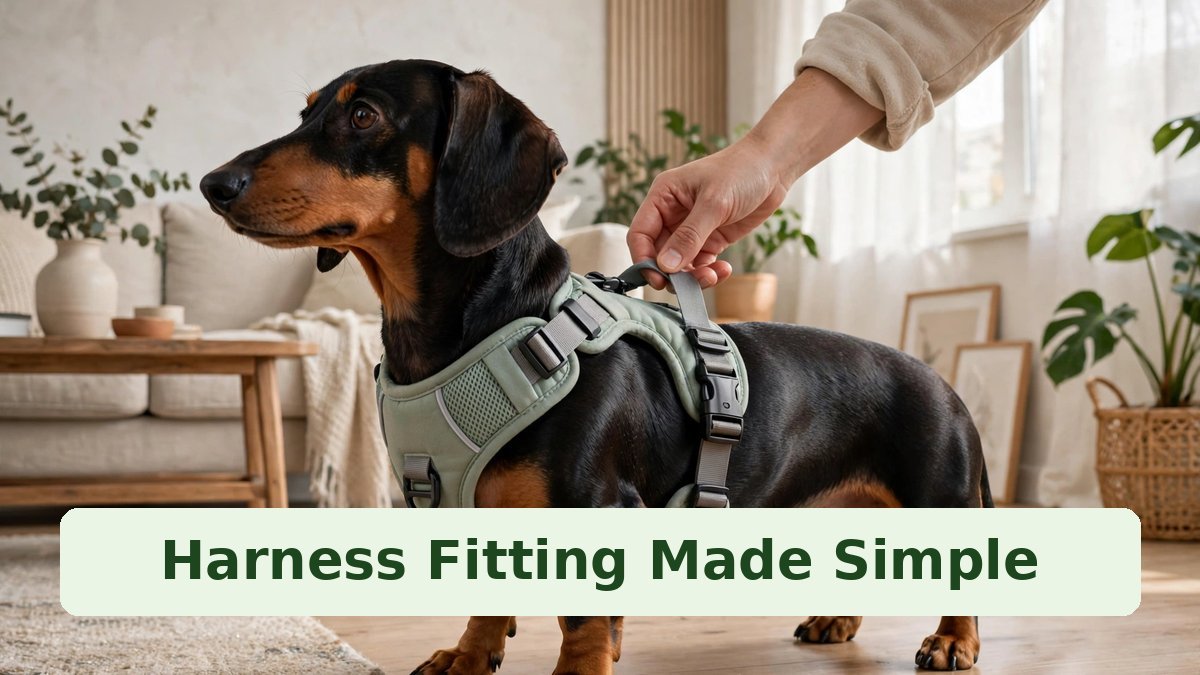
Dachshund Harness Fitting Guide for a Safer, Better Fit
Quick Answer
- Measure around the widest part of the chest and the neck, then choose the size that matches the chest measurement first.
- A good fit is snug but not tight: you should be able to slide two fingers flat under each strap, and the harness should not twist or ride up.
- Check the fit after walks, after washing, and as your dog’s weight changes, and ask a veterinarian about any rubbing, limping, or reluctance to walk.
Contents: 1. Why Fit Matters for the Back | 2. Measure Before You Buy | 3. Put the Harness On Correctly | 4. The Two-Finger Fit Check | 5. Test It on a Walk | Step-by-Step Fitting | Common Mistakes | When to Call Your Vet | FAQs | Pin This
A harness spreads pressure across the chest and body instead of concentrating it on the neck, which is why many Dachshund owners prefer one for walks. But a harness only helps if it fits. A loose harness twists, slips, and lets a dog lunge suddenly. A tight harness rubs, restricts movement, and can make a dog reluctant to walk at all. Fitting is not a one-time job either: weight, coat thickness, and washing can all change the fit over weeks and months.
This guide walks through measuring, fitting, and testing a harness at home, step by step. It does not recommend any product, and it does not claim that a harness prevents back problems. It gives you a practical routine for a comfortable, secure fit, and clear signs that the fit needs adjusting or veterinary advice.
1. Why Fit Matters for the Back
When a dog pulls, the force has to go somewhere. With a collar, much of it goes to the neck. With a well-fitted harness, it spreads across the chest and shoulders, and the dog is easier to guide without sudden jerks. That matters for a long-backed breed, because sudden lunges and twisting pulls add strain that careful handling tries to avoid. The Animal Medical Center explains intervertebral disc disease in dogs and how disc problems can affect movement and comfort. Cornell describes chondrodystrophy and intervertebral disc disease in breeds such as the Dachshund. These sources explain the background; they do not say a harness alone protects a back, and neither does this guide.
Fit also affects behaviour. A dog that is rubbed raw under the front legs, or pinched when it moves, will shorten its stride, hesitate on walks, or try to chew the harness off. Owners sometimes blame the dog for being difficult, when the harness is the problem. A few minutes of careful fitting, and a short indoor test before the first long walk, can prevent weeks of reluctant walks. If you are still deciding between harness and collar, the comparison of harness versus collar for Dachshunds explains the differences in general terms.
2. Measure Before You Buy
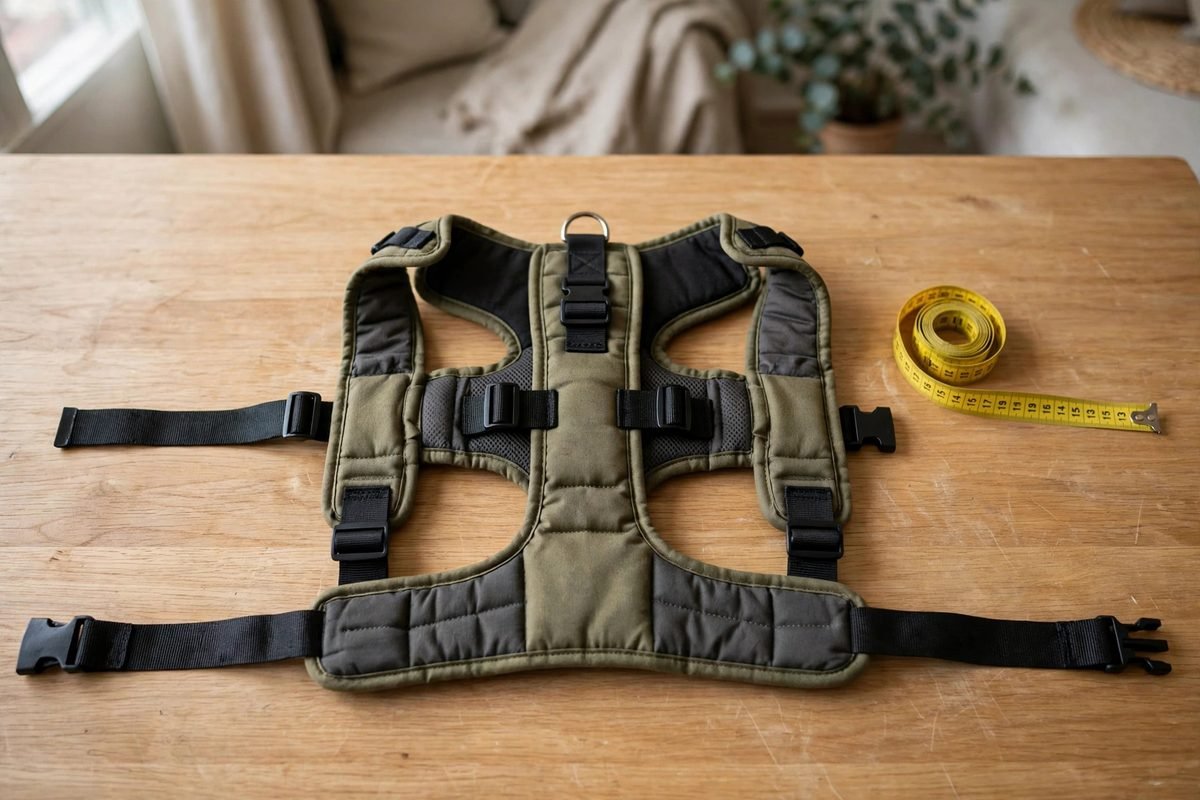
Measure your dog standing, on a flat floor, when it is calm. Use a soft measuring tape, not a ruler or a guess. First, measure around the widest part of the chest, just behind the front legs. Keep the tape snug against the body but not tight, and write the number down. Second, measure around the base of the neck, where a harness neck strap would sit. Third, measure the length from the base of the neck to the base of the tail, which helps with harness styles that run along the back. Measure twice, and use the larger reading if the two differ.
Compare the chest measurement first when choosing a size, because the chest is the hardest part to fit. If your dog falls between sizes, the general approach is to consider the larger size if the harness has good adjustment, and the smaller size if the harness has little adjustment, but always follow the size guide for the harness in front of you, since sizing varies. Note your dog’s measurements in a phone note with the date, so you can check them again after a few months. Puppies and dogs whose weight changes need remeasuring, not a guess based on last year’s size.
3. Put the Harness On Correctly
Start indoors, in a calm room, with treats ready. Loosen all straps before you begin, so you are adjusting to your dog rather than forcing your dog into a preset shape. For a step-in harness, place it flat on the floor, guide one front paw and then the other into the openings, and lift the straps up around the body. For an over-head harness, slip the neck opening gently over the head, then guide one leg through, and clip the side. Keep your movements slow, praise calm standing, and stop for a treat break if your dog becomes restless.
Once clipped, check the orientation before tightening anything: the chest piece should sit on the chest, not twisted to one side, and any back clip should sit between the shoulder blades rather than over the neck. If the harness twists as soon as your dog moves, it is usually too loose or put on the wrong way round. Take it off, flatten it, and start again. It is quicker to refit from scratch than to tighten a twisted harness into place. When lifting your dog during fitting, use the method in the guide on how to lift a Dachshund correctly, supporting chest and hindquarters together.

4. The Two-Finger Fit Check
With the harness clipped, run the two-finger check on every strap: slide two fingers flat under the strap, against your dog’s body. They should fit snugly, without forcing and without a large gap. Check the chest strap, the belly strap, and the neck opening in turn. Then check movement: ask your dog to walk a few steps indoors and watch the front legs. The straps should not cut into the armpits, ride up toward the throat, or slip sideways. Watch the back too: a harness that bunches or pulls to one side needs its straps rebalanced, not simply tightened further.
Next, check escape risk. Gently pull the harness forward and backward, as a dog might pull on a walk, and see whether a leg can slip out or the harness slides over the head. A secure harness stays in place under gentle pressure while still passing the two-finger check. If you cannot achieve both security and comfort, the size or style is wrong for your dog’s shape, and adjusting further will not fix it. Try a different size or style, and repeat the whole check from the start rather than accepting a compromise that rubs or slips.
5. Test It on a Walk
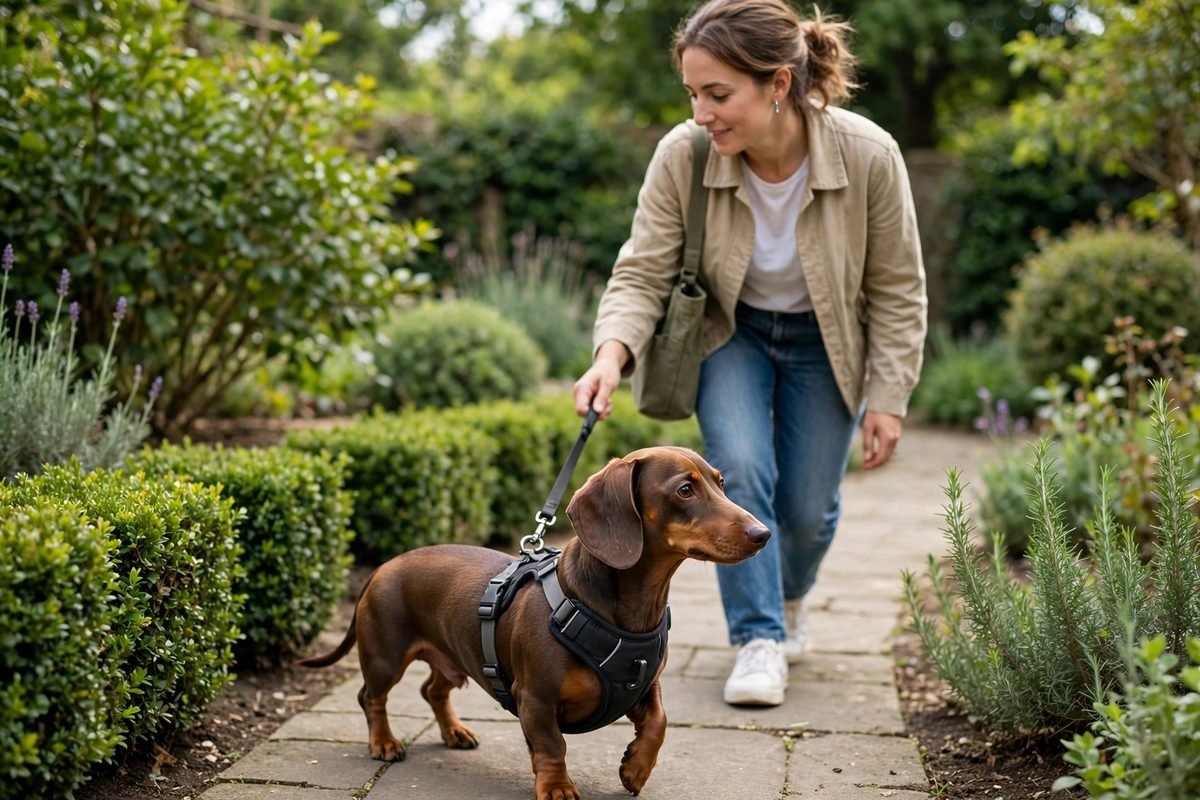
Take a short test walk first, around the block or in the garden, not a long outing. Watch for the first five minutes: does your dog walk normally, or does it freeze, chew at the straps, shorten its stride, or pull to one side? Stop after ten minutes and check the skin under the straps for redness or marks, especially behind the front legs. A faint pressure mark that fades quickly is different from a red line that stays, so check again after half an hour indoors.
Repeat the fit check after washing the harness, because fabric can tighten or loosen when washed and dried. Repeat it monthly, and whenever your dog’s weight, coat, or activity changes. Keep a short note of the strap settings that work, such as a mark on the strap or a photo of the fitted harness, so you can return to a good fit after washing. A harness that fitted in winter under a thick coat may fit differently in summer, and a growing puppy may need several adjustments in a year.
Harness Fit Checklist
| Check | Good fit | Needs adjusting |
|---|---|---|
| Two-finger test | Two fingers slide flat under each strap | Fingers forced in, or a large gap |
| Chest piece | Centred on the chest, not twisted | Slips sideways or rides up |
| Front legs | Free movement, no rubbing | Straps cut into armpits |
| Escape test | Stays put under gentle pull | Leg slips out or slides over head |
Step-by-Step: Fitting in Ten Minutes
- Measure chest, neck, and back length with a soft tape; write the numbers down.
- Loosen all straps, then put the harness on indoors, calmly and slowly.
- Check orientation: chest piece centred, back clip between the shoulder blades.
- Run the two-finger check on every strap, and rebalance straps that pull sideways.
- Walk indoors for a few minutes, watching leg movement and twisting.
- Take a short outdoor test walk, then check the skin under the straps.
Common Mistakes
The most common mistake is fitting a harness while the dog is excited or moving, which leads to straps tightened unevenly. Fit indoors when the dog is calm, and recheck after a short walk. A second mistake is never rechecking: a harness fitted once in spring may be too tight or too loose by autumn. A third mistake is tightening a slipping harness instead of changing the size. Tightening a wrong size causes rubbing, while the right size stays secure at a comfortable tension. A fourth mistake is ignoring the armpit area, where rubbing often starts unnoticed under longer coats.
When to Call Your Vet
Ask a veterinarian if your dog shows persistent rubbing, sores, or hair loss under the harness, limps or shortens its stride when wearing it, refuses to walk, or shows pain when the harness is put on or taken off. A veterinarian can check whether the skin, movement, or fit needs attention, and whether an underlying problem is involved. Do not try to diagnose the cause at home, and do not keep using a harness that causes sores while waiting for advice. Seek veterinary care promptly for sudden weakness, severe pain, or any rapid change in movement, and describe the harness fit and recent walks when you call.
How tight should a harness be?
Snug enough to stay in place under gentle pulling, but loose enough for two fingers to slide flat under each strap. If you must force your fingers under a strap, it is too tight.
How often should I recheck the fit?
After every wash, monthly as a routine, and whenever weight, coat, or activity changes. Puppies need more frequent checks as they grow.
What if a Dachshund is between sizes?
Follow the size guide for that harness, prioritising the chest measurement, and test the fit indoors before a long walk. If neither size passes the two-finger and escape checks, try a different style.
Should the harness stay on indoors?
Remove it indoors once walks are done, so the skin can breathe and you can check for rubbing. A harness is walking equipment, not all-day clothing.
Can a harness replace careful handling?
No. A good fit helps on walks, but safe lifting, ramp use, weight control, and calm handling still matter. Think of the harness as one part of a wider back-care routine.
Pin This: Harness Fitting Checklist
- Measure chest first, standing and calm.
- Two fingers flat under every strap.
- Chest piece centred, no twisting or riding up.
- Short test walk, then check the skin.
- Recheck after washing and every month.





2 Comments