

Dachshund Cooling Vest for Summer Walks: Stay Cool Guide
Quick Answer
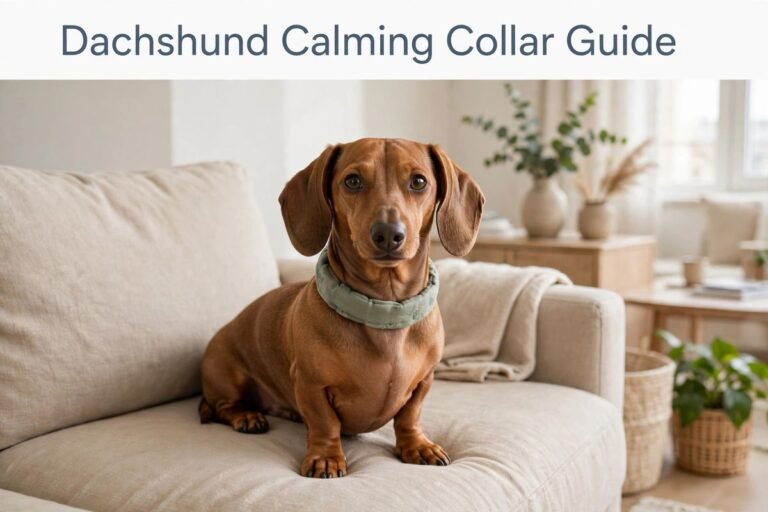
- A cooling vest is a light vest that holds cool water against a Dachshund’s chest and back, so the dog stays cooler on a hot walk than with fur alone.
- Choose a vest made for a small, long-bodied dog, with a snug fit, a light fabric, and a simple soak-and-wring activation, in a size that fits the chest and length.
- Soak the vest in cool water, wring it gently, fit it snugly, and check the dog often, because a vest that dries out stops cooling and needs re-wetting.
- Use the vest for short walks in shade, with fresh water to drink, and bring the dog inside if it pants heavily, slows down, or seeks shade.
- Contact a veterinarian if the dog shows heat distress, vomiting, weakness, or back pain, stiffness, or reluctance to move after a hot walk.
Contents
- 1. How a Cooling Vest Works on a Hot Walk
- 2. Choosing a Cooling Vest for a Dachshund
- 3. Soaking, Fitting, and Activating the Vest
- 4. Walking in Heat with a Cooling Vest
- 5. Drying, Cleaning, and Watching the Dog
- Cooling Vest Comparison Checklist
- Common Mistakes
- When to Call Your Vet
- Pin This: Cooling Vest Summer Walks Checklist
- Frequently Asked Questions
- Conclusion
Summer walks can be hard for a Dachshund. A small dog walks close to hot pavement, with a long body, short legs, and a coat that holds heat, and a midday walk in July can leave the dog panting, slowing down, and looking for shade within minutes. Owners often shorten walks, walk early, or stay indoors, and those choices help, but a cooling vest adds one more layer of help: a light, damp vest that cools the chest and back while the dog walks, so a short walk stays comfortable a little longer. This article is general information only, not a diagnosis.
1. How a Cooling Vest Works on a Hot Walk
Most cooling vests work by evaporation. The vest is made from a fabric that absorbs water, holds it against the dog’s body, and lets it evaporate slowly in the air. As the water evaporates, it takes heat away from the surface, and the chest and back feel cooler. The effect is strongest in dry heat with a light breeze, and weaker in humid heat, where water evaporates slowly. A vest that is soaked, wrung, and fitted snugly cools best, while a vest that is dripping wet, loose, or dry does little.
The vest cools the core of the body, not just the fur. A Dachshund’s chest and back carry the most heat on a walk, and a damp vest over those areas helps the body lose heat while the dog moves. The vest also shades the back from direct sun, which matters for a dog with a dark coat or a short coat that lets sun through. A light-coloured vest reflects more sun than a dark one, and a vest that covers the back from neck to tail gives more shade than a vest that covers only the chest.
A cooling vest does not replace water, shade, or rest. A dog in a vest still needs fresh water to drink, still needs shade, and still needs short walks in the heat. The vest buys time, not safety, and a dog that is already hot, panting heavily, or slowing down needs to come inside, with or without a vest. The Animal Medical Center explains intervertebral disc disease in dogs, and disc problems are a known risk for this long-backed breed, with disc degeneration in short-legged breeds able to begin in the first year of life, so a hot, tired dog that stumbles, slips, or strains on a walk is a back risk as well as a heat risk.

2. Choosing a Cooling Vest for a Dachshund
Start with the shape. A Dachshund is long, low, and deep-chested, so a vest made for a dog with a standard shape may be too short in the body, too tight across the chest, or too loose around the belly. Measure the chest just behind the front legs, measure the length from the neck to the base of the tail, and measure the neck, then compare those numbers with the maker’s size guide. A vest that fits the chest but leaves the back uncovered cools less, while a vest that is too long can catch on the legs or drag on the ground.
Look for a simple, secure fastening. A vest that fastens with wide hook-and-loop straps around the chest and belly is easy to adjust, easy to remove, and easy to check for fit. A vest that pulls over the head can be hard to fit on a dog that does not like its head covered, and a vest with small buckles can be fiddly in the heat. Check that the straps are wide, that the fastening holds firmly, and that no strap presses on the neck or the belly. A vest that slips, twists, or rides up while the dog walks needs adjusting or a different size.
Think about colour and coverage. A light-coloured vest, in white, pale blue, or light grey, reflects sun and stays cooler than a dark vest, and a vest that covers the back from neck to tail gives more shade than a chest-only vest. A vest with a light, reflective strip can help visibility on an early morning walk, but the strip should be small and smooth, not a hard patch that rubs. Try the vest on at home, let the dog move in it, and check for rubbing, slipping, or discomfort before the first hot walk. The guide to a cooling mat for hot weather covers the same cooling idea for rest at home, and the guide to summer heat walks for Dachshunds in apartments explains how to plan short, shaded walks in the heat.
3. Soaking, Fitting, and Activating the Vest
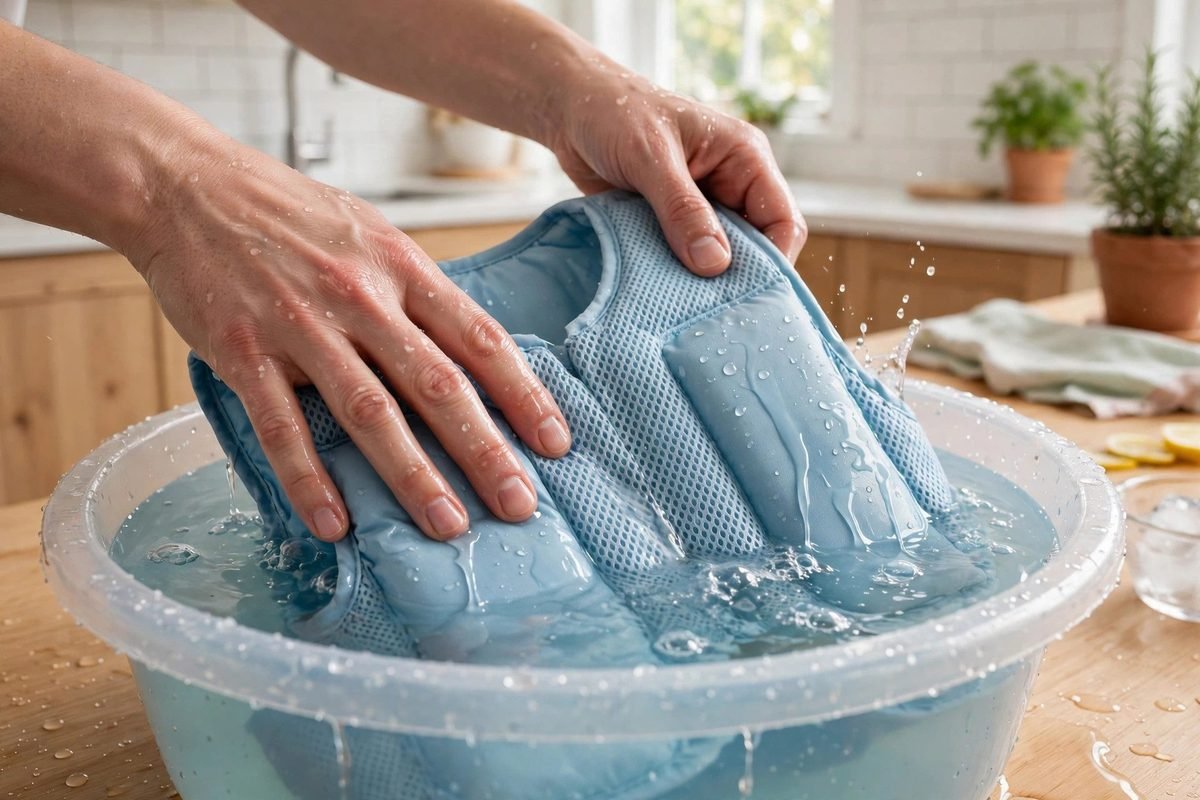
Soak the vest in cool water, not cold water and not warm water. Fill a basin or a sink with cool tap water, submerge the vest fully, and let it soak for the time the maker describes, usually a few minutes, until the fabric is saturated. Then lift the vest out, let the excess water drain, and wring it gently, without twisting it hard, until it is damp and cool, not dripping. A vest that drips will soak the dog, the lead, and the owner’s clothes, and a vest that is wrung too dry will not cool for long.
Fit the vest at home, in a cool room, before going out. Slip the vest over the back, fasten the chest strap first, then the belly strap, and adjust each strap until two fingers fit under it. The vest should sit flat on the back, with no bunching, no twisting, and no strap pressing on the neck or the belly. Let the dog walk around the home for five minutes, and watch how it moves: a good fit allows a normal walk, a normal sit, and a normal lie-down, with no stiffness and no attempt to chew the straps.
Check the vest after a few minutes of wear. A vest that is working feels cool and damp to the touch, and the dog’s back feels cooler under the vest than on the uncovered belly. A vest that feels dry, warm, or hot needs re-wetting, and a vest that has slipped to one side needs refitting. Carry a small bottle of cool water on the walk, so the vest can be re-wetted without going home, and re-wet it in the shade, with the dog standing calmly, not in direct sun.
4. Walking in Heat with a Cooling Vest
Walk early or late, even with a vest. A cooling vest helps on a warm morning or a warm evening, but it does not make a midday walk in strong sun safe. Choose a shaded route, with trees, buildings, or a covered path, and keep the walk short, usually ten to fifteen minutes in heat, with a calm pace. A dog that walks in shade, on grass or a shaded pavement, stays cooler than a dog that walks in full sun on dark tarmac, vest or no vest.
Carry water and offer it often. Bring a bottle of fresh, cool water and a small bowl, and offer water every few minutes, in the shade. A dog that drinks little on a hot walk may be too hot to drink, or may need a quieter spot to drink in, so stop in the shade, let the dog rest, and offer water again. Do not let the dog drink a large amount at once after a hot walk, because gulping cold water on a hot stomach can cause discomfort; offer small amounts, often, and let the dog drink at its own pace.
5. Drying, Cleaning, and Watching the Dog
Remove the vest as soon as the walk ends, and let the dog dry in a cool room. A damp vest left on indoors can chill a dog, especially in air conditioning, and a wet vest can rub and irritate the skin if it stays on too long. Hang the vest up to dry, in the shade, with air flowing around it, and do not store it damp in a bag or a drawer, because a damp vest grows smells and bacteria. A dry vest is ready for the next walk, and a damp vest is not.
Store the vest flat or hung up, in a cool, dry place, away from direct sun. Sunlight can fade the fabric and weaken the straps, and heat can damage the water-absorbing layer. Keep the vest with the summer kit, with the water bottle, the bowl, and the lead, so it is ready for the next hot walk, and check it before the first hot day of the year, not on the day itself. A vest that has sat in a drawer all winter may need a wash and a soak test before it is used again.
Watch how the dog moves after a hot walk, every time. A dog that walks normally, drinks, and settles to rest has had a good walk. A dog that walks stiffly, refuses a ramp, yelps when lifted, or lies flat and will not move needs rest and a veterinarian, not another walk. Cornell’s information on chondrodystrophy and disc disease explains why this breed’s discs are vulnerable, and early signs are easy to miss if no one is watching. Keep a short note of walk length, temperature, vest use, and how the dog moved afterwards, and share it with a veterinarian if anything changes.

Cooling Vest Comparison Checklist
| Vest type | Best for | Limit to watch |
|---|---|---|
| Evaporative vest, light fabric | Dry heat, short shaded walks | Dries out, needs re-wetting often |
| Light-coloured full-back vest | Sun shade, chest and back cooling | Must fit a long body, check length |
| Vest with wide straps | Easy fit, easy removal | Straps must not press neck or belly |
| Cooling mat at home | Rest after a walk, indoor cooling | Not for walking, use after the vest |
Common Mistakes
- Using a vest to justify a long midday walk in strong sun.
- Soaking the vest in ice water or using a frozen vest.
- Leaving a damp vest on indoors after the walk.
- Forgetting to re-wet the vest when it dries out.
- Choosing a vest that is too short for a long body.
- Walking on hot pavement that burns the paws.
- Storing the vest damp in a bag or drawer.
- Ignoring heavy panting, slowing down, or seeking shade.
When to Call Your Vet
Contact a veterinarian if a Dachshund shows heat distress, heavy panting, drooling, vomiting, weakness, staggering, or collapse after a hot walk, and seek urgent help for collapse, seizures, or a very high body temperature. Contact a veterinarian also if the dog shows back pain, stiffness, limping, or reluctance to move after a walk, or if it has burnt, cut, or sore paws. This article gives general information only and does not diagnose any condition. A veterinarian can examine the dog, check for heat illness, disc disease, or paw injury, and advise whether summer walks and a cooling vest suit that individual dog. Do not delay veterinary help for a dog that is clearly in pain, cannot move normally, or shows signs of heat illness.
Pin This: Cooling Vest Summer Walks Checklist
- Choose a light vest that fits chest and length.
- Soak in cool water and wring gently.
- Fit snugly at home before going out.
- Walk early or late, on a shaded route.
- Check pavement heat with a hand first.
- Carry water and re-wet the vest often.
- Remove the vest after the walk and dry it.
Frequently Asked Questions
Does a cooling vest really help a Dachshund?
Yes, for short walks in dry heat, when the vest is soaked in cool water, fitted snugly, and re-wetted as it dries. The vest cools the chest and back by evaporation and shades the back from sun. It does not make a hot midday walk safe on its own, and it does not replace water, shade, or rest.
How long does a cooling vest stay cool?
Usually twenty to forty minutes in dry heat, depending on the fabric, the temperature, and the breeze. Check the vest often, and re-wet it with cool water when it feels dry or warm. In humid heat, the vest dries more slowly but cools less, so keep walks shorter.
Can my dog wear a cooling vest all day?
No. Remove the vest after the walk, let the dog dry in a cool room, and hang the vest up to dry. A damp vest left on indoors can chill a dog and rub the skin, and a dry vest does not cool. Use the vest for walks, and a cooling mat for rest at home.
What water should I use to soak the vest?
Cool tap water is best. Soak the vest fully, wring it gently until damp, and fit it snugly. Do not use ice water, ice packs, or a frozen vest, because very cold water on a hot dog can cause shivering and discomfort.
Can my dog walk in the midday sun with a vest?
No, a vest does not make a midday walk safe. Walk early or late, choose a shaded route, keep the walk short, and check the pavement heat with a hand first. If the dog pants heavily, slows down, or seeks shade, end the walk and bring the dog inside to cool down.
Conclusion
A cooling vest makes a hot Dachshund walk a little cooler: a light vest that fits a long body, soaked in cool water, fitted snugly, and used with shade, short walks, and fresh water. Give summer walks that careful setup, and the dog stays cooler, calmer, and safer in the heat.


One Comment