Dachshund Paw Balm and Nose Balm: Apartment Guide at Home
Quick Answer
- Dachshund paw balm is a thick, plain moisturiser for dry paw pads, and a nose balm is a gentler version for a dry nose. Both are used in small amounts, on clean skin, and never on open cuts.
- Choose a balm with a short list of plain ingredients, no strong scent, and no added colour. Avoid products with essential oils, menthol, camphor, or tea tree oil unless a veterinarian has advised them.
- Apply a thin layer after a walk and at bedtime, after the paws have been wiped clean and dried. A thick layer is more likely to be licked off.
- Watch the paws for cracks, redness, swelling, or limping. A balm can soften dry skin, but it cannot fix pain, infection, or a wound.
- Contact a veterinarian if a crack bleeds, a paw is swollen, the nose has sores, or the dog keeps licking the same spot day after day.
Contents
- 1. What Paw Balm and Nose Balm Do
- 2. Choosing a Safe Balm for a Dachshund
- 3. How to Apply Balm Step by Step
- 4. A Weekly Paw and Nose Care Routine
- 5. When Balm Is Not Enough
- Paw Balm and Nose Balm Checklist
- Common Mistakes
- When to Call Your Vet
- Pin This: Paw Balm and Nose Balm Guide
- Frequently Asked Questions
- Conclusion
1. What Paw Balm and Nose Balm Do
Dachshund paw balm is a thick balm that sits on the surface of the paw pads and slows down moisture loss. Paw pads are tough skin, but they dry out in winter, on salty pavements, on hot ground in summer, and after many walks on rough surfaces. Dry pads feel rough under the fingers, and in bad cases the surface splits into small cracks. A balm softens the top layer of the pad and helps it stay flexible, so the pad bends with each step instead of splitting.
A nose balm does a similar job on a different surface. A Dachshund nose should feel cool and slightly damp for much of the day, but sun, wind, dry indoor air, and central heating can leave the top of the nose dry and flaky. A nose balm is usually thinner and plainer than a paw balm, because the dog will lick its nose within minutes of the balm going on. That licking is normal, and it is the reason the ingredient list matters so much: a nose balm must be safe in the small amounts a dog licks, with no strong scent. A paw balm and a nose balm are not always the same product, and a paw product should only be used on the nose if the label says it is safe there.
Balm is a care product, not a treatment for disease. It can soften dry skin, protect a pad from a salty pavement, and soothe a nose that is dry from indoor heating. It cannot heal a deep cut, clear an infection, or stop a dog from licking a sore spot. The nail and paw care guide for Dachshunds at home covers the wider routine of trimming, checking, and cleaning the paws, and balm fits inside that routine as one small step. Used in the right place, at the right time, and in the right amount, Dachshund paw balm keeps dry pads comfortable through cold and hot months alike.
2. Choosing a Safe Balm for a Dachshund
Choosing a balm starts with the label, not the picture on the tin. Look for a short ingredient list with plain, familiar items such as shea butter, beeswax, coconut oil, olive oil, or calendula. A short list is easier to check. Avoid balms with a strong scent, because a Dachshund lives by its nose, and a strong smell can put the dog off walking, eating, or settling. Avoid products that list essential oils, menthol, camphor, eucalyptus, or tea tree oil, because these can irritate skin and can be unsafe if licked in larger amounts. If the label does not list every ingredient, choose a different product.
The form of the balm matters for an apartment home. A balm in a small tin or a twist-up stick is easy to keep by the door, easy to carry on a walk, and easy to use with one hand while the dog stands still. A stick keeps the balm clean and gives a thin, even layer, which is exactly what a paw needs. For the nose, a stick or a small tube is easier to control, because only a tiny amount is needed. Choose a size that will be used within a few months, because an old tin left open in a warm room can go stale.
Price is not a reliable guide to safety. A plain balm with a short list of simple ingredients can cost less than a fancy balm with added scents and colours, and the plain one is often the better choice. Check the label for a note that the product is made for dogs, and check the expiry date before the first use. If a balm smells sharp or rancid, or has changed colour, throw it away and open a fresh one. Test a new balm on one front paw first, wait a day, and check for redness or extra licking before using it on all four paws and the nose.
3. How to Apply Balm Step by Step
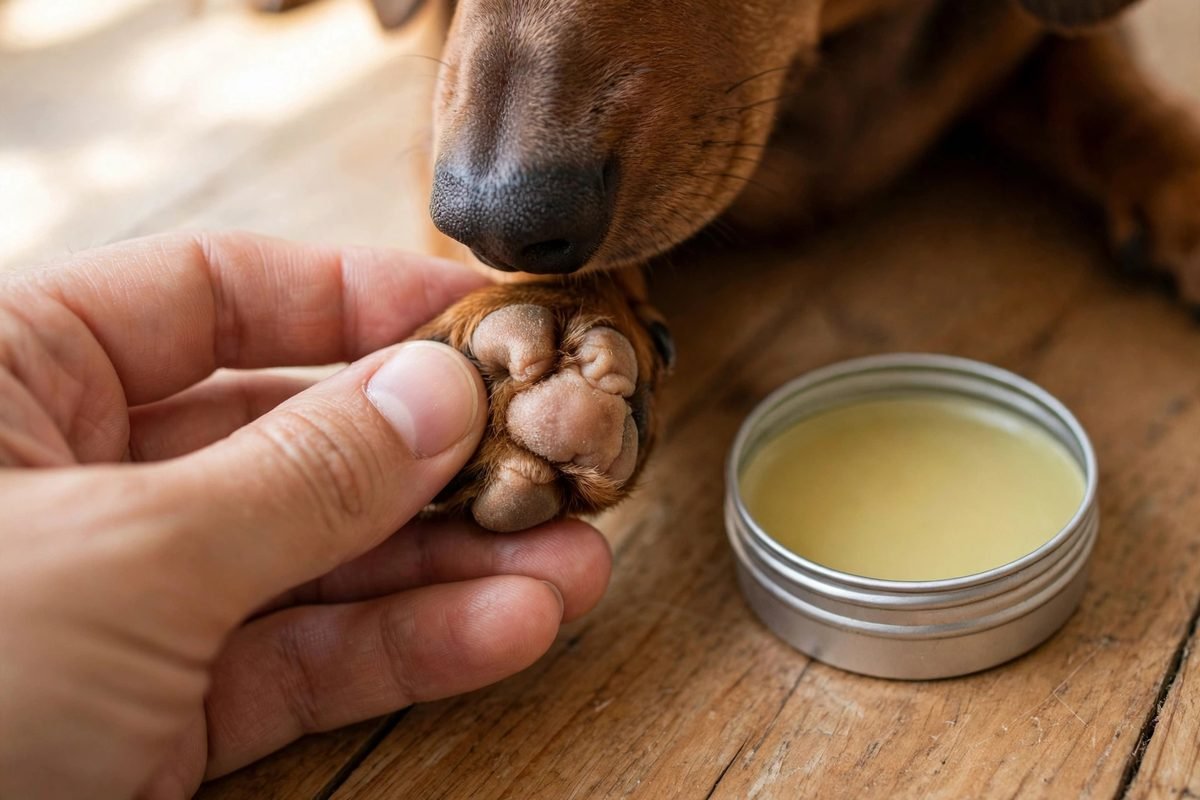
Apply balm to clean, dry paws. After a walk, wipe each paw with a damp cloth or a plain paw wipe, and check between the toes for grit, salt, or small stones. Dry the paws with a soft towel, because balm spread over a wet paw slides off and does nothing. Let the dog stand on a towel while the paws dry, and use the time to look at each pad. A healthy pad is firm, dark, and slightly rough, with no deep cracks and no red skin between the toes. If a pad looks sore, skip the balm on that paw.
Warm a small amount of balm between the fingers before it touches the paw. A pea-sized amount is enough for one paw, and a smaller amount is enough for the nose. Rub the balm into the pad with a slow, gentle motion, covering the whole pad and the skin at the edges, but not pushing balm between the toes. The balm should leave a thin shine on the pad, not a thick white layer. If the paw looks white and greasy, wipe the extra balm away with a cloth. For the nose, dab the balm on the top of the nose and the dry edges, and let the dog lick the rest away. Do not put balm inside the nostrils.
Keep the dog still for a few minutes after the balm goes on, so it has time to sink into the skin. Bedtime is the best time for a full application, because the dog settles on its bed and the balm has hours to work. The paw wipes and cleaning routine after walks explains the cleaning step that should always come before balm, and the two steps together take less than five minutes.

4. A Weekly Paw and Nose Care Routine
A weekly routine keeps balm use steady without turning it into a chore. After every walk, wipe the paws clean and dry them, and apply balm only when the pads feel dry or rough. In winter, balm may be needed after most walks, because salt dries the pads fast. In summer, balm may be needed after walks on hot pavement. In mild weather, two or three applications a week may be enough.
Once a week, set aside ten minutes for a closer check. Look at each pad in good light, and feel the surface with a clean finger. Check between the toes for redness, dampness, or a smell that is different from normal. Check the nails, because a long nail changes how the paw lands and puts extra pressure on one part of the pad. Check the nose for dry patches, flakes, or small cracks, and check the lips and the chin for redness where balm may have been licked. A weekly check catches small changes early, when a little extra balm and a day of rest are enough.
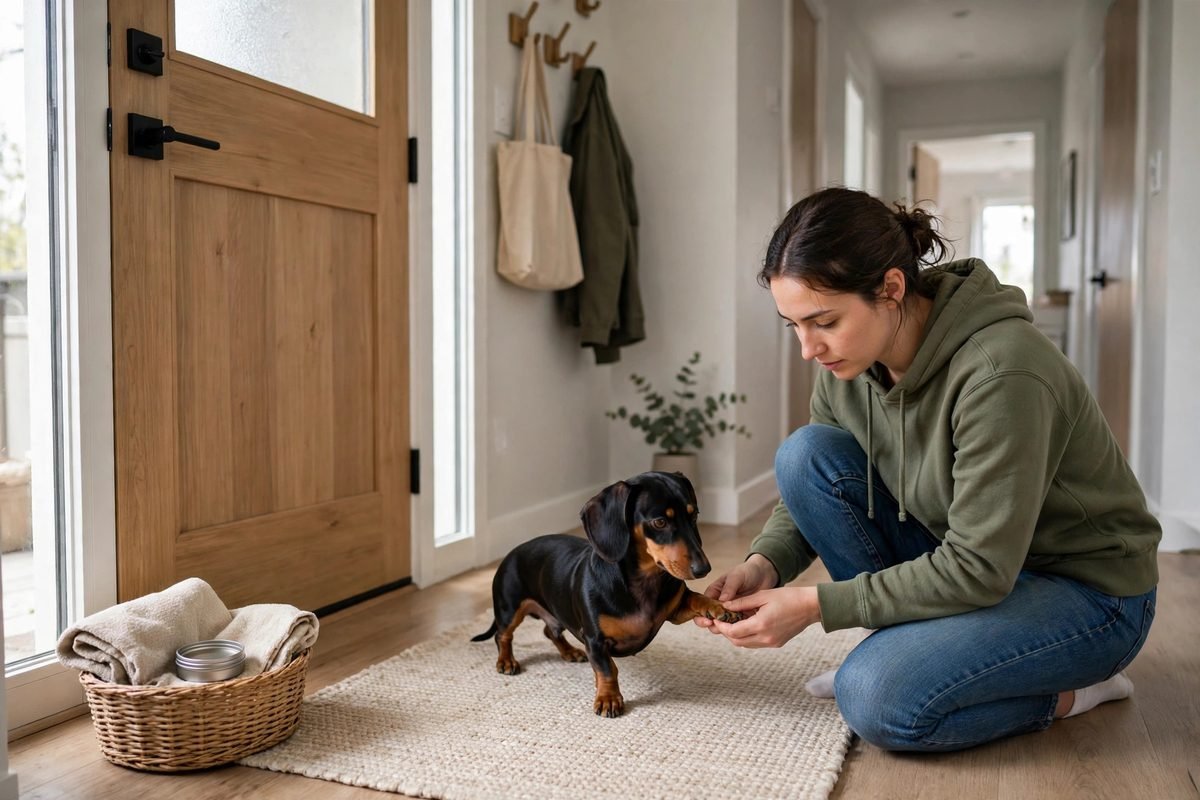
Keep the balm, the wipes, and a soft towel in one place by the door, so the routine happens without thinking. A small basket by the door works well in an apartment, and a second small tin in a coat pocket means the balm is there on a long walk too. Replace the towel often, and wash it without strong scented detergent.
5. When Balm Is Not Enough
Balm has clear limits, and knowing them keeps a small problem from becoming a large one. A crack that bleeds, a pad that is swollen, a toe that is hot to the touch, or a dog that limps after a walk needs more than balm. A nose with sores, crusts that do not clear, bleeding, or a change in colour needs more than balm too. A dog that licks the same paw or the same spot again and again may be licking because of pain or irritation under the skin, and a balm on the surface will not reach the cause. In these cases, stop balm on the sore spot and keep it clean and dry.
A back problem can hide behind a paw problem. A Dachshund that walks differently, hesitates on stairs, or holds one paw up may have a sore paw, or it may have a sore back that changes how it walks. Disc degeneration in short-legged breeds can begin in the first year of life, so a change in walking should always be watched with the back in mind, not only the paws. If the dog yelps when lifted, flinches when the back is touched, or shows weakness in the back legs, the paws are not the main problem, and a veterinarian should be contacted.
Allergies and skin problems can also look like dry paws at first. A dog with red skin between the toes, damp paws that smell different from normal, or itching that spreads to the ears and the belly may need a different kind of care. A balm can make damp, irritated skin worse by sealing in moisture, so balm should not be used on red, damp, or smelly skin until a veterinarian has checked it. Note when the problem started and whether it is worse after walks, after baths, or in certain weather. Those notes help a veterinarian see the pattern.
Paw Balm and Nose Balm Checklist
| Step | What to Do | How Often |
|---|---|---|
| Clean | Wipe paws after every walk; check between toes | After every walk |
| Dry | Pat paws dry with a soft towel before balm | After every walk |
| Apply | Thin layer on pads; tiny dab on the nose | When pads feel dry |
| Check | Look at pads, toes, nails, and nose in good light | Once a week |
| Rest | Keep the dog still for a few minutes after balm | After each application |
| Replace | Throw away stale balm; check the expiry date | When it smells off |
Common Mistakes
- Using a thick layer of balm, so the dog licks it all off within minutes.
- Applying balm to dirty or wet paws, so grit and salt are sealed under the balm.
- Using a scented balm with essential oils, menthol, or tea tree oil on the nose.
- Putting balm on a bleeding crack, a swollen paw, or red, damp skin between the toes.
- Using a paw balm on the nose when the label does not say it is safe for the nose.
- Skipping the weekly check, so a small crack or a long nail goes unnoticed.
- Letting the dog walk outside at once after balm, so sticky paws pick up grit.
When to Call Your Vet
Contact a veterinarian if a crack bleeds or does not close, a paw is swollen or hot, the dog limps for more than a day, the nose has sores or crusts that do not clear, or the dog keeps licking the same spot. Contact a veterinarian urgently if the dog cannot put weight on a paw, yelps when lifted, shows weakness in the back legs, or refuses food and water. A veterinarian can check the paw, the nose, and the back together, and can advise whether the balm is right for the dog or whether a different product is needed. This article gives general information only and is not a diagnosis.
Pin This: Paw Balm and Nose Balm Guide
- Choose a plain balm with a short ingredient list and no strong scent.
- Clean and dry the paws before any balm goes on.
- Use a thin layer on the pads and a tiny dab on the nose.
- Apply at bedtime so the balm has hours to work.
- Check paws, toes, nails, and nose once a week.
- Call a veterinarian if a crack bleeds or the dog limps.
Frequently Asked Questions
How often should Dachshund paw balm be used?
Use balm when the pads feel dry or rough, which may be after most walks in winter and less often in mild weather. Two or three applications a week are enough for many dogs.
Can the same balm be used on the paws and the nose?
Only if the label says it is safe for the nose. A nose balm is usually thinner and plainer, because the dog will lick it. When in doubt, use a separate nose balm with a short, plain ingredient list.
Is it safe if a Dachshund licks paw balm off?
A small amount of a plain balm is usually licked off without harm, which is why the ingredient list matters. A thin layer and a balm with no essential oils, menthol, or camphor keep the risk low.
What should be done if a paw pad cracks?
Keep the paw clean and dry, skip balm on the crack, and watch it for a day. If the crack bleeds, the paw swells, or the dog limps, contact a veterinarian instead of covering the crack with more balm.
Does paw balm help a Dachshund walk on salt and grit?
A thin layer before a walk can slow down drying from salt, and cleaning the paws after the walk removes the salt itself. Wiping and drying the paws after every winter walk matters more.
Conclusion
Dachshund paw balm is a small, simple product that earns its place by the door. A plain balm, clean dry paws, a thin layer at bedtime, and a weekly check keep dry pads comfortable and a dry nose soothed, and the next step is to check the pads tonight and see whether they feel rough or smooth.