
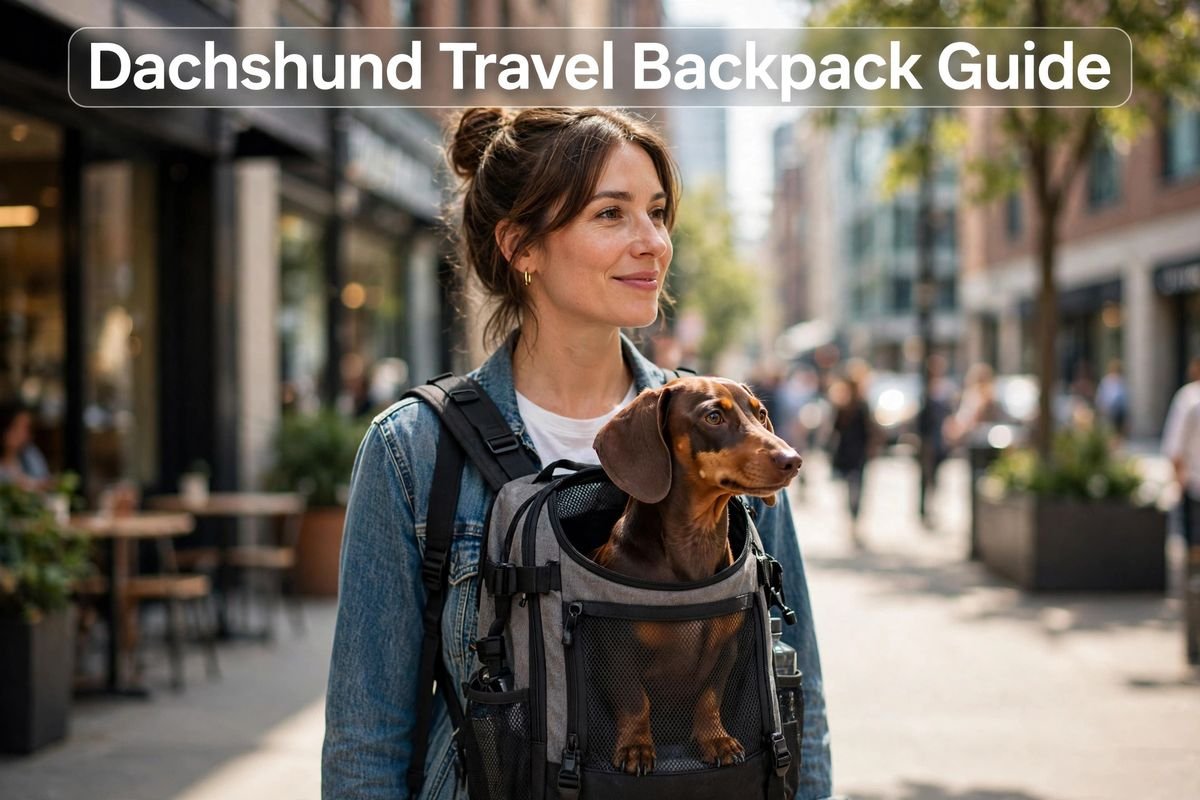
Dachshund Pet Travel Backpack Guide: Hands-Free Walks
Quick Answer
- A Dachshund pet travel backpack is a padded carrier worn on the chest or back that lets an owner carry a small dog hands-free on walks, errands, and trips.
- The safest fit keeps the dog upright or lying flat, with the spine straight, the head free, and the weight spread across both shoulders, never hanging from the neck.
- Check the weight limit on the pack before buying: most backpack carriers suit dogs up to about 15 pounds, and a standard Dachshund may already be too heavy for one.
- Introduce the backpack at home first, with short sessions and treats, so the dog learns the carrier is a safe place before the first real outing.
- Contact a veterinarian if the dog yelps, limps, or refuses to move after being carried, or if back pain signs show up after a trip.
Contents
- 1. How a Dachshund Pet Travel Backpack Works
- 2. Choosing the Right Backpack: Size, Support, and Ventilation
- 3. Fitting the Backpack for a Back-Safe Carry
- 4. Introducing the Backpack Step by Step
- 5. Using the Backpack on Walks, Errands, and Trips
- Backpack Fit and Use Checklist
- Common Mistakes
- When to Call Your Vet
- Pin This: Backpack Fit Checklist
- Frequently Asked Questions
- Conclusion
1. How a Dachshund Pet Travel Backpack Works
A Dachshund pet travel backpack is a soft, padded carrier that holds a small dog against the owner’s chest or back, leaving both hands free. The dog sits or lies inside a roomy pocket with its head out through an opening, while straps over the shoulders and a waist belt spread the weight. For an apartment owner, it turns a crowded bus, a long hallway, or a busy market into a simple trip, since the dog rides along instead of walking through crowds or waiting at home.
The shape of the carrier matters more than the color or the price. A good backpack keeps the dog’s spine straight, with the body supported from underneath and the legs resting in a natural position. Some carriers hold the dog upright, like a baby carrier, while others let the dog lie flat, curled up in a soft base. For a long-backed breed, the flat or gently reclined position is kinder, because the spine stays level and the belly is supported along its full length. Disc degeneration in short-legged breeds can begin in the first year of life, so a carrier that protects the spine is worth choosing early, even for a young dog.
A backpack is not a replacement for walking. A healthy Dachshund still needs daily walks on a leash, sniffing and moving at its own pace, and the backpack is for the parts of a trip where walking is hard: stairs in a busy station, a crowded street, a vet waiting room, or a long stretch that tires a short-legged dog. Think of it as a lift for part of the journey, not the whole journey.
2. Choosing the Right Backpack: Size, Support, and Ventilation
Start with the dog’s weight and length. Weigh the dog on a kitchen scale or at the vet, then measure from the chest to the base of the tail, and compare both numbers with the size chart on the pack. A mini Dachshund often fits a small carrier, while a standard Dachshund, at 16 to 32 pounds, is often too heavy for a backpack and needs a different kind of carrier. A carrier that is too small squeezes the dog and bends the spine, while one that is too big lets the dog slide around with every step.
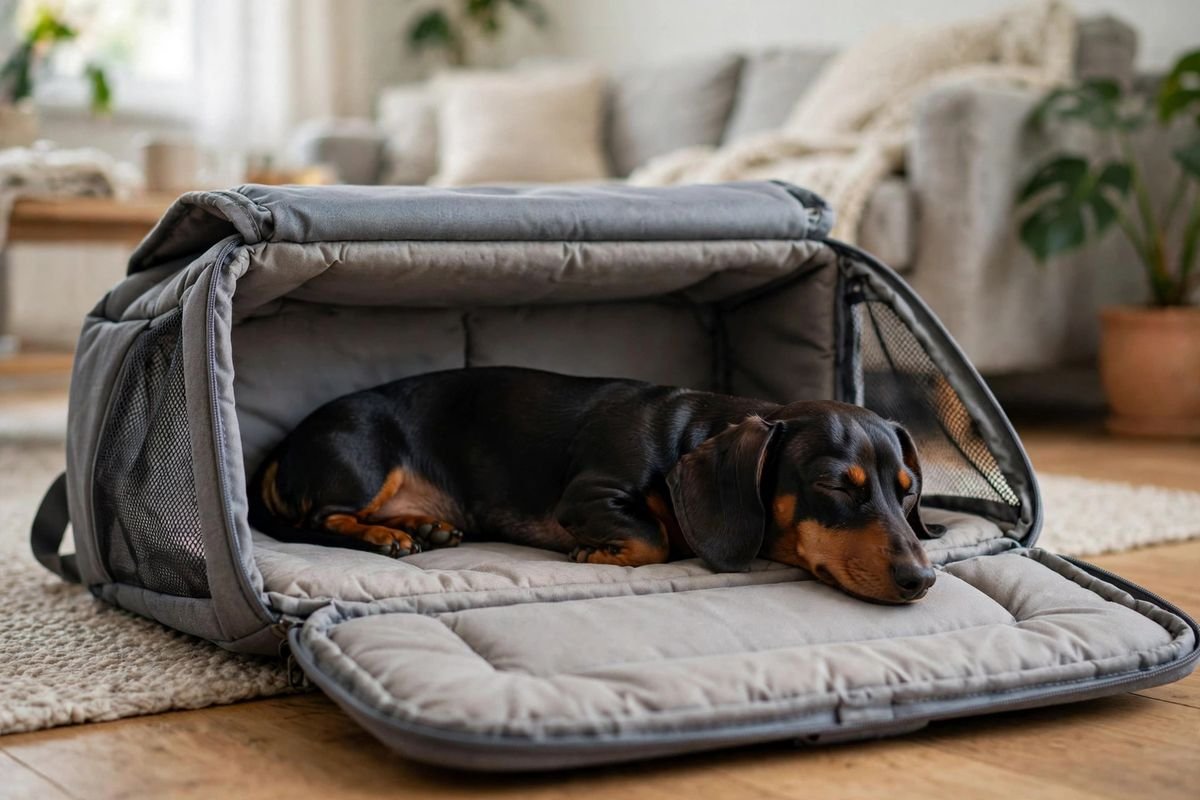
Look for a firm, padded base that holds its shape when the dog is inside. The base should be wide enough for the dog to lie down, with a soft pad that can be removed and washed. Mesh panels on the sides and top give airflow, which matters in warm weather and in crowded places where the air is still. The opening for the head should be wide enough for the dog to look around without straining the neck, and a clip inside the carrier attaches to the harness so the dog cannot jump out.
Check the straps and the way the weight sits on the owner. Wide, padded shoulder straps and a waist belt spread the load across the shoulders and hips, which keeps the owner’s back straight on a longer walk. A chest strap stops the shoulder straps from sliding off. Try the empty carrier on before buying and walk around the room: if the empty pack already feels awkward, it will feel worse with a dog inside. The guide to a travel carrier for vet visits covers the same fit points for trips to the clinic.
3. Fitting the Backpack for a Back-Safe Carry
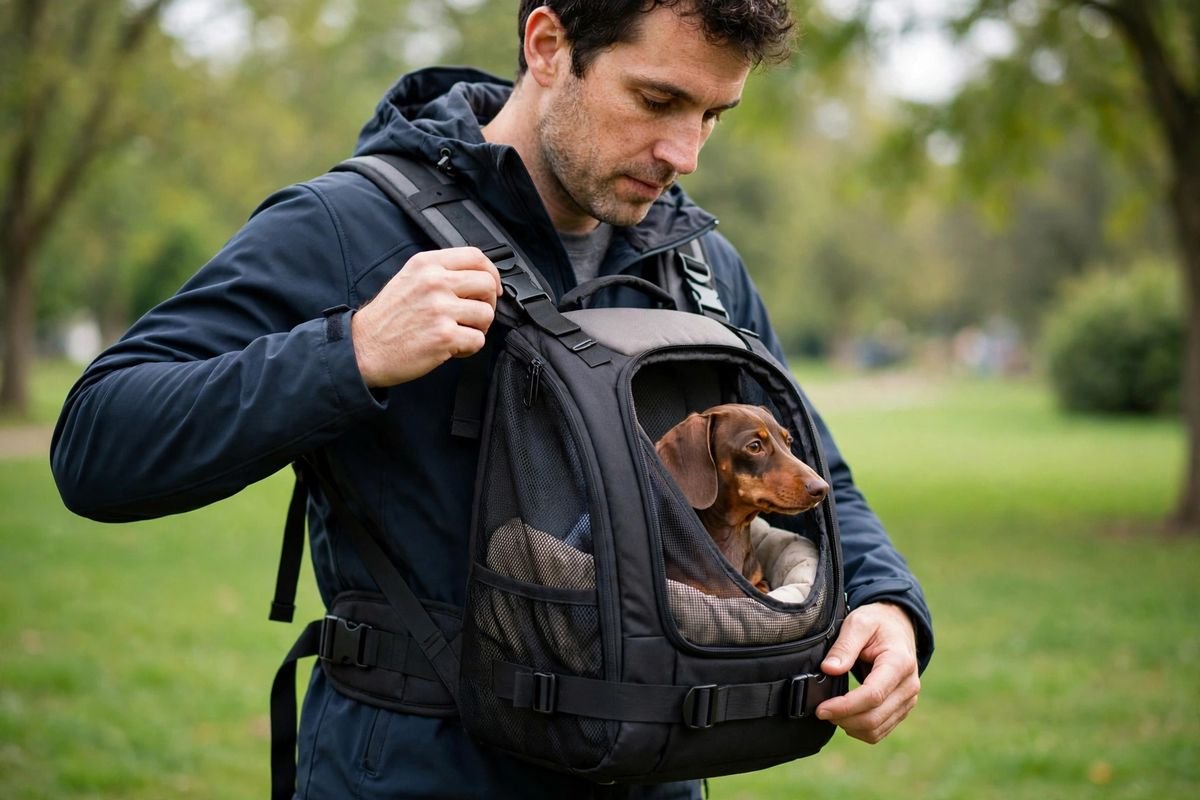
Fit the backpack with the dog inside and the owner standing straight. Place the dog in the carrier on a table or couch, clip the inside tether to the harness, and then lift the carrier onto the chest or back. The dog’s spine should look level from the side, with no arching up or sagging down, and the head should sit free above the opening without the chin resting on the rim. If the dog’s back rounds up, the carrier is too short; if the dog slides to one side, the straps are uneven.
Adjust the straps in a set order: waist belt first, then shoulder straps, then the chest strap. The waist belt should sit snug on the hips and take most of the weight, the shoulder straps should feel even on both sides, and the chest strap should keep the shoulder straps from sliding outward. Tighten a little at a time and check the dog after each change, since a small change in a strap can shift the dog’s whole position. Vets commonly advise keeping a Dachshund’s back level and supported during lifting and carrying, and a well-fitted backpack follows that same idea.
Check the fit again after ten minutes of walking. The dog may settle lower as the padding compresses, and the straps may loosen with movement. Stop, take the carrier off, and look at the dog: check the belly, the legs, and the way the dog stands when it steps out. A dog that shakes itself off and walks normally was comfortable. A dog that hunches, walks stiffly, or refuses to move needs a different fit, a different carrier, or a shorter trip. The Animal Medical Center guide to intervertebral disc disease in dogs explains the signs that mean a dog’s back needs prompt attention.
4. Introducing the Backpack Step by Step
Introduce the backpack at home, on a quiet day, with no trip planned. Set the open carrier on the floor with a soft pad and a treat inside, and let the dog sniff it and step in on its own. Praise the dog calmly when it steps in, and let it step out again at once. Repeat this a few times over a day or two, so the carrier smells familiar and the dog links it with treats and calm praise, not with being trapped.
Next, close the carrier for a few seconds while the dog is inside, then open it again. Lengthen the closed time a little each day, from seconds to a minute, then to a few minutes, always with the dog calm and the owner close by. Then lift the carrier and hold it still, then walk slowly around one room, then around the apartment. If the dog whines or tries to climb out at any step, go back to the last step where the dog was calm and repeat it for another day.
Keep the first real outing short and easy: a walk around the block, a visit to a quiet shop, or a ride in the car to a calm park. Bring water and a small blanket, and plan a stop where the dog can get out, stretch, and walk on the ground. Watch the dog during the trip and after it: relaxed ears, a loose body, and a normal walk afterward mean the introduction worked. A dog that stays tense for hours after the trip needs shorter outings and more practice at home first.
5. Using the Backpack on Walks, Errands, and Trips
On a normal day, use the backpack for the hard parts and let the dog walk the easy parts. Carry the dog through a crowded station, up a long flight of stairs, or across a busy road, then set the dog down on a flat, quiet stretch and let it walk on a leash. This mix keeps the dog’s legs moving while the carrier handles the moments where walking is risky or tiring. A pet stroller for senior Dachshunds can serve the same purpose on longer days, and the choice between a backpack and a stroller comes down to how far the trip goes and how much the dog weighs.
Pack the carrier the same way every time. Put a folded blanket or pad in the base, clip the tether to the harness, and keep a small water bottle and a few treats in the owner’s pocket, not loose in the carrier. In warm weather, check the dog often for panting and offer water at every stop, since a carrier with mesh sides still traps heat. In cold weather, a light blanket over the carrier opening keeps the wind off the dog’s back. Never leave the dog in the carrier in a parked car.
Clean the carrier after every few trips, or at once if the dog has been sick or the carrier smells. Most carriers have a removable pad that can be washed, and the shell can be wiped with a damp cloth and left to dry in the open air. Check the seams, zippers, and straps for wear each month, and replace the carrier if a strap frays or a zipper sticks.

Backpack Fit and Use Checklist
| Step | What to Do | What to Watch For |
|---|---|---|
| Before buying | Weigh the dog; measure chest to tail | Standard Dachshunds are often too heavy for a backpack |
| Choose | Firm padded base, mesh sides, head opening, inside tether | Dog can lie flat; spine stays level |
| Fit | Waist belt, then shoulders, then chest strap | Even straps; dog level; head free |
| Introduce | Open carrier at home, then closed, then lifted, then a short walk | Calm at each step before moving on |
| On the trip | Carry the hard parts; let the dog walk the easy parts | Panting, stiffness, or restlessness |
| After the trip | Let the dog out to stretch and walk | Normal walk; no hunching or limping |
| Monthly | Check seams, zippers, and straps | Frayed straps or a sticking zipper mean replace it |
The checklist works as a routine: measure, choose, fit, introduce, and check again after every trip. A carrier that fits well and is checked often keeps the dog safe on the road.
Common Mistakes
- Buying a backpack without weighing the dog, and carrying a dog that is too heavy for it.
- Letting the dog hang upright with its legs dangling, which leaves the long spine unsupported.
- Skipping the at-home introduction and taking the dog straight on a long, crowded trip.
- Forgetting the inside tether, so the dog can jump out of the carrier.
- Leaving the dog in the carrier for hours without a break to walk and stretch.
- Using the backpack as a full replacement for walks, so the dog gets little exercise.
- Ignoring a frayed strap or a sticking zipper and using the carrier anyway.
- Carrying the dog in hot weather without checking for panting or offering water.
When to Call Your Vet
Contact a veterinarian if the dog yelps, limps, hunches its back, or refuses to move after being carried, or if back pain signs show up after a trip. Contact a veterinarian urgently if the dog cannot move its back legs, loses bladder control, or is in severe pain. A veterinarian can examine the dog and advise whether carrying, the carrier type, or the daily routine needs to change. The Cornell guide to chondrodystrophy and intervertebral disc disease explains why the short-legged body shape raises the risk for this breed. This article gives general information only and is not a diagnosis.
Pin This: Backpack Fit Checklist
- Weigh the dog and measure chest to tail first.
- Pick a firm base with mesh sides and an inside tether.
- Fit the waist belt, then shoulders, then chest strap.
- Introduce the carrier at home, step by step.
- Let the dog walk the easy parts of every trip.
- Call a veterinarian if the dog limps or hunches after a trip.
Frequently Asked Questions
Can a standard Dachshund use a pet travel backpack?
Often not. Most backpack carriers suit dogs up to about 15 pounds, and a standard Dachshund weighs 16 to 32 pounds, which is over the limit for most packs. A mini Dachshund usually fits. Check the weight limit on the pack and the dog’s real weight before buying, and consider a stroller or a shoulder carrier if the dog is too heavy.
Is it safe to carry a Dachshund in a backpack?
It can be, when the carrier fits well and the dog’s spine stays level and supported. The dog should lie flat or recline gently, never hang upright with its legs dangling. Keep trips short at first, watch the dog after each trip, and ask a veterinarian if the dog has a back problem.
How long can my Dachshund stay in the backpack?
Keep carrier time to about an hour at a stretch, with a break to walk, stretch, and drink. Puppies, older dogs, and dogs that are new to the carrier need shorter sessions. If the dog pants, whines, or tries to climb out, stop and let it out at once.
Should the backpack go on the front or the back?
Most owners find a front carrier easier, because the dog can be watched and the weight sits on the chest and hips. A back carrier works for a calm dog on a longer walk, but the dog cannot be seen, so the owner must stop often to check. Either way, the waist belt should take most of the weight.
What if my Dachshund hates the backpack?
Go back to the start: set the open carrier on the floor with treats inside and let the dog explore it for a few days. Move on only when the dog steps in calmly. Some dogs never accept a backpack, and that is fine; a stroller or a regular carrier may suit them better.
Conclusion
A Dachshund pet travel backpack works when the size is right, the spine stays level, and the dog has learned the carrier step by step at home. The next step is a small one: weigh the dog and measure from chest to tail, then check those numbers against the size chart before buying anything.






One Comment