
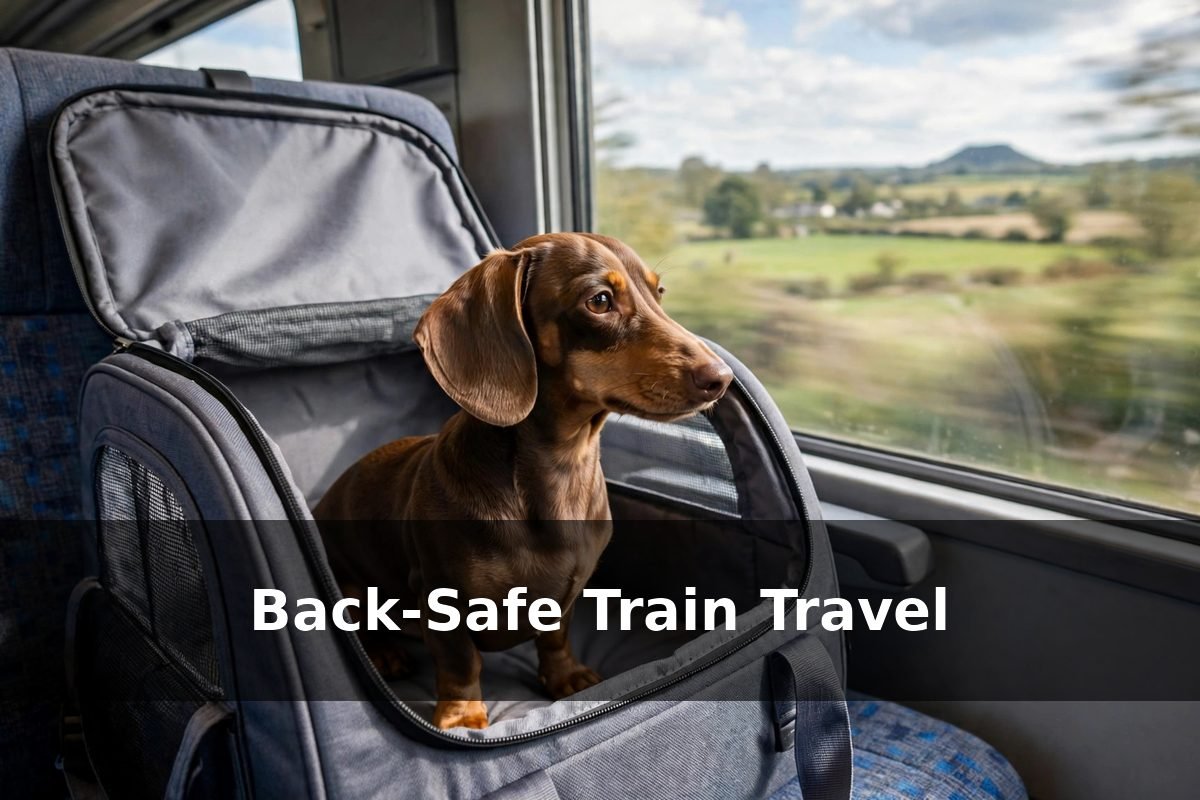
Dachshund Back-Safe Train Travel: Bus and Train Guide
Quick Answer
- Dachshund back-safe train travel starts with a carrier that has a firm, flat base, a familiar blanket inside, and room for the dog to lie down.
- Settle the dog in the carrier before boarding, and lift the carrier level, with both hands, rather than swinging it or carrying it by one handle.
- Lift the dog in and out of the carrier level, one hand under the chest and one under the hips, keeping the back straight.
- Keep the carrier steady during the ride, wedged in place so it cannot slide, and take toilet breaks at longer stops on flat ground.
- Contact a veterinarian if the dog yelps when lifted, refuses to move after the trip, or shows weakness in the back legs.
Contents
- 1. Choosing a Carrier That Protects the Back
- 2. Settling In Before the Train or Bus Moves
- 3. Lifting In and Out at Stations and Stops
- 4. The Ride Itself: Sway, Noise, and Breaks
- 5. Arriving: The First Walk and the Settle-In Routine
- Train and Bus Trip Checklist: Before, During, and After
- Common Mistakes
- When to Call Your Vet
- Pin This: Back-Safe Train and Bus Travel
- Frequently Asked Questions
- Conclusion
1. Choosing a Carrier That Protects the Back
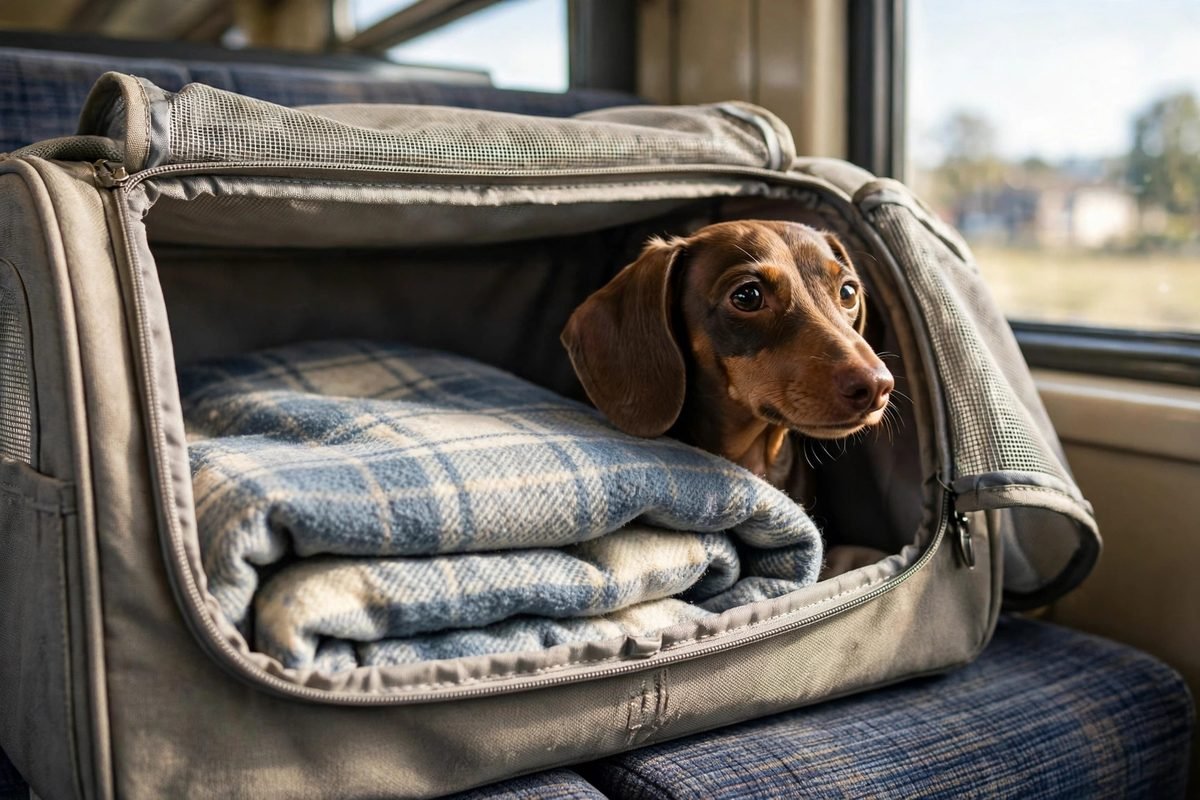
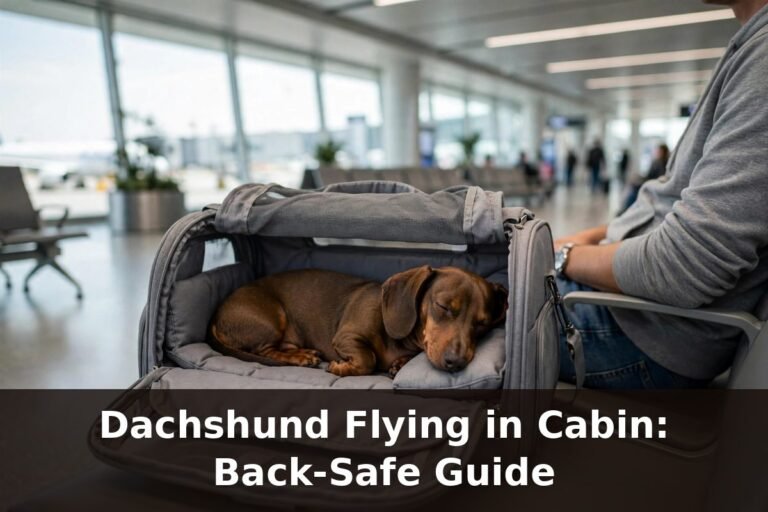
A train or bus trip is a different kind of journey from a car ride, and the carrier matters more, because the dog may spend the whole trip inside it. The carrier should have a firm, flat base that does not sag under the dog’s weight, because a sagging base forces the spine to curve for hours. It should be large enough for the dog to lie down flat and turn around, but not so large that the dog slides from side to side when the train turns or the bus brakes. A carrier with a solid bottom, soft sides, and a blanket folded flat inside gives the back the steadiest possible ride.
Try the carrier at home before the trip. Leave it open on the floor for a few days, with the familiar blanket inside and a treat placed at the back, so the dog walks in on its own and learns that the carrier is a safe place. A dog that has practised lying in the carrier at home will settle in it on a train, while a dog that meets the carrier for the first time at a busy station will brace, pant, and hold its back stiff for the whole journey. The travel backpack carrier guide covers the wider choice of carriers, and the same size and base rules apply to a train carrier.
Check the rules of the train or bus company before booking. Some services ask for the dog to stay in a closed carrier, some allow a small dog on a leash on the floor, and some have size limits for carriers. Knowing the rule in advance avoids a last-minute change at the platform, and a last-minute change is when lifting goes wrong.
2. Settling In Before the Train or Bus Moves
Settling starts at home, not at the station. Give the dog a short, flat walk before leaving, so it has toileted and stretched its legs, then let it rest in the carrier for a few minutes at home with the door open. A calm dog boards calmly, and a calm dog keeps its back loose. Leave early enough that the walk to the station is slow, with no rushing, no running for the train, and no hurried lift onto the platform.
At the station, keep the dog in the carrier from the start. A busy platform is full of feet, luggage wheels, and sudden noises, and a Dachshund walking on a leash through a crowd is at risk of being stepped on or knocked sideways, which can twist the back. Carry the carrier level, with both hands, holding it close to the body. Avoid carrying it by one handle, which lets it swing, and avoid holding it away from the body, which lets it tilt. A level carrier is a level back.
Choose a seat with care. A window seat with the carrier on the seat beside the owner, wedged in place with a bag or a folded coat, keeps the carrier steady and the dog close. Open the carrier door a little once the train is moving, if the rules allow, so the dog can see the owner and smell familiar air. A dog that can see its owner settles faster than a dog shut in the dark.
3. Lifting In and Out at Stations and Stops
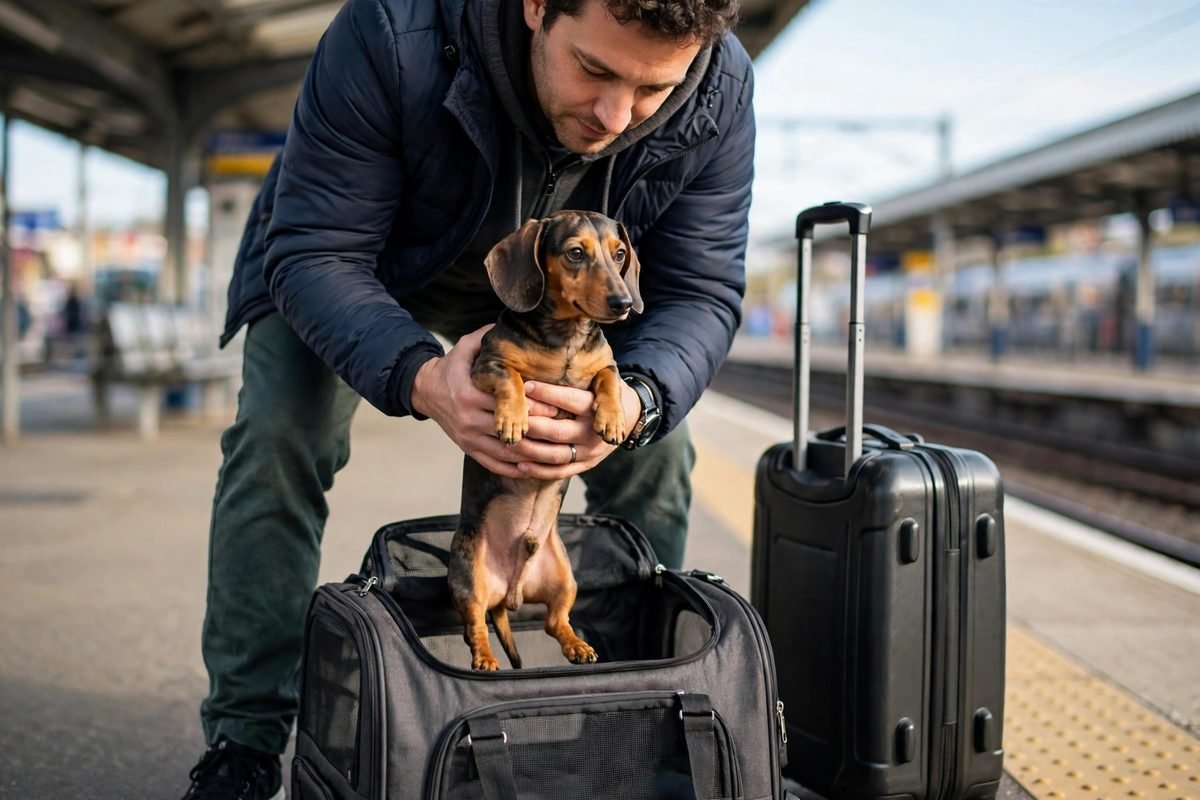
Lifting in and out of the carrier is the moment where most back strain happens on a train or bus trip, so it deserves a slow, planned move every time. Open the carrier on a flat surface, at the owner’s lap level or on a seat, never on the floor of a moving train. Place one hand under the chest, just behind the front legs, and the other hand under the hips, just in front of the back legs. Lift straight up, keeping the back level, with no dangling front or back end and no twisting. Set the dog down the same way, in reverse, with all four paws landing together on a flat surface.
Never lift the dog out of the carrier while the train or bus is moving. A sudden brake or a sharp turn while the dog is half out of the carrier can twist the spine in a way that no walk or jump ever would. Wait for a stop, or for a long, straight stretch of track, and take the time to do the lift properly. If the stop is short, leave the dog in the carrier and take the toilet break at the next longer stop instead. A missed toilet break is a small problem; a twisted back is a large one.
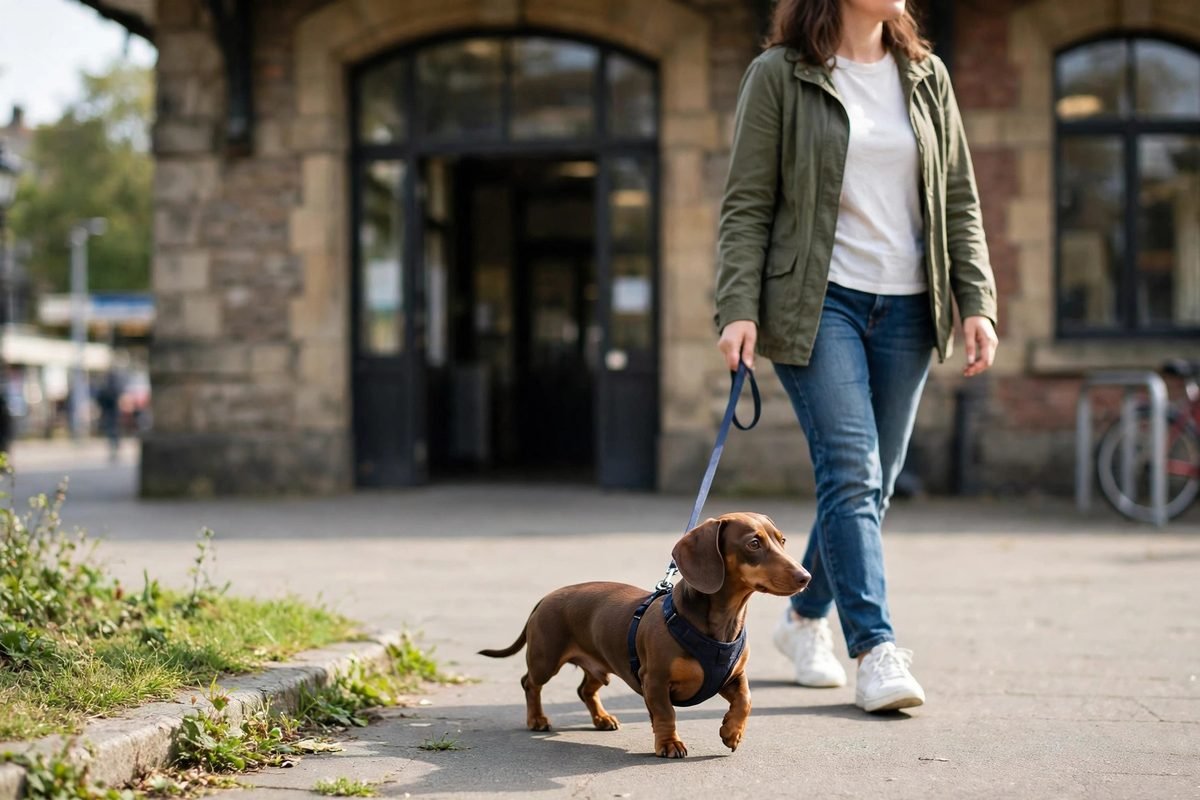
At the destination station, lift the dog out onto flat ground, not onto a platform edge or a step. Carry the carrier to a quiet corner of the station first, set it down on the floor, and lift the dog out there, away from the crowd. The dog will be stiff after sitting still for the journey, and the first steps should be slow, flat, and unhurried. Dachshund back-safe train travel depends on these small, careful lifts more than on anything else in the trip, because a single hurried lift can undo hours of steady travel.
4. The Ride Itself: Sway, Noise, and Breaks
Trains sway and buses brake, and a dog that braces against the motion holds its back stiff for the whole ride. A carrier wedged in place so it cannot slide does most of the work: the dog can lie still instead of bracing, and the muscles along the spine can rest. Wedge the carrier with a bag, a folded coat, or a cushion, and check after the first few minutes that it has not shifted. A carrier that slides a few centimetres on every turn will leave the dog sore by the end of the trip.
Noise is the second problem. A train carriage is loud, with announcements, doors, and other passengers, and a nervous dog tenses its whole body in response. A familiar blanket, a calm voice, and a hand resting on the carrier help the dog settle. A treat given through the carrier opening, at floor level, is a calmer reward than a lift.
Breaks need planning. On a long journey, choose a route with a longer stop where the dog can be lifted out onto flat ground for a short toilet walk. Keep the walk to a few minutes, on level pavement, at the dog’s own pace, and lift the dog back into the carrier the same careful way. Offer water at the break, in a small bowl on the ground, and let the dog drink before the next leg of the journey. A dog that has drunk water and toileted will settle better for the rest of the ride than one that is thirsty and uncomfortable.
5. Arriving: The First Walk and the Settle-In Routine
Arrival is not the end of the back care routine. A dog that has sat still for an hour or more will be stiff, and the first walk should be short, flat, and slow. Lift the dog out of the carrier onto level ground, let it stretch and wander for a few minutes, and watch how it moves. A dog that trots smoothly has travelled well. A dog that rises slowly, takes short careful steps, or pauses at the kerb is still stiff, and the rest of the day should stay quiet.
Set up a rest spot as soon as the destination is reached, whether it is a hotel, a relative’s home, or a holiday flat. A soft bed on the floor, a blanket, and a water bowl within a few steps give the dog a place to recover from the journey. Keep the first evening quiet: no long walk, no stairs, no jumping onto unfamiliar furniture. The dog needs to learn the new space slowly, and a calm first evening sets the tone for the whole stay. The back care routine after a long car journey follows the same arrival pattern, and it works just as well after a train or bus trip.
Watch the next morning. A dog that wakes up loose and walks to the door at a normal pace has recovered well from the trip. A dog that is still stiff the next morning needs another quiet day, with short flat walks only, until the morning rise looks normal. Note the journey in a few words, so the next trip can be planned better: which carrier, which seat, how long the ride was, and how the dog moved afterwards. Disc degeneration in short-legged breeds can begin in the first year of life, so even a young Dachshund deserves this care on every trip.
Train and Bus Trip Checklist: Before, During, and After
| When | What to Do | What to Watch For |
|---|---|---|
| Before | Carrier practised at home; short flat walk; check company rules | Dog settles in the carrier; calm before leaving |
| Boarding | Carrier level, both hands; dog inside through the crowd | No swinging or tilting; dog stays calm |
| During | Carrier wedged steady; water and breaks at longer stops | Dog lying still; no bracing or panting |
| Arrival | Lift out onto flat ground; short slow walk; rest spot ready | Smooth trot; no stiffness or yelping on lifting |
| Next morning | Watch the rise; short flat walk if movement looks normal | Loose rise; level back; normal appetite |
Common Mistakes
- Using a carrier with a sagging base, so the spine curves for the whole journey.
- Carrying the carrier by one handle, letting it swing and tilt with every step.
- Lifting the dog out of the carrier while the train or bus is still moving.
- Walking the dog through a crowded platform on a leash, where it can be knocked sideways.
- Letting the carrier slide around on the seat, so the dog braces for the whole ride.
- Skipping toilet breaks on a long journey, leaving the dog uncomfortable and tense.
- Going straight out for a long walk on arrival, before watching how the dog moves.
- Rushing for the train, so the whole trip starts with a hurried lift and a stressed dog.
When to Call Your Vet
Contact a veterinarian if the dog yelps when lifted after the trip, refuses to move, walks with a hunched back, or shows weakness in the back legs. Contact a veterinarian urgently if the dog cannot move its back legs, loses bladder control, or is in severe pain. A veterinarian can examine the dog and advise whether the travel routine needs to change, and the Animal Medical Center guide to intervertebral disc disease in dogs explains the signs that need prompt attention. The Cornell guide to intervertebral disc disease notes that the condition ranges from mild pain to paralysis, which is why early contact matters. The Cornell guide to chondrodystrophy and intervertebral disc disease explains the breed background behind that caution. This article gives general information only and is not a diagnosis.
Pin This: Back-Safe Train and Bus Travel
- Choose a carrier with a firm, flat base and a familiar blanket.
- Practise the carrier at home before the trip.
- Carry the carrier level, with both hands, close to the body.
- Lift the dog in and out level, only when the vehicle is still.
- Wedge the carrier steady and take breaks at longer stops.
- Walk short and flat on arrival, and watch the next morning.
Frequently Asked Questions
Can a Dachshund travel by train or bus safely?
Yes, with a carrier that has a firm flat base, a calm settle before boarding, and level lifting in and out. The dog stays in the carrier through crowds and the ride, and the carrier is wedged steady so it cannot slide.
What size carrier is best for a Dachshund on a train?
The carrier should be large enough for the dog to lie down flat and turn around, but not so large that the dog slides from side to side on turns and braking. A solid bottom and a blanket folded flat inside keep the back steady.
Should the dog be lifted out of the carrier during the ride?
No, not while the vehicle is moving. Wait for a stop, lift the dog out level onto flat ground for a short toilet walk, and lift it back in the same careful way before the vehicle moves again.
How can a Dachshund be kept calm on a train?
A familiar blanket, a calm voice, and a hand resting on the carrier help the dog settle. Avoid reaching in to lift the dog out at every stop, and avoid letting strangers reach in, because each reach-in asks the dog to move when it should rest.
What should be checked after arriving by train or bus?
Watch the first walk: a smooth trot means the trip went well, while a slow rise, short careful steps, or a pause at the kerb mean the dog is still stiff. Keep the evening quiet and check the rise again the next morning.
Conclusion
Train and bus travel is a back care routine of small, careful moves: a firm carrier, a calm settle, level lifting, a steady ride, and a slow arrival. The next step is to practise the carrier at home this week, so the next trip starts with a dog that already knows its safe place.



One Comment