

Dachshund Safe Digging Routine at Home: Back-Safe Dig Box
Quick Answer
- Digging is a natural urge for Dachshunds, and a low dig box gives that urge a safe place at home instead of the sofa cushions, the rug, or the balcony planter.
- Build a shallow, stable box with soft sand or fabric, low sides the dog can step into, and a non-slip mat underneath, so the dog digs with its front paws while its back stays level.
- Keep sessions short, calm, and supervised, bury a few toys or treats, and end with rest and water before the dog gets tired or overexcited.
- Contact a veterinarian if digging turns frantic, or if the dog shows back pain, stiffness, limping, or reluctance to move after play.
Contents
- 1. Why Dachshunds Love to Dig
- 2. Building a Back-Safe Dig Box
- 3. Teaching a Calm Digging Routine
- 4. Keeping Sessions Short and Supervised
- 5. Cleaning Up, Resting, and Watching the Back
- Safe Digging Routine Comparison Checklist
- Common Mistakes
- When to Call Your Vet
- Pin This: Safe Digging Routine Checklist
- Frequently Asked Questions
- Conclusion
Most Dachshund owners know the sound: paws scrabbling at a blanket, a cushion, or a patch of soil, with total focus and a wagging tail. Digging is part of what this breed was shaped to do, and in an apartment that urge does not disappear. It finds the nearest soft surface, which is often a sofa, a bed, or a rug that was never meant to be dug.
A dig box gives the urge a place of its own: a shallow tray filled with something safe to move, where the dog can dig on purpose, at a set time, and then stop. Done well, it is gentle exercise and a calm routine in one, and it protects furniture, floors, and the dog’s back. This article explains how to build one, teach the routine, and keep it safe. It is general information only, not a diagnosis, and a dog with back pain needs a veterinarian, not a new toy.
1. Why Dachshunds Love to Dig
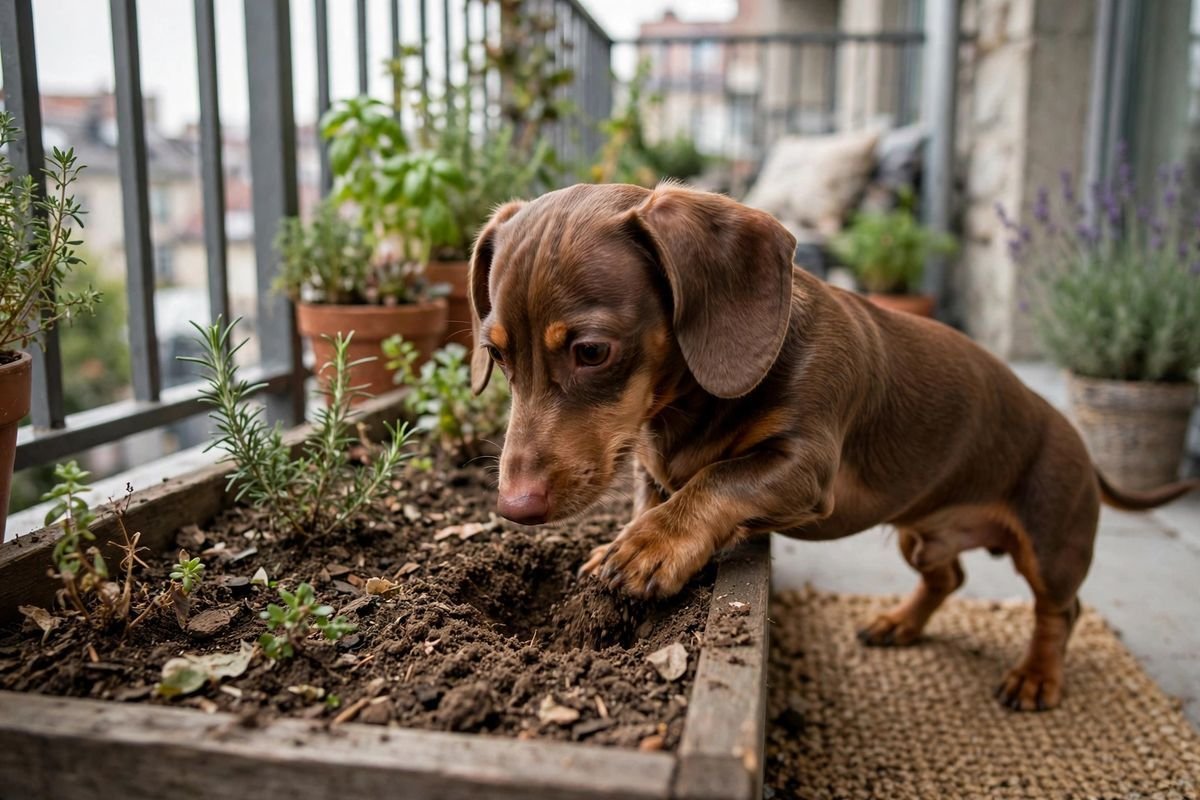
Dachshunds were bred to work underground, following scent into narrow spaces and moving earth with their front paws. That history is still visible in the shape of the dog: a long body, short legs, strong shoulders, and large front paws that are good at scooping and scraping. Digging is not bad behaviour in this breed. It is an instinct, and a dog that never gets to use it may turn the same energy toward cushions, bedding, or the garden planter on the balcony.
In an apartment, digging also fills a gap. A small home offers fewer new smells and fewer jobs for a bright dog, so a digging session gives the nose and paws something to do. A dog that digs calmly for ten minutes often settles more easily afterwards than a dog that has spent the same time pacing or shredding a cushion. The goal is to give a natural behaviour a safe outlet, at a level the body can handle.
Back care matters here because digging uses the shoulders, the neck, and the spine together. A dog that digs on a slippery floor, leaps in and out of a deep box, or digs frantically for a long time can strain muscles or twist its back. The Animal Medical Center explains intervertebral disc disease in dogs, and disc problems are a known risk for this long-backed breed, with disc degeneration in short-legged breeds able to begin in the first year of life. A low, stable dig box, short sessions, and a calm pace keep the activity within what a small dog can do comfortably.
2. Building a Back-Safe Dig Box
Start with a low, wide container. A shallow wooden tray, a low plastic storage box with one side cut down, or a sturdy cardboard box lined with a washable cover all work, as long as the dog can step in and out without jumping. The sides should be no higher than the dog’s chest, and one side should be lower still, like a doorway, so the dog walks in at floor level. A box that is too deep forces the dog to leap out, which is exactly the kind of sudden landing a long back does not need.
Fill the box with something soft and safe to move. Clean play sand is the classic choice: it gives way under the paws, it is easy to scoop, and it can be sieved or replaced when it gets dirty. Shredded paper, fabric strips, or a snuffle mat layered in the box are good indoor alternatives, especially for a dog that tries to eat sand. Avoid gravel, stones, sharp bark, or soil from a garden bed, which may hold sharp pieces, chemicals, or parasites. Whatever the filling, it should be deep enough to bury a toy, about ten centimetres, and no deeper, so the dog digs down without straining its neck.
Place the box on a non-slip mat, in a corner where it cannot slide, and away from the main walkway. A mat under the box catches stray sand, stops the box moving while the dog digs, and gives the dog grip as it steps in and out. Keep a small brush and a dustpan nearby, because some sand will escape, and a quick sweep after each session keeps the floor safe. Put the water bowl within easy reach, but not so close that sand lands in it, and keep the box in the same spot each time, so the dog learns where digging belongs.
3. Teaching a Calm Digging Routine
Introduce the box when the dog is calm, not when it is already excited or digging the sofa. Let the dog sniff the box, step in, and find a buried toy or treat near the surface, so the first experience is easy and rewarding. Keep the first session to two or three minutes, then lift the dog out gently, offer a calm word, and put the box away or cover it. A short, successful first session teaches the dog that the box is a good place, and that digging there ends calmly.
Use a simple, consistent cue, such as dig, spoken once in a calm voice as the dog starts to paw at the filling. If the dog digs the rug or the sofa instead, guide it calmly to the box without scolding, and reward the first paw in the box. The guide to back-friendly play at home for Dachshunds covers the same idea for other games: short, level, and calm beats fast, high, and frantic, and a dog that learns to play gently protects its own back. Children in the home can help too, and the guide to back-safe play with children at home explains how to keep shared play gentle and low to the floor.
Build the routine slowly over a week. Start with one short session a day, then add a second session if the dog stays calm and moves well afterwards. Bury toys a little deeper each time, and hide a few treats under the surface, so the dog uses its nose as well as its paws. If the dog starts to dig faster, bark, or leap in the box, end the session calmly and try again later with a shorter, easier version. A calm dig is a useful dig; a frantic dig is a sign to stop, not a sign to carry on.

4. Keeping Sessions Short and Supervised
Five to ten minutes is enough for most Dachshunds. That is long enough for the nose and paws to work, and short enough that the shoulders and back do not tire. Watch the dog’s body while it digs: the back should stay roughly level, the front paws should do most of the work, and the dog should pause to sniff, shift position, and breathe. A dog that digs without pausing, pants heavily, or starts to dig with its whole body is tired, and tired muscles protect the spine less well.
Always supervise digging, especially at first. A dog left alone with a dig box may eat sand or fabric, dig until it is exhausted, or tip the box over and slip on the floor. Stay in the room, keep the session short, and remove the box or cover it between sessions, so digging stays a shared routine rather than a habit the dog does alone at full speed. If the household is busy, a short session before a quiet period works well, because the dog can rest afterwards instead of moving straight into another exciting activity.
Think about timing across the day. A morning session after a short walk, or an afternoon session before rest, fits most apartment routines. Avoid digging straight after a meal, when the stomach is full, and avoid it late at night, when an excited dog will struggle to settle. If the dog has had a long walk, a vet visit, or a stressful day, skip the dig box and offer a calmer activity instead, such as a chew or a sniff game on a flat surface. A routine that bends around the dog’s energy is safer than a routine that runs on a fixed clock.
5. Cleaning Up, Resting, and Watching the Back
After each session, brush sand or paper from the dog’s paws and chest, check between the toes for trapped grains, and offer fresh water. A quick paw check takes a minute, and it is also a chance to notice a sore pad, a cracked nail, or stiffness the dog is hiding. Sweep the floor around the box, empty stray sand back into the box, and cover the box if it will sit unused, so dust and household dirt stay out of the filling.
Replace or refresh the filling regularly. Sand should be sieved weekly and replaced when it smells, clumps, or holds dirt, and fabric strips should be washed on a gentle cycle and dried fully before use. Wash the box itself with warm water and a pet-safe cleaner, rinse well, and dry it before refilling, so no cleaning residue remains for the dog to lick. A clean box is safer, smells better, and keeps the dog interested, while a dirty box can irritate skin, paws, and noses.
Watch how the dog moves after digging, every time. A dog that walks normally, stretches, and settles to rest has had a good session. A dog that walks stiffly, refuses stairs or a ramp, yelps when lifted, or lies flat and will not move needs rest and a veterinarian, not another session. Cornell’s information on chondrodystrophy and disc disease explains why this breed’s discs are vulnerable, and early signs are easy to miss if no one is watching. Keep a short note of session length and how the dog moved afterwards, and share it with a veterinarian if anything changes.

Safe Digging Routine Comparison Checklist
| Digging setup | Best for | Limit to watch |
|---|---|---|
| Low wooden tray with sand | Real digging feel, easy to sieve | Sand escapes, needs a mat and sweeping |
| Shallow box with fabric strips | Indoor use, washable, no sand mess | Strips need washing and drying fully |
| Snuffle mat in a low tray | Nose work, calm digging, small spaces | Less digging depth, check for loose threads |
| Balcony planter with clean soil | Outdoor feel, fresh air | Soil may hold chemicals, needs supervision |
Common Mistakes
- Using a deep box the dog must jump in and out of.
- Filling the box with gravel, stones, or garden soil.
- Letting sessions run long until the dog is exhausted.
- Leaving the dog alone with the box unsupervised.
- Digging straight after a meal or late at night.
- Forgetting to sweep sand from the floor, which causes slips.
- Ignoring stiffness or reluctance to move after a session.
When to Call Your Vet
Contact a veterinarian if a Dachshund shows back pain, stiffness, limping, weakness in the legs, reluctance to move, or yelping when lifted, and seek urgent help for sudden collapse, loss of bladder control, or severe pain. Contact a veterinarian also if the dog eats sand or fabric, vomits, refuses food, or has sore or cracked paws after digging. This article gives general information only and does not diagnose any condition. A veterinarian can examine the dog, check for disc disease or muscle strain, and advise whether digging is safe for that individual dog. Do not delay veterinary help for a dog that is clearly in pain or cannot move normally.
Pin This: Safe Digging Routine Checklist
- Use a low box the dog can step into.
- Fill it with clean sand or soft fabric.
- Place it on a non-slip mat in one spot.
- Keep sessions to five to ten minutes.
- Supervise every session and end calmly.
- Clean paws and sweep sand after each session.
- Watch how the dog moves, and rest if it is stiff.
Frequently Asked Questions
Is digging safe for a Dachshund’s back?
Yes, when it is done in a low box, for a short time, at a calm pace. The risk comes from jumping in and out of a deep box, digging frantically for a long time, or digging on a slippery floor. A shallow box, a level back, and five to ten supervised minutes keep the activity gentle.
What should I fill a dig box with?
Clean play sand is the usual choice, because it gives way under the paws and is easy to sieve. Shredded paper, fabric strips, or a snuffle mat work well indoors and are washable. Avoid gravel, stones, sharp bark, and garden soil, which may hold sharp pieces or chemicals.
How long should a digging session last?
Five to ten minutes is enough for most dogs. Start with two or three minutes for a new dog, and watch for tiredness, heavy panting, or digging without pausing. End the session before the dog is exhausted, and let it rest and drink afterwards.
Can digging stop my dog from digging the sofa?
It often helps, because the dog gets a proper place for the same urge. Guide the dog calmly to the box when it starts on the sofa, reward the first paw in the box, and keep the box in the same spot. It takes a week or two of consistent, calm guidance to change the habit.
Should I let my dog dig every day?
One short session a day suits most dogs, and a second short session is fine if the dog stays calm and moves well afterwards. Skip digging on days when the dog is tired, sore, or unwell, and contact a veterinarian if stiffness or pain appears after a session.
Conclusion
A back-safe dig box turns a natural Dachshund urge into a calm apartment routine: a low box, soft filling, short supervised sessions, and a watchful eye on how the dog moves afterwards. Give digging a place of its own, and the sofa, the rug, and the dog’s back all stay safer.





One Comment