
Gentle Back Massage for Dachshunds
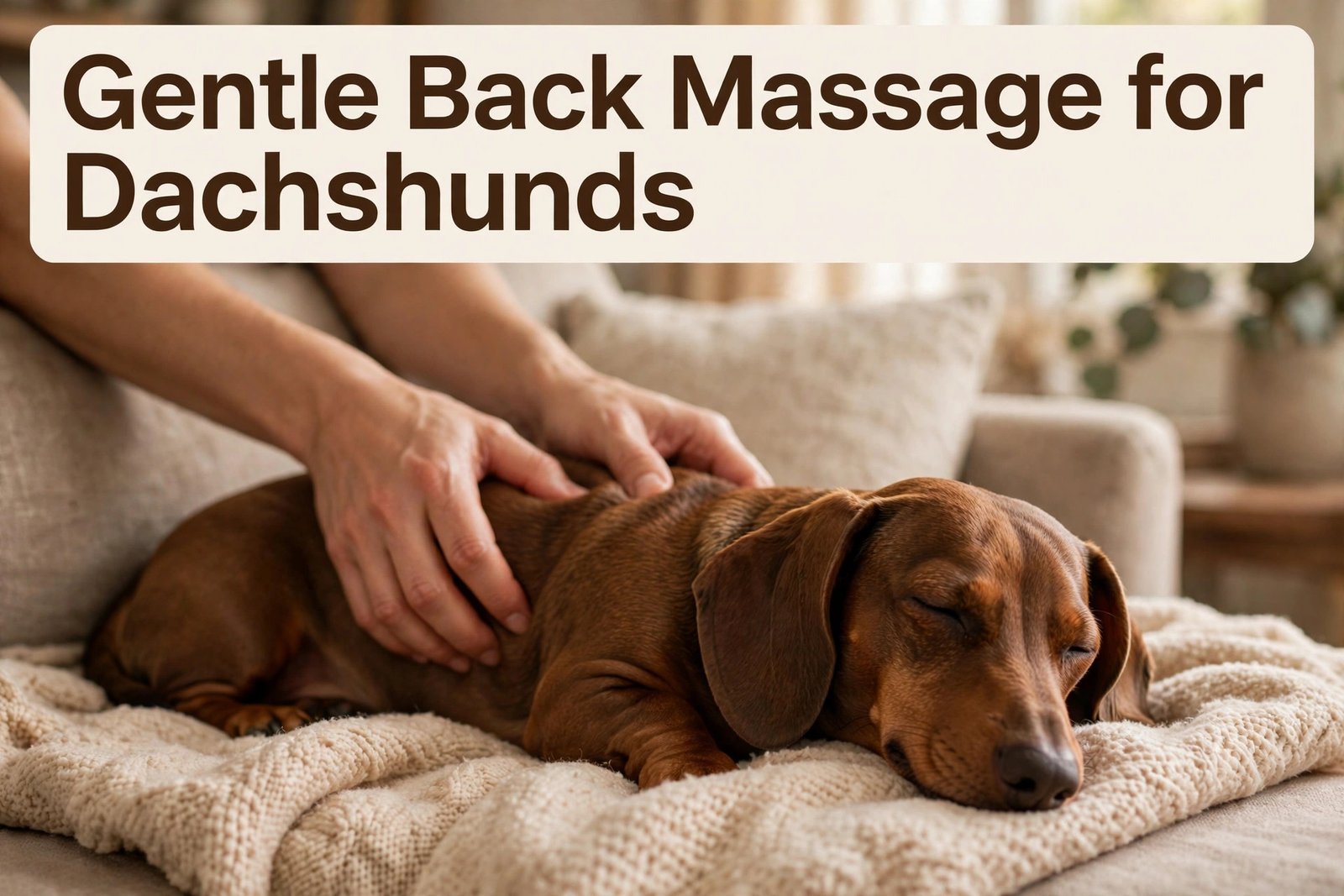
A gentle back massage at home can be a calm bonding time for a Dachshund, provided it stays light, slow, and fully guided by the dog’s response. Massage does not treat back disease, and it never replaces veterinary care, but slow stroking can help an owner notice tension, flinching, or changes in the back during everyday handling. The session should feel like quiet petting, not therapy.
This guide covers only light, safe handling for a healthy, relaxed dog. It also covers what to avoid, when to stop, and when a veterinarian should be contacted instead. If a Dachshund has a known back problem, recent pain, or any new symptom, skip massage entirely and ask a veterinarian first.
Quick Answer
- Massage should be light, slow, and short, with the dog free to move away at any time.
- Use flat-hand strokes along the back, never pressure on the spine itself.
- Avoid the neck, tail base, and belly during a back massage session.
- Stop at once for flinching, crying, growling, or moving away, and contact a veterinarian if pain is suspected.
Contents
- Settling First: A Calm Dog and Calm Hands
- Shoulder and Neck-Area Strokes, Kept Light
- Long Strokes Along the Sides of the Back
- Gentle Hindquarter Touch and the Hip Area
- Ending the Session and Watching the Response
1. Settling First: A Calm Dog and Calm Hands
A massage session starts before any hand touches the back. Choose a quiet time, a familiar blanket or bed, and a moment when the dog is already relaxed, not excited after a walk or restless before a meal. Sit beside the dog rather than leaning over it, keep movements slow, and let the dog sniff the hands and settle. If the dog paces, pants, or moves away, the session is not starting that day, and that is a fine outcome.
Warm, clean hands and short nails help the touch stay smooth. Remove rings or watches that could press into the coat, and keep the room calm, with no loud television or visiting dogs nearby. The first minute should be simple stroking on the shoulder area, watching for a soft body, slow breathing, and a willingness to stay. A dog that leans in gently or sighs and relaxes is showing comfort; a dog that stiffens or shifts away is asking for a pause.

2. Shoulder and Neck-Area Strokes, Kept Light
Begin with light strokes over the shoulder muscles, using a flat hand and moving from the front of the shoulder toward the back, following the coat. Pressure should be no more than the weight of a relaxed hand, and each stroke should be slow enough to count to three. Keep the hand away from the throat and the front of the neck, and never press into the bones of the shoulder or the spine.
Watch the response after every few strokes. A relaxed dog stays loose, with ears in a normal position and breathing that stays slow. If the dog turns the head sharply, tenses, or moves the shoulder away, stop that area and return to simple, familiar petting, or end the session. Shoulder strokes are a warm-up, not a treatment, and the session can end here on many days without moving further along the back.<
3. Long Strokes Along the Sides of the Back
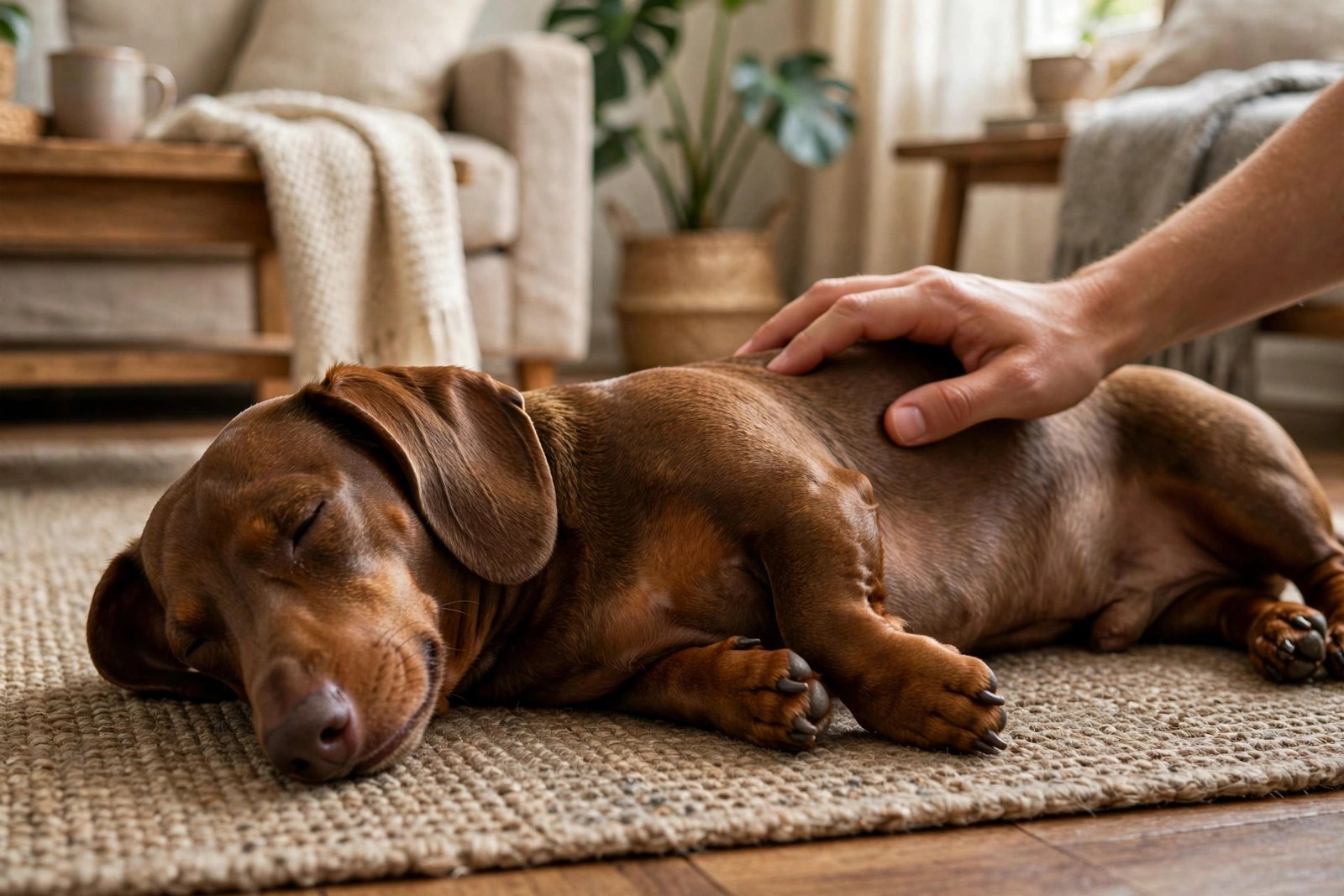
For the main part of the session, use long, light strokes along the muscles beside the spine, from behind the shoulders toward the hips, always moving in one direction and always beside the spine, never on top of it. One hand can rest lightly on the shoulder while the other strokes, which helps the dog feel steady. Keep the rhythm slow and even, with pauses between strokes so the dog can relax.
This section is where an owner may notice something new: a flinch under the hand, a tight patch of muscle, or a spot the dog avoids. Noticing is useful, but pressing harder on a tight spot is not. Note the area, end the session calmly, and contact a veterinarian if the reaction suggests pain, or if the same spot causes a reaction on another day. Massage should never be used to work out a sore spot, and repeated pressure on a painful area can make matters worse.
4. Gentle Hindquarter Touch and the Hip Area
The hindquarters can be included with the same light touch, stroking over the top of the thigh muscles and around the hip area without pressing into joints or the tail base. Keep the dog lying on its side or sitting comfortably, never held in an awkward position to reach an area. Short strokes, a flat hand, and a slow pace matter more here, because many dogs are sensitive around the hips and hind legs.
End this section early if the dog pulls a leg away, shifts position repeatedly, or shows any sign of discomfort. A short, calm session that covers only the shoulders and sides is better than a long session that ends with stress. Guidance on handling mistakes to avoid is covered in the article about five mistakes that hurt a Dachshund’s back and what to do instead, which pairs well with this guide.
5. Ending the Session and Watching the Response
End with a minute of familiar, gentle petting in the dog’s favorite spot, then let the dog rise and move in its own time. Avoid lifting the dog straight after massage, and avoid starting play or a walk immediately. A calm ending helps the owner see the real response: does the dog stretch gently, settle again, walk evenly to the water bowl, and behave normally over the next hour?
If stiffness, limping, reluctance to move, or a change in mood follows a session, keep the dog calm, skip the next session, and contact a veterinarian. A single gentle session should not cause soreness, so soreness after massage is a reason for advice, not for repeating the massage. Keep a short note of the date, the areas touched, and the response, which can help a veterinarian understand any pattern over time.

Safe and Unsafe Touch at a Glance
| Safe | Avoid |
|---|---|
| Flat-hand, light strokes beside the spine | Pressure directly on the spine or joints |
| Slow, one-direction strokes | Fast, deep, or kneading pressure |
| Short sessions, dog free to leave | Holding the dog in place for massage |
| Stopping at the first sign of discomfort | Pressing harder on a tight or sore spot |
| Calm ending and watching the response | Play, jumping, or a walk straight after |
Making Massage a Calm Weekly Habit
Start with one short session a week, at the same quiet time of day, so the dog learns what to expect. Keep the first sessions to shoulder strokes only, ending with familiar petting and a treat-free calm close, since food rewards during handling can rush the ending. Over following weeks, add the side strokes only if the dog stays relaxed throughout, and keep hindquarter touch for last, since that area is the most sensitive for many dogs.
A weekly note helps here as well: the date, the areas touched, the length of the session, and the dog’s response during and after. If the same spot causes flinching twice, stop including that area and raise it with a veterinarian, rather than trying a lighter touch repeatedly. A habit that stays calm, short, and observant is worth more than a longer routine that the dog tolerates rather than enjoys. When a week goes well, keep the same plan for another week before adding anything new, since consistency gives a clearer picture than frequent change.
Common Mistakes
- Pressing on the spine, the tail base, or a joint to reach deeper muscle.
- Massaging a dog that is already in pain, limping, or reluctant to move.
- Using oils, heat pads, or tools without veterinary advice.
- Holding the dog still or continuing after growling, flinching, or moving away.
- Treating massage as a substitute for veterinary care after a back injury.
Pin This: Quick Checklist
- Keep it light, slow, and short.
- Stroke beside the spine, never on it.
- Let the dog move away at any time.
- Stop at once for flinching or crying.
- Skip massage and call a vet if pain is suspected.
When to Call Your Vet
A veterinarian can advise whether gentle massage is appropriate for a particular Dachshund, and can check any flinch, tight area, or change noticed during handling. This matters most for older dogs, dogs with a previous back episode, and any dog showing new pain signs. A veterinarian may advise rest, an examination, or a different plan, and that advice should come before any further home handling.
Contact a veterinarian promptly for crying when touched, a hunched back, weakness in the legs, reluctance to move, or any sudden change after handling. Keep the dog calm and still, and avoid further massage, lifting by the front legs alone, or jumping. This article gives general information only and does not diagnose any condition. Evidence on home massage for dogs is limited and largely observational, so vets commonly advise light handling, careful observation, and prompt professional advice over any deeper or repeated technique.
The Animal Medical Center explains intervertebral disc disease in dogs, including signs that need prompt veterinary attention: Animal Medical Center.
DachsLife 2015 describes research on disc calcification in Dachshunds, which underlines why back handling needs care: DachsLife 2015.
Frequently Asked Questions
How long should a home massage session last?
Five to ten minutes is plenty, and many sessions can be shorter. End while the dog is still relaxed, rather than continuing until the dog moves away.
Can massage help a Dachshund with back pain?
Massage does not treat back pain or disc disease. If pain is suspected, stop handling, keep the dog calm, and contact a veterinarian instead of massaging.
Should massage oils or heat be used at home?
No, unless a veterinarian has advised a specific product for a specific dog. Oils, heat pads, and tools can irritate skin or hide pain signals.
How often can gentle massage be given?
A few calm sessions a week suit many relaxed, healthy dogs, with days off in between. Frequency matters less than watching the response and stopping at any sign of discomfort.
What if a Dachshund never relaxes during massage?
That is useful information, not a failure. Some dogs prefer simple petting or no handling sessions at all. Respect that preference and focus on calm handling during daily care instead.
Conclusion
Gentle back massage at home works best as quiet, observant handling: light strokes beside the spine, a dog free to leave, and a calm ending with time to watch the response. It is a way to spend calm time together and to notice changes early, not a treatment for back problems. For safe lifting before and after any handling session, read the guidance on how to lift a Dachshund correctly without hurting its back.



One Comment