Back-Safe Routine in a Two-Story Home for Dachshunds
Quick Answer
- A back-safe routine in a two-story home for Dachshunds plans the stairs out of the day: carry the dog up and down, and keep food, water, and a bed on each floor.
- Set a carry point at the bottom and the top of the stairs, so lifting happens in the same safe spot every time.
- Give the dog a rest spot on each floor, so it never has to climb stairs just to settle down.
- Keep daily life on one floor where possible, with short, flat walks outside instead of trips between floors.
- Contact a veterinarian if the dog starts to hesitate at the stairs, yelps when lifted, or moves stiffly after a climb.
Contents
- 1. Why Stairs Every Day Add Up for a Dachshund
- 2. Carry Points: Lifting Up and Down the Stairs Safely
- 3. A Two-Floor Setup: Beds, Bowls, and Rest Spots
- 4. The Daily Routine: Mornings, Evenings, and Night
- 5. Keeping the Routine Going When Life Gets Busy
- Two-Story Home Checklist: Each Floor, Each Day
- Common Mistakes
- When to Call Your Vet
- Pin This: Back-Safe Two-Story Routine
- Frequently Asked Questions
- Conclusion
1. Why Stairs Every Day Add Up for a Dachshund
A back-safe routine in a two-story home for Dachshunds starts with a simple fact: stairs are not one climb, they are many. A dog that goes up and down four times a day climbs the stairs more than twenty times a week, and each climb asks the long back to work hard. Going up pushes the back legs and arches the spine, and going down loads the front legs and jars the spine with each step. Vets commonly advise at-risk dogs to avoid running on stairs, and a daily routine that repeats the climb again and again deserves the same caution.
Disc degeneration in short-legged breeds can begin in the first year of life, so a young Dachshund in a two-story home can already have a spine that reacts to repeated stair use. The risk is not one careful climb. It is the pattern: morning, midday, evening, and night, day after day, with the dog rushing up when excited or hurrying down when it needs to go out. A dog that charges up the stairs after a visitor, or bounds down them to reach the door, loads the spine far more than a slow, carried trip ever would.
The house itself shapes the risk. Open-plan stairs with no door invite the dog to climb on its own, and a staircase with slippery wood or a sharp turn at the top adds a slide or a twist to every trip. A baby gate, a closed door, or a simple barrier at the bottom of the stairs changes the whole pattern, because the dog can no longer choose to climb alone. The open-plan staircase safety guide for Dachshunds at home explains how to block and manage open stairs, and a gate is the first step in a two-story routine.
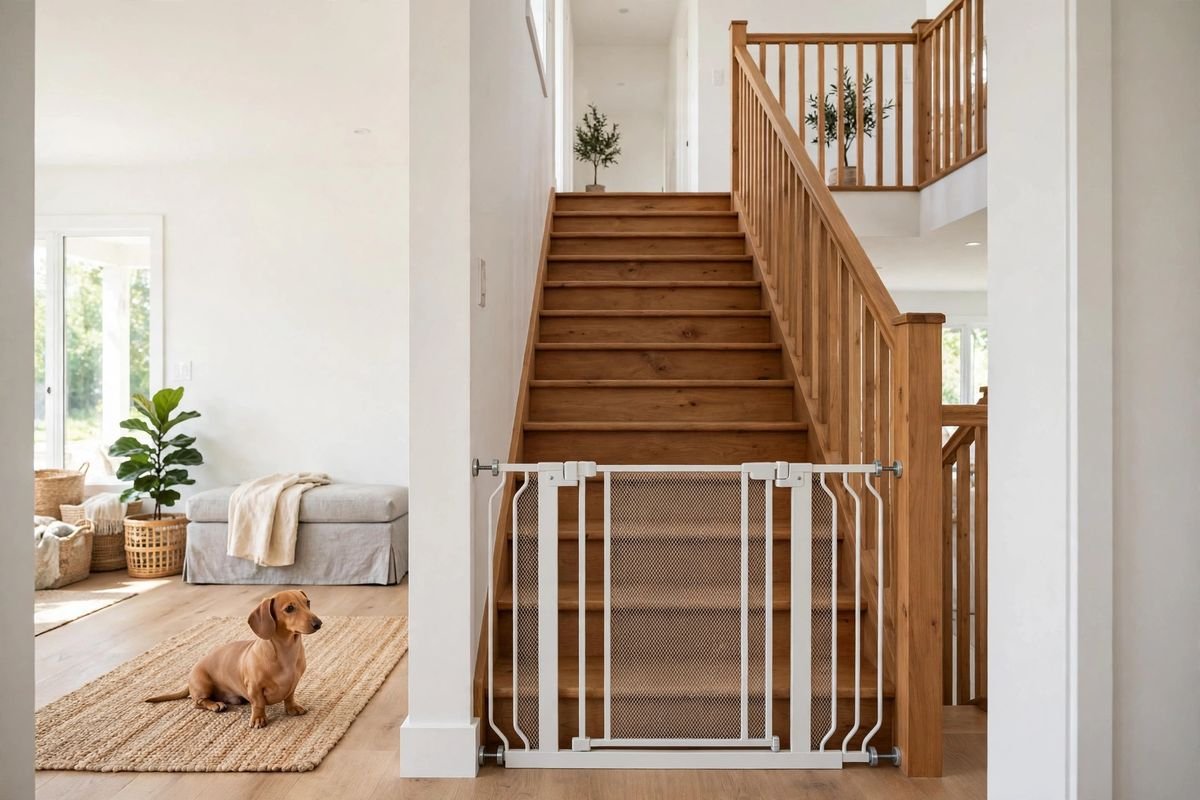
2. Carry Points: Lifting Up and Down the Stairs Safely
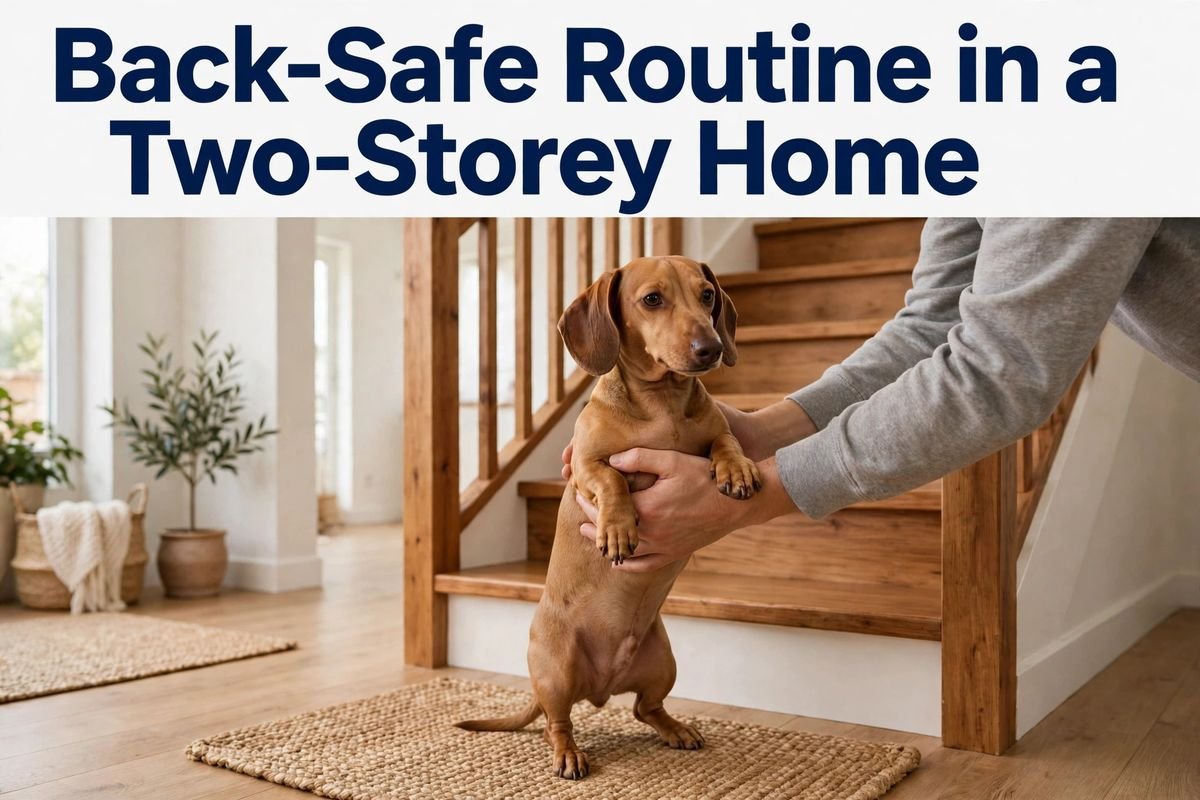
A carry point is a marked spot at the bottom and the top of the stairs where lifting always happens. Choose a flat, clear patch of floor, away from the first step, with a rug or mat underfoot so the owner stands steady. The dog learns to wait at the carry point, and the owner learns to lift there every time, without rushing. A small mat in a different color, or a bed placed nearby, marks the spot clearly for the dog.
Lift with one hand under the chest and one under the hips, keeping the back level, and hold the dog close to the body while walking up or down. Do not lift by the front legs, do not let the back end dangle, and do not twist to open a door while carrying the dog. If a door needs opening, set the dog down at the carry point first, open the door, and then lift again. A ramp can help where the stairs are short, but a carried dog on a steady arm is the safest choice for a full flight.
Teach the wait. At the bottom of the stairs, ask the dog to sit on its mat, lift it, and carry it up. At the top, set it down on the mat there, and let it walk away on the flat floor. Praise the wait quietly, and keep the routine the same every time. A dog that waits at the carry point is a dog that does not dash up the stairs when the doorbell rings. The guide to carrying a Dachshund up and down stairs safely covers the lift in detail, and the same level hold fits a two-story home.
3. A Two-Floor Setup: Beds, Bowls, and Rest Spots
The easiest way to cut stair trips is to stop needing them. Put a bed, a water bowl, and a few toys on each floor, so the dog can eat, drink, and rest wherever it already is. The upstairs bed goes in a quiet corner of the bedroom, away from the stairs, with a blanket to burrow under. The downstairs bed goes in the living room, where the family spends the day. A dog with a bed on each floor has no reason to climb just to settle down.
Keep food and water on the floor the dog uses most during the day, and a water bowl upstairs for the night. Feeding on one floor only means the dog has to travel for every meal, so split the routine: breakfast downstairs, dinner downstairs, and water available on both floors at all times. A toilet routine matters too. If the garden door is downstairs, the dog will need a carried trip down for each toilet break, and that is fine, as long as the trip is carried and calm, not a dash down the stairs alone.
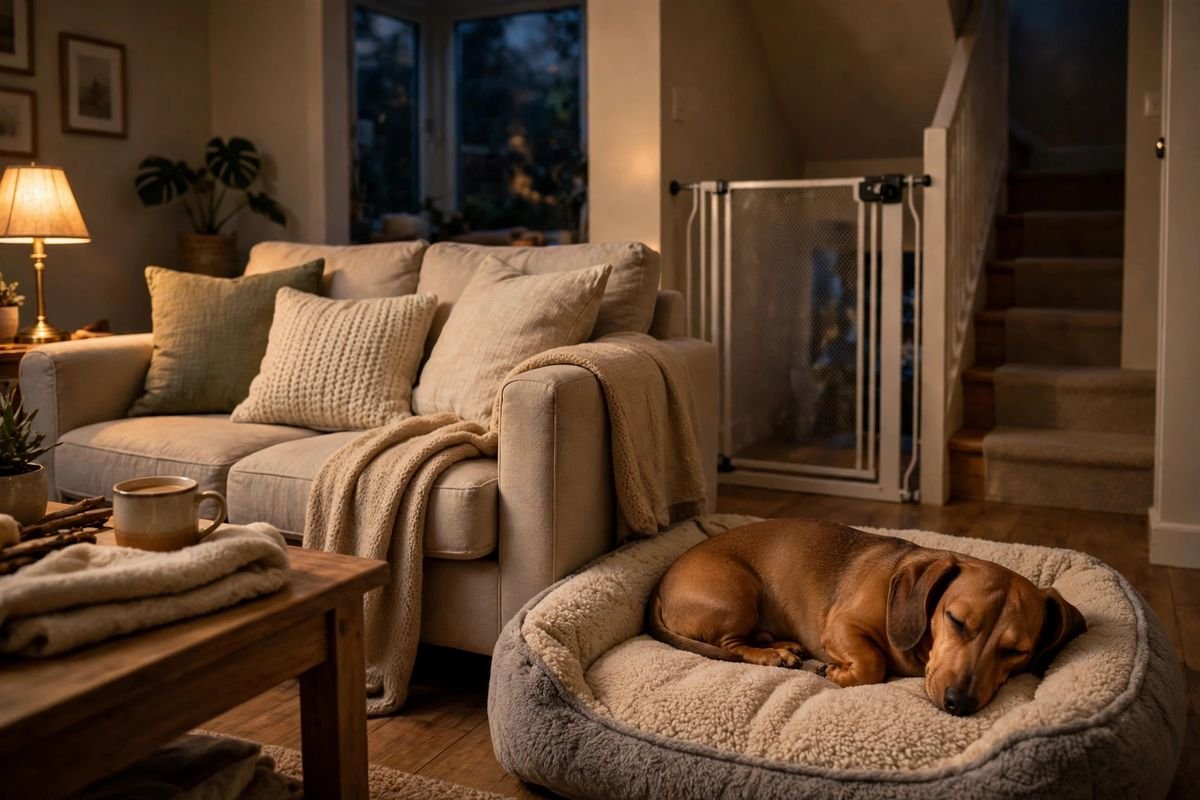
Choose the sleeping floor and keep it steady. Many owners keep the dog’s night bed upstairs, in the bedroom, and that works well if the dog is carried up at bedtime and carried down in the morning. Other owners keep the night bed downstairs, and the dog sleeps there while the family sleeps upstairs. Either choice works, as long as it is the same every night and the dog is never left to climb the stairs alone in the dark. A night light at the top of the stairs helps the owner carry safely, and a closed stair gate keeps the dog from wandering.
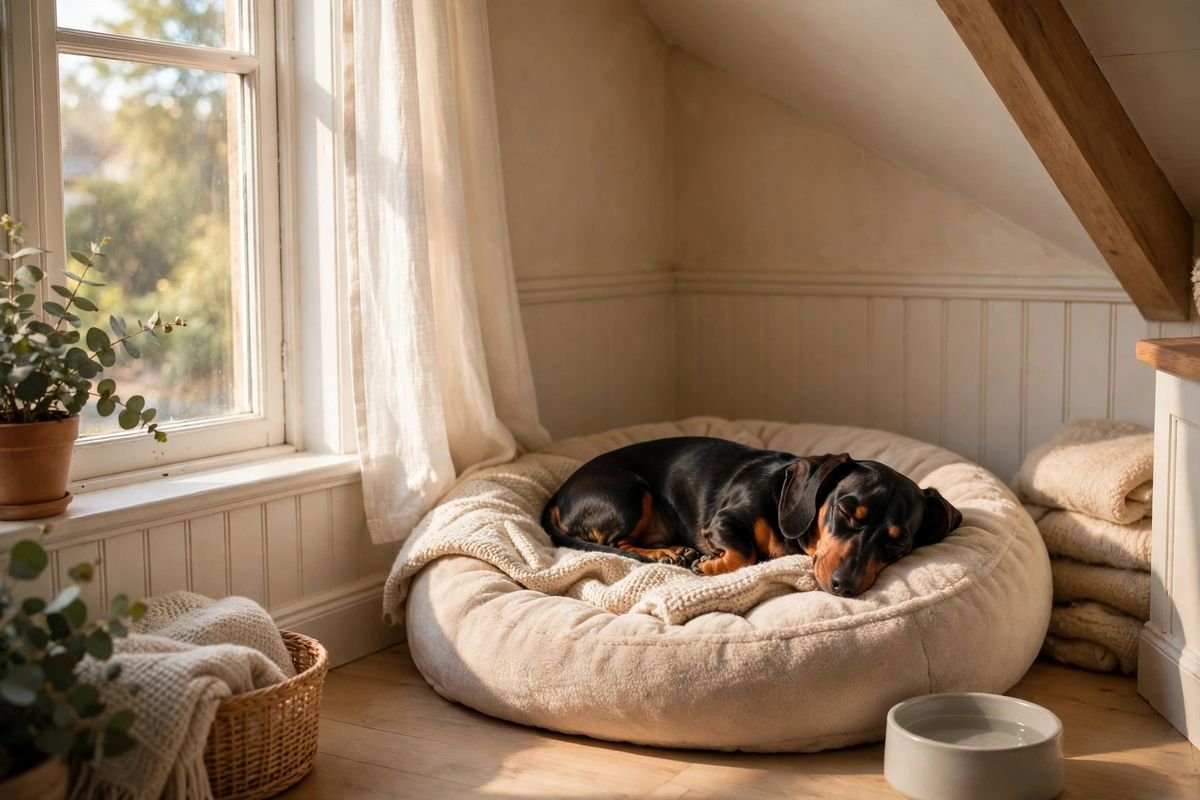
4. The Daily Routine: Mornings, Evenings, and Night
Mornings set the pattern for the day. Carry the dog downstairs, set it down on the flat floor, and let it toilet and eat at its own pace. Keep the first walk short and flat, outside, on a loose leash, before the day gets busy. A slow morning, with no rush up or down the stairs, leaves the dog loose for the rest of the day. If the dog is stiff in the morning, keep it downstairs for the whole day, with a bed, water, and toys close by.
Follow these steps for a typical day:
- Morning: carry down, toilet, breakfast, short flat walk, then rest downstairs.
- Midday: water, a short indoor wander, a calm play session on the flat floor, then rest.
- Afternoon: carry up only if the family is upstairs for a long stay, with a bed and water ready there.
- Evening: carry down for dinner, toilet, and a short flat walk, then rest downstairs.
- Night: carry up to the night bed, or settle the dog in its downstairs bed, and close the stair gate.
Evenings are the riskiest time, because the house is busy and the dog is tired. Visitors, cooking, and children moving between floors can tempt the dog to follow, up and down, again and again. Keep the dog with the family on one floor in the evening, and carry it when the family moves. A tired dog that is carried is a safe dog, and a tired dog that climbs alone is the one most likely to slip or twist on the stairs.
5. Keeping the Routine Going When Life Gets Busy
A routine only works if the whole household follows it. Tell everyone in the home, including visitors and children, that the dog does not use the stairs alone, and show them the carry points. A short note on the stair gate, or a small sign by the stairs, reminds guests who do not know the rule. Children can learn the lift too, with an adult watching, or they can call an adult to carry the dog instead of carrying it themselves.
Busy days need a simpler plan, not a skipped one. On a day when the family is out, keep the dog on one floor with everything it needs, and close the stair gate. On a day with builders, cleaners, or a party, keep the dog in its quiet room on one floor, with a bed, water, and a familiar blanket. A simple day with no stair trips at all is far better than a busy day with ten rushed climbs.
Check the routine every few weeks. Is the gate still closed? Are the carry mats still in place? Is the dog still waiting at the carry point, or has it started to slip past? Small slips creep in over time, and a quick check catches them before they become a habit. A routine that is checked and kept is a routine that protects the back for years, not just for a week.
Two-Story Home Checklist: Each Floor, Each Day
| When | What to Do | What to Watch For |
|---|---|---|
| Every morning | Carry down; toilet, breakfast, short flat walk | Smooth rise; level back; steady trot |
| Daytime | Keep the dog on one floor; bed and water close by | Dog rests on its bed; no stair dashes |
| Moving floors | Lift at the carry point; back level; gate closed behind | Dog waits at the mat; no twisting while carrying |
| Evening | Carry down for dinner and toilet; settle on one floor | Calm evening; no repeated climbs |
| Night | Carry to the night bed; close the stair gate | Dog sleeps through; no wandering to the stairs |
The checklist works best when it is followed in the same order every time. A routine followed every time makes it easy to spot the day something changes, because the owner knows what a normal day looks like.
Common Mistakes
- Leaving the stairs open, so the dog climbs alone whenever it wants to follow the family.
- Lifting by the front legs only, or letting the back end dangle while walking up the stairs.
- Keeping the bed, food, and water on one floor only, so the dog has to climb for every need.
- Letting the dog dash up or down the stairs when excited, tired, or in a hurry to go out.
- Skipping the gate at night, and letting the dog wander to the stairs in the dark.
- Asking a child to carry the dog alone, without an adult watching the lift.
- Assuming the routine is working, and never checking the gate, the mats, or the carry points.
- Ignoring a dog that starts to hesitate at the stairs, and carrying on with the same climbs.
When to Call Your Vet
Contact a veterinarian if the dog starts to hesitate at the stairs, yelps when lifted, flinches when the back is touched, or moves stiffly after a climb. Contact a veterinarian urgently if the dog cannot move its back legs, loses bladder control, or is in severe pain. A veterinarian can examine the dog and advise whether the stair routine needs to change, and the Animal Medical Center guide to intervertebral disc disease in dogs explains the signs that need prompt attention. The DachsLife study, published in 2015, found that evidence on stairs and exercise in Dachshunds is observational and mixed, which is why a cautious, carried routine is a sensible choice. This article gives general information only and is not a diagnosis.
Pin This: Back-Safe Two-Story Routine
- Carry the dog up and down, every time, at a set carry point.
- Put a bed and water bowl on each floor.
- Keep a stair gate closed, day and night.
- Keep daily life on one floor where possible.
- Watch for hesitation at the stairs, and rest the dog if it appears.
- Call a veterinarian if stiffness or yelping follows a climb.
Frequently Asked Questions
Can a Dachshund use stairs in a two-story home?
A Dachshund can climb stairs now and then, but a daily routine of many climbs loads the long back again and again. Carrying the dog up and down, and keeping life on one floor where possible, is the safer daily pattern.
What is a carry point?
A carry point is a flat, clear spot at the bottom and the top of the stairs where lifting always happens. The dog learns to wait there, and the owner lifts with the back level, every time, without rushing.
Do I need a bed on each floor?
Yes, if the dog spends time on both floors. A bed and a water bowl on each floor mean the dog never has to climb just to rest or drink, and that alone cuts many stair trips from the day.
How do I stop my Dachshund from climbing the stairs alone?
Use a stair gate or a closed door, and keep it closed day and night. Teach the dog to wait at the carry point, and carry it whenever the family moves between floors, so the dog never needs to climb alone.
What if my Dachshund hesitates at the stairs?
Hesitation is a sign to note, not to push past. Carry the dog, keep the day quiet and flat, and watch how it moves the next morning. If hesitation, stiffness, or yelping lasts, contact a veterinarian.
Conclusion
A two-story home works well for a Dachshund when the stairs are planned out of the day: carry at set points, keep a bed and water on each floor, and close the gate. The next step is to set up the two carry points today, with a mat at the bottom and a mat at the top of the stairs.