
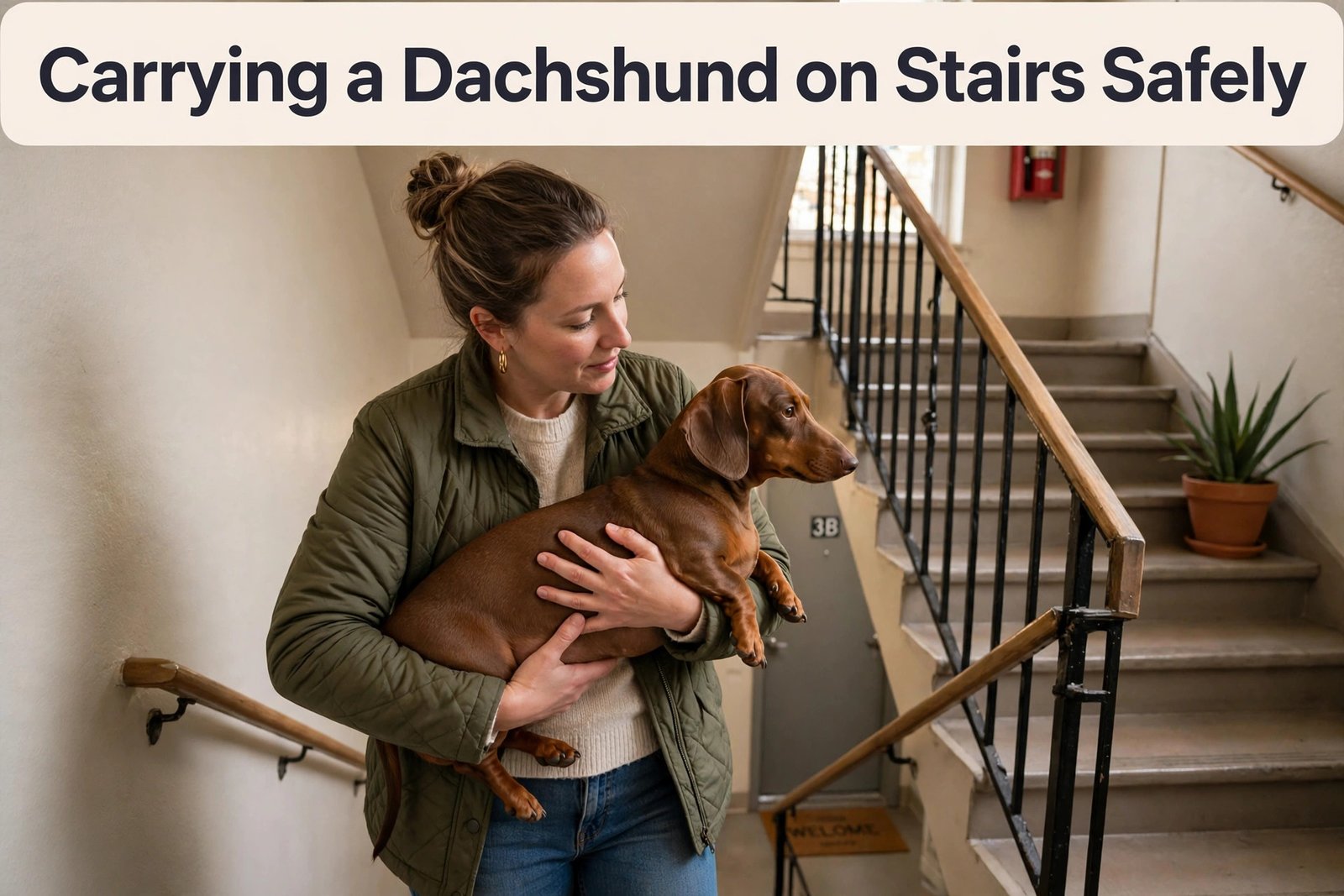
Carrying a Dachshund Up and Down Apartment Stairs Safely
Apartment stairs are a daily challenge for a Dachshund. Each flight involves repeated impact on the way down and effort on the way up, and a long back handles that load less forgivingly than a shorter back. Many owners therefore carry their Dachshund on stairs, but carrying only helps when the hold is secure, the back stays level, and the pace stays calm. A rushed or one-handed carry can be worse than a slow, planned trip.
This guide covers the two-hand hold, the differences between going up and going down, landings and tight turns, and when a ramp or a gate is a better long-term plan. It assumes a healthy adult dog and a carrier who can walk stairs safely while holding the dog. If either the dog or the carrier feels unsteady, a different plan is needed, and a veterinarian can advise on stair handling for a particular dog.
Quick Answer
- Support the chest and the hindquarters together, keeping the back level at all times.
- Go slowly, with the dog held close to the body, and pause on landings.
- Going down needs extra care: slower steps and a level back matter most.
- If carrying feels unsteady, use a ramp, a gate, or another route instead.
Contents
- The Two-Hand Hold: Chest and Hindquarters Together
- Going Up: A Steady Pace, Close to the Body
- Going Down: Slower Steps and a Level Back
- Landings, Doorways, and Tight Turns
- When Carrying Is Not Enough: Ramps and Planning
1. The Two-Hand Hold: Chest and Hindquarters Together
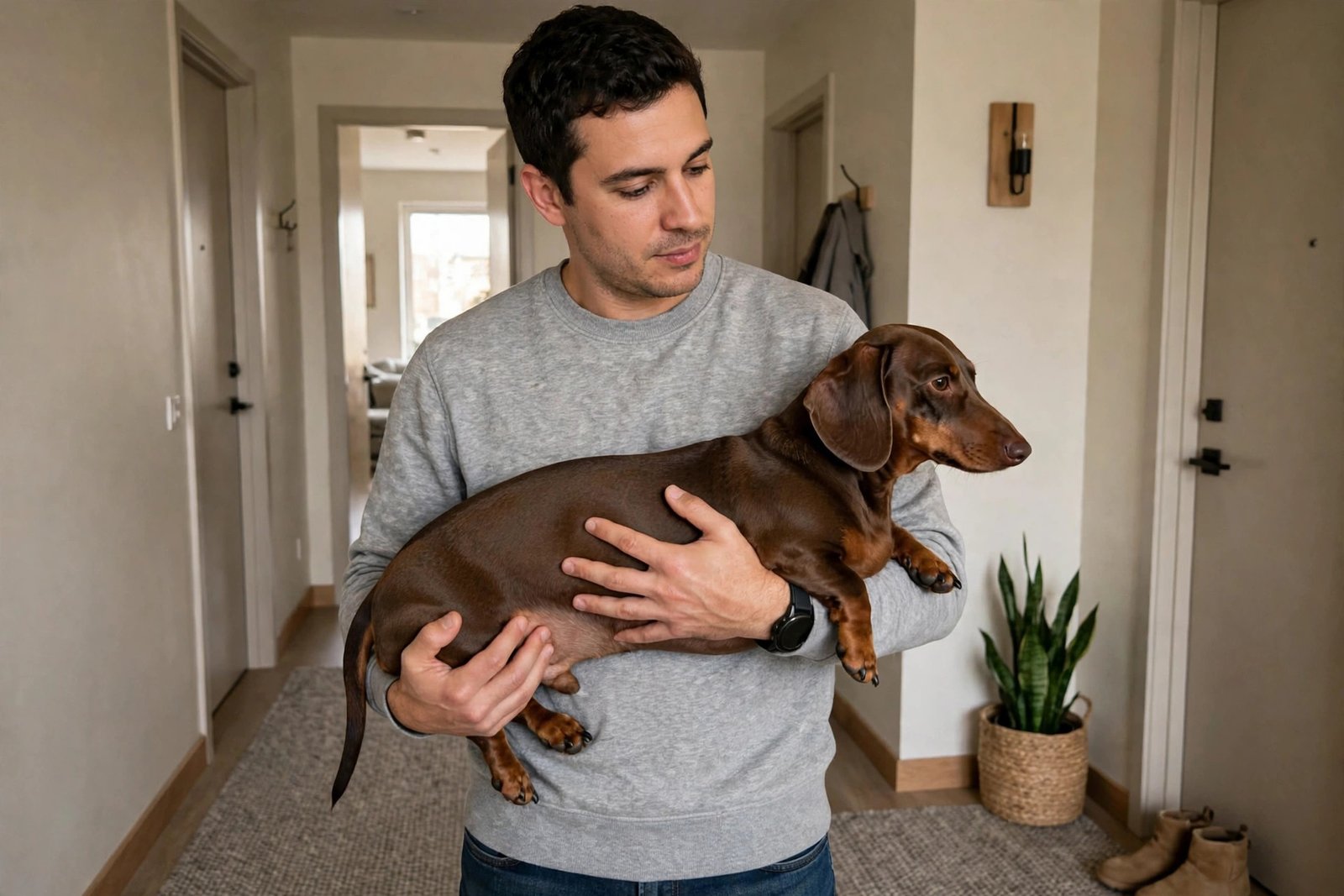
The safe hold supports both ends of the dog at once. One hand rests under the chest, behind the front legs, while the other hand supports the hindquarters, under the rear and the back legs. The dog stays horizontal, with the back level and the head facing forward, held close to the carrier’s body so the weight does not pull outward. This hold spreads the load and avoids dangling, which strains the back and the shoulders.
Practice the hold on flat ground first, before any stairs. Lift smoothly, without jerking, keep the dog close, and set the dog down gently on all four feet. If the dog wriggles, squirms, or tries to jump from the arms, set it down at once on a safe surface and try again calmly, or choose another plan for that trip. A secure, calm hold on flat ground is the test for whether a stair carry is sensible at all.
2. Going Up: A Steady Pace, Close to the Body
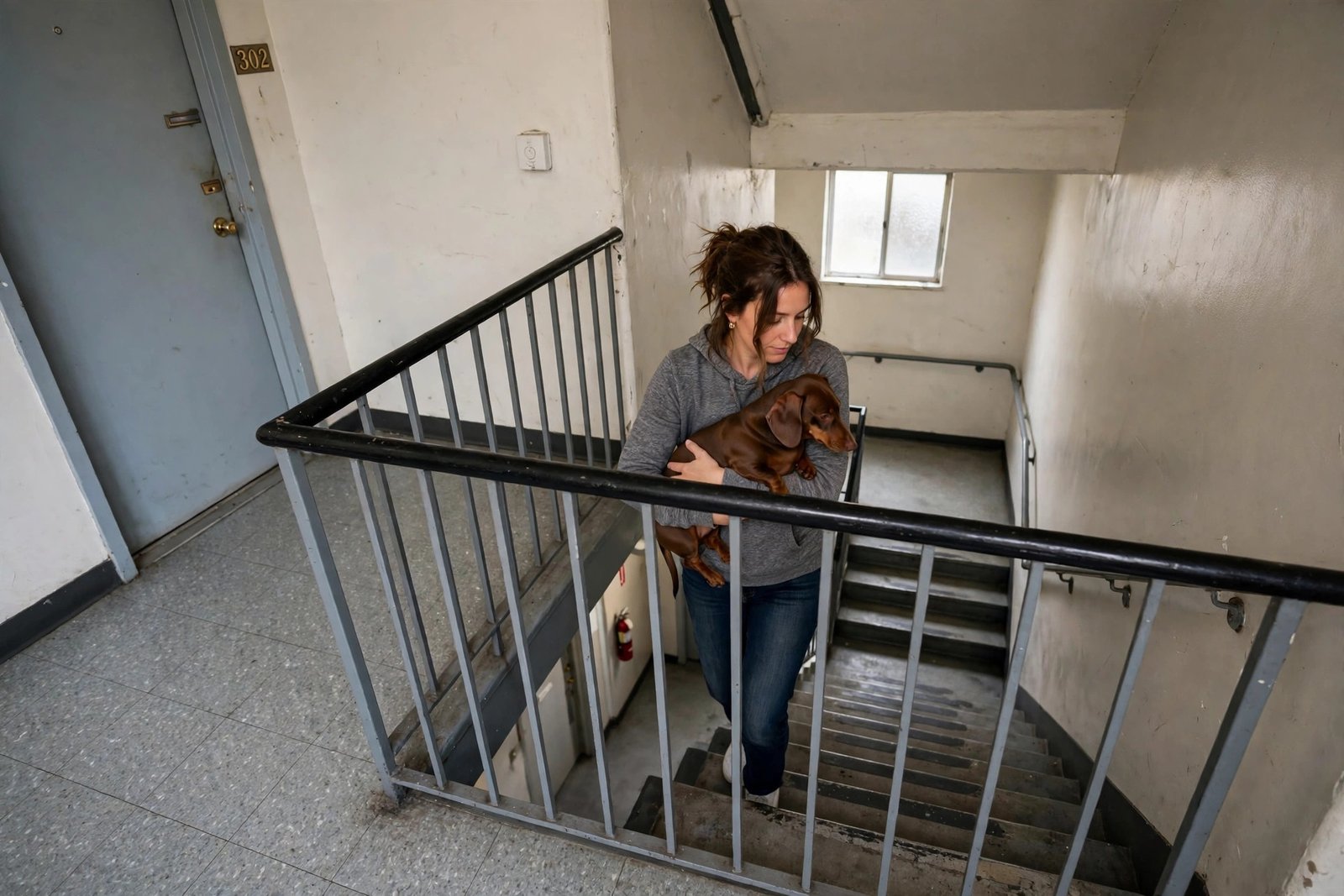
Going up stairs, keep the dog close, the back level, and the pace steady, with one step at a time and no rushing. Hold the dog slightly against the body, watch the steps rather than the dog, and pause on a landing if the flight is long or the arms tire. A tired carrier is a risk, because grip loosens and steps become uneven, so a pause is part of safe carrying, not a delay.
Avoid carrying anything else in the hands during a stair trip, and wear shoes with grip rather than socks or smooth soles. Keep the route clear of bags, toys, and loose rugs on the steps, and keep the dog’s lead tucked away so it cannot catch on a rail or a step. If the dog becomes restless partway up, stop on a landing, settle the dog, and continue only when the hold is secure again. Guidance on the same hold on flat ground is covered in the article about how to lift a Dachshund correctly without hurting its back.3. Going Down: Slower Steps and a Level Back
Going down needs more care than going up, because gravity pulls the dog forward and each step can jolt the hold. Take slower, shorter steps, keep the dog close and level, and avoid leaning forward over the dog. If the dog’s weight shifts forward, pause on a step or landing, readjust the hindquarter hand, and continue only when the dog is level again. Never let the dog dangle head-down, even for a moment.
Railings help the carrier, but only when one hand can stay free enough for balance, which means the dog must already be secure with the two-hand hold. If both hands are fully occupied and balance feels uncertain, that trip should not happen that way. A ramp, a lift in a building lift, or waiting for help is safer than a shaky descent. Downstairs trips should also end with a gentle set-down on a flat, non-slip landing, not a step onto a slippery hallway floor.
4. Landings, Doorways, and Tight Turns
Landings and doorways are where many carries go wrong. A landing gives a chance to pause, reset the hold, and check the next flight, so use it rather than rushing through. Doorways need care too: open the door fully before lifting, or set the dog down safely before handling a heavy door, rather than balancing a dog and a door at once. Tight turns on a stairwell need slow, small steps, with the dog kept close so its body does not swing outward.
Plan the whole route before lifting: which stairs, which landings, which doors, and where the dog will be set down at the end. A route with a narrow turn, a steep flight, or a slippery landing may need a different plan, such as a ramp at the base or a ground-floor exit. Setting the dog down on a mat at the final landing, then walking the last flat stretch on a lead, often works better than carrying all the way to a door.
5. When Carrying Is Not Enough: Ramps and Planning
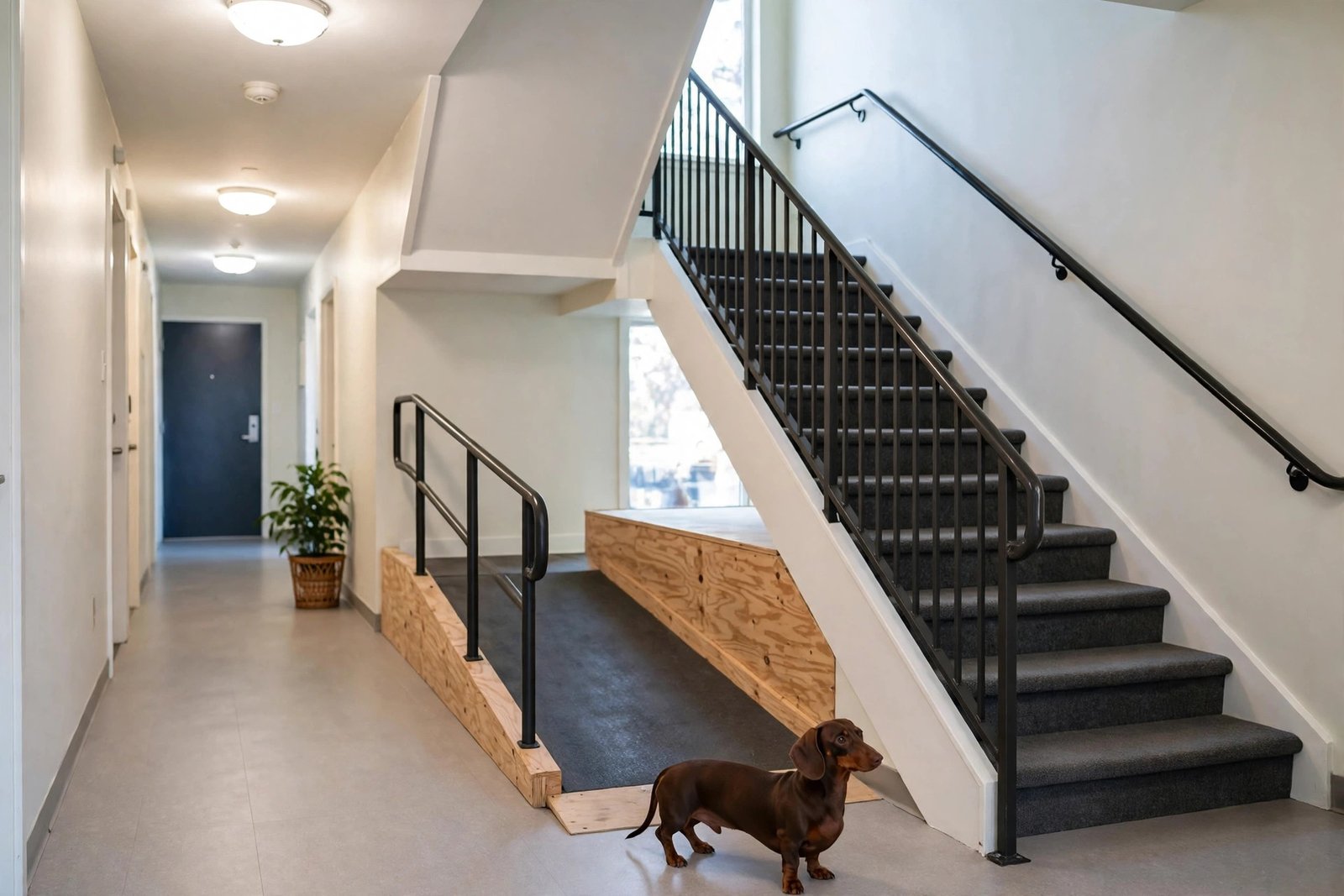
Carrying works well for occasional trips, but it is not always the best long-term plan. A carrier with a sore back, a dog that wriggles strongly, a very long or steep stairwell, or a dog recovering from a back problem may all need a different solution. A ramp at a low angle, a stair gate that keeps the dog on one level, or a ground-floor toilet route can remove the daily stair question entirely, and each option deserves a proper look rather than a rushed decision.
Planning also covers the times carrying is hardest: early mornings, late nights, rain, and trips with shopping or a child in tow. A ramp placed before it is needed, a gate fitted in advance, and a routine that avoids peak stair use all reduce risky carries. Guidance on ramp choice and placement is covered in the article about the best ramp for a Dachshund sofa and bed setup, and the same principles of low angle and non-slip surface apply to stair alternatives.
Stair Trips: Carry or Choose Another Plan?
| Situation | Carry safely | Choose another plan |
|---|---|---|
| Short flight, calm dog, secure hold | Yes, slowly, with pauses | Not needed |
| Long or steep flight | Only with landings and rests | Ramp, lift, or ground-floor route |
| Dog wriggles or carrier feels unsteady | No | Ramp, gate, or help from another person |
| Dog has a back problem or is in pain | Only as a veterinarian advises | Veterinary advice first, then a planned route |
Practicing the Carry Before It Becomes Daily
Practice the carry on flat ground for several days before relying on it for stairs. Lift, walk a short hallway distance, pause, set the dog down gently, and repeat once, watching for wriggling, shifting weight, or tired arms. If the hold feels secure on flat ground, try a single short flight with a landing pause, and build up only as confidence grows for both carrier and dog.
Also practice the alternative plan, so it is ready when carrying is not sensible. Walk the ramp route, check the gate, and confirm the ground-floor exit, before a rainy night or a tired evening makes improvisation necessary. A household plan works best when everyone who carries the dog uses the same hold, the same pace, and the same set-down spot, so brief practice with each carrier prevents confusion on the stairs themselves. When a week goes well, keep the same plan for another week before adding anything new, since consistency gives a clearer picture than frequent change.
Common Mistakes
- Lifting by the front legs alone, leaving the hindquarters dangling.
- Carrying with one hand while holding bags, a phone, or a lead.
- Rushing downstairs, leaning forward, or skipping landing pauses.
- Carrying a wriggling dog rather than setting it down and replanning.
- Using stairs daily with no ramp, gate, or alternative plan in place.
Pin This: Quick Checklist
- Two hands: chest and hindquarters together.
- Keep the back level and the dog close.
- Go down slower than up; pause on landings.
- Set down gently on a flat, non-slip surface.
- If unsteady, use a ramp or another route.
When to Call Your Vet
A veterinarian can advise whether carrying on stairs is appropriate for a particular Dachshund, especially after a back problem, surgery, or a period of restricted movement. Some dogs need strict stair avoidance for a time, while others can be carried safely with the hold described here. That advice should be sought before a new stair routine becomes daily habit, and it should be revisited if the dog’s condition changes.
Contact a veterinarian promptly for limping, crying, reluctance to move, a hunched back, weakness in the legs, or any sudden change after a stair trip or a fall. Keep the dog calm and still, avoid further stairs, and do not test the back with repeated trips. This article gives general information only and does not diagnose any condition. Evidence on stair use and back problems in Dachshunds is mixed and largely observational, so vets commonly advise controlled handling, consistent stair plans, and prompt advice over any single rule about stairs.
The Animal Medical Center explains intervertebral disc disease in dogs, including signs that need prompt veterinary attention: Animal Medical Center.
DachsLife 2015 describes research on disc calcification in Dachshunds, which underlines why stair handling needs care: DachsLife 2015.
Frequently Asked Questions
Is it better to carry a Dachshund or let it walk upstairs?
Many owners carry their Dachshund on stairs to avoid repeated impact, but the best choice depends on the dog, the stairwell, and veterinary advice. Consistency matters: a planned method used every time beats a different choice each trip.
What if a Dachshund is too heavy to carry safely?
Use a ramp, a lift, or a ground-floor route, or ask another person for help. Carrying a dog that cannot be held securely and level is not safe for the dog or the carrier.
Can a puppy be carried on stairs?
Yes, with the same two-hand hold, kept level and close. Puppies wriggle more, so practice on flat ground first and set the puppy down at once if the hold becomes insecure.
Should a Dachshund ever use a stair ramp instead?
A ramp at a low, non-slip angle is a good alternative for long, steep, or frequently used stairs, and for carriers who cannot carry safely. The ramp must be stable and used calmly, every time.
What should happen after a fall on the stairs?
Keep the dog calm and still, avoid further stairs, and contact a veterinarian promptly, even if the dog seems to recover quickly. Note what happened and any change in movement afterwards.
Conclusion
Carrying a Dachshund on apartment stairs is a skill, not just a lift: two hands, a level back, a close hold, slow steps down, and pauses on landings. Plan the route before lifting, keep hands free, and choose a ramp or another route whenever a carry feels unsteady. Done consistently, that plan turns a daily stair trip from a repeated risk into a calm, controlled part of the day.




3 Comments