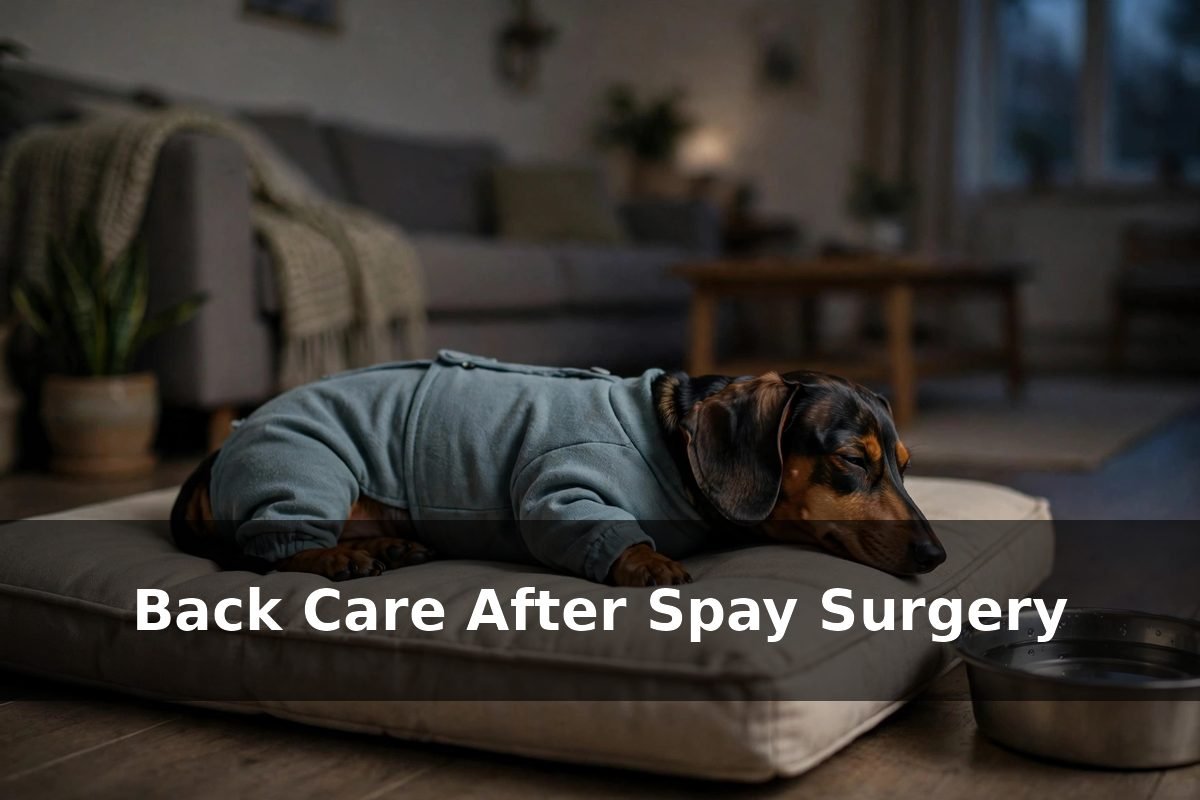
Dachshund Back Care After Spay or Neuter: Rest Guide
Quick Answer
- Dachshund back care after spay or neuter surgery starts with rest: a quiet room, a flat bed on the floor, and no stairs, jumping, or long walks for the first days.
- Lift the dog level, with one hand under the chest and one under the hips, keeping the wound area free of pressure and the back straight.
- Carry the dog up and down stairs, and keep toilet trips short, on a leash, on flat ground only.
- Check the wound once a day, gently, for redness, swelling, discharge, or an opened stitch, and stop the dog from licking it.
- Contact a veterinarian if the wound looks worse, the dog is in pain, or recovery is not improving day by day.
Contents
- 1. The First 24 Hours: Rest Comes First
- 2. A Quiet Recovery Space on the Floor
- 3. Lifting, Stairs, and Toilet Breaks
- 4. The Daily Wound Check
- 5. Eating, Energy, and the Return to Normal
- Recovery Timeline: Days 1 to 14 After Surgery
- Common Mistakes
- When to Call Your Vet
- Pin This: Back Care After Spay or Neuter Surgery
- Frequently Asked Questions
- Conclusion
1. The First 24 Hours: Rest Comes First
The first day after surgery is the hardest day for a Dachshund’s back, because the dog is groggy, sore, and unsteady, and every movement asks more of the spine than usual. The anaesthetic leaves the dog wobbly on its legs, and a wobbly dog braces its back with every step, which tires the muscles along the spine fast. Rest is the treatment for that first day: a quiet room, a flat bed on the floor, and no stairs, jumping, running, or playing. Dachshund back care after spay surgery is mostly about protecting the back while the belly heals, because the two are connected by every move the dog makes.
Keep the first evening as still as possible. No visitors, no other pets crowding the bed, and no loud television. Offer water as soon as the dog is settled, in a bowl within a few steps of the bed, so the dog does not have to cross the room to drink. Offer a small meal a little later, once the grogginess has faded, and keep it small: a dog that eats too much too fast after anaesthetic can feel sick, and vomiting strains the belly and the back at the same time. If the dog refuses food on the first evening, that is common, and the appetite usually returns by the next morning.
Watch the dog settle. A dog that lies flat, sighs, and sleeps is recovering well. A dog that paces, whines, or cannot find a comfortable position may be sore, and the position of the bed may need adjusting. The first night should be spent in the same room as the owner if possible, so any restlessness is noticed early. Disc degeneration in short-legged breeds can begin in the first year of life, so even a young Dachshund recovering from surgery has a spine that deserves this care.
2. A Quiet Recovery Space on the Floor
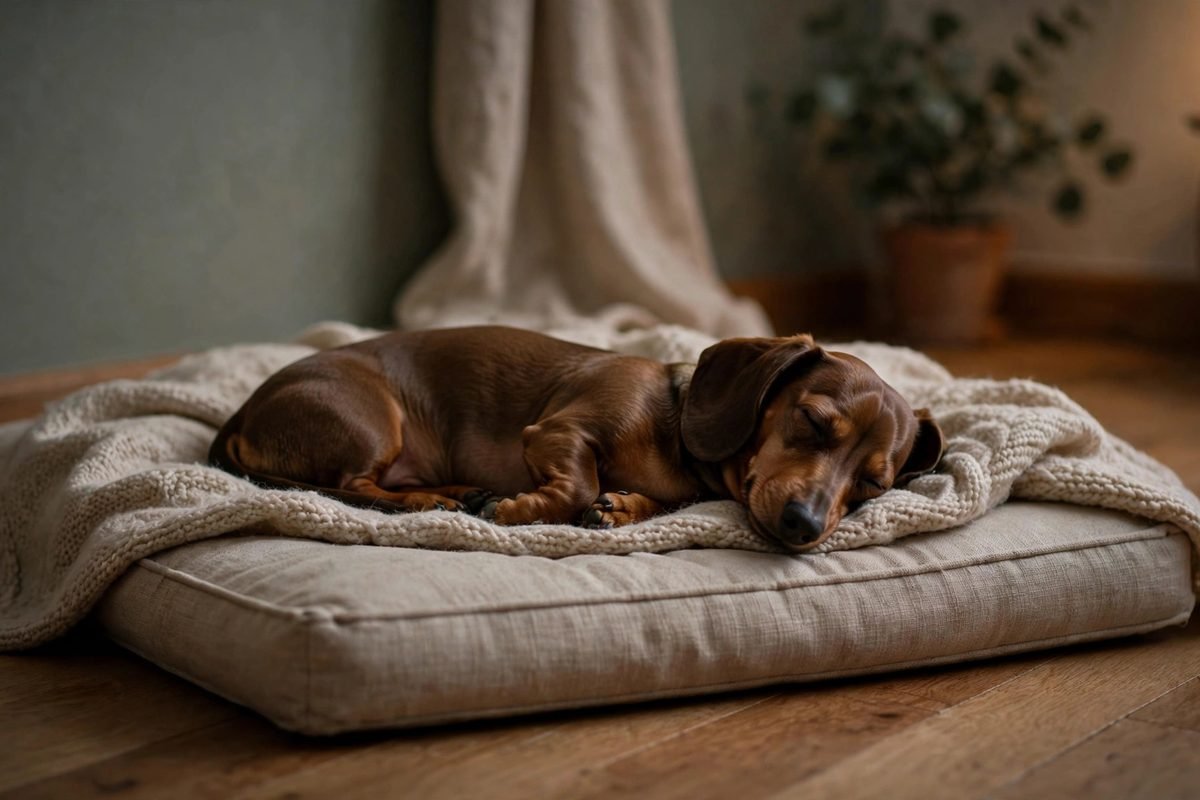
The recovery space should be ready before the dog comes home. Choose a quiet corner of a lived-in room, away from stairs, doorways, and the path other people walk through. Put a flat, soft bed on the floor, with a clean blanket the dog can lie on, and a water bowl within a few steps. The room should feel warm, not hot, and the light should be soft. A dog that can see its owner nearby will settle faster than a dog left alone in a cold, empty room, and a calm dog rests its back instead of tensing it.
Keep the space flat. The bed should sit directly on the floor, not on a raised platform, and there should be no step up into it. A dog that has to climb into a deep bed pulls its back with every entry, and a dog that has to jump down from a raised bed lands with a jolt. A low, flat bed with a low edge is the kindest choice, and a folded blanket beside it gives the dog a second resting spot at the same level.
Limit the space for the first few days. A small room, or a pen in a corner of a larger room, keeps the dog from wandering, climbing, or trying the stairs. The pen should be large enough for the bed, the water bowl, and a short stretch of floor to walk on, but small enough that the dog cannot build up speed. The vet-advised rest routine for back recovery follows the same flat, limited-space pattern for the first days.
3. Lifting, Stairs, and Toilet Breaks
Lifting is the moment where most back strain happens after surgery, so it deserves a slow, planned move every time. Place one hand under the chest, just behind the front legs, and the other hand under the hips, just in front of the back legs, keeping the hands clear of the wound area on the belly. Lift straight up, keeping the back level, with no dangling front or back end and no twisting of the body. Hold the dog close to the body, so the weight sits against the chest rather than hanging from the arms. Set the dog down the same way, in reverse, with all four paws landing together on a flat surface.
Stairs are off limits for the first days. Carry the dog up and down any steps that cannot be avoided, using the same level lift, and keep the carry short and steady. The sofa and the bed are off limits too: lift the dog onto them only if it must be there, and lift it down again rather than letting it jump. Most dogs are happier staying on the floor bed for the first week, and the floor bed is the safest place.
Toilet breaks should be short, on a leash, and on flat ground only. Carry the dog to the door, set it down on level ground, and let it walk a few steps to toilet at its own pace. Keep the trip to a few minutes, then carry the dog back inside. Avoid garden steps, slopes, and any surface that makes the dog scramble. A dog that strains to toilet, or that cries out while toileting, needs a call to the clinic, because straining pulls on the belly and the back together. The back care routine after a vet visit covers the same gentle lifting pattern for the trip home.

4. The Daily Wound Check
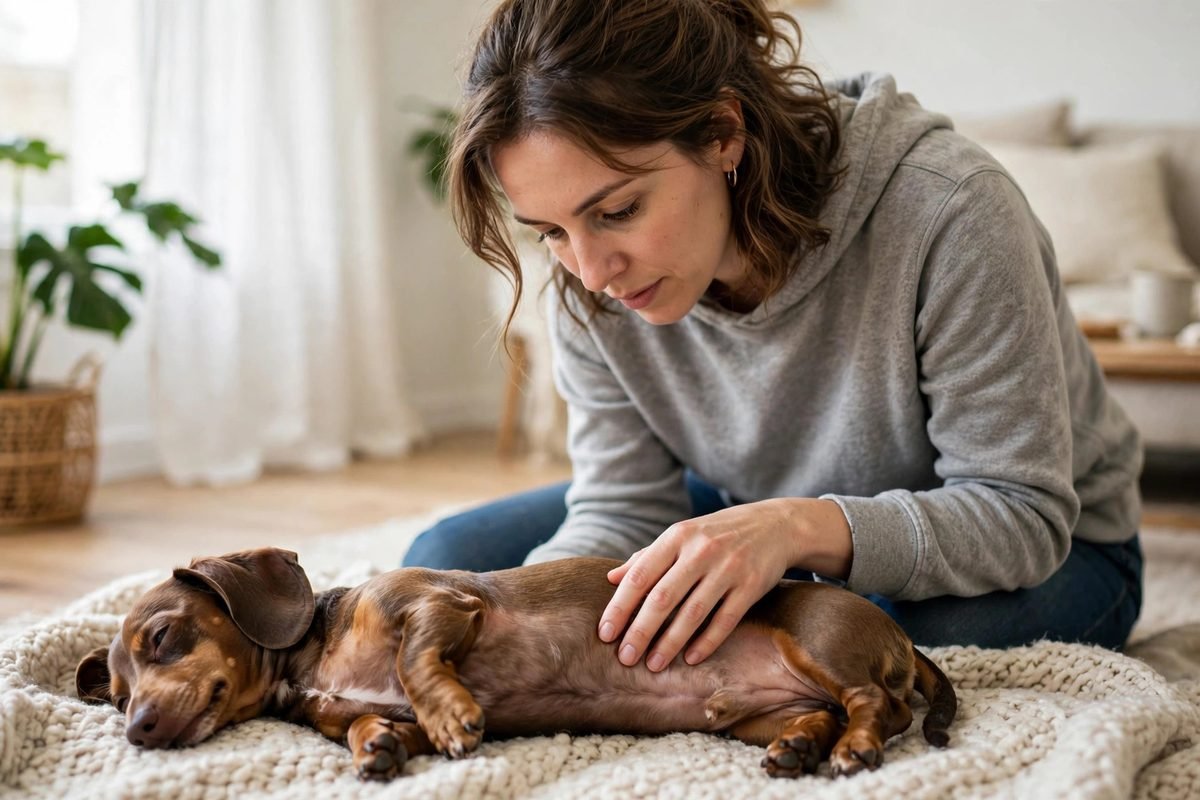
Check the wound once a day, at the same time each day, so any change is easy to spot. Choose a moment when the dog is calm and lying on its side, and look without pressing. A healthy wound looks closed, with the skin around it only slightly pink, and no discharge. The stitches or the surgical glue should sit flat against the skin, and the area should feel no warmer than the skin around it. Look, note what is seen in a few words, and move on: a daily look is enough, and constant checking worries the dog.
Know what needs a call. Redness that spreads, swelling that grows, a wound that feels hot, any discharge, a stitch that has come loose, or a wound edge that has opened are all reasons to contact the clinic the same day. A wound that smells unpleasant, or a dog that suddenly starts licking the wound after ignoring it for days, also deserves a call. Do not clean the wound, apply creams, or cover it with anything unless the clinic has said to, because the wrong product can slow healing.
Stopping the licking matters as much as the check itself. A dog that licks its wound can pull out a stitch or open the wound, and both set recovery back by days. A cone, a soft recovery collar, or a recovery suit stops the licking, and the dog should wear it whenever it is not being watched directly. Some dogs settle with a cone in a day, and some need a suit instead, and either is fine as long as the wound stays untouched. Keep the wound dry: no baths, no wet grass for long, and a towel dry if the belly gets damp on a toilet trip.
5. Eating, Energy, and the Return to Normal
Appetite returns in stages. On the first evening, offer a small meal, about half the normal amount, and see how the dog responds. By the next morning, most dogs eat normally, and the meal size can return to normal over the next day. Keep meals on the floor, at the dog’s level, so the dog does not have to stretch up or climb to eat. Fresh water should stay within a few steps of the bed at all times, because a dog that has to cross the room to drink will move more than it should in the first days.
Energy returns in stages too. For the first two or three days, the dog will sleep more than usual and show little interest in play, and that is normal. Around day four or five, the dog will start to ask for more: a longer toilet walk, a look at a toy, a wander around the room. Let the energy return slowly, with short indoor movement first, and keep stairs, jumping, and rough play off limits until the clinic says otherwise.
The follow-up appointment is part of the recovery, not an extra. The clinic will usually want to see the dog around ten to fourteen days after surgery, to check the wound and confirm healing. Keep that appointment even if the wound looks perfect, because the clinic checks the healing under the skin as well as on top. Until that visit, keep the routine steady: rest, level lifting, short toilet trips, and the daily wound check. When the clinic confirms healing, the normal routine can return in small steps, starting with short flat walks.
Recovery Timeline: Days 1 to 14 After Surgery
| When | What to Do | What to Watch For |
|---|---|---|
| Day 1 | Rest in a quiet room; flat bed on the floor; water close by; small meal | Groggy but settling; lying flat; no vomiting after eating |
| Days 2-3 | Short leash toilet trips on flat ground; carry on stairs; daily wound check | Appetite returning; wound closed and only slightly pink |
| Days 4-7 | Short indoor wandering; cone or suit on when unwatched; keep wound dry | Energy returning; no licking; no swelling or discharge |
| Days 8-14 | Slowly longer flat walks; still no jumping, stairs, or rough play | Wound healing flat; dog moving smoothly; no new pain |
| Day 10-14 | Follow-up appointment at the clinic, even if the wound looks fine | Clinic confirms healing; normal routine returns in steps |
Common Mistakes
- Letting the dog climb the stairs alone on the first day home, when it is still groggy.
- Lifting the dog by the front legs only, so the back end dangles and the wound area pulls.
- Skipping the cone or suit because the dog dislikes it, then finding a stitch pulled out.
- Cleaning the wound or applying creams that the clinic did not advise.
- Offering a large meal on the first evening, then dealing with sickness and straining.
- Letting the dog jump off the sofa on a burst of energy on day three or four.
- Missing the follow-up appointment because the wound looks fine from the outside.
When to Call Your Vet
Contact a veterinarian if the wound shows spreading redness, swelling, discharge, an opened edge, or a loose stitch, or if the dog is in pain, refuses food or water, vomits repeatedly, or strains to toilet. Contact a veterinarian urgently if the dog cannot move its back legs, the wound has opened wide, or there is heavy bleeding. A veterinarian can examine the wound and the back and advise whether the rest routine needs to change, and the Animal Medical Center guide to intervertebral disc disease in dogs explains the back signs that need prompt attention. The Cornell guide to intervertebral disc disease notes that the condition ranges from mild pain to paralysis, which is why early contact matters. The Cornell guide to chondrodystrophy and intervertebral disc disease explains the breed background behind that caution. This article gives general information only and is not a diagnosis.
Pin This: Back Care After Spay or Neuter Surgery
- Rest on a flat bed on the floor for the first days.
- Lift level, hands clear of the wound, back straight.
- Carry on stairs; keep toilet trips short and flat.
- Check the wound once a day and stop all licking.
- Keep the follow-up appointment, even if healing looks fine.
- Call a veterinarian if the wound worsens or pain grows.
Frequently Asked Questions
How long should a Dachshund rest after spay or neuter surgery?
Rest is needed for about ten to fourteen days, with the first two or three days the quietest. Short leash toilet trips on flat ground are fine, but stairs, jumping, running, and rough play stay off limits until the clinic confirms healing.
How should a Dachshund be lifted after surgery?
Place one hand under the chest and one under the hips, keeping the hands clear of the wound on the belly. Lift straight up with the back level, hold the dog close, and set it down with all four paws landing together on a flat surface.
What should the wound look like each day?
A healthy wound looks closed, with only slight pinkness around it, no discharge, and stitches or glue sitting flat. Spreading redness, swelling, heat, discharge, or an opened edge all need a call to the clinic the same day.
How can licking be stopped after surgery?
Use a cone, a soft recovery collar, or a recovery suit whenever the dog is not being watched directly. Keep it on until the clinic says the wound has healed, because one night of licking can pull out a stitch.
When should the vet be called after surgery?
Call if the wound worsens, the dog is in pain, refuses food or water, vomits repeatedly, or strains to toilet. Call urgently if the wound opens wide, there is heavy bleeding, or the dog cannot move its back legs.
Conclusion
Recovery after spay or neuter surgery is a back care job as much as a wound care job, and a quiet floor bed, level lifting, short flat toilet trips, and a daily wound check give both the belly and the spine the easiest two weeks. The next step is to set up the recovery space and the stair gates before the day of surgery, so the dog comes home to rest, not to obstacles.