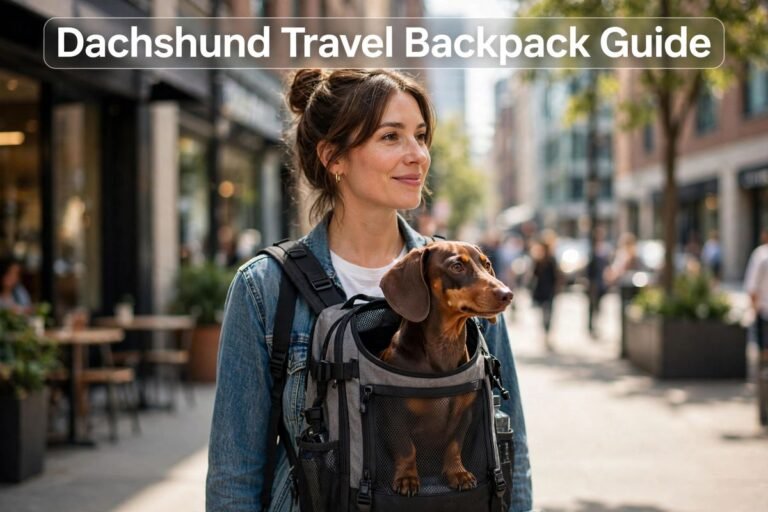
Dachshund Car Barrier Guide: Safe Back-Seat Travel Tips
Quick Answer
- A Dachshund car barrier is a mesh screen or metal grid that fits between the front and back seats, keeping the dog in the back seat and the driver free to focus on the road.
- Pick a barrier that fits the car’s width and headrest posts, stays firm at motorway speed, and lets the driver see clearly through the rear-view mirror.
- Fit the barrier snug, with no gaps at the sides, and pair it with a harness so the dog stays settled and safe in the back seat.
- Introduce the barrier at home first, with short, calm trips, so the dog learns the back seat is a safe place.
- Contact a veterinarian if the dog yelps, limps, or refuses to move after a car trip, or if travel stress keeps getting worse.
Contents
- 1. How a Dachshund Car Barrier Works
- 2. Choosing the Right Barrier: Types and Fit
- 3. Fitting the Barrier in the Back Seat
- 4. Helping a Dachshund Settle Behind the Barrier
- 5. Keeping the Car Safe and Calm on Every Trip
- Car Barrier Setup Checklist
- Common Mistakes
- When to Call Your Vet
- Pin This: Car Barrier Setup Checklist
- Frequently Asked Questions
- Conclusion
1. How a Dachshund Car Barrier Works
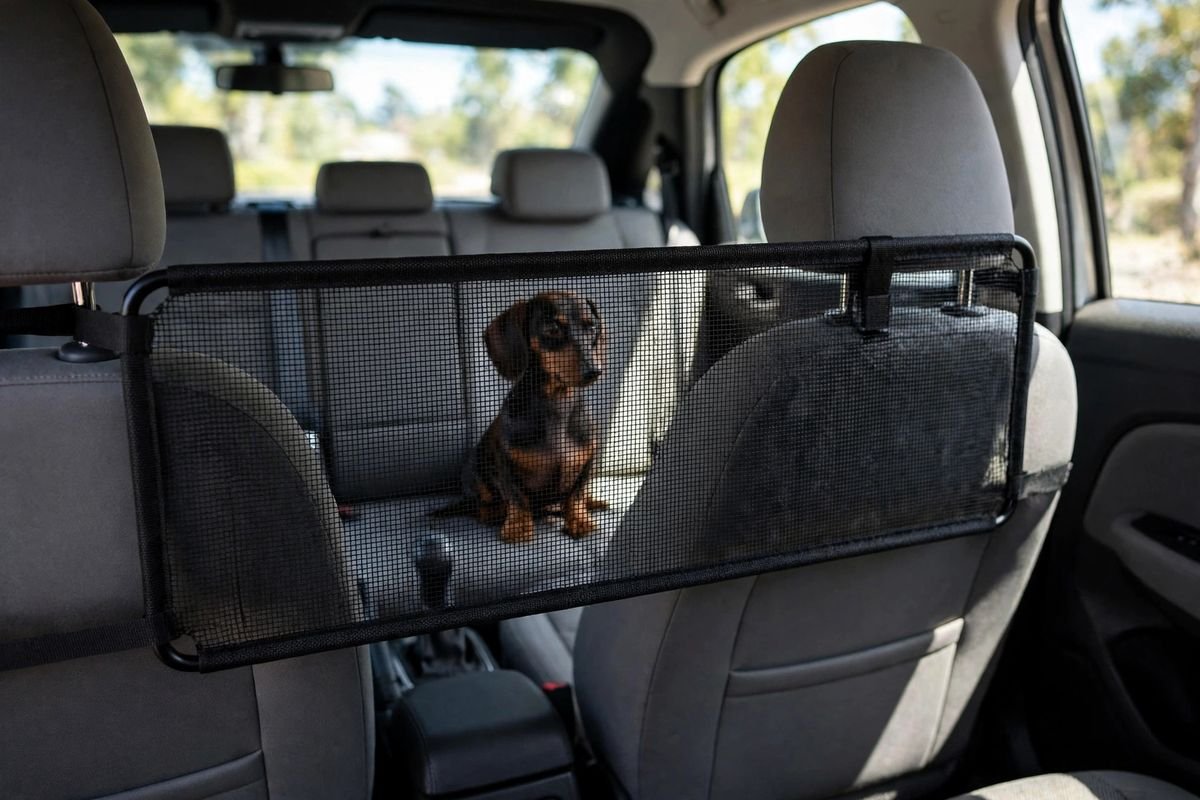
A Dachshund car barrier is a screen that fits behind the front seats and keeps the dog in the back seat for the whole trip. The barrier is usually a mesh net or a metal grid that attaches to the headrest posts, and it blocks the gap between the seats so the dog cannot climb into the front. The driver keeps a clear view of the road, the dog keeps its own space in the back, and a sudden stop does not throw the dog forward into the dashboard.
The barrier does two jobs at once. It keeps the driver safe, since a dog climbing onto the driver’s lap or under the pedals is a real hazard on the road, and it keeps the dog safe, since the back seat is the calmest place in the car. Disc degeneration in short-legged breeds can begin in the first year of life, so a calm, supported ride matters even for a young dog, and a dog that rides quietly in the back is less likely to twist, jump, or land badly when the car stops. A barrier is not a seatbelt, and it works best when the dog also wears a harness in the back seat.
A barrier suits a Dachshund well, because the breed is small enough to fit in the back seat with room to lie down, and bold enough to try the front seat if nothing stops it. In a small car, the barrier turns the back seat into the dog’s own space, with a blanket and a familiar smell. The dog learns that the back seat is where car trips happen, and settling there becomes a habit after a few calm trips.
2. Choosing the Right Barrier: Types and Fit
There are two main types of barrier: mesh and metal grid. A mesh barrier is a fabric net that hooks onto the headrests and hangs between the seats. It is light, cheap, and easy to fold away, and it suits a calm dog that stays in the back seat on its own. A metal grid barrier is a rigid frame of steel tubes that bolts or clamps to the headrest posts. It is stronger and better for a determined dog that paws at the barrier or tries to climb over it.
Fit is the point that matters most. Measure the width between the headrest posts and the height from the seat to the roof, and compare both numbers with the barrier’s size range. A barrier that is too narrow leaves a gap at the side, and a small Dachshund can slip through a gap that looks too small to matter. A barrier that is too wide will not sit straight and may rattle on the road. Look for a barrier with adjustable width and height, so it can be tuned to the car rather than forced into place.
Check the view through the barrier before buying. A fine mesh or a widely spaced grid lets the driver see through the rear-view mirror, while a thick fabric or a closely spaced grid blocks the view and makes reversing harder. Check the fixings too: hooks that clip over the headrest posts are quick to fit, while straps that loop around the posts hold firmer on a long trip. A car booster seat can work with a barrier in the back seat, giving a small dog a raised view out of the window while the barrier keeps it in place.
3. Fitting the Barrier in the Back Seat
Fit the barrier on a dry day, with the car parked and the engine off. Start with the headrests: raise them to the height the barrier needs, clip the hooks or straps over the posts, and pull the barrier up until it sits straight between the seats. Adjust the width until the edges meet the sides of the car with no gap, and tighten every strap or clamp in turn. Push the barrier firmly with a hand: it should not move, bow, or slide sideways, and it should not rattle when the car door is closed.
Check the gaps next. Run a hand along the top, the sides, and the bottom of the barrier, and look for any space a small dog could squeeze through. A Dachshund can fit through a gap of a few inches, especially at the bottom near the seat, so the barrier should sit close to the seat base. Some barriers have a lower panel or a skirt that closes the gap at the bottom, and that extra piece is worth using. If the barrier leaves a gap that cannot be closed, it is the wrong size for the car, and a different model is needed.
Set up the back seat after the barrier is fitted. Put a non-slip blanket or a dog bed on the seat, clip the harness tether to the seatbelt point, and keep the dog’s water and a chew within reach. The guide to a car seatbelt harness covers the harness and tether in detail, and the two work together: the barrier keeps the dog in the back seat, and the harness keeps the dog in place on the seat. Check the barrier again after the first drive, since straps can loosen with vibration, and tighten anything that has moved.

4. Helping a Dachshund Settle Behind the Barrier
Introduce the barrier while the car is parked. Let the dog sniff the barrier and the back seat, then sit in the back seat with the dog for a few minutes, with a treat and a familiar blanket. Keep the engine off and the doors open, so the dog can step out at any time. Repeat this for a few days, until the dog climbs into the back seat calmly and lies down on its own. The barrier should feel like part of the car, not like a wall that has appeared overnight.
Start with very short drives: around the block, to the end of the street, or to a nearby park. Keep the drive calm, with no sudden braking, loud music, or sharp turns. Praise the dog quietly when it lies down, and give it a treat when the car stops. If the dog paws at the barrier or tries to climb over it, keep the trip short and end on a calm note, then try again the next day.
Watch the dog’s behavior on the road. A dog that lies down, looks out of the window, or sleeps is comfortable behind the barrier. A dog that paces, pants, or drools may be stressed or travel sick, and the trip should be kept short until the cause is clear. Open a rear window a little for fresh air, keep the car cool, and stop every hour or two on a long trip so the dog can stretch, drink, and relieve itself. Vets commonly advise a calm, steady routine for dogs that find travel stressful, and a barrier that the dog trusts is part of that routine.
5. Keeping the Car Safe and Calm on Every Trip
Before every trip, check the barrier, the harness, and the back seat in one quick pass. Push the barrier to make sure it is firm, check the harness tether for wear, and make sure the dog’s blanket is flat and the seat is clear of loose items. A loose bottle or a bag on the back seat can slide and startle the dog when the car brakes, so keep the back seat tidy and the dog’s space clear. Put the dog in the back seat last, after the car is loaded, so the dog does not wait in a hot car while bags are packed.
Drive smoothly when the dog is in the car. Brake gently, take corners slowly, and avoid sudden stops, since a dog in the back seat feels every jolt more than a person in the front. Keep the temperature cool and steady, and never leave the dog alone in a parked car, even for a few minutes, since a car heats up fast in the sun. On a hot day, park in the shade and open the windows a little before the dog gets in.
Clean the barrier and the back seat once a month, or sooner if the dog has been sick on a trip. Wipe a mesh barrier with a damp cloth and let it dry, and wipe a metal grid with a cloth and check the joints for rust. Wash the blanket and the dog bed, and vacuum the seat to remove fur and dirt. Check the straps and clamps for wear each month, and replace the barrier if a fixing cracks or a strap frays.

Car Barrier Setup Checklist
| Step | What to Do | What to Watch For |
|---|---|---|
| Measure | Width between headrest posts; height to the roof | No gaps a small dog can slip through |
| Choose | Mesh for a calm dog; metal grid for a determined dog | Clear view through the rear-view mirror |
| Fit | Hooks over headrest posts; tighten all straps | Barrier firm; no movement, bowing, or rattling |
| Set up the seat | Non-slip blanket; harness tether clipped in | Dog settled; water and chew within reach |
| Introduce | Parked car first, then short drives | Dog lies down calmly behind the barrier |
| Before each trip | Push the barrier; check the tether; tidy the seat | Nothing loose; straps still tight |
| Monthly | Clean the barrier; check straps and clamps | No cracks, rust, or frayed straps |
Follow the checklist in the same order every time. A barrier that is measured, fitted, checked before each trip, and cleaned monthly keeps the driver and the dog safe on the road.
Common Mistakes
- Buying a barrier without measuring the car, and leaving a gap at the side.
- Using a mesh barrier for a dog that paws through it or climbs over it.
- Skipping the harness, so the dog can still slide around the back seat.
- Taking the dog on a long trip the first time the barrier is fitted.
- Blocking the rear-view mirror with a thick barrier, so reversing is hard.
- Leaving loose items on the back seat that slide and startle the dog.
- Forgetting to check the straps after the first drive, when they loosen with vibration.
- Leaving the dog alone in a parked car, even for a few minutes.
When to Call Your Vet
Contact a veterinarian if the dog yelps, limps, or refuses to move after a car trip, or if travel stress, panting, drooling, or sickness keeps getting worse. Contact a veterinarian urgently if the dog cannot move its back legs, loses bladder control, or is in severe pain. A veterinarian can check whether the problem comes from the car setup or from a health issue, and advise on the next step. The Animal Medical Center guide to intervertebral disc disease in dogs explains the signs that need prompt attention, and the Cornell guide to intervertebral disc disease explains how the condition can range from mild pain to paralysis. This article gives general information only and is not a diagnosis.
Pin This: Car Barrier Setup Checklist
- Measure the width and height of the car first.
- Pick mesh for a calm dog, metal grid for a determined one.
- Fit the barrier firm, with no gaps at the sides.
- Pair it with a harness tether in the back seat.
- Introduce it parked, then with short drives.
- Call a veterinarian if the dog limps after a trip.
Frequently Asked Questions
Do I still need a harness if I have a car barrier?
Yes. The barrier keeps the dog in the back seat, but the harness keeps the dog in place on the seat when the car brakes or turns. A dog without a harness can slide across the seat or fall into the footwell. Use both together for a safe, calm ride.
Will a car barrier fit any car?
Most barriers fit most cars, but the size range matters. Measure the width between the headrest posts and the height from the seat to the roof, and compare both with the barrier’s size range. A barrier that leaves a gap at the side is the wrong size, and a small Dachshund can slip through it.
Can my Dachshund see me through the barrier?
Yes, with a mesh or widely spaced grid barrier, the dog can see and smell the driver, which helps the dog settle. A thick fabric barrier blocks the view and can make a nervous dog worse. Pick a barrier that lets the dog see through it and the driver see through the rear-view mirror.
How do I stop my Dachshund from climbing over the barrier?
Pick a barrier tall enough to reach near the roof, with no gap at the top, and pair it with a harness tether that keeps the dog on the seat. Introduce the barrier slowly with short, calm trips, and praise the dog when it lies down. A determined climber needs a metal grid barrier, not a mesh one.
Is a car barrier safe in a crash?
A barrier is not a crash-tested restraint on its own. It keeps the dog in the back seat and stops the dog from reaching the driver, but the harness and tether do the job of holding the dog in place. Use both together, and keep the dog in the back seat on every trip.
Conclusion
A Dachshund car barrier works when the size fits the car, the barrier sits firm with no gaps, and the dog has learned the back seat step by step. The next step is a small one: measure the width between the headrest posts and the height to the roof, then check those numbers against the barrier’s size range before buying anything.